 Kids Snack Bars
 Soft-Baked Cookies
 Protein Bars
 Build A Box
 Shop All





Opting for organic food is a powerful step toward a cleaner lifestyle for your family. It's a choice that brings some pretty incredible benefits, from reduced pesticide exposure to potentially higher nutrient levels and a lighter footprint on our planet.
This isn't just about what's on your plate—it's about the positive ripple effect your choices have on your family’s health and the world around you.
Why Your Family Will Love Organic Eating
Let's be honest, walking through the grocery store can feel like a pop quiz you didn't study for, especially when you're trying to make the best choices for your kids. The word "organic" is everywhere, but what does it really mean for your day-to-day life?
Think of it less as a strict rule and more as a simple, joyful upgrade for your pantry—a switch that packs a serious punch. It's about making food fun and fuel-filled!
At its core, the idea is simple: organic food is grown and processed without synthetic pesticides, genetically modified organisms (GMOs), or artificial fertilizers. To really get a handle on the principles guiding these choices, you can explore the basic organic philosophy. This commitment to working with nature is what unlocks a world of benefits.
The Big Three Organic Benefits
When you're dealing with hungry kids, snack time can feel like a constant negotiation. You want something nutritious; they want something that tastes good. This is where organic snacks, like kids' snack bars and cookies, are a total game-changer. They're your secret weapon in the snack wars!
They’re a fantastic, fuss-free way to introduce the benefits of organic eating. Instead of reaching for snacks filled with artificial colors and flavors, you’re handing them fuel made from real, recognizable ingredients. Imagine that—a cookie that's both a treat and a tiny nutritional powerhouse.
Here’s a quick look at the core benefits this brings to your family's table.
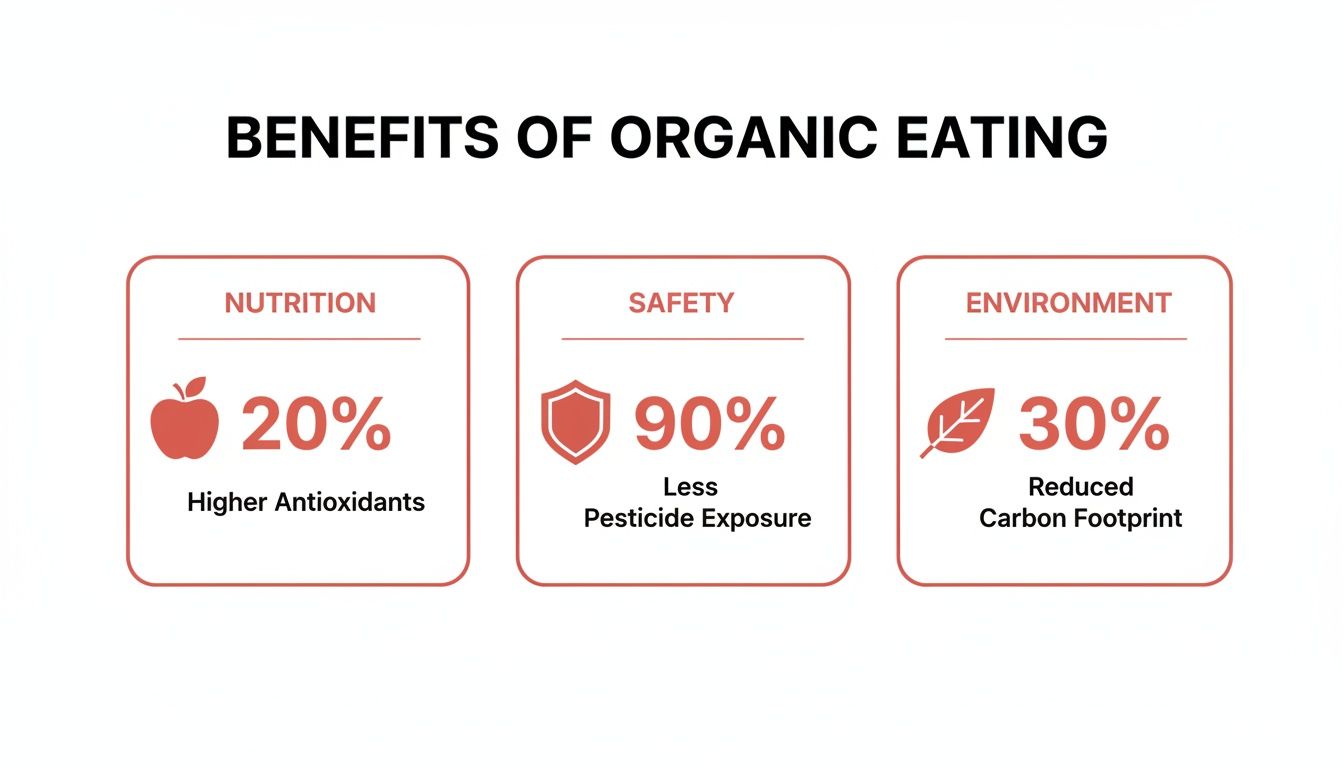
This visual really brings it home, showing how organic choices can lead to better nutrition, less exposure to pesticides, and a much lighter environmental impact. Making the switch isn't just a trend; it's a practical, common-sense choice for families who want cleaner, more vibrant food.
Let's take a quick side-by-side look at what makes organic stand out.
Organic vs Conventional Food: A Snapshot
| Benefit | Organic Food | Conventional Food |
|---|---|---|
| Pesticide Use | Prohibits synthetic pesticides, relying on natural methods. | Commonly uses synthetic pesticides to control pests. |
| Nutrient Profile | Often higher in antioxidants and certain micronutrients. | Nutrient levels can be lower due to soil depletion. |
| GMOs | Prohibited. All certified organic food is non-GMO. | GMOs are often used in crops like corn, soy, and sugar beets. |
| Environmental Impact | Promotes soil health, biodiversity, and water conservation. | Can contribute to soil erosion and water pollution. |
| Antibiotic Use | Prohibited in organic meat, poultry, and dairy production. | Routinely used to promote growth and prevent disease in livestock. |
This table gives you a clear, at-a-glance view of why that "organic" label matters so much. It represents a completely different approach to how our food is grown and raised.
The real magic of organic eating is knowing that you're nourishing your family from the inside out. Every organic apple or snack bar is a small, empowering step toward a healthier, more conscious lifestyle.
From boosting your family’s intake of beneficial antioxidants to significantly lowering their exposure to synthetic chemicals, the advantages are clear. This guide will walk you through each benefit, making it simple to see how these choices support everyone, from your littlest snackers to the busiest adults in your household.
How Organic Food Can Boost Your Family's Nutrition
When you're making the hundredth snack of the week for your kids, it’s easy to focus on just getting something—anything—into their hands. But what if that snack could do more than just quiet a grumbling tummy? What if it could be a tiny nutritional superhero in disguise? This is where one of the most exciting benefits of organic eating comes into play.
Think of soil like a bank account for nutrients. Conventional farming can often make frequent withdrawals without making enough deposits, leaving the soil (and the plants grown in it) a bit depleted. Organic farming, on the other hand, is all about enriching that account by focusing on building healthy, vibrant soil packed with minerals and life.
This commitment to soil health means the plants have a richer source of goodness to draw from. And the result? That organic apple or handful of carrots often packs a more powerful nutritional punch.
A Closer Look at the Nutrient Boost
Let’s be real: for growing kids, nutrition is everything. We’re talking about the essential building blocks their bodies need to thrive—vitamins, minerals, and powerful compounds called antioxidants that act like little bodyguards for their cells.
And here’s the good news: organic foods often contain higher levels of these crucial components. For example, research has shown that organic crops frequently boast higher concentrations of antioxidants. A huge 2014 meta-analysis that reviewed 343 studies found that organic crops had, on average, 19% higher antioxidant concentrations. It also found they had 48% lower levels of the toxic heavy metal cadmium compared to their conventional counterparts. You can dig into more data on the organic food market and its findings.
So, by choosing organic, you're not just avoiding certain synthetic chemicals; you're actively dialing up your family's intake of beneficial compounds. It’s a simple switch that upgrades the quality of your food, straight from the ground up.
Snack Time: Your Ultimate Nutrition Mission
Kids live on snacks. From the after-school rush to weekend adventures, snacks are the fuel that keeps them going. And honestly? This is your secret weapon for boosting their nutrition without a fight.
Instead of seeing snack time as just another chore, think of it as a golden opportunity. Swapping a conventional snack for an organic one is one of the easiest ways to put these nutritional benefits into practice. Why not make every bite count?
The beauty of organic snacks is their simplicity. When you choose something like an organic kids snack bar or cookie, you're often getting real, whole-food ingredients you can actually pronounce, without the artificial fillers.
Consider these simple snack swaps:
- Instead of a sugary, conventional granola bar, try an organic kids snack bar made with dates, nuts, and seeds. You get sustained energy from real ingredients, not a sugar crash. Perfect for playground power-ups!
- Instead of cookies full of artificial flavors and colors, opt for organic cookies that use simple ingredients like organic oats and real fruit for sweetness. They're so yummy, the kids will never guess they're good for them.
- Instead of conventional fruit snacks, reach for a handful of organic berries or a pouch of organic applesauce to maximize that antioxidant goodness.
Choosing organic snacks is about making every bite count. It's a fun, delicious way to support your kids' immune systems, give them lasting energy for the playground, and build healthy habits that will stick. You're not just giving them a treat—you're giving them a dose of high-quality fuel to power their day. It’s a small change that makes a big nutritional difference.
Reducing Pesticide Exposure for Peace of Mind
Let's talk about something that's on every parent's mind: the invisible stuff that might be hitching a ride on our family's food. We’re talking about synthetic pesticides. In conventional farming, these are the man-made chemicals used to keep pests away from crops. While they do their job, they can also leave behind residues on fruits, vegetables, and grains.
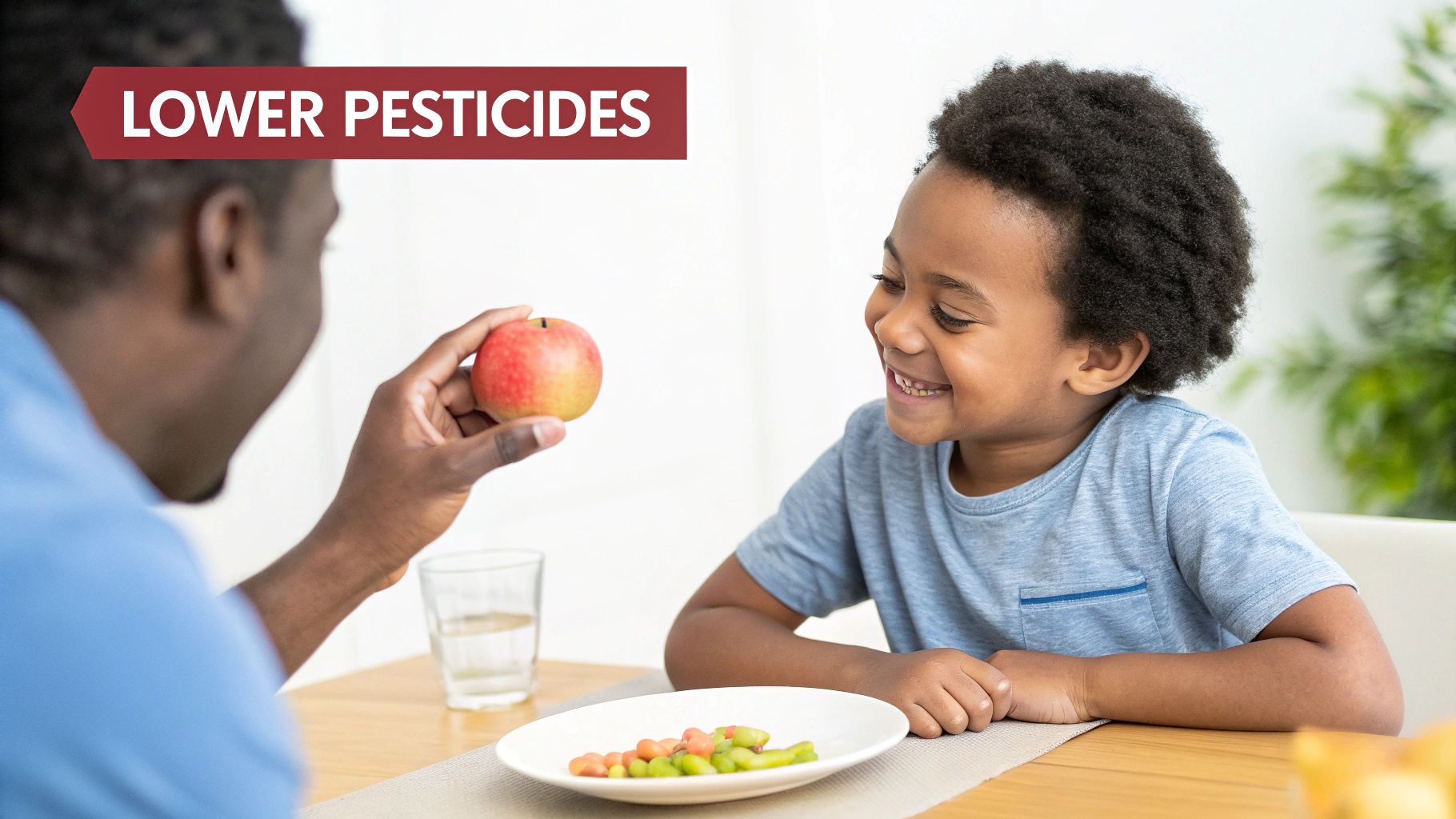
Choosing organic is like giving your family a protective shield against these unwanted chemical guests. It's not about creating fear; it’s about giving you the power of an informed choice, especially when it comes to your little ones. Kids' developing bodies are more vulnerable to potential harm from these residues, which makes minimizing their exposure a smart and reassuring move.
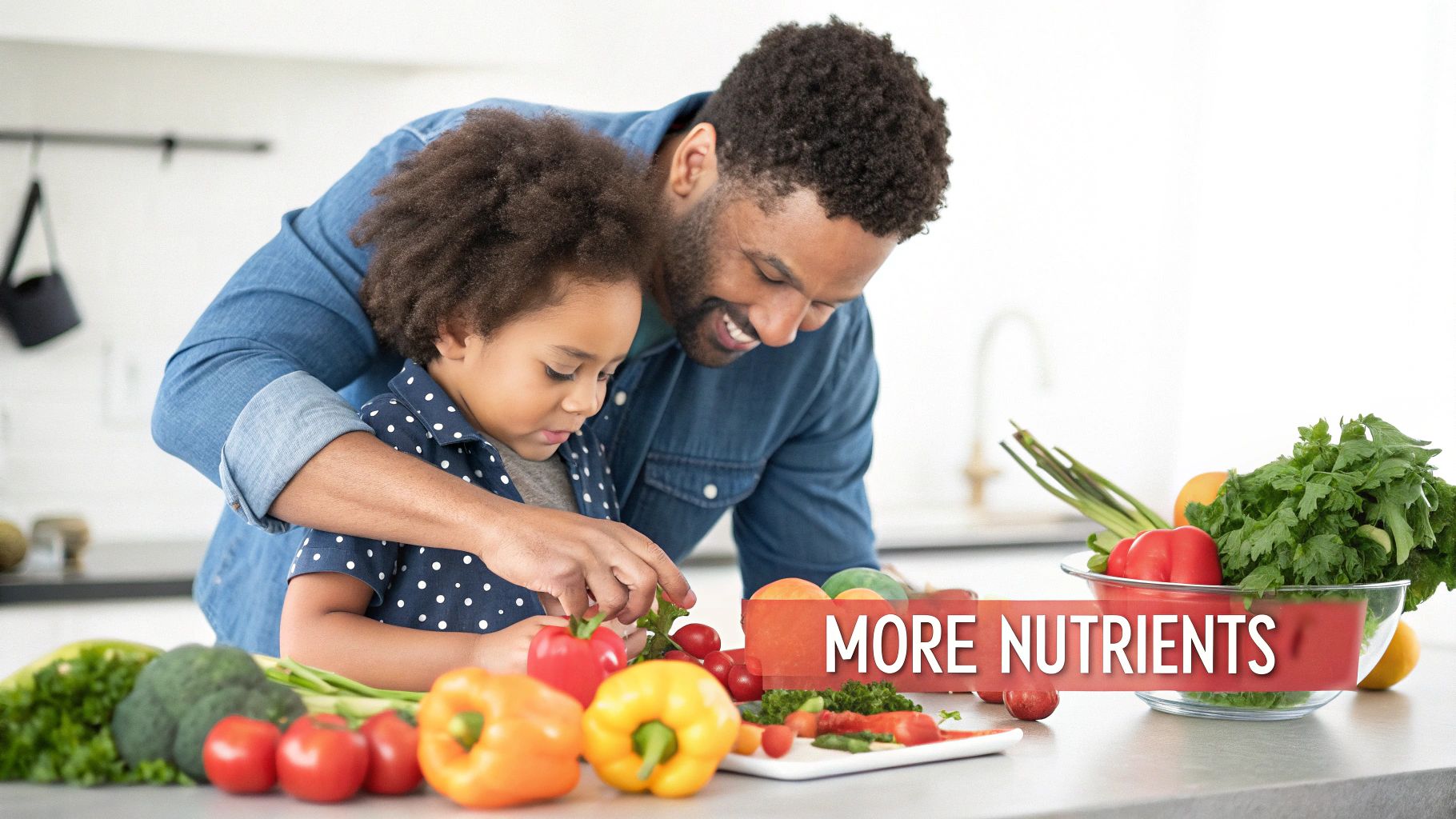
This is where the certified organic label becomes your best friend. It’s a promise—a guarantee, really—that the food has been grown and processed according to strict federal guidelines that ban the use of most synthetic pesticides and fertilizers. That peace of mind is one of the most powerful benefits of going organic.
Why Organic Makes a Real Difference
The difference between conventional and organic produce when it comes to pesticide residue isn't small—it's dramatic. While conventional produce can carry residues from hundreds of different pesticides, organic certification strictly forbids the use of synthetics. This one choice drastically cuts down your family's exposure.
For example, USDA data consistently shows that organic foods have far fewer pesticide residues than their conventional counterparts. One study even found that kids who switched to an organic diet showed a 75% lower level of certain pesticides in their systems. That’s powerful protection for their developing brains.
This isn't just about what you're avoiding; it's about the confidence you gain. Knowing the snacks you pack and the meals you serve are cleaner gives you one less thing to worry about in our busy world.
Kid-Friendly Snacking Without the Worry
Okay, let's get real about snack time. It’s chaotic, it’s constant, and it’s absolutely crucial for keeping hangry kids happy. This is where making a simple switch can have the biggest impact and bring the most peace of mind.
Think about the go-to snacks: kids snack bars, fruit pouches, and little cookies. These are often daily staples. By choosing organic versions of these favorites, you are systematically reducing your child's pesticide load, one delicious bite at a time. It's an easy win!
Choosing an organic kids snack bar isn't just a snack decision; it's a wellness strategy. You're providing clean, simple fuel without the lingering question of chemical residues, making snack time a moment of pure, worry-free enjoyment.
Imagine your child happily munching on a cookie or a snack bar. When it's organic, you know the ingredients were grown with care, focusing on soil health and natural pest control instead of synthetic sprays. It’s a simple, actionable step that makes a world of difference.
Small Swaps Create Big Results
You don’t have to overhaul your entire kitchen overnight to start reaping the benefits. The journey to reducing pesticide exposure can begin with small, intentional choices that add up over time. Give one of these a try this week!
- Prioritize the "Dirty Dozen": Start by swapping conventional versions of produce known to have higher pesticide residues (like strawberries, spinach, and apples) for their organic counterparts.
- Upgrade Daily Staples: Focus on items your family consumes every day. This could be your morning oatmeal, the bread for sandwiches, or even your daily cup of tea. When aiming to reduce pesticide exposure in your diet, consider how even small choices, like opting for organic tea bags grown without synthetic pesticides, can contribute to your peace of mind.
- Make Snack Time Organic Time: Since kids snack so frequently, making this a dedicated "organic zone" is an easy win. Stocking up on organic kids snack bars and cookies ensures their daily fuel is as clean as possible.
Every organic choice is a vote for a cleaner food system and a quieter mind. It transforms grocery shopping from a chore into a powerful act of care for your family's well-being.
The Environmental Perks of Choosing Organic
When you toss an organic snack into your kid’s lunchbox, you're doing more than just satisfying their midday munchies. You're actually casting a powerful vote for a healthier planet. Every choice, from organic kids snack bars to the apples in your fruit bowl, creates a ripple effect that extends far beyond your kitchen.
Let's zoom out a bit. Organic farming isn’t about forcing nature’s hand; it’s about working with it. Think of it as teamwork between the farmer and the earth—a partnership building a more resilient, vibrant world for the next generation.
This partnership with nature is one of the most inspiring benefits of organic eating. It’s about more than just what’s left out (like synthetic pesticides). It’s about what’s actively put in—care, respect for natural cycles, and a deep commitment to sustainability.
Building Healthier Soil and Cleaner Water
Healthy soil is the foundation of our entire food system, and organic farming treats it like gold. Instead of relying on chemical fertilizers, organic farmers use natural methods like composting and crop rotation to build rich, fertile soil that’s teeming with life.
This living soil acts like a giant sponge. It’s better at soaking up and holding onto water, which seriously cuts down on runoff and soil erosion. That's a huge deal, because when soil from conventional farms erodes, it can carry chemical residues into our rivers and lakes, impacting everything that lives there.
By choosing organic, you're supporting farming practices that keep our waterways cleaner and our soil healthier. That organic cookie your child is enjoying started its journey in soil that was nurtured, not depleted.
A Haven for Bees, Butterflies, and Wildlife
Ever noticed how a healthy garden is always buzzing with life? Organic farms are like that, but on a much grander scale. By ditching synthetic pesticides, these farms become safe havens for essential pollinators like bees and butterflies, not to mention birds and other wildlife.
This commitment to biodiversity is a cornerstone of organic agriculture. It’s not just about growing a single crop; it’s about fostering a balanced ecosystem where nature can truly thrive.
The choice to buy organic is a direct investment in biodiversity. You're helping create landscapes where pollinators flourish, ensuring the health of countless plants that depend on them—including many of the fruits and vegetables your family loves.
And this movement is growing. In 2023, the amount of land dedicated to organic farming worldwide swelled to 99 million hectares. That’s a huge increase, signaling a global shift toward more sustainable practices. Supporting this means fostering environments where nature’s hardest workers can do their jobs safely. You can learn more about the growth of global organic agriculture.
Fighting Climate Change from the Ground Up
Here’s a cool fact that might surprise you: healthy soil is one of our best allies in the fight against climate change. The rich, organic matter in well-managed soil has an incredible capacity to capture and store carbon from the atmosphere. It's a process called carbon sequestration.
While some conventional farming practices can release carbon into the air, organic farming does the opposite. By focusing on soil health, organic farms actually pull carbon out of the atmosphere and lock it safely underground.
So, when you're choosing a snack, remember what that choice supports:
- Less Chemical Runoff: Keeping our precious water resources protected.
- Thriving Ecosystems: Providing a safe home for bees, butterflies, and other wildlife.
- Carbon Storage: Helping to combat climate change just by building healthy soil.
That simple organic kids snack bar in your pantry is more than just a tasty treat. It’s a small but meaningful connection to a global movement building a cleaner, healthier world for everyone. It's proof that our daily choices really do make a world of difference.
Fueling Your Kids with Smart Organic Snacks
Snack time. For parents, these two words can bring on a mix of dread and desperation. It’s that daily dance between what your kids actually want (usually something bright, sugary, and shaped like a cartoon character) and what you want for them (something that nourishes their growing bodies).
But what if you could end the snack-time struggle for good?
The secret is to see snacking not as a battle, but as a fun, nourishing adventure. This is where smart, organic snacks become your ultimate parenting hack. By choosing snacks with clean, simple ingredients, you’re giving them delicious fuel that supports everything from playground sprints to focused homework time—all without the junk.
Choosing organic snacks, like kids' snack bars and cookies made with real, plant-based ingredients, is one of the easiest wins you can score for your family. It’s a simple way to embrace the benefits of organic eating without feeling like you have to overhaul your entire kitchen overnight.
Decoding Snack Labels for Easy Wins
Walking down the snack aisle can feel totally overwhelming. Bright packages scream things like "all-natural" and "made with real fruit," but a quick flip to the ingredient list often tells a different story. Learning to read labels is your superpower in finding the truly good stuff for your kids.
The good news? It's way simpler than you think. You don't need a nutrition degree to spot a great snack. Just look for a short, recognizable ingredient list. If you can't pronounce it, or if it sounds like it came from a science lab, it's probably best to put it back.
This is where the beauty of organic snacks really shines. When you choose a certified organic snack, you're getting a product made without synthetic pesticides, GMOs, or artificial additives. It’s a shortcut to cleaner eating that gives you peace of mind with every bite.
For instance, a quality organic kids' snack bar might list ingredients like dates, sunflower seed butter, and organic berries. A conventional bar, on the other hand, might have a laundry list of things like high-fructose corn syrup, artificial flavors, and a rainbow of synthetic color dyes. The difference is clear, and so are the benefits for your kid's well-being.
What to Look For and What to Avoid
To make your next grocery run a breeze, here’s a quick cheat sheet for picking the best snacks for your crew.
Look For These Snack Superstars:
- Simple, Plant-Based Ingredients: Think organic oats, real fruits, nuts, and seeds. These provide sustained energy, fiber, and essential nutrients.
- Certified Organic Seal: This is your guarantee that the snack meets strict standards for clean ingredients and farming practices.
- Naturally Sweetened: Snacks sweetened with real fruit, like dates or apples, offer amazing flavor without the sugar crash that comes from refined sugars.
Avoid These Common Culprits:
- Artificial Additives: Steer clear of artificial colors (like Red 40), flavors, and preservatives. They offer zero nutritional value.
- Excess Sugar: Always check the sugar content. So many "healthy" kids' snacks are packed with added sugars that lead to those dreaded energy spikes and crashes.
- Highly Processed Ingredients: Things like hydrogenated oils and refined flours are red flags. Stick to whole-food ingredients as much as you can.
Making these simple swaps helps build a foundation of healthy eating habits that can last a lifetime. For even more guidance on what to pack, you can find tons of ideas for healthy snacks for kids in our snack guide.
Making Snack Time a Delicious Adventure
Honestly, the best way to get kids excited about healthy eating is to make it fun! Turn snack time into an opportunity for discovery and enjoyment. Instead of just handing over a snack, get them involved.
Let them pick out their favorite flavor of organic kids' snack bars for the week, or have them help you arrange fruit and organic cookies on a plate to look like a smiley face. When kids feel like they’re part of the choice, they’re far more likely to embrace it. Brands like Skout Organic make this easy, with a variety of kid-approved flavors in their snack bars and soft-baked cookies that taste like a treat but are packed with goodness.
By making simple, informed swaps, you can transform snack time from a stressful negotiation into a joyful, nourishing moment. You're not just feeding your kids—you're fueling their potential, one delicious, organic snack at a time.
Making Organic Work for Your Budget and Lifestyle
Let's be real—the idea of going organic is exciting, but for most of us, the first question that pops up is about the price tag. It's easy to picture a grocery bill that skyrockets, but making this lifestyle work for your family is more doable than you might think. This isn't about a perfect, all-or-nothing pantry overhaul. It’s about making smart, simple swaps that fit your life and your budget.
The key is to focus on small changes where they count the most. You don't have to switch everything to organic overnight. Think of it as a gradual, joyful upgrade to how your family eats—one that keeps both wellness and your wallet in mind.
Smart Strategies for Affordable Organic Living
Making organic eating work is all about having a game plan. With a few savvy tips, you can get all the perks without the price-tag stress. It starts with knowing where to focus your energy and your dollars for the biggest impact.
One of the best tools in your arsenal is the "Dirty Dozen" list. This guide calls out the conventional produce with the highest levels of pesticide residue. By focusing your organic budget on these items, you get the most bang for your buck. For produce on the "Clean Fifteen" list, you can feel more comfortable opting for conventional versions.
Here are a few more practical tips to get you started:
- Buy in Season: Seasonal produce isn't just fresher and way more flavorful—it's also much easier on your wallet. Hit up a local farmers' market to connect with growers and score the best deals.
- Embrace Meal Planning: Planning your meals for the week is a total superhero move. It slashes food waste (a major money drain) and helps you avoid those last-minute, pricey takeout orders.
- Look for Sales and Coupons: Just like with any other groceries, keep an eye out for sales on organic products. Lots of stores have dedicated sections or weekly flyers for organic deals.
Remember, the goal is progress, not perfection. Every organic choice is a win for your family. Start with what feels manageable and build from there—you’ll be surprised at how quickly it becomes second nature.
Convenience Without Compromise for Busy Families
For busy parents, convenience is everything. This is especially true when it comes to the never-ending demand for snacks. The afternoon rush hits, and you need something quick, healthy, and kid-approved, stat. This is where smart organic choices can save the day (and your sanity).
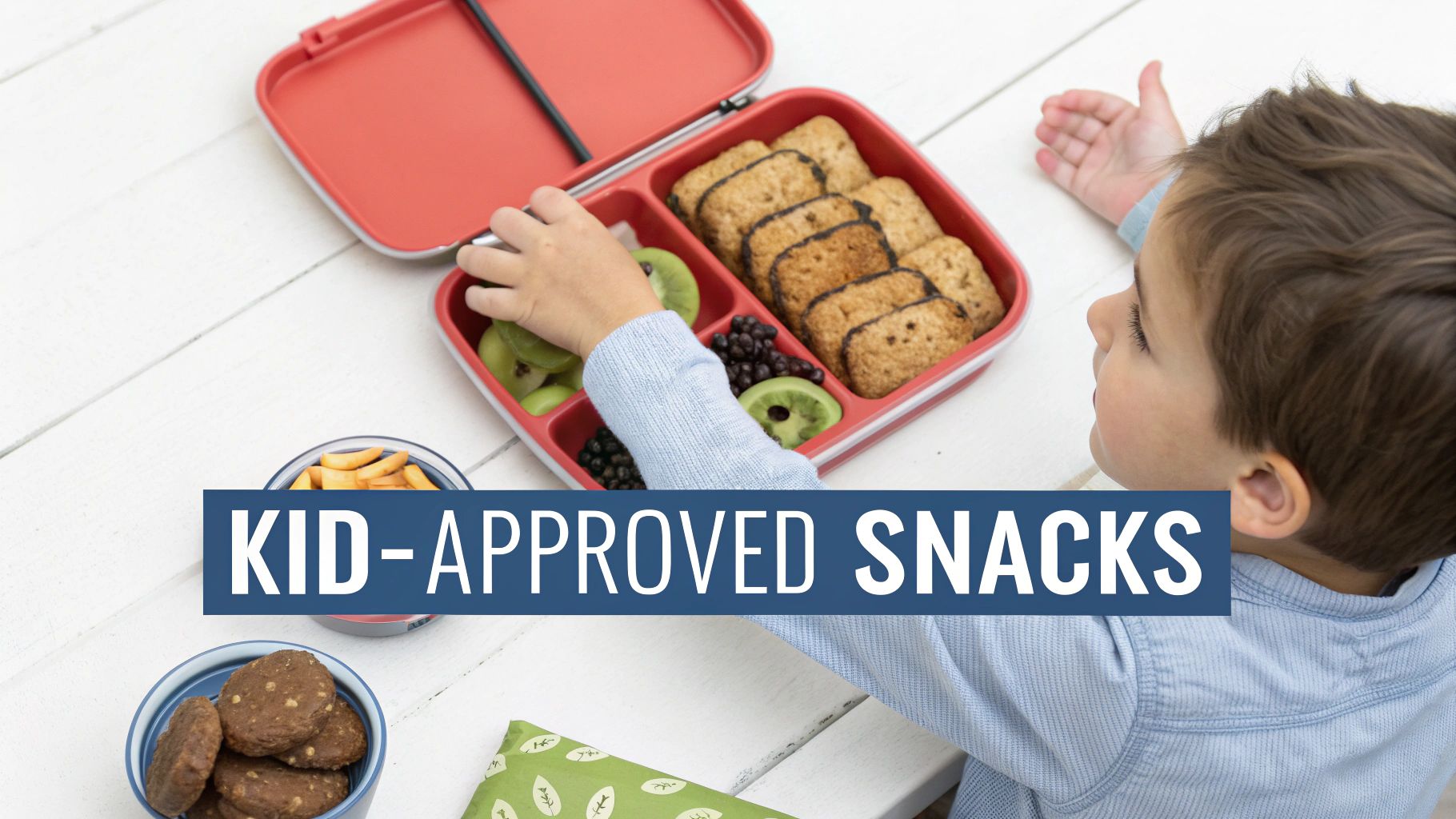
Stocking your pantry with high-quality organic snacks, like kids' snack bars and cookies, is an investment in stress-free afternoons. You get the grab-and-go ease you need, without the artificial ingredients or extra sugar you’re trying to avoid. Being prepared with these options means you won’t have to reach for less-healthy convenience foods when you’re in a pinch. Plus, knowing what you're buying is key; take a moment to learn how to read food labels to become a pro at spotting the truly good stuff.
Services like Skout Organic's customizable snack boxes are a total game-changer. You can build a box with your kids' favorite flavors and have it delivered right to your door. This not only guarantees you always have healthy options on hand but can also offer savings through subscription models, making organic snacking both simple and budget-friendly.
Common Questions About Organic Eating
Making the switch to organic can bring up a few questions, especially when you're trying to do what’s best for your family. Let's tackle some of the most common ones to give you total confidence in your choices.
One big question is whether washing produce is enough to get rid of pesticides. While washing is super important and does remove surface residues, it can’t eliminate systemic pesticides—those that are absorbed into the plant itself.
Choosing certified organic is the surest way to minimize your family’s exposure.
Making Organic Snacking Easy and Fun
So, how do you even start with organic snacks for your kids? The best advice is to make it a fun adventure, not a chore. You don't need to clear out the pantry overnight!
A great first step is to swap just one of their regular snacks for a clean, organic version. This is where organic kids snack bars and cookies are a parent's best friend. They're designed to be delicious and appealing, so the switch feels like a treat, not a sacrifice. Why not start with something easy like an organic chocolate chip cookie or a berry snack bar?
Pro-Tip: Get your kids involved in the process! Let them pick a new flavor of organic snack bar to try or help you unbox a delivery. When they have a say in the choice, they get excited about their new, healthier snacks.
This small change makes a huge difference. By choosing snacks with simple, recognizable ingredients, you’re providing fuel without the artificial additives. If you're curious about the specifics, you can learn more about what certified organic means and why that seal matters so much.
Ultimately, it’s about making small, joyful swaps that build healthier habits for life.
Ready to make snack time simple, delicious, and organic? Explore Skout Organic's collection of kid-approved snack bars and cookies. Build your custom snack box today!