 Kids Snack Bars
 Soft-Baked Cookies
 Protein Bars
 Build A Box
 Shop All





Let's be real—reading food labels is your secret weapon in the grocery store. It's about looking past the flashy promises on the front of the box and getting to the truth on the back. Once you know what to look for—specifically the serving size, calories, and sneaky culprits like sugar, sodium, and fat—you can turn confusing shopping trips into clear, confident decisions for your family. Ready to become a label-reading ninja? Let's go!
Your Guide to Understanding Food Labels
Think of a food label as a cheat sheet hidden in plain sight. This guide is your decoder ring. We're going to skip the complicated jargon and get straight to what matters for making smart, healthy choices every single time. And trust me, it's easier than you think.
This skill is more important than ever. A 2023 survey found that a whopping 83% of American consumers read food labels before buying something. It just goes to show that more and more of us want to know what's really in our food.
The 'Big Three' At a Glance
When you're short on time, focusing on three key areas can give you a quick snapshot of a product's nutritional value. This is my go-to method for making fast, informed decisions in a busy aisle. Give it a try on your next shopping trip!
| Nutrient | What to Look For | Why It Matters |
|---|---|---|
| Serving Size | The very first line. Is it realistic? A small bag of chips might be 2.5 servings. | All other numbers on the label are based on one serving. If you eat the whole package, you have to multiply everything. Sneaky, right? |
| Added Sugars | Listed under "Total Carbohydrates." Aim for single digits per serving for snacks. | These are sugars added during processing, not natural ones from fruit or milk. They offer empty calories and can lead to those dreaded sugar crashes. |
| Sodium | Check the milligrams (mg) and the % Daily Value (%DV). Less than 5% DV is low; over 20% DV is high. | High sodium intake is linked to high blood pressure. Processed and packaged foods are often loaded with it. |
Mastering these three points alone will drastically improve your ability to quickly vet products and choose healthier options for your family.
Navigating the World of Kids' Snacks
Okay, let's talk about the kids' snack aisle. It’s a battlefield for parents—a dizzying maze of cartoon characters and bold claims. Snack bars and cookies love to shout about being "made with real fruit" or being a "good source of whole grains."
But when you flip that box over, the real story often unfolds. That's where knowing how to read a food label becomes your superpower. It helps you cut through the marketing fluff and see what you're actually feeding your little ones. A classic example? Those kid-friendly snack bars that look wholesome but have more sugar than a cookie. Yikes!
The goal isn't perfection; it’s about making consistently better choices. Here’s what you can do once you become a label-reading pro:
- Spot Hidden Sugars: You’ll learn to recognize the many different names for sugar (like high-fructose corn syrup or dextrose) that companies use.
- Understand Portion Distortion: You'll immediately see how a small pouch of fruit snacks can actually be two or three servings, tripling the sugar content.
- Prioritize Real Ingredients: A quick scan of the ingredients list will help you pick snacks that start with whole foods, not processed fillers and additives.
Making It a Family Affair
Why not get the kids involved? Turning grocery shopping into a game is a brilliant way to teach healthy habits early on. Challenge them to find a cereal with less than 10 grams of sugar or a snack where a whole grain is the very first ingredient.
By teaching them now, you’re not just picking a healthier snack for today; you’re equipping them with a lifelong skill to navigate their own food choices down the road. It’s a foundational lesson in self-care.
This process empowers you to find genuinely healthy options that your kids will still get excited about. And believe it or not, these label-reading skills are pretty universal. You can even apply the same principles when you learn how to read dog food labels like a pro.
Next, we'll break down the Nutrition Facts panel piece by piece. You'll learn exactly where to look and how to interpret the numbers quickly, even when you've got a toddler in the cart and a long checkout line ahead.
Mastering the Nutrition Facts Panel
Welcome to the mission control of your food: the Nutrition Facts panel. This little black-and-white box is your dashboard, giving you all the vital stats you need to make a smart call. Let's break it down together, turning confusion into confidence.
This is where you get the real story, especially when it comes to kids' snacks. The front of the box might show happy cartoon animals and promises of "wholesome goodness," but the back tells you if it's actually fuel or just a sugar bomb in disguise.
Start with Serving Size
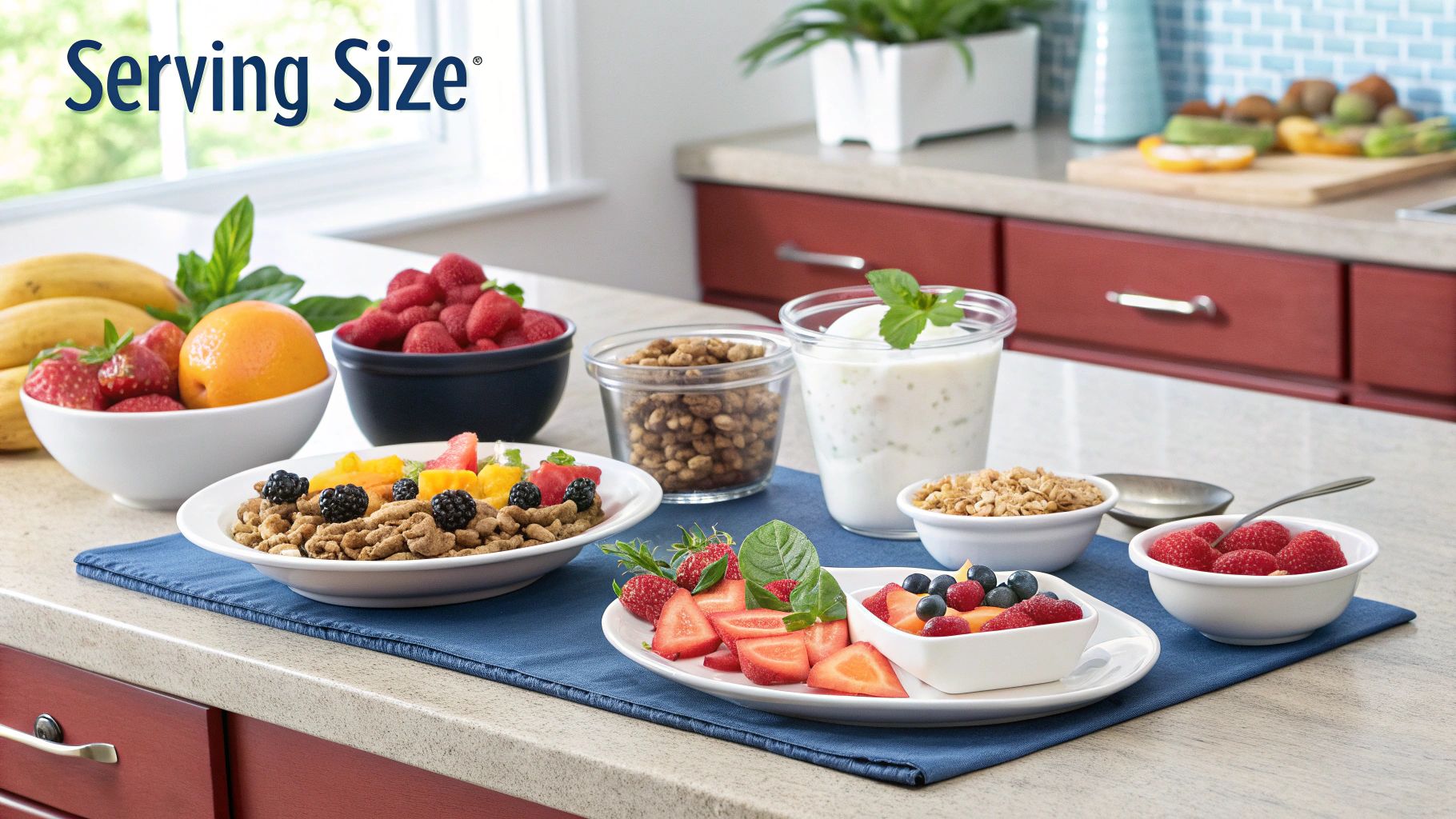
The very first thing to check is the serving size and the servings per container. This is the most overlooked—and most powerful—piece of information on the entire label. Why? Because every single number below it is based on that one single serving.
Imagine you hand your child a small bag of mini cookies. The label says 150 calories and 10 grams of sugar per serving. Sounds okay, right? But then you spot it: "Servings per container: 2."
If your child eats the whole bag (and let's be honest, they probably will), you have to double everything. That's 300 calories and 20 grams of sugar. Suddenly, that "small snack" has more sugar than a doughnut. See? Sneaky!
The Big Players: Macronutrients
Once you've nailed the serving size, your eyes should drop down to the macronutrients. This is where you'll find the details on fats, carbohydrates, and protein. Don't let the terms intimidate you; it's simpler than it sounds.
Here's a quick look at how a nutrition panel breaks down this information.
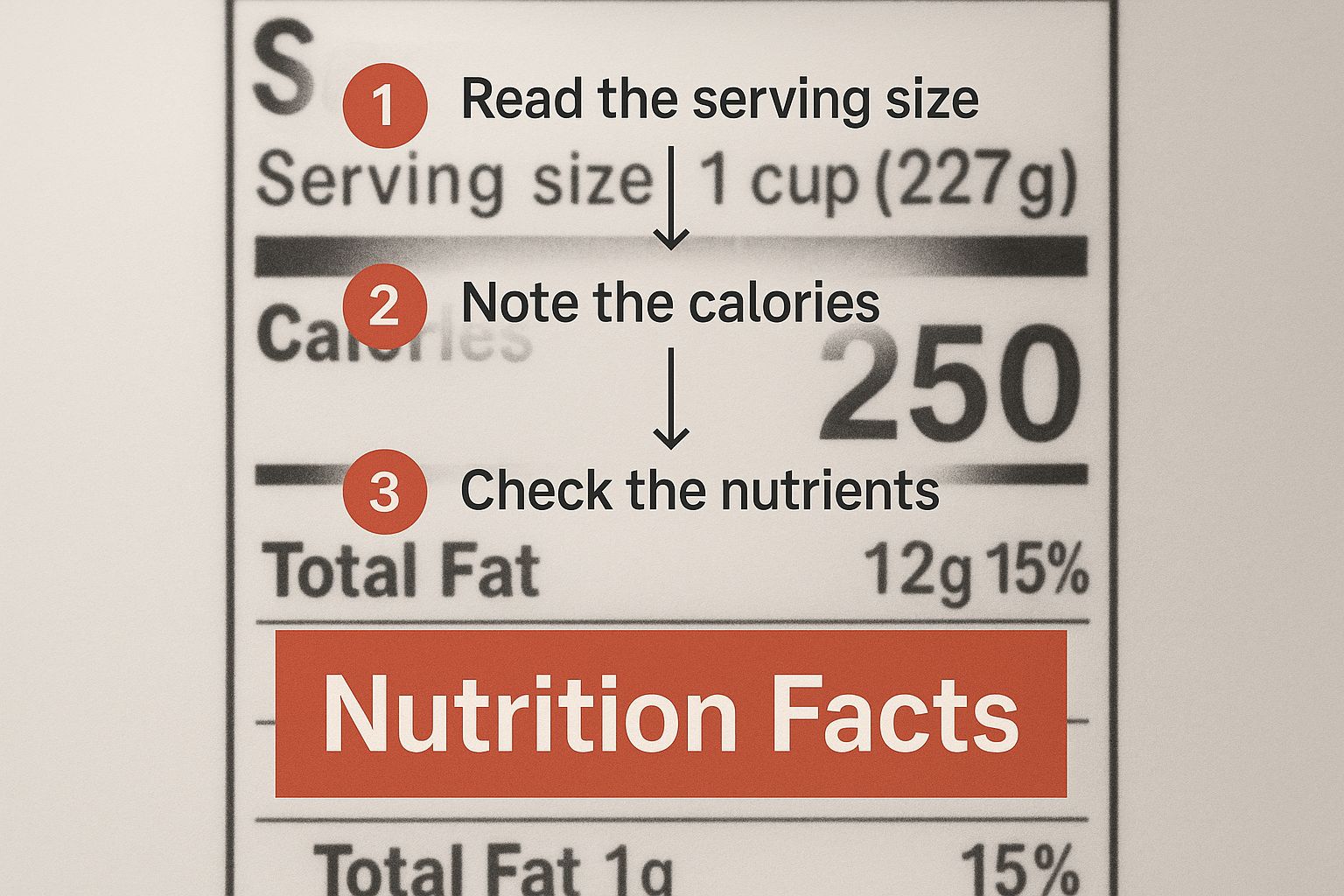
This visual roadmap shows how information flows from the big picture (calories) to the fine details (micronutrients).
You'll see Total Fat broken down into Saturated Fat and Trans Fat. Your mission, should you choose to accept it, is to keep trans fat at zero grams and saturated fat on the lower side.
Next up is Total Carbohydrate, which includes Dietary Fiber and Total Sugars. Fiber is your friend—it keeps you full and supports digestion. Here’s a great suggestion: aim for at least 3 grams per serving in snacks like bars and crackers.
Unmasking Added Sugars
This brings us to the most important line item for any parent navigating the snack aisle: "Includes Added Sugars." This is a game-changer. It separates the naturally occurring sugars (like those in milk or fruit) from the sugars dumped in during manufacturing, like high-fructose corn syrup, cane sugar, or dextrose.
Think of it this way: The sugar in a plain yogurt comes from lactose (natural). But the sugar in a strawberry-flavored kids' yogurt is mostly added sugar. This is the stuff you want to minimize. For kids' snacks, a great rule of thumb is to aim for single-digit grams of added sugar per serving.
This one line helps you compare two "healthy" looking snack bars and instantly see which one is basically a cookie in disguise. If you're looking for great snack options, our guide on the best organic protein bars can help you find choices that prioritize protein over empty sugars.
The 5/20 Rule: A Simple Shortcut
Feeling overwhelmed? Here's a trick to quickly judge any food: the 5/20 rule. This applies to the Percent Daily Value (%DV) column on the right side of the label.
- 5% DV or less of a nutrient is considered low. This is great for things you want to limit, like saturated fat, sodium, and added sugars.
- 20% DV or more of a nutrient is considered high. This is fantastic for nutrients you want more of, like dietary fiber, Vitamin D, and iron.
Let's put it into practice. You're comparing two yogurts. Yogurt A has 4% DV for added sugar and 20% DV for calcium. Yogurt B has 25% DV for added sugar and 10% DV for calcium. Using the 5/20 rule, Yogurt A is the clear winner for a healthy snack. It’s an easy, powerful shortcut.
To further hone your skills in analyzing dietary information, you can learn how to read nutrition labels like an expert and make even more confident choices for your family.
Decoding the Ingredient List
If the Nutrition Facts panel tells you what's in your food, the ingredient list tells you the how. This is where the real story is told, cutting straight through the flashy marketing claims on the front of the box. Honestly, it’s my favorite part of the label.
The most important rule here is simple: ingredients are listed in descending order by weight. Whatever the product contains most of, you'll find it listed first. This one little fact is a game-changer, especially when you’re standing in the snack aisle trying to make a quick, healthy choice.
Picture this: you're comparing two different snack bars for your kids. The first one starts with "Rolled Oats," but the second one's first ingredient is "Sugar." Right away, you know which one offers whole-grain fuel and which is just a candy bar in disguise. It makes sorting through the options so much faster.
The Great Sugar Detective Game
Speaking of sugar, this is where things can get a little tricky. Manufacturers have gotten pretty crafty at hiding it. You won’t always see the word “sugar” right at the top, because they often use a tactic called "ingredient splitting." They’ll use smaller amounts of several different sweeteners so none of them have to be listed as the main ingredient.
But a smart shopper like you won't be fooled. It’s time to play detective and hunt for sugar's many aliases.
Here are some of the usual suspects to watch out for:
- Syrups: Corn syrup, high-fructose corn syrup, rice syrup, maple syrup.
- Words ending in "-ose": Dextrose, fructose, sucrose, maltose.
- "Natural" Sounding Sugars: Cane juice, evaporated cane juice, agave nectar, honey, molasses.
When you spot three or four of these scattered throughout the list, you can bet the total sugar content is sky-high, even if a whole grain is listed first. Make it a game with your kids—see how many secret sugar names you can find on a box!
By learning to spot these hidden sugars, you're not just making a healthier choice in the moment. You're teaching your kids a critical skill for understanding what they eat for the rest of their lives.
Translating the Mystery Ingredients
Beyond sugars, ingredient lists can sometimes look like a science experiment, filled with long, unpronounceable words. Don't let that intimidate you! Many are just vitamins, minerals, or harmless stabilizers. However, some are red flags for highly processed foods.
For instance, keep an eye out for terms like "artificial flavors," "Red 40," or "partially hydrogenated oil" (which is a source of trans fat). A good rule of thumb I always follow is to choose products with shorter ingredient lists filled with words you actually recognize. If it sounds like something you’d find in your own kitchen—like oats, dates, cinnamon, or almonds—you're on the right track.
This habit is more common than you might think. Over 75% of consumers say they check ingredients when buying a new product. As this detailed study on consumer habits shows, reading labels is strongly linked to healthier diets, especially for young adults who are building lifelong eating patterns.
Finding Allergen Information Fast
For families managing food allergies, the ingredient list is non-negotiable. Thankfully, regulations make this part much easier. The eight major food allergens (milk, eggs, fish, shellfish, tree nuts, peanuts, wheat, and soybeans) must be clearly identified.
You'll usually find this information in one of two places:
- In parentheses after the ingredient itself: For example, "whey (milk)."
- In a separate "Contains" statement: This is a bolded line right below the list, like, "Contains: Wheat, Milk, and Soy."
This makes scanning for potential allergens quick and efficient, giving you peace of mind. By mastering the ingredient list, you become the ultimate gatekeeper of your pantry, ensuring every snack is as wholesome as it is delicious.
Seeing Past Health Claims and Buzzwords
Think of the front of a food package as its dating profile—it’s designed to show off its best side, not the whole truth. This is where marketers use flashy buzzwords and health claims to grab your attention. This section is your defense against that slick marketing, helping you see past the hype and rely on the facts on the back.
Let's walk through the kids' snack aisle. It's a sea of cheerful packages plastered with phrases like "Made with real fruit!" or "All-Natural Goodness." While these sound fantastic, they can be incredibly misleading. A cookie might be labeled "low-fat," but flip it over, and you could find it’s packed with extra sugar and refined flours to make up for the missing fat and flavor.
Unpacking Common Health Claims
Marketers know exactly which words make us feel good about our choices. "Natural," "Organic," "Sugar-Free"—these terms are powerful. But what do they actually mean according to government regulations? Often, the definitions are much looser than you'd think.
The term "Natural," for example, has a surprisingly vague definition from the FDA. It generally just means nothing artificial or synthetic has been included. It doesn't stop a product from being highly processed or loaded with things like high-fructose corn syrup. It’s a perfect example of a word that feels healthy but offers very little nutritional guarantee.
On the other hand, the "Organic" label is highly regulated. For a snack bar to be certified organic, it must meet strict federal standards for how its ingredients are grown and processed. This is a great reminder that not all buzzwords are created equal. Understanding why organic certifications matter can help you decide when it's worth seeking out that specific seal.
Here's the key takeaway: The front of the box is for selling; the back of the box is for telling. Always trust the Nutrition Facts panel and the ingredient list over any splashy claim on the front.
Buzzword vs Reality: What Health Claims Really Mean
Let's break down some of the most common claims you'll see in the snack aisle and reveal the marketing traps to watch out for. Think of this table as your secret weapon against confusing labels.
| Health Claim | What It Officially Means | The Marketing Trap |
|---|---|---|
| "Multigrain" or "Made with Whole Grains" | The product contains more than one type of grain. It does not mean the grains are whole. | A "multigrain" cracker can be made almost entirely of refined white flour with just a tiny amount of other grains mixed in. Always check the ingredient list for the word "whole" in the first ingredient. |
| "Low-Fat" | The product has 3 grams of total fat or less per serving. | To compensate for the lack of fat, companies often pump these products full of sugar, salt, and refined carbs to make them taste good. A low-fat cookie can have more sugar than its full-fat counterpart. |
| "Sugar-Free" | The product contains less than 0.5 grams of sugar per serving. | This often means the product is sweetened with artificial sweeteners or sugar alcohols, which can cause digestive issues for some people, especially kids. It doesn't mean the product is low in calories or carbohydrates. |
| "No Sugar Added" | No sugar or sugar-containing ingredients were added during processing. | A product like fruit juice concentrate can be labeled "no sugar added" but still be incredibly high in natural sugars and calories. Always check the "Total Sugars" on the nutrition panel for the full picture. |
This knowledge transforms you from a passive consumer into an empowered shopper. You can walk down any aisle, ignore the noisy promises on the packaging, and use your new skills to find the foods that truly align with your family's health goals.
A Practical Guide for The Kids Snack Aisle
Alright, let's head into what might be the most overwhelming territory in the entire grocery store: the kids' snack aisle. It’s a full-on sensory assault of bright packaging, cartoon characters, and exciting claims that often act as clever camouflage for sky-high sugar and minimal nutrition.
This is where your new label-reading skills become your superpower.
This isn’t about demonizing snacks or striving for some impossible standard of perfection—no busy parent has time for that. It's about making small, informed upgrades. It’s about knowing how to quickly glance at two granola bars and confidently pick the one that offers real, sustained energy, not just a sugar crash waiting to happen.
The Side-by-Side Snackdown
Let’s walk through a classic scenario. You’re trying to choose between two popular kids' snack bars. On the surface, they both seem fine. The boxes feature happy kids, vibrant colors, and buzzwords like "made with whole grains." But the real story is always on the back.
Bar A: The Cartoon Character Favorite
- Serving Size: 1 bar (24g)
- Added Sugars: 12g
- First Ingredient: Enriched Flour
Bar B: The Less Flashy Option
- Serving Size: 1 bar (28g)
- Added Sugars: 7g
- First Ingredient: Whole Grain Oats
Just a quick scan reveals a huge difference. Bar A's first ingredient isn't even a whole grain, and its 12 grams of added sugar is a major red flag for such a tiny bar. Bar B, on the other hand, leads with actual whole grains and keeps the added sugar well under our target of 8 grams.
That simple comparison takes less than ten seconds, but it empowers you to make a much better choice for your kids.
Your Snack Aisle Action Plan
Navigating this aisle feels a lot less chaotic when you have a clear mission. Instead of getting wooed by the marketing on the front, just flip the box over and look for these key markers of a genuinely better snack.
- Spot the Whole Grains: Check the ingredients list first. The very first ingredient should have the word "whole" in it, like "whole wheat flour" or "whole oats." Don't get tricked by terms like "multigrain," which often just means a mix of refined flours.
- Cap the Added Sugars: Set a mental rule for yourself: aim for snacks with fewer than 8 grams of added sugar per serving. This one guideline will instantly help you filter out a massive number of candy-like bars and cookies.
- Find the Fiber: Look for at least 2-3 grams of dietary fiber per serving. Fiber is what helps kids feel full and satisfied, which means they won't be asking for another snack 20 minutes later.
- Scan for Recognizable Ingredients: A shorter ingredient list filled with words you actually recognize (like dates, almonds, cinnamon) is almost always a better sign than a long list of chemical-sounding additives. For more ideas, our guide to healthy snacks for kids can help inspire your next grocery run.
The goal isn't to eliminate treats. It’s to elevate the everyday snack. By focusing on whole ingredients and lower sugar, you’re providing fuel for school, sports, and play—not just a quick, empty burst of energy.
A Global Shift Toward Label Literacy
This focus on understanding our food isn't just a trend; it's a global movement. In South Korea, for example, the awareness and use of food labels have climbed steadily for nearly a decade. Research shows that comprehension of these labels saw a huge jump during the pandemic, suggesting that health concerns pushed people everywhere to get more serious about their food choices. You can learn more about these fascinating insights into global food label trends and how they reflect a worldwide desire for transparency.
Making these informed choices for your kids sets a powerful example. You’re not just packing a lunchbox; you’re teaching them how to read labels and make smart decisions for themselves as they grow up. Each time you flip over a box, you're reinforcing a lifelong habit of looking beyond the hype to find real nourishment. One small choice at a time really does add up.
Your Top Food Label Questions, Answered
Okay, so you're getting the hang of the nutrition panel. But then you get to the grocery store, and it's a whole different ball game. It’s one thing to know the rules, but another to use them when you're caught between two different snack bars, both screaming "healthy" from the box.
Let's walk through some of the most common head-scratchers I hear from parents. Think of this as your cheat sheet for making fast, confident choices in the middle of a chaotic shopping trip.
I’m in a Hurry. What’s the Most Important Thing to Look At?
If you’ve only got a few seconds, zero in on two things: serving size and added sugars.
First, glance at the serving size. Is it actually realistic for your kid? That tiny bag of animal crackers might technically be two servings. If they eat the whole thing (and let's be real, they will), you have to double all the numbers on the label.
Next, find the "Includes Added Sugars" line. This is your secret weapon. For kids' snacks, I always tell parents to aim for single-digit grams. If a small granola bar has 12 grams of added sugar, it’s basically a candy bar in disguise.
How Can I Be Sure a Product Is Actually Whole Grain?
Don't let the healthy-looking brown color of a bread loaf or a box of crackers fool you. Marketing claims like "made with whole grains" can be super misleading. The only real way to know is to flip the box over and scan the ingredient list.
The very first ingredient needs to have the word "whole" in it. Look for things like "whole wheat flour" or "whole oats." If the first ingredient is "enriched wheat flour," you're getting a refined grain and missing out on all that good fiber.
Are "Sugar-Free" and "No Sugar Added" the Same?
This is a classic trap, and nope, they mean completely different things. It’s one of the most common points of confusion, especially with kids' snacks and drinks.
Here’s the breakdown:
- Sugar-Free: This just means the product has less than 0.5 grams of sugar per serving. The catch? It’s often loaded with artificial sweeteners or sugar alcohols to get that sweet taste.
- No Sugar Added: This tells you that no extra sugar was thrown in during the manufacturing process. But the item itself could still be naturally high in sugar, like 100% fruit juice is.
Bottom line? Always check the "Total Sugars" line on the nutrition panel to get the full story.
At Skout Organic, we believe snacking should be simple and delicious, period. We take the guesswork out of reading labels by using recognizable, organic ingredients to create snacks your whole family will love. Explore our collection of kids' bars and cookies today!
Article created using Outrank