 Kids Snack Bars
 Soft-Baked Cookies
 Protein Bars
 Build A Box
 Shop All





Ever feel like you need a secret decoder ring just to read a food label? You’re not alone. When you’re rushing through the snack aisle, trying to find something healthy your kids will actually eat, labels like "non-GMO" can feel like just another piece of jargon to figure out.
So, what does it really mean? Let's make it super simple. Non-GMO means a food product was made without any ingredients that have been genetically modified in a lab. Think of it as food grown the old-fashioned way, using the same kinds of traditional cross-breeding methods farmers have relied on for centuries. It's like your grandma's garden, but on a bigger scale!
Decoding the Non GMO Label on Your Snacks
Let’s be honest, figuring out what's in your kids' snacks can feel like a full-time job. Between school, sports, and meltdowns over missing toys, the last thing you need is a food label that reads like a science textbook.
So, let's break down what "non-GMO" really means for your pantry and why it's a game-changer for snack time.
Imagine a classic brownie recipe that’s been passed down for generations. The ingredients are simple and familiar—flour, sugar, eggs. That’s your non-GMO snack. Now, picture a version where the corn used for the cornstarch was scientifically altered in a lab to resist pests. That’s where GMOs (Genetically Modified Organisms) come into play.
Keeping Snack Time Simple (and Fun!)
For busy parents, the non-GMO label is often a shortcut to peace of mind. When you grab a non-GMO kids snack bar or a pack of cookies, you're choosing products made from ingredients that haven't had their DNA tweaked in a lab. It’s about sticking closer to nature and keeping things simple, which is a total win when you're fueling those little bodies for big adventures.
This preference for transparency isn't just a passing trend. Parents everywhere are driving a massive shift in the food industry.
The global non-GMO food market was valued at USD 68.5 billion and is projected to skyrocket to USD 109.3 billion by 2030. This explosive growth reflects a huge consumer demand for natural, unmodified foods, especially from health-conscious families.
This isn’t about being perfect; it's about being informed. When you see that non-GMO label on your kid's favorite snack bars, it’s an invitation to feel more confident about the fuel you’re giving your family. Think of it as a helpful signpost pointing you toward ingredients you can recognize and trust. You can explore more about this growing market trend and what it means for consumers by checking out the latest research about the non-GMO food market.
Navigating the Labels: GMO vs. Non-GMO vs. Organic
The snack aisle can feel like a pop quiz, with a sea of labels all vying for your attention. What’s the real difference between non-GMO and organic? More importantly, can a snack bar or cookie be one but not the other?
Let's clear up the confusion and make you a label-reading champion. Ready?
Think of it like this: Organic is the all-star student who aces every single subject. To earn that coveted "USDA Organic" seal, a product has to meet a long list of super-strict standards. This means no GMOs, of course, but it also means no synthetic pesticides, herbicides, or chemical fertilizers. It's the whole package of clean eating.
On the other hand, Non-GMO is the specialist who excels in one key area—avoiding genetic modification. A product with the Non-GMO Project Verified seal has gone through rigorous testing to ensure it doesn't contain any genetically modified ingredients. However, it might still be grown with conventional pesticides.
Understanding the Key Differences
So, can a snack be non-GMO without being organic? Absolutely.
It’s a crucial distinction for parents trying to match their shopping list to their family’s values. All organic products are non-GMO by definition, but not all non-GMO products are organic.
This visual breaks down the core concepts to help you see exactly how they differ.
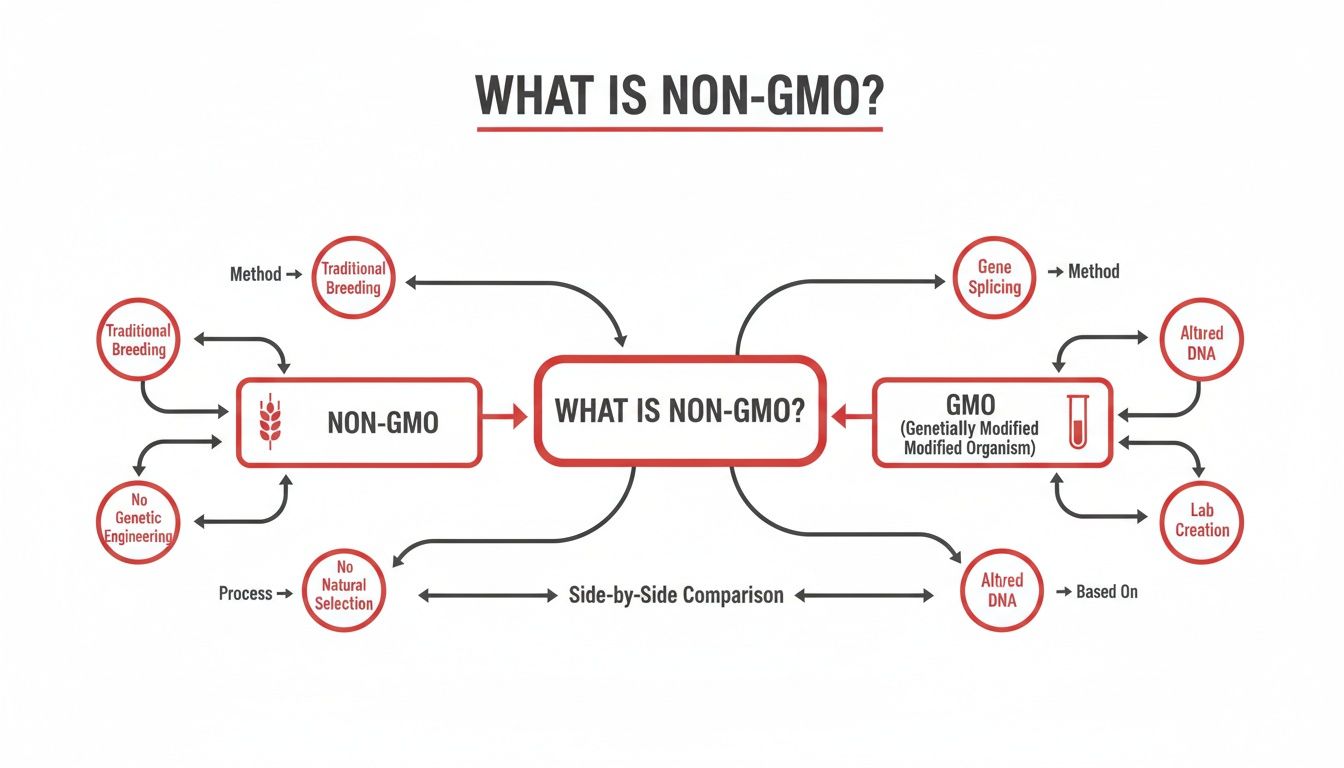
As you can see, non-GMO foods rely on traditional methods like cross-breeding, which farmers have used for centuries. GMOs, however, involve direct DNA manipulation in a lab.
The demand for clear, transparent labeling is growing fast. Non-GMO foods are surging in popularity, with the global market projected to hit a whopping USD 309 billion. This trend goes hand-in-hand with the rise of plant-based eating, as more and more consumers seek out clean ingredients for their families.
What This Means for Your Kids' Snacks
When you're choosing snack bars or cookies for your kids, seeing both the "USDA Organic" and "Non-GMO Project Verified" seals is the ultimate sign of quality. It means the brand went the extra mile to get certified under two different—but equally important—sets of standards.
The bottom line is simple: "Organic" is always non-GMO, but "non-GMO" is not always organic.
Understanding these labels empowers you to make the best choices for your family. If your main goal is to avoid genetic modification, the non-GMO label is your trusted guide. If you want to avoid both GMOs and synthetic chemicals, look for that organic seal. For a deeper dive, check out our guide on what certified organic really means.
This kind of label literacy helps build a bigger picture of conscious consumerism, whether you're buying snacks or comparing options like organic cotton vs bamboo for baby products.
How to Spot Genuinely Non-GMO Snacks
Ready to become a non-GMO detective on your next grocery run? The snack aisle is full of kids' snack bars and cookies, and knowing which labels to trust is your secret weapon. Let’s make this fun and easy.
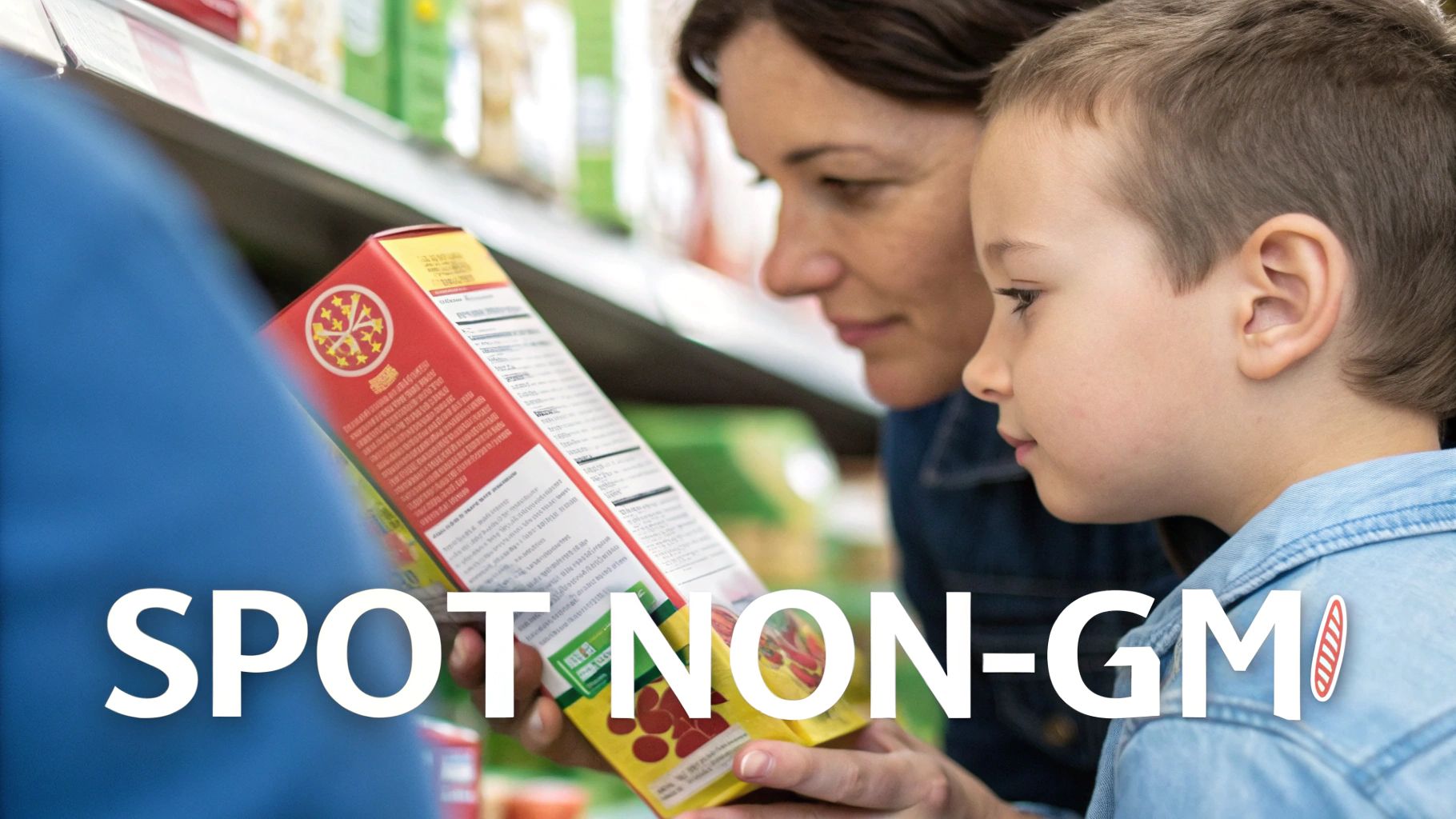
Think of yourself as a label-reading superstar. Your mission, should you choose to accept it, is to find snacks that meet your family’s standards. To do that, you need to know which seals are the real deal and which are just marketing fluff.
The Gold Standard: The Butterfly Seal
When you're scanning the shelves for genuinely non-GMO snacks, your top priority should be spotting the Non-GMO Project Verified seal. See that little orange butterfly? That's your golden ticket. It’s the most trusted and rigorous certification for non-GMO products in North America.
To earn this seal, a product has to go through an intense verification process. This includes ongoing testing for major GMO-risk ingredients like corn, soy, canola, and sugar beets.
The Non-GMO Project seal offers the highest level of assurance because its standards are often stricter than government regulations. It confirms that a product has met rigorous standards for GMO avoidance every step of the way, from farm to package.
So, when you see the butterfly on a box of your kid's favorite cookies or snack bars, you can feel confident you’re making a great choice. It's a quick, easy visual cue that cuts through the noise. Why not make it a game for your kids to spot the butterfly on your next shopping trip?
Other Labels to Trust
While the butterfly is your best friend, it's not the only helpful signpost in the grocery store. There are a couple of other labels that can guide you toward non-GMO choices.
Here’s a quick field guide to what you might see:
- USDA Organic Seal: Remember how we said all organic is non-GMO? The USDA Organic seal is another fantastic indicator. If a product is certified organic, it was produced without the use of genetic engineering. Easy peasy.
- Manufacturer Claims: Some packages might just say "non-GMO" or "Made without Genetically Engineered Ingredients" without an official seal. These claims can be reliable, but they aren't third-party verified like the butterfly seal. Think of them as a good starting point, but the verified seals offer more robust proof.
Navigating these labels becomes second nature with a bit of practice. If you want to become even more skilled, you can learn more about how to read food labels to make empowered choices every time you shop. Happy snacking!
Why Parents Are Reaching for Non-GMO Snacks
The whole conversation around GMOs can feel intense. When you’re just trying to grab a healthy snack for your kid, it’s easy to get overwhelmed by all the noise. So, what’s really behind the growing number of parents intentionally picking up non-GMO kids snack bars and cookies? It usually comes down to a few core reasons.
For a lot of families, it’s all about food transparency. It’s that simple. Parents just want to know what’s in their family's food and where it comes from. The non-GMO label acts as a clear signpost, telling them the ingredients haven't been altered in a lab. It’s a preference for food that feels a little closer to its natural state, which brings a sense of comfort and control.
Beyond the Label: What Really Motivates Parents
But it’s often more than just wanting simple ingredients. While major health organizations generally consider approved GMOs safe to eat, some parents just feel more comfortable sticking with what they know, especially for little, growing bodies. It's less about fear and more of a "just in case" approach—choosing foods with a longer, more traditional track record. For many, it's about giving their kids snacks, like snack bars and cookies, that feel as wholesome as possible.
The environmental angle is a huge piece of the puzzle, too. Certain GMO crops are specifically designed to survive powerful herbicides, and many parents worry about what the increased use of these chemicals means for our farms and ecosystems. By choosing non-GMO, they feel like they’re casting a vote for agricultural practices that are a bit gentler on the planet.
At its heart, the non-GMO movement for many families isn’t about being anti-science. It's about having a choice. It’s the simple right to understand how your food is made and pick the options that line up with what you value, whether that’s for your family’s health or the environment.
Ultimately, this isn't about making a "right" or "wrong" decision—it's about making an informed one. Understanding why you might lean toward non-GMO helps you navigate the snack aisle with way more confidence. Whether your focus is on ingredient simplicity, environmental impact, or just wanting more transparency, knowing your own personal "why" makes the whole process feel less confusing and more empowering.
Building the Ultimate Non GMO Snack Box
Alright, time to turn all that label-reading know-how into something your kids will actually eat! Building a non-GMO snack box isn’t about restrictions—it’s a creative adventure. Think of it as being a snack curator, turning your grocery trip from a chore into a treasure hunt for delicious, wholesome goodies for your kids.
Let’s start with the basics. When you're scanning the aisles for kids snack bars, cookies, or cereals, keep an eye out for those high-risk GMO ingredients. These are the usual suspects that are almost always genetically modified unless a product has a non-GMO or organic certification.
Your High-Risk Ingredient Watchlist
Knowing what to look for on an ingredient panel is half the battle. Here are the top ingredients that should make you pause and look for a seal of approval:
- Corn: This includes corn syrup, cornstarch, and corn oil—all incredibly common in processed snacks.
- Soy: Be on the lookout for soy protein, soy lecithin (an emulsifier in tons of cookies and bars), and soybean oil.
- Sugar: If a label just says "sugar," it's likely a blend that includes sugar from GMO sugar beets.
- Canola: Canola oil is a frequent flier in baked goods and crackers.
Spotting these on a label doesn't automatically mean it's a no-go. It’s just your cue to look for that trusted Non-GMO Project butterfly or USDA Organic seal to confirm where it came from.
The non-GMO movement isn't slowing down, and baked goods are expected to see huge growth. For health-conscious families, non-GMO protein ingredients alone are projected to hit USD 750.1 million by 2034, proving the demand for clean-ingredient snacks is stronger than ever. You can explore more data about the future of the non-GMO foods market.
Creative and Fun Non GMO Snack Pairings
Now for the fun part—putting it all together! The best snack boxes offer a mix of textures and flavors. Think crunchy, creamy, sweet, and savory.
The secret to a kid-approved snack box is variety and color. Combine familiar favorites with one new thing to encourage adventurous eating. It turns a simple snack into a delightful experience.
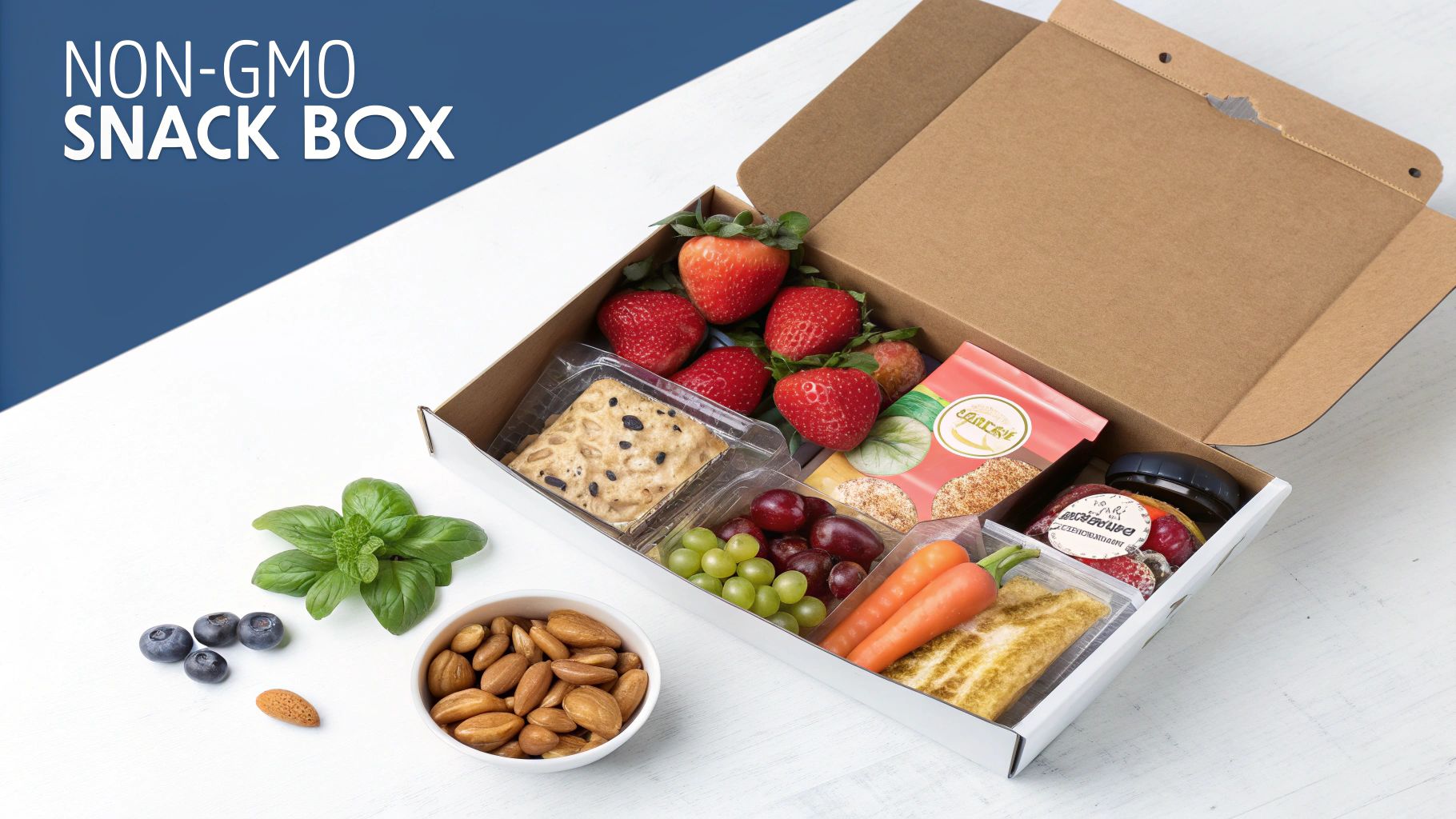
Here are a few combinations to get you started:
- The Sweet & Salty Mix: Pair a non-GMO soft-baked cookie with apple slices and a handful of organic almonds.
- The Dipper's Delight: Combine organic baby carrots and cucumber slices with a non-GMO hummus or seed butter.
- The Power-Up Pack: A non-GMO kids snack bar alongside some cheese cubes and a small bunch of grapes.
- The Crunchy Bunch: Mix non-GMO pretzels with dried apricots and a few dark chocolate chips for a trail-mix vibe.
Building your own snack combinations gives you total control over what your kids are eating. And for those extra busy weeks, you can always explore options like a pre-curated organic snack box subscription.
Happy snacking!
Simple Steps to Start Your Non GMO Lifestyle
Switching to a more non-GMO lifestyle doesn't have to be a giant, overwhelming mission. Think of it less like a complete kitchen overhaul and more like adding a fun new game to your grocery routine. Every small choice you make really does add up.
You don’t have to change everything at once. A fantastic way to begin is by focusing on just one single category that matters most to you. For many parents, that’s kids' snacks. The next time you're shopping for snack bars or cookies, just make it your mission to find options with a trusted label.
Your First Fun Challenge
Your first step can be simple and surprisingly satisfying. Instead of trying to avoid every single GMO out there, focus on finding and trying one new non-GMO product each week. I suggest starting with your kids' favorite snacks!
- Look for the Butterfly: Make a game out of spotting the Non-GMO Project Verified seal. Honestly, it’s the easiest, most reliable way to know a product has been thoroughly checked.
- Go Organic: Remember, if it's USDA Organic, it’s also non-GMO by definition. This is another quick shortcut when you're in a hurry.
- Start with Favorites: Swap your usual cookies or snack bars for a certified non-GMO version and see what your family thinks. It's a low-pressure way to start.
The goal is progress, not perfection. You're not aiming for a flawless, 100% non-GMO cart on your first try. You're simply taking small, positive steps toward providing transparent and wholesome food for your family.
Feel empowered and excited about this journey. Each label you read and every conscious choice you make is a victory. You're building healthy habits and creating a pantry you can feel great about, one delicious snack at a time.
A Few More Non-GMO Questions Answered
Still have a few questions swirling? Good. Let's tackle some of the most common things parents wonder about when they're navigating the non-GMO snack world. My goal is to clear up any final confusion so you can feel totally confident when you shop.
Think of this as your personal cheat sheet for those "Wait, but what about...?" moments in the grocery aisle.
Is Bioengineered the Same as GMO?
This is a fantastic question and a super common point of confusion. The short answer is: no, not exactly.
"Bioengineered food" is the term the U.S. government decided to use on labels, but its definition is much narrower than what most of us think of as a GMO. For example, highly processed ingredients like sugar from GMO sugar beets or oil from GMO canola might not have any "detectable modified genetic material" left after all that processing. Because of that loophole, they often don't require a bioengineered label, even though they come from a GMO source.
The Non-GMO Project's butterfly seal is much more comprehensive. It verifies products based on their ingredients' sources, ensuring that even highly refined ingredients from GMO crops are not used if you want to avoid them completely.
If a Snack Bar Doesn't Have a BE Label, Is It Non-GMO?
Not necessarily, and this is where it gets tricky for parents. Because of the exemptions in the U.S. labeling law, the absence of a "Bioengineered" (BE) label is not a guarantee that a product is free from GMOs.
Many products, especially those where meat is a primary ingredient or those containing refined GMO-derived oils and sugars, might not carry a BE label. This makes it a pretty unreliable tool for shoppers who want to completely avoid GMOs.
What Is the Easiest Way to Find Non-GMO Cookies and Snacks?
Ready for the simplest, most fun tip? Look for the butterfly!
When you're in a rush and need a quick, trustworthy signal, the orange butterfly of the Non-GMO Project Verified seal is your absolute best friend. It’s the most rigorous and recognizable certification in North America. Brands work hard to earn that seal, and it means the product has been thoroughly vetted from start to finish.
Here’s a quick idea for your next shopping trip:
- Make it a game: Challenge your kids to be the first to spot the butterfly on a box of cookies or snack bars.
- Try a swap: If you have a go-to snack, see if you can find a version with the butterfly seal or the USDA Organic logo. It’s a fun, low-pressure way to discover new family favorites.
At Skout Organic, we make it easy by ensuring all our kids' snack bars and cookies are not just delicious but also USDA Organic and Non-GMO Project Verified. We believe in transparency so you can focus on the fun part—enjoying wholesome snacks with your family. Explore our collection and build your own custom snack box at https://www.skoutorganic.com.