 Kids Snack Bars
 Soft-Baked Cookies
 Protein Bars
 Build A Box
 Shop All





Trying to find a healthy, soy-free snack for your family can feel like searching for a needle in a haystack. You're standing in the aisle, staring at a wall of protein bars, and all you want is something simple, clean, and maybe—just maybe—something your kids will actually eat without a fuss. You are definitely not alone!
The truth is, the best soy-free protein bars don't need complicated formulas. They rely on clean, simple ingredients like seeds and plant-based proteins to get the job done. This guide is here to help you cut through the noise, have a little fun, and find snacks you can feel good about tossing into your cart (and your kids' lunchboxes).
Your Guide to Soy-Free Snacking Success
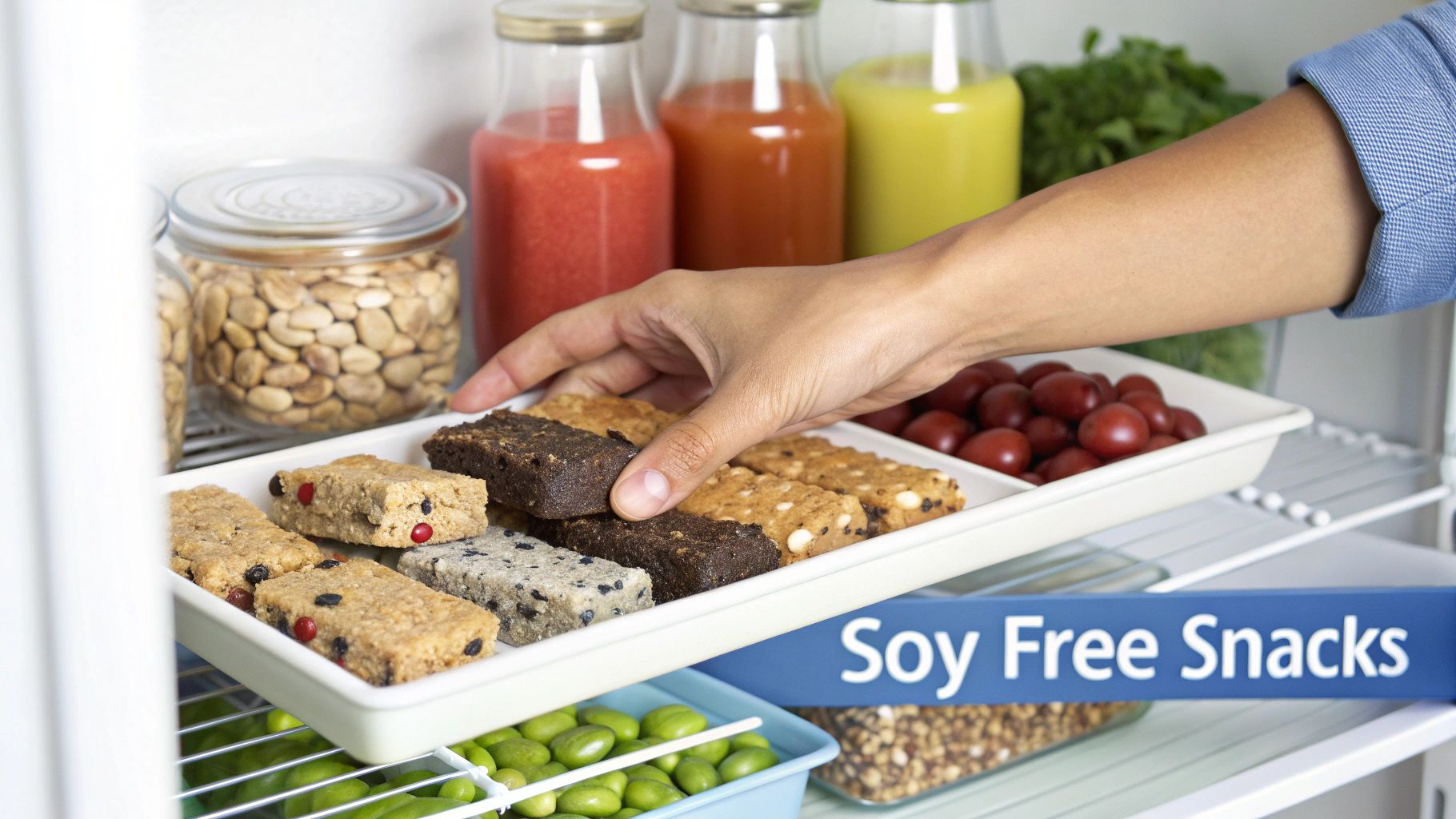
Let's be real: snack time can feel like a high-stakes negotiation, especially with kids. You’re looking for something nutritious to fuel their day, but they just want something that tastes amazing. This is where finding the perfect soy-free protein bar gets tricky. It’s not just about you—it’s about finding a go-to snack the whole family loves.
But forget the stress and the label-reading headaches. We’re here to show you that finding a tasty, nutritious, and safe soy-free snack isn't just possible—it’s actually pretty simple once you know what to look for. Ready to become a snack-time hero?
From Lunchboxes to After-School Fuel
Think about the daily snack scramble: that last-minute lunchbox addition, the post-practice refuel, or a quick bite during a packed weekend. So many popular kids' snack bars and cookies are loaded with hidden soy, not to mention sugars and artificial ingredients you can’t even pronounce. Yikes!
It's a frustrating cycle for parents who are either managing allergies or just trying to stick to cleaner eating habits. You just want snacks that offer real nutritional value without compromising on that all-important yum factor.
A great soy-free protein bar can be a total game-changer for parents. Here’s what makes them such a fantastic choice:
- Clean Energy: They provide steady, sustained energy from whole-food sources, helping everyone avoid that dreaded sugar crash that comes with most conventional snacks. No more post-snack meltdowns!
- Allergen-Friendly: For kids with soy sensitivities or allergies, they offer a safe and delicious option that takes the worry out of snacking. Peace of mind is a beautiful thing.
- Convenience: They are the ultimate grab-and-go solution for busy families, making sure a healthy option is always within arm's reach.
Brands like Skout Organic have really nailed this balance, offering simple, whole-food options that make healthy snacking a breeze for everyone. Their kids' snack bars and cookies use organic ingredients you can actually recognize. Our suggestion? Keep a stash in your car. You'll thank us later.
If you're digging into wholesome options, checking out the best organic protein bars can give you even more great ideas for your pantry. Now, let’s dive into how you can become a pro at picking the perfect soy-free snack for any and every occasion.
Ever wonder why the "soy-free" label is popping up everywhere, from grocery store aisles to your favorite cafes? It’s definitely not just a passing trend. This shift is driven by real, personal health choices, and getting to the bottom of them is the first step toward finding the perfect snack for you and your family.
The reasons people reach for a soy free protein bar are incredibly personal. For some, it's a non-negotiable medical need. For others, it's a conscious lifestyle choice aimed at feeling their absolute best. Let's unpack the main drivers behind this growing movement.
Allergies and Sensitivities: The Big Motivator
The most common reason for ditching soy is a straightforward one: allergies and sensitivities. A soy allergy can trigger anything from mild digestive upset and skin rashes to more severe, life-threatening reactions. This is a huge concern for parents, as soy is one of the most common allergens in children.
When you're managing a child's food allergy, snack time can feel like navigating a minefield. So many popular kids' snack bars and cookies use soy protein isolate or soy lecithin as fillers, putting them on the "off-limits" list. Finding a safe, delicious alternative isn't just a preference; it's absolutely essential for your child's well-being and your own peace of mind.
And this isn't a small issue. Soy allergies impact approximately 0.6% of people globally, placing soy firmly among the top food allergens. This has a major effect on the snack aisle, as more and more shoppers are actively looking for reliable alternatives. You can explore more about these market dynamics in the full report on the protein bar market.
Lifestyle Choices and Hormonal Health
Beyond allergies, plenty of people choose to avoid soy for other important health reasons. One of the biggest factors? Hormonal health. Soy contains compounds called phytoestrogens, which can mimic the hormone estrogen in the body. While the science is still evolving, some people prefer to skip soy to support their endocrine health, especially if they have pre-existing hormonal sensitivities or thyroid conditions.
The bottom line is that you should feel empowered to choose foods that make your body feel good. Whether you're avoiding soy for an allergy, a lifestyle preference, or general wellness, your reasons are valid and deserve options that support them.
Certain ways of eating also naturally exclude soy. If you follow a Paleo or Whole30 diet, for example, you’re already avoiding legumes, which includes all forms of soy. This has pushed many people to discover amazing, soy-free protein sources that fit right in with their clean-eating principles.
Another big consideration is the prevalence of genetically modified organisms (GMOs). A huge majority of the soy grown in the United States is genetically modified. For families committed to an organic and non-GMO lifestyle, avoiding soy is often a core part of their food philosophy. This choice is all about seeking out foods in their most natural, unprocessed state—a principle that extends from their main meals right down to their kids' snack bars.
How to Become a Soy Label Detective
Ready to put on your detective hat? Finding a truly soy-free protein bar in the grocery aisle can feel like cracking a secret code. Soy is a master of disguise, popping up in places you’d least expect—especially in popular kids' snack bars and cookies.
But don’t worry. Once you know what to look for, spotting it becomes second nature.
Think of it like learning a new language. At first, the words look totally unfamiliar, but soon you start recognizing patterns. Learning how to read food labels is a skill that empowers you to make confident choices for your family, turning confusing shopping trips into a simple, stress-free routine.
This handy infographic breaks down the common reasons families choose to go soy-free, from managing allergies to aligning with specific lifestyle goals.
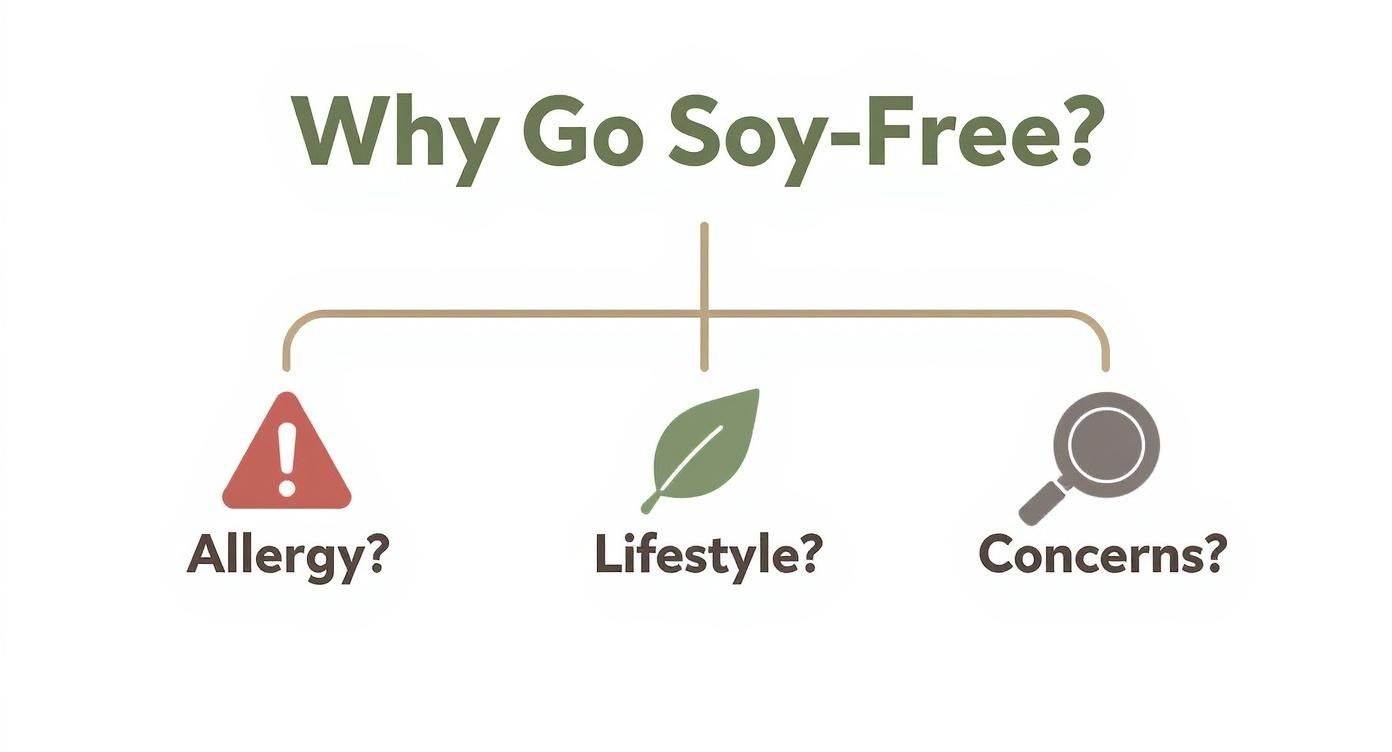
As you can see, the path to a soy-free lifestyle is unique for everyone. But no matter the reason, it always starts with understanding what you're looking for on the label.
Spotting Soy in Disguise
Soy rarely introduces itself by its first name. It loves to hide behind scientific-sounding terms or seemingly innocent ingredients. This is especially true in processed snacks, where soy is often used to improve texture or boost protein content on the cheap.
When you're scanning the ingredients list on that new brand of kids' snack bars, keep an eye out for these common culprits. They are the sneakiest offenders that often fly under the radar.
To help you out, here’s a quick-reference table to spot soy in disguise on ingredient lists.
| Common Hidden Soy Ingredients on Labels |
| :--- | :--- |
| Ingredient Name | What It Is |
| Lecithin | An emulsifier used to keep ingredients from separating. Unless it specifies "sunflower lecithin," it's almost always from soy. |
| Textured Vegetable Protein (TVP) | A highly processed soy product often used as a meat substitute or protein booster in bars and snacks. |
| Edamame | These are simply immature soybeans. While they are a whole food, they are still soy. |
| Miso and Tamari | Fermented soy products used for flavoring. While tamari is sometimes gluten-free, it’s not soy-free. |
| "Natural Flavors" | This vague term can be a hiding spot for soy-based ingredients. If a product isn't certified soy-free, it's worth a second look. |
The goal isn’t to memorize a dictionary of ingredients. It’s about recognizing the top offenders so you can quickly scan a label and know whether a snack is a safe choice.
Understanding Precautionary Labels
Now, let's talk about those tricky little warnings at the bottom of the label. You've probably seen phrases like "may contain soy" or "processed in a facility that also handles soy."
What do these actually mean?
These are called precautionary allergen labels, and they aren't regulated in the same way as the main ingredient list. Manufacturers add them voluntarily to warn consumers about the potential for cross-contamination.
For someone with a mild sensitivity, a "may contain" warning might be an acceptable risk. However, for a child with a severe soy allergy, even trace amounts can be dangerous. It’s a personal call, but when it comes to your kids, being cautious is always the best approach.
The safest bet is to choose products that are certified soy-free. This certification guarantees they've been tested to ensure no cross-contact has occurred—the ultimate peace of mind when packing a lunchbox or grabbing a quick snack.
Exploring Powerful Plant Protein Sources
Alright, let's get to the fun part—diving into the incredible world of plant-based proteins that make a top-notch soy free protein bar possible. This isn't about what you have to cut out; it's about celebrating all the powerful, nutrient-dense ingredients you get to enjoy. It's time to meet the new all-stars of the snack aisle.
Once you move past soy, a whole universe of plant proteins opens up, each with its own unique texture, flavor, and nutritional superpowers. This variety is driving some seriously exciting changes in the snack world, giving families more (and better) options than ever before.
The demand for these soy alternatives is soaring as more people put their health first. The global protein bar market, currently valued at around USD 15 billion, is booming, and this shift is a huge reason why. As brands get creative to meet the call for soy-free options, they’re turning to some seriously potent plant sources to power their products.
The Plant-Based Power Players
Let’s break down the most popular and effective soy-free protein sources you'll find in modern bars. Each one brings something special to the table, from a creamy texture to a complete amino acid profile that helps your body thrive.
- Pea Protein: This is pretty much the reigning champion of the plant-protein world. Made from yellow split peas, it’s rich in iron and packs in all nine essential amino acids. That makes it a complete protein, which is exactly what your muscles need for repair and growth.
- Brown Rice Protein: You'll often see this paired with pea protein, and for good reason. Combining them creates a more robust amino acid profile. Plus, it's hypoallergenic and super easy to digest—a huge win for anyone with a sensitive stomach.
- Hemp Protein: Don't let the name fool you—hemp is a nutritional powerhouse. It’s loaded with protein, healthy fats like omega-3s and omega-6s, and fiber. It’s an awesome all-in-one ingredient for a truly satisfying bar.
These three are the heavy hitters you’ll see most often, but the innovation definitely doesn't stop there.
Unsung Heroes of the Snack Aisle
Beyond the big names, some of the most exciting ingredients are nutrient-packed seeds. These aren't just crunchy toppings; they are concentrated sources of protein and micronutrients that can form the very foundation of a great soy-free bar.
Think of these seeds as the secret weapons in a snack's nutritional arsenal. They prove you don't need highly processed isolates to create a bar that's both delicious and incredibly effective at fueling your body.
Here are a couple you should get to know:
- Pumpkin Seed Protein: One of the best plant-based sources of protein out there, pumpkin seeds are also packed with magnesium, zinc, and healthy fats. They give bars a smooth, slightly nutty flavor that works beautifully.
- Sunflower Seed Protein: Another fantastic nut-free option, sunflower seed protein is rich in antioxidants and vitamin E. It helps give bars a satisfying texture and a clean, mild taste that kids absolutely love.
When you're looking for kids' snack bars, seeing pumpkin or sunflower seeds high on the ingredient list is a fantastic sign. It means the bar is built on whole-food nutrition, not just powders. When you're exploring ways to add more protein to your diet, it's helpful to understand the different types of protein supplements to see how they all fit into your personal wellness goals.
The beauty of these ingredients is their simplicity. You can learn more about the variety and benefits by checking out our complete guide to plant-based protein sources. This inside look helps you appreciate the care that goes into a well-crafted bar and choose one based on ingredients you can actually recognize and trust.
Finding the Best Soy Free Bars for Kids
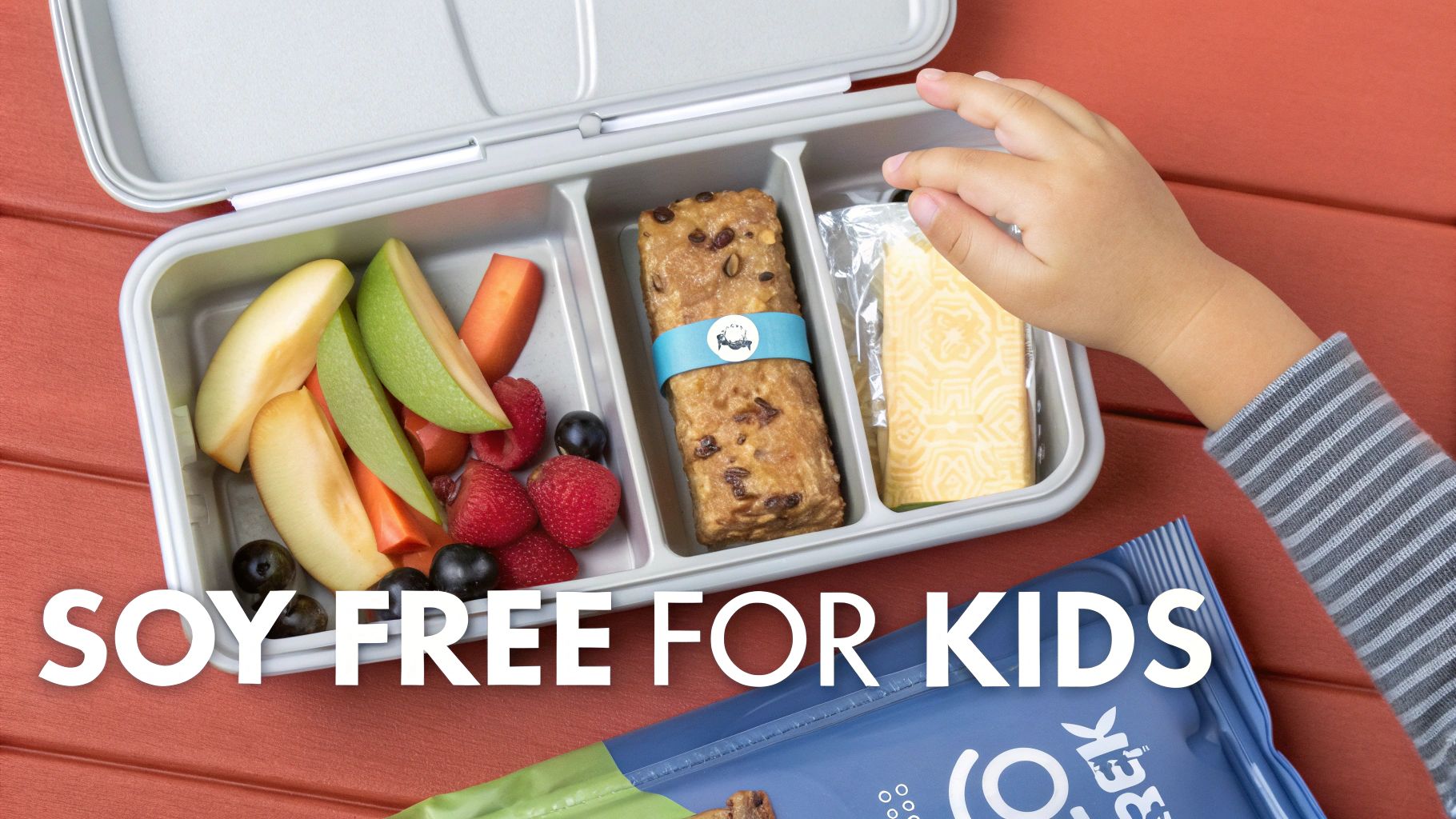
Let’s be real: finding snacks that are healthy, safe, and actually get eaten is pretty much a parenting superpower. The daily snack negotiation can feel intense—you're pushing for nutrition, they're holding out for something delicious. This is where the right soy free protein bar can be a total game-changer.
When you're navigating a soy allergy or simply trying to keep your family’s diet clean, the kids' snack aisle can feel like a minefield. So many bars and cookies are loaded with fillers, artificial sweeteners, and, of course, hidden soy. A high-quality, soy-free bar designed for kids is a simple, reliable solution to keep them fueled up and happy.
What to Look for in a Kid-Friendly Bar
Not all protein bars are created equal, especially when it comes to little ones. The super-dense, high-protein bar an adult might grab post-workout isn't the right fit for a child's nutritional needs or digestive system. Instead, the best kids' bars keep it simple with whole-food ingredients.
Think of it this way: you want a snack that looks more like real food and less like a science experiment. When you’re on the hunt, here are a few key things to look for:
- Simple, Recognizable Ingredients: Look for a short ingredient list filled with things you can actually picture, like organic dates, sunflower seeds, or real fruit.
- No Added Sugar: Kids don't need a sugar rush from refined sweeteners. The best bars get their sweetness from fruit, which adds nutrients along with a gentle flavor.
- Appropriate Protein Levels: Kids definitely need protein for growth, but not in huge doses. A bar with 5-8 grams of clean, plant-based protein is perfect for fueling their day without being too heavy.
- Soft, Chewy Texture: A bar that's easy for little mouths to chew is a must for both safety and enjoyment.
This is exactly where brands like Skout Organic shine. Their kids' bars and cookies are built on these principles, using organic, plant-based ingredients to create snacks parents can trust and kids actually love.
Fueling Adventures Big and Small
The real beauty of a great soy-free kids' bar is how versatile it is. It’s the perfect sidekick for every part of your busy day, making healthy choices easy and stress-free.
A well-stocked pantry of reliable, kid-approved snacks is more than just convenient—it's your secret weapon for navigating busy schedules, picky eating phases, and unexpected hunger emergencies with total confidence.
Here are just a few ways to work them into your routine:
- Lunchbox Heroes: Tuck one into their lunchbox for a guaranteed source of clean energy that will help them power through the afternoon.
- After-School Fuel: Keep a stash ready for that post-school energy slump. It’s the perfect bridge to dinner, especially before heading off to sports practice or music lessons.
- On-the-Go Lifesavers: Whether you're running errands or heading out for a weekend hike, having a soy-free protein bar on hand means you'll never get caught off guard by a "hangry" moment.
By choosing bars with simple, clean ingredients, you're not just giving them a snack—you're giving yourself a little piece of delicious peace of mind.
Choosing a Bar to Fuel Your Active Lifestyle
A soy-free protein bar can be your secret weapon for crushing your fitness goals. But just like you wouldn't wear running shoes to lift heavy weights, the right bar depends entirely on your activity. It's all about matching your fuel to your workout.
Whether you need a quick energy boost before a run or a powerful recovery tool after hitting the gym, the right bar makes a huge difference. Let’s break down how to pick the perfect partner for your active life, helping you perform your best and recover even faster.
Fueling Up for Fun and Fitness
Let’s talk about kids. Their "active lifestyle" is all about constant motion—running, jumping, and just generally being a whirlwind of energy. Finding snacks that can keep up is key, especially when you need something convenient and soy-free.
When you're grabbing a snack for your little one's soccer practice or a family hike, you’re looking for clean, sustained energy. This is where soy-free kids snack bars and cookies really shine. They offer a balanced mix of carbs for immediate fuel and a touch of protein to keep them feeling full, all without the artificial ingredients or soy fillers you find in so many other options.
A great tip is to look for bars built on a foundation of whole foods like organic dates, seeds, and real fruit. These ingredients provide the natural energy kids need to play hard.
The perfect kids' snack isn't about packing in massive amounts of protein; it's about delivering clean, simple fuel that supports their natural energy levels and keeps them smiling.
The Right Bar for Your Workout
Now, let's shift gears to your own fitness routine. Let’s be honest, the fuel you need for a long-distance run is completely different from what you need to recover from a tough strength training session. Picking the right soy-free protein bar can make or break your performance and recovery.
Here's a simple breakdown:
- For Endurance (Running, Cycling): Before your workout, you need easily digestible carbohydrates for quick energy. A bar with a higher carb-to-protein ratio is your best friend here. Look for one sweetened with fruit that also has around 10-15 grams of plant-based protein to help prevent muscle breakdown.
- For Strength Training (Lifting, HIIT): After you’ve put in the work, the focus is all on muscle repair. You'll want a bar with higher protein content, aiming for 15-20+ grams. This helps kickstart the muscle-building process your body uses to get stronger.
- For All-Day Energy: Sometimes you just need a healthy snack to bridge the gap between meals. A balanced bar with moderate protein (10-12 grams), healthy fats, and fiber is the perfect choice to keep hunger away and your energy steady.
Clean, plant-based proteins from sources like pumpkin seeds and peas are excellent for supporting muscle repair without the digestive issues some people experience with soy or whey. By matching your bar to your activity, you're not just snacking—you're strategically fueling your body for success.
Alright, let's get into some of the questions that might still be bouncing around in your head. Think of this as the final piece of the puzzle, so you can feel totally confident picking out the right soy-free snacks for your family.
Are Soy Free Protein Bars Automatically Healthier?
Not necessarily. While "soy-free" is a must for anyone with an allergy or sensitivity, it doesn't automatically get a health halo. A truly healthy bar comes down to the entire ingredient list.
It's common for brands to swap out soy only to pack their bars with loads of added sugar, sugar alcohols, or artificial ingredients. The best choice will always be a bar made with simple, whole foods you can actually recognize.
Can My Kids Eat These Bars?
Absolutely, but you'll want to choose wisely! Instead of handing them a dense protein bar designed for an adult's nutritional needs, it's a great idea to opt for snacks made specifically for them.
Look for kids' snack bars with softer textures, smaller portions, and no added sugar—their little bodies just don't need it. And when in doubt, especially if allergies are a concern, a quick chat with your pediatrician is always a good move.
The goal is to find a snack that fuels their fun without the junk. Simple ingredients like organic fruit and seeds are a perfect match for a kid's active day, offering clean energy for the playground and beyond.
Choosing the right soy free protein bar or cookie means less worry for you and more delicious, healthy fuel for them. It’s all about finding that perfect, parent-approved and kid-loved snack that makes everyone happy.
Ready to stock your pantry with delicious, soy-free snacks the whole family will love? Explore Skout Organic's collection of kids' snack bars and cookies made with simple, organic ingredients. Find your new favorite flavor at https://www.skoutorganic.com.