
 Kids Snack Bars
 Soft-Baked Cookies
 Protein Bars
 Build A Box
 Shop All





Welcome to the vibrant world of plant-based eating! If you're looking for delicious and powerful ways to fuel your family, you've come to the right place. This guide is all about exploring the best plant based protein sources that are not only packed with nutrients but are also versatile enough for everything from hearty dinners to grab-and-go kids' snacks. Let's be real, finding healthy, protein-rich options that your kids will actually eat can feel like a mission to Mars. It's so easy to just grab those pre-packaged bars and cookies, but they're often loaded with sugar.
Don't worry, we're here to help you become a kitchen superhero! We'll dive into the nutritional powerhouses of the plant kingdom, offering practical tips and fun ideas to make incorporating them into your daily routine a total breeze. From complete proteins like quinoa to versatile staples like lentils and chickpeas, get ready to transform your meals and snacks. This list will show you exactly how to use these ingredients to create your own delicious, homemade alternatives to processed snacks. And hey, to make any plant-based ingredient extra yummy, a little flavor goes a long way. For some ideas on adding zest, explore creative seasoning for vegetables. Let's get started on this flavorful adventure!
1. Quinoa: The Complete Protein Powerhouse
Quinoa is often mistaken for a grain, but it's actually a super-seed from a plant native to South America. It has totally earned its "powerhouse" title by being one of the few plant-based protein sources that is a complete protein. What does that mean? It provides all nine essential amino acids your body can't make on its own, making it a stellar choice for muscle repair and growth. Pretty cool, right?
A Versatile and Nutritious Staple
With a mild, slightly nutty flavor, quinoa is incredibly versatile. It works perfectly as a fluffy side dish, a hearty base for a salad bowl (think of those awesome custom bowls), or even as a binder in homemade veggie burgers. For families, it's a game-changer. You can sneak its goodness into kids' snacks by making quinoa bites or even baking it into cookies for a protein and fiber boost they'll never suspect.
The following bar chart breaks down the key nutritional data for a standard serving of cooked quinoa.
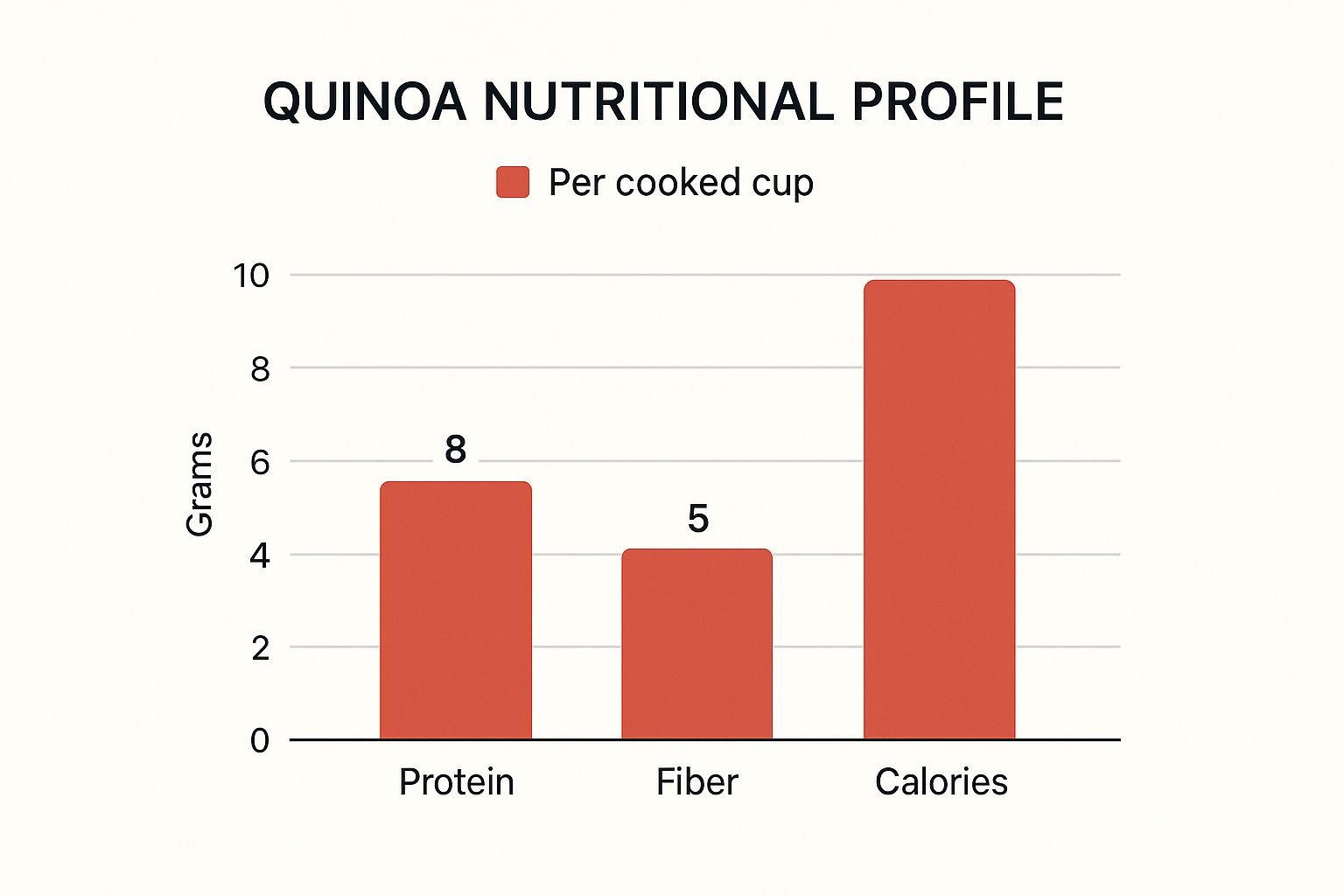
This visual highlights how a single cup offers a significant 8 grams of protein and 5 grams of dietary fiber for just 222 calories, making it an efficient source of nutrients.
Pro Tip: Want to sound like a fancy chef? Toast your dry quinoa in a pan for a few minutes before adding water or broth. This simple step elevates its taste in any dish and gives it a richer, nuttier flavor.
To ensure the best texture, always rinse quinoa under cold water before cooking to remove its natural coating, called saponin, which can taste bitter. Nobody wants bitter quinoa!
2. Lentils: The Affordable and Mighty Legume
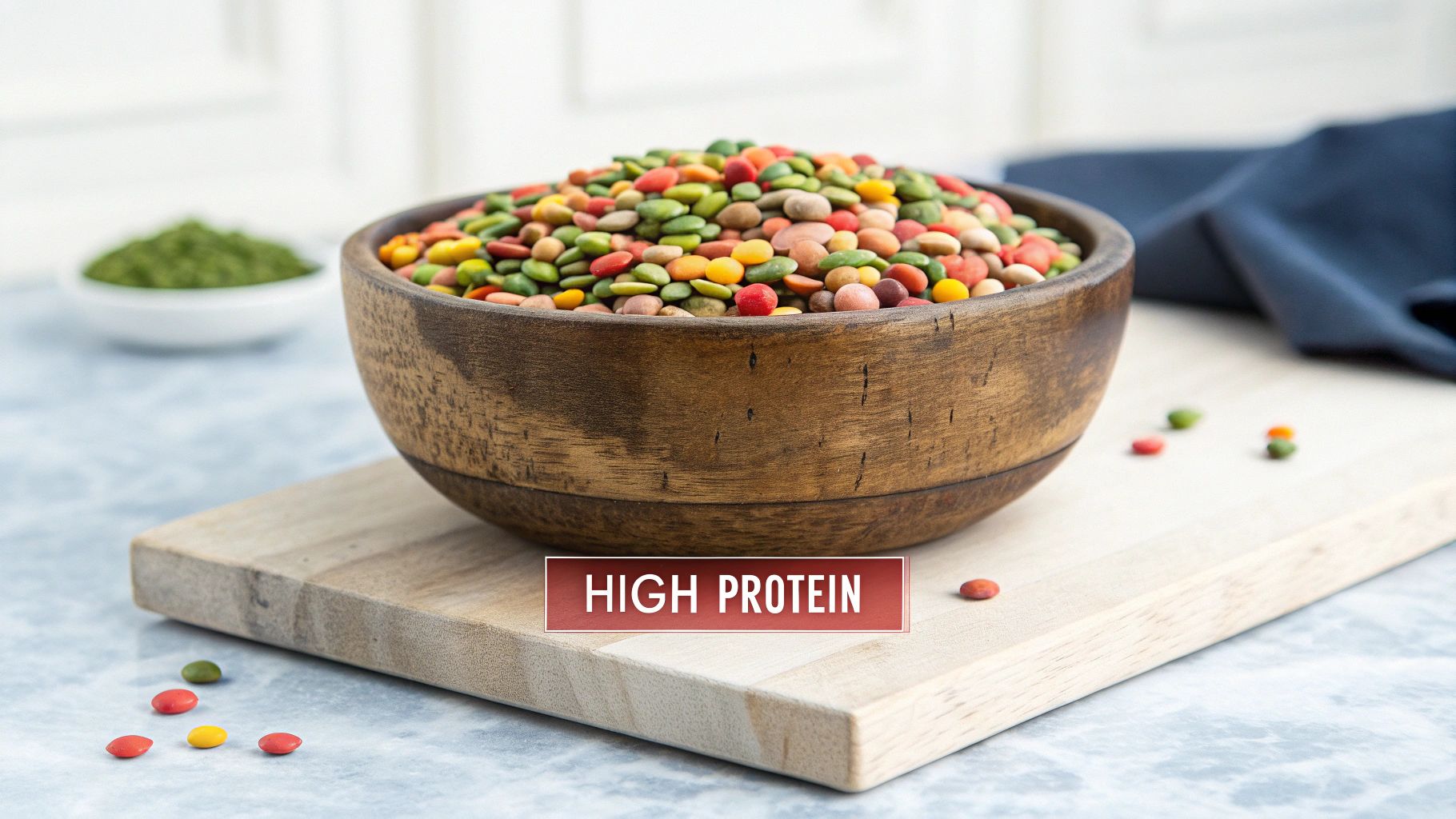
Lentils are edible legumes that have been a dietary staple for thousands of years, and for good reason. As one of the most accessible plant based protein sources, they are celebrated for their nutritional value and rapid cooking time compared to other beans. A single cooked cup delivers an impressive 18 grams of protein, making them an excellent foundation for building strong muscles and staying energized.
A Pantry Staple for Every Meal
Lentils are culinary chameleons, available in colors like red, green, and black, each with a unique texture. Their earthy flavor makes them a perfect addition to robust Indian dal, hearty Mediterranean stews, and even as a meat substitute in tacos or shepherd's pie. For families, lentils are a budget-friendly hero. You can blend them into sauces for a hidden protein kick or bake them into savory muffins and snack bars for a wholesome, kid-approved treat. Incorporating powerful plant foods like lentils is a cornerstone of a healthy lifestyle; you can discover more about the benefits of lentils and other plant-based foods to see how they can transform your family's nutrition.
This chart shows the impressive nutritional profile of lentils, highlighting their protein and fiber content.
With 18 grams of protein and a massive 16 grams of fiber for just 230 calories, lentils are a nutritional powerhouse that supports both muscle health and digestive wellness.
Pro Tip: For perfect texture, add acidic ingredients like tomatoes, vinegar, or lemon juice only after the lentils are fully cooked. Adding them too early can prevent the lentils from becoming tender, and crunchy lentils are no fun.
To get the most out of this ingredient, combine lentils with a grain like rice or barley. This pairing creates a complete protein, supplying all the essential amino acids your body needs to thrive.
3. Chickpeas (Garbanzo Beans): The Versatile Legume
Chickpeas, also known as garbanzo beans, are a staple in Mediterranean and Middle Eastern cuisines that have become a global favorite. These hearty legumes are a fantastic source of plant-based protein, delivering around 15 grams per cooked cup. They are celebrated not just for their nutritional value but for their incredible adaptability in the kitchen, forming the base of classics like hummus and falafel.
From Dips to Desserts
With a creamy texture and mild, nutty taste, chickpeas are a true culinary workhorse. They are the star ingredient in hummus, can be roasted with spices for a crunchy, satisfying snack, or tossed into salads and curries for a protein boost. For families, these are a secret weapon for snack time! You can find chickpea puffs that kids adore, or even make "cookie dough" dip with blended chickpeas that's secretly healthy. So go ahead, let your kids have a blast dipping apples and pretzels into it!
The following bar chart breaks down the key nutritional data for a standard serving of cooked chickpeas.
This visual highlights how a single cup offers an impressive 15 grams of protein and 13 grams of dietary fiber for about 269 calories, making them a filling and nutrient-dense choice.
Pro Tip: For the smoothest, creamiest homemade hummus, take a few extra minutes to remove the thin skins from the chickpeas after cooking. A little baking soda in the cooking water helps them slip off easily. Your taste buds will thank you!
Don't discard the liquid from canned chickpeas! Known as aquafaba, this starchy water is a revolutionary egg white substitute that can be whipped into meringues or used as a binder in vegan baking. It's like magic!
4. Hemp Seeds: The Tiny but Mighty Protein Source
Don't let their small size fool you; hemp seeds (or hemp hearts) are nutritional giants. Sourced from the Cannabis sativa plant, they contain only trace amounts of THC and offer an impressive 10 grams of complete protein in a mere three-tablespoon serving. This makes them one of the most concentrated plant based protein sources available, ideal for building and maintaining muscle.
A Nutty Boost for Any Meal
Hemp seeds have a mild, nutty flavor similar to sunflower seeds, making them incredibly easy to incorporate into your family's diet. Sprinkle them over yogurt, blend them into smoothies for a creamy texture, or mix them into oatmeal. For parents looking for healthy snack hacks, hemp hearts are a secret weapon. You can easily add them to homemade granola bars or energy balls, boosting the protein and healthy fat content for sustained energy. It's an effortless way to power up your kids' snacks.
The chart below shows the impressive nutritional value packed into these tiny seeds.
This visual breakdown emphasizes their high protein content (10g) and healthy fats (15g) for just 166 calories, showcasing their nutrient density.
Pro Tip: To maintain the freshness of their delicate omega fatty acids, always store hemp seeds in an airtight container in the refrigerator. This prevents the healthy oils from going rancid. Happy oils, happy life!
Thanks to brands like Manitoba Harvest and Nutiva, finding high-quality hemp hearts at your local grocery store is easier than ever. Their rise in popularity among athletes and health experts has solidified their spot as a top-tier plant protein.
5. Spirulina: The Microscopic Protein Giant
Spirulina is a blue-green algae, a type of cyanobacteria that thrives in both fresh and saltwater. This microscopic organism is a true nutritional giant, boasting one of the highest protein concentrations of any food on the planet. It's considered a complete protein, providing all nine essential amino acids required for bodily functions. It's so powerful that NASA has even researched it as a potential food for astronauts. If it's good enough for astronauts, it's good enough for us!
A Vibrant and Nutrient-Dense Superfood
With a distinct, slightly oceanic taste, spirulina is most commonly found in powder or tablet form. It's an easy addition to morning smoothies, where its potent flavor can be balanced with fruits like pineapple and banana. For parents, its brilliant green-blue hue can be a super fun way to introduce powerful nutrients. Try adding a small amount to pancake batter or homemade energy bites to create "monster" or "hulk" snacks that kids will go crazy for.
The following bar chart breaks down the key nutritional data for a standard serving of spirulina powder.
This visual shows that just two tablespoons pack a remarkable 8 grams of protein and a significant amount of iron for only 40 calories, establishing it as one of the most efficient plant based protein sources available.
Pro Tip: Start with a small dose, like half a teaspoon, and gradually increase your intake. This allows your digestive system to adjust to this potent superfood. Go slow and steady!
To ensure quality and safety, always choose an organic, third-party tested brand. This helps guarantee your spirulina is free from heavy metals and other potential contaminants.
6. Tofu: The Versatile Protein Sponge
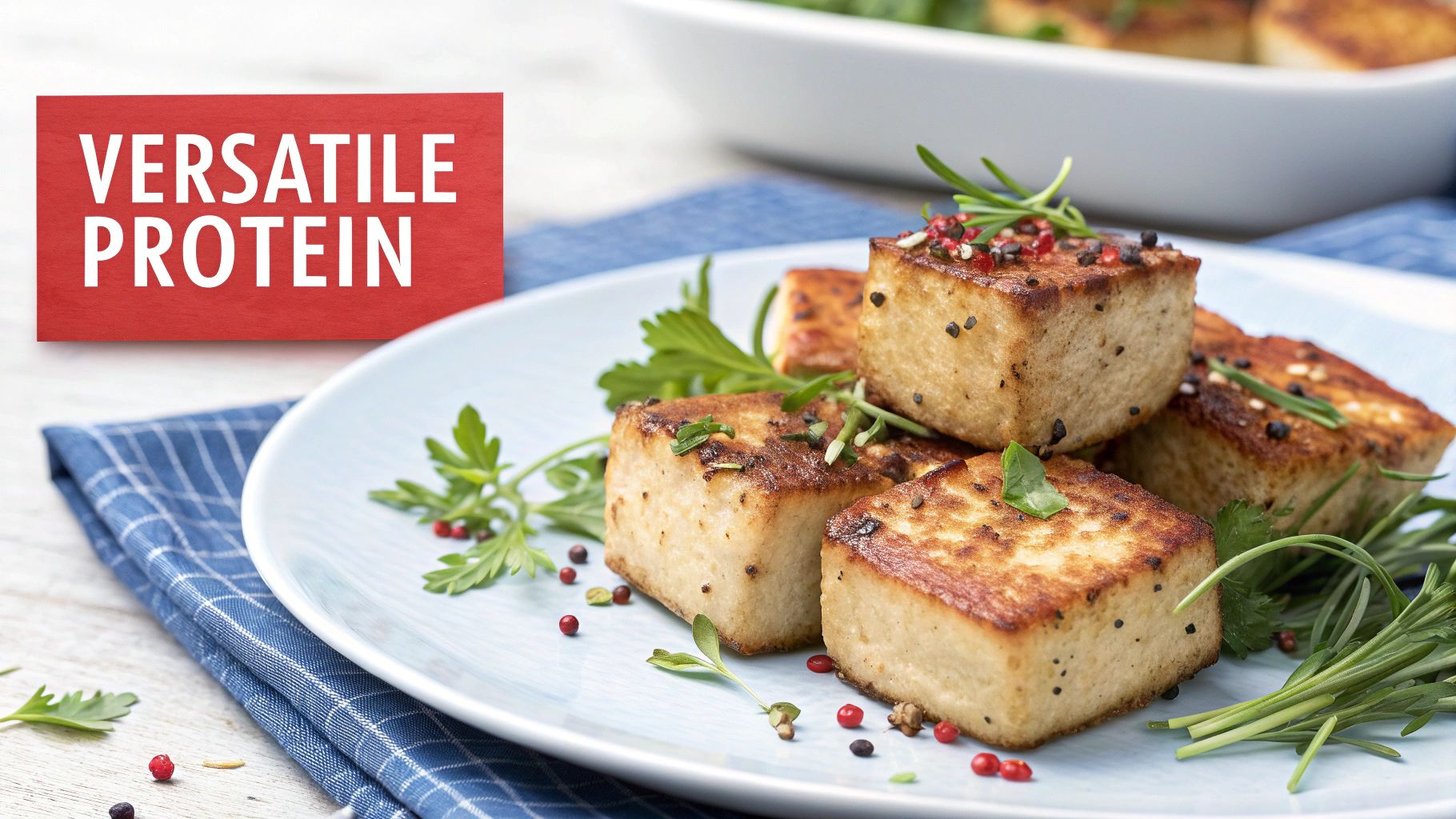
Tofu, a staple in Asian cuisine for millennia, is made from condensed soy milk pressed into solid white blocks. Similar to quinoa, it's a complete protein, providing all nine essential amino acids. With about 20 grams of protein per cup, this powerhouse is one of the most popular and versatile plant based protein sources available today, thanks to its amazing ability to absorb any flavor it's paired with.
A Culinary Chameleon for Every Meal
Tofu’s magic lies in its texture, which ranges from silken to extra-firm. Extra-firm tofu is fantastic for creating a satisfying, meaty texture in dishes like a savory tofu scramble for breakfast or crispy, air-fried cubes to top a salad. For families, silken tofu is a secret weapon; blend it into smoothies, puddings, or even pasta sauces for a creamy, protein-packed base your kids won't even notice. Seriously, they'll be none the wiser! This adaptability makes it simple to integrate into your weekly meal plan, as you can explore more about harnessing the power of plant-based eating for your family.
The video below offers a simple yet delicious crispy tofu recipe that's perfect for beginners.
This visual guide shows just how easy it is to transform a simple block of tofu into a crave-worthy meal.
Pro Tip: For an extra chewy, meat-like texture, freeze your block of firm tofu, then thaw and press it. This process creates small, porous pockets that soak up marinades beautifully. It's a total texture game-changer!
To get the crispiest results, always press firm or extra-firm tofu for at least 30 minutes to remove excess water before cooking.
7. Tempeh: The Fermented Soybean Powerhouse
Tempeh is a traditional Indonesian food made from fermented soybeans. The soybeans are formed into a firm, dense cake, giving it a unique, chewy texture and a nutty, earthy flavor. As one of the most potent plant based protein sources, it packs a staggering 31 grams of protein per cup, making it a favorite for fitness enthusiasts. The fermentation process not only makes the protein more digestible but also introduces beneficial probiotics for gut health. A happy gut is a happy life!
A Meaty and Nutrient-Dense Alternative
With its firm bite, tempeh is an incredible meat substitute. It can be sliced and pan-fried like a cutlet, crumbled into chili or pasta sauce as a ground meat replacement, or marinated and baked for a savory main course. For a kid-friendly twist, you can cube it, coat it in a sweet and sour sauce, and serve it as "tempeh nuggets" for a protein-packed meal they'll love. Who doesn't love nuggets?
Pro Tip: To mellow its natural bitterness and help it better absorb marinades, steam or simmer tempeh slices for about 10 minutes before cooking. This simple step transforms the flavor and texture, making it extra delicious.
For the best results, always marinate your tempeh for at least 30 minutes. Its dense structure soaks up flavor beautifully, making it a versatile canvas for everything from smoky barbecue sauce to a zesty lemon-herb blend.
8. Chia Seeds: Tiny Seeds, Mighty Nutrition
Don't let their small size fool you; chia seeds are nutritional giants. These tiny black and white seeds from the Salvia hispanica plant were a staple food for ancient Aztec and Mayan civilizations. As one of the top plant based protein sources, they provide about 5 grams of protein per two-tablespoon serving and contain all nine essential amino acids.
A Fun and Functional Ingredient
Chia seeds have a unique ability to absorb liquid and form a gel, which is both weird and wonderful! This property makes them ideal for creating creamy chia puddings, a popular and easy breakfast option that feels like a treat. For families, they are a secret weapon; you can blend them into smoothies for a thick, milkshake-like texture or use them as a binder in kid-friendly energy bars and crackers. You can even make "chia slime" for a fun, edible sensory activity for the little ones!
The following bar chart breaks down the key nutritional data for a standard serving of chia seeds.
This visual shows how two tablespoons pack a powerful 5 grams of protein and an impressive 10 grams of dietary fiber for just 138 calories, supporting both muscle health and digestion.
Pro Tip: Create an easy egg substitute for baking by mixing one tablespoon of ground chia seeds with three tablespoons of water. Let it sit for about 10 minutes until it forms a gel. Ta-da! Instant vegan egg.
To ensure they are easy to digest, it's best to soak chia seeds in liquid for at least 15-20 minutes before consuming them. This "blooming" process makes their nutrients more accessible and prevents any digestive discomfort.
9. Pea Protein: The Hypoallergenic Muscle-Builder
Pea protein is a high-quality protein powder derived from yellow split peas. The extraction process removes most of the starch and fiber, leaving a concentrated, easily digestible protein. This makes it a fantastic addition to the world of plant based protein sources, especially for those with allergies to dairy, soy, or gluten. It's renowned for its rich content of branched-chain amino acids (BCAAs), which are crucial for muscle building and recovery.
The Go-To for Smoothies and Snacks
With a mild, slightly earthy taste, pea protein powder blends seamlessly into smoothies, shakes, and even baked goods. For active families, it's a game-changer. You can easily boost the protein in your kids' morning oatmeal or blend it into pancake batter for a more satisfying breakfast that keeps them full until lunch.
This is also the hero ingredient you'll find in many of the best store-bought kids' snack bars and cookies. It’s a clean, powerful way to add protein without weird additives. For some great examples, check out this guide to the best plant-based protein bars on skoutorganic.com. It's an easy way to keep your family fueled with clean energy on busy days.
Pro Tip: To create a complete protein with a full amino acid profile, combine pea protein with rice protein in your shakes. The two complement each other perfectly, providing all the essential amino acids your body needs.
For the best experience, especially if you're new to protein powders, start with half a serving to see how your digestive system responds. Choosing an unflavored version also provides maximum versatility, allowing you to add it to both sweet and savory recipes without altering the core flavor.
10. Black Beans: The Affordable Protein Pantry Staple
Black beans are a powerhouse legume, providing a hearty 15 grams of protein per cooked cup. Also known as turtle beans, these small, shiny beans are a cornerstone of Latin American and Southwestern cuisine. Their deep, dark color comes from anthocyanins, powerful antioxidants also found in superfoods like blueberries. Talk about a super bean!
A Versatile and Fiber-Rich Ingredient
The humble black bean is incredibly versatile, making it one of the most practical plant based protein sources. It’s the star ingredient in classic dishes like Cuban black beans and rice. For families, black beans are a budget-friendly win; they can be blended into brownies for a hidden protein kick (the kids will never know!) or mashed into savory patties for kid-friendly veggie burgers. Imagine serving up fudgy, protein-packed brownies for an after-school snack!
With nearly 15 grams of fiber per cup, black beans support digestive health and promote a feeling of fullness, which aids in weight management. This high fiber and protein content makes them a nutritionally dense addition to any meal, from vibrant salads to hearty soups and chilis.
Pro Tip: Rinsing canned black beans under cool water can reduce their sodium content by up to 40%. This simple step makes them an even healthier choice for quick and easy meal prep. It takes 30 seconds and makes a huge difference.
For the best results with dried beans, soak them overnight to significantly shorten the cooking time and improve their digestibility.
Top 10 Plant-Based Protein Sources Comparison
| Item | Implementation Complexity 🔄 | Resource Requirements ⚡ | Expected Outcomes 📊 | Ideal Use Cases 💡 | Key Advantages ⭐ |
|---|---|---|---|---|---|
| Quinoa | Moderate (requires rinsing) | Moderate (15-20 min cooking time) | Complete plant protein, moderate calories | Rice/pasta substitute, plant-based diets | Complete protein, gluten-free, sustainable |
| Lentils | Low (no soaking needed) | Low to moderate (15-45 min cook) | High protein, high fiber | Soups, stews, salads, budget-friendly meals | Affordable, quick cooking, heart health |
| Chickpeas | Moderate (soaking required) | Moderate to high (longer cooking) | Good protein and fiber, versatile | Hummus, falafel, baking, vegan egg substitute | Versatile, complete with tahini, canned convenience |
| Hemp Seeds | Very low (ready to eat) | Minimal (no cooking) | Dense protein in small servings | Smoothies, toppings, snacks | Complete protein, omega fatty acids |
| Spirulina | Very low (powder/supplement form) | Minimal (no cooking) | Very high protein concentration per weight | Supplements, smoothies, nutritional boosts | Extremely nutrient-dense, sustainable |
| Tofu | Moderate (pressing, marinating) | Moderate (various textures) | High complete protein, low calorie | Meat substitute, versatile cooking | Versatile, inexpensive, long shelf life |
| Tempeh | High (fermentation required) | Moderate (short shelf life) | Very high protein, probiotics | Meat substitute, fermented food enthusiasts | Fermented, high protein & fiber, probiotics |
| Chia Seeds | Very low (no cooking, soaking only) | Minimal (soak 15+ min) | Moderate protein, high omega-3 and fiber | Puddings, egg replacements, hydration aid | Complete protein, omega-3, long shelf life |
| Pea Protein | Low (powder form) | Minimal (mixing only) | High protein concentration, hypoallergenic | Smoothies, muscle building, allergen-friendly | High BCAAs, digestible, allergen-free |
| Black Beans | Moderate to high (soaking recommended) | Moderate to high (long cook time) | Good protein, fiber, antioxidants | Latin cuisine, meal prep, budget meals | Affordable, antioxidant-rich, versatile |
Making Plant-Based Snacking Simple and Delicious for Kids
As we've explored, the world of plant-based protein is incredibly diverse and packed with nutritional power. From the complete amino acid profile of quinoa and hemp seeds to the hearty, fiber-rich goodness of lentils and black beans, there is a wealth of options to fuel your family's health and wellness. You've seen how versatile ingredients like chickpeas, tofu, and spirulina can be seamlessly integrated into meals, providing not just protein but an array of essential vitamins, minerals, and antioxidants.
The journey toward a more plant-forward lifestyle isn't about perfection; it's about making small, consistent choices that add up. By understanding the benefits of these top ten plant based protein sources, you are now equipped to build balanced, satisfying meals that support muscle growth, energy levels, and overall vitality for everyone in your household, from active adults to growing children.
From Theory to the Lunchbox: Actionable Snacking
While planning protein-rich dinners is one thing, the real challenge for many parents is the constant demand for snacks. This is where the knowledge you've gained becomes truly practical. Instead of reaching for empty-calorie options, you can now see the potential in your pantry.
- Chickpeas: These are not just for hummus. As mentioned, roasted chickpeas are a crunchy, savory snack that kids love.
- Black Beans: Mash them into a quick dip for veggie sticks or blend them into brownie recipes for a hidden protein boost.
- Pea Protein: This is a superstar ingredient in the world of healthy, pre-packaged snacks.
The key is to bridge the gap between homemade efforts and the realities of a busy schedule. On days when you don't have time to roast chickpeas or blend a dip, having reliable, clean-label snacks on hand is a game-changer. This is particularly important for kids, who need consistent fuel for their active bodies and developing minds.
Many modern snack brands are harnessing the power of these exact ingredients. You can find kids' snack bars and cookies where pea protein, chickpeas, or seeds are the foundational ingredients. This allows you to provide convenient, portable nutrition without compromising on your commitment to whole, non-toxic foods. By choosing snacks that are built on powerful plant based protein sources, you're ensuring that even on-the-go moments contribute positively to your child's health, fostering a lifelong appreciation for nourishing food.
Embracing this variety is an exciting adventure in flavor and health. You're not just adding new foods to your plate; you're building a foundation of wellness, one delicious, plant-powered meal and snack at a time.
Ready to make healthy snacking effortless for your family? Explore the delicious, kid-approved snack bars and cookies from Skout Organic. They use simple, organic, plant-based ingredients to create convenient treats you can trust. Discover your new favorite on-the-go snack at Skout Organic today!