 Kids Snack Bars
 Soft-Baked Cookies
 Protein Bars
 Build A Box
 Shop All





Ever feel like you need a secret decoder ring just to read a snack bar label? You're not alone. The world of pure protein bar ingredients can be a confusing mess of healthy-sounding terms and chemical names you can't pronounce, leaving you wondering if you're making a good choice for yourself or your kids.
Your Guide to Smart Snacking Choices
Walking down the snack aisle feels like navigating a jungle. You're bombarded with flashy packages promising "high protein," "low sugar," and "all-natural" goodness. But when you flip the box over, the ingredient list often tells a completely different story. It’s a huge market, after all! The global protein bar market was valued at about USD 14.26 billion in 2024 and is expected to keep soaring, driven by health-conscious shoppers just like you. Find out more about the protein bar market trends.
This guide is your friendly map through that jungle. We're here to cut through the marketing fluff, have a little fun, and help you become an ingredient detective. Our suggestion? Forget the hype on the front of the box and become a pro at reading the back.
Snacking Smarts for the Whole Family
It’s one thing to grab a bar for a post-workout boost, but what about when your kid asks for one? Suddenly, the stakes feel a lot higher. You're probably standing there comparing a protein bar to a classic kids' granola bar or one of those soft-baked cookies, wondering, "Which one is the lesser of two evils?"
Here's a fun fact: a lot of snack bars—for kids and adults—are basically candy bars in disguise. They're often packed with sneaky sugars, artificial junk, and fillers that offer zero real nutritional value. Bummer, right?
Think of this guide as your cheat sheet for making smarter snack choices. Our goal is to empower you to confidently pick the best options off the shelf, whether it's for your gym bag or your child's lunchbox. We'll even tell you what to look for in awesome kids' snack bars and cookies!
We'll break down the common ingredients you'll find, explaining what they are and why they matter. By the end, you'll know exactly what to look for and what to avoid, turning confusing shopping trips into confident, healthy wins for your whole family.
Let's get started!
Decoding the Different Types of Protein
When you grab a protein bar, the “protein” part is obviously the main event. But think of it like choosing a hero for your snack-time adventure—not all heroes have the same powers! The type of protein in that bar makes a huge difference in how your body uses it, how it tastes, and how your stomach feels afterward.
So, let's peek behind the curtain at the most common stars of the show. Ready for the fun part?
Dairy-Based Proteins: The Classics
For a long time, dairy-based proteins have been the go-to in the fitness world. In fact, animal-based proteins still make up a massive 75.3% of the protein bar market, with whey and casein leading the charge.
These two are like the superhero siblings of the protein world. Both come from milk, but they have very different personalities:
- Whey Protein: This is the fast-acting, energetic hero. It’s absorbed quickly, making it a favorite for post-workout recovery when your muscles are screaming for immediate repair. You’ll usually see it listed as whey concentrate (contains some lactose and fat) or whey isolate (more processed to remove most lactose and fat, making it easier on some stomachs).
- Casein Protein: This is the slow-and-steady hero. It digests much more slowly, releasing amino acids over several hours. Think of it as a sustained stream of power that keeps you feeling full and satisfied for longer. A great suggestion is to have a casein-based snack if you need to tide yourself over for a few hours.
This diagram shows how protein is just one piece of the puzzle that makes up a typical bar.
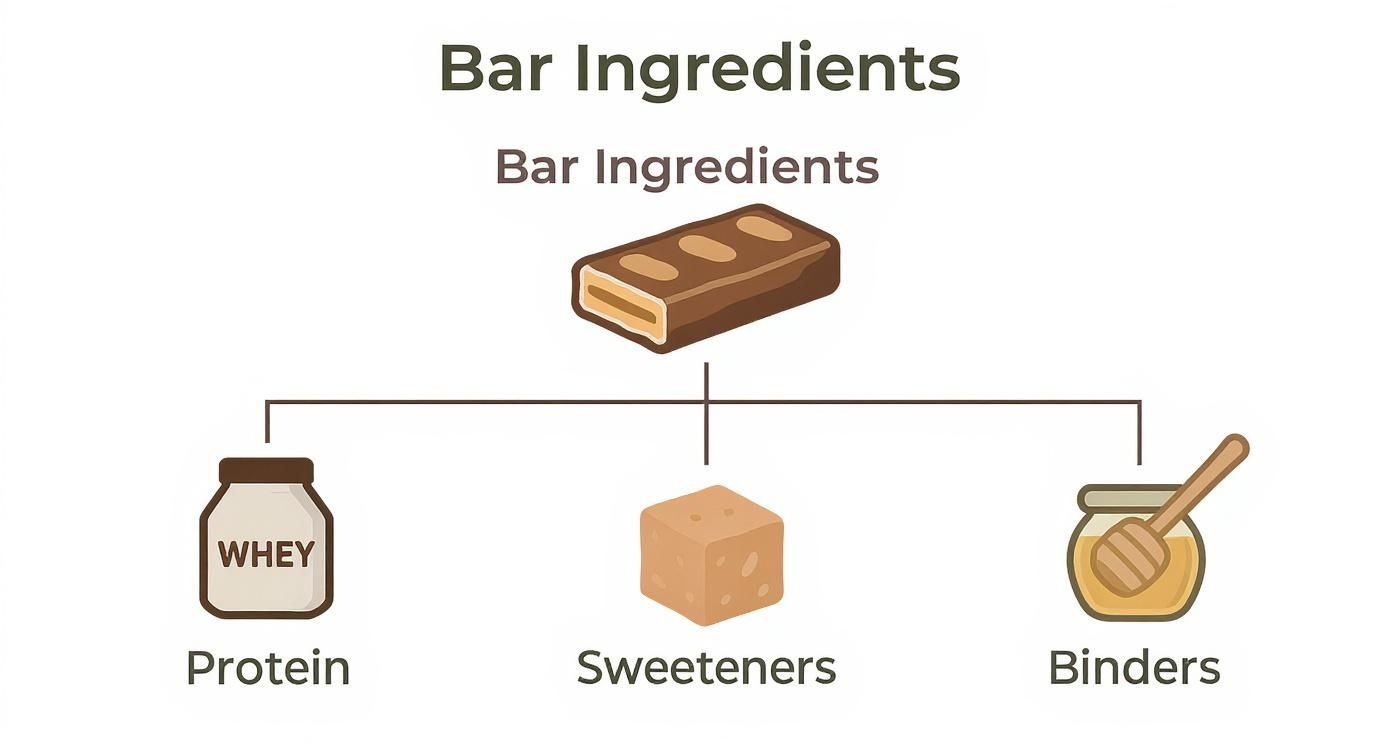
As you can see, the protein source is a foundational choice that influences the bar's entire nutritional profile, right alongside sweeteners and binders. When you’re trying to understand the different proteins in bars, it helps to know the broader context of the best supplements for lean muscle growth, including protein sources like whey.
Plant-Based Proteins: The Rising Stars
But what if dairy isn't your friend? Or what if you're looking for a cleaner, plant-powered option for yourself or your kids? Welcome to the wonderful world of plant-based proteins! These are quickly gaining ground, especially in kids' snacks where parents are searching for gentle, whole-food ingredients.
The goal isn’t to find the one "best" protein source. It's about understanding the options so you can choose what works for your body, your family, and your lifestyle.
Some of the most popular plant-based heroes include:
- Pea Protein: A fantastic, allergen-friendly option that's surprisingly high in key amino acids for muscle support.
- Soy Protein: One of the few "complete" plant proteins, meaning it contains all nine essential amino acids your body needs to thrive.
- Brown Rice Protein: Often paired with pea protein to create a complete amino acid profile, it's a gentle and easily digestible choice.
These plant-based options are perfect for anyone with lactose intolerance or families simply wanting to add more plant-based goodness to their diet. To learn more, check out our guide on plant-based protein sources for a deeper dive.
Common Protein Sources At a Glance
Feeling a little overwhelmed by the options? Don't sweat it! Here’s a simple table to help you compare the most common protein sources you'll find on snack bar labels.
| Protein Source | Type | Key Benefit | Good to Know |
|---|---|---|---|
| Whey Protein | Animal-Based | Fast absorption, great for post-workout | Can cause digestive issues for those with lactose sensitivity. |
| Casein Protein | Animal-Based | Slow digestion, promotes feeling full | Also dairy-based and can be problematic for some. |
| Soy Protein | Plant-Based | Complete amino acid profile | Often GMO, so look for non-GMO or organic sources. |
| Pea Protein | Plant-Based | Allergen-friendly and easy to digest | Sometimes has a slightly earthy taste. |
| Brown Rice Protein | Plant-Based | Gentle on the stomach | Best when combined with other proteins for a complete profile. |
Ultimately, the best protein for your bar is the one that aligns with your health goals and dietary needs. Whether you stick with a classic like whey or try a rising star like pea protein, now you know exactly what you’re looking for on that ingredient list.
Uncovering Sweeteners, Binders, and Fats
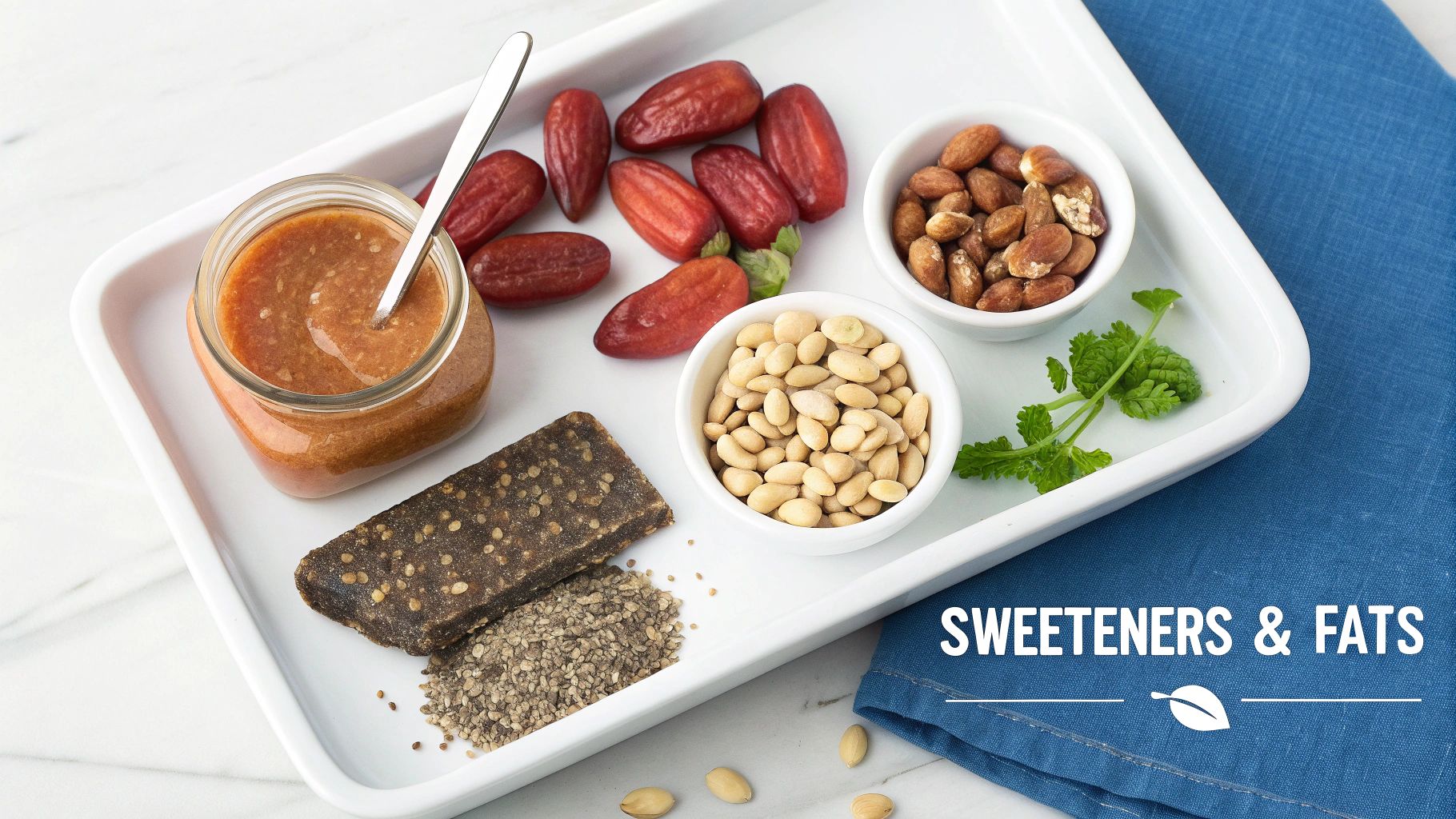
We've met the protein stars, so let's get into the supporting cast: the ingredients that hold a bar together and make it taste like a treat instead of a brick of chalk.
This is where things can get tricky, especially when you're picking snacks for kids. A quick scan of the label can tell you whether you’re holding a genuinely healthy snack or just a candy bar in a clever disguise.
First up, the sweet stuff. That "chocolate chip cookie dough" flavor doesn't happen by magic; it comes from sweeteners. And where that sweetness comes from is a huge clue to the bar's overall quality.
The Sweetener Showdown
When you’re scanning a label, sweeteners fall into a few camps. On one side, you have whole-food heroes like dates, honey, or monk fruit. These are awesome because they bring extra nutrients to the party—like the fiber you get from dates. We suggest looking for these first!
On the other side are artificial sweeteners and sugar alcohols. Ingredients like sucralose, aspartame, or erythritol add sweetness without calories, but they can be a mixed bag. For many people, especially kids with sensitive tummies, sugar alcohols can cause bloating and digestive upset. Not exactly the snack-time bliss you were hoping for.
Many kids' snack bars and cookies rely on these to get that super-sweet taste, so it's smart to proceed with caution. Our suggestion? If the ingredient list reads like a science experiment, put it back and look for something simpler.
The Binders That Hold It All Together
What keeps a protein bar from crumbling into a dusty mess in your bag? Binders! Think of them as the delicious "glue" that gives a bar its satisfying, chewy texture.
Just like with sweeteners, the type of binder says a lot about the bar's philosophy. The best bars use wholesome, functional ingredients to do the job.
- Nut and Seed Butters: Things like almond butter, peanut butter, or sunflower seed butter add healthy fats, a little extra protein, and a rich, creamy texture. Yum!
- Fruit Pastes: Dates are the MVP here. They provide natural sweetness and a sticky consistency that’s perfect for binding everything together.
- Fibers and Syrups: Ingredients like chicory root fiber or brown rice syrup also act as binders, though you’ll want to check how much added sugar they contribute.
When you see a simple list with ingredients like "almond butter" and "dates," it's a fantastic sign you're looking at a clean, whole-food-based bar.
The best bars use ingredients that multitask. A binder like cashew butter, for example, not only holds the bar together but also provides healthy fats and enhances the flavor.
Decoding the Fats
Finally, let's talk fats. Fats are essential for flavor, texture, and helping our bodies absorb certain vitamins, but not all fats are created equal. The source matters—a lot.
Look for bars that get their fat from whole foods like nuts (almonds, cashews) and seeds (chia, flax, sunflower). These provide heart-healthy unsaturated fats along with other awesome nutrients.
A common red flag to watch out for is palm oil. While it's an effective binder and shelf-stabilizer, it's a highly processed, saturated fat that offers little nutritional benefit and comes with major environmental baggage. Choosing bars with fats from whole nuts and seeds is always a smarter, healthier choice for you and your family.
Navigating Fibers, Flavors, and Additives
A truly great protein bar is more than just a mashup of protein, binders, and fats. The real magic—or mischief—often lies in the "extras" list. These are the fibers, flavors, and additives that can either elevate a bar into a super-snack or turn it into a gut-busting science experiment.
This is especially true when choosing snacks for little ones. While an adult might power through a high-fiber bar without issue, the same ingredient could send a kid’s tummy into a tizzy. Understanding these extras helps you pick a winner for the whole family.
Decoding Different Fibers
Fiber is fantastic, but it’s not a one-size-fits-all ingredient. When you’re scanning the pure protein bar ingredients, you'll often see added fibers like inulin or chicory root fiber. These are soluble fibers, which can be superstars for promoting healthy gut bacteria.
But here’s the catch: for some people—especially kids—these concentrated fibers can be tough to digest, leading to bloating and gas. It’s like giving your gut a surprise workout it wasn’t ready for.
If your child complains of a stomachache after eating certain kids' snack bars, these sneaky fibers might be the culprit. A better bet is looking for bars where fiber comes from whole foods like oats, nuts, and seeds.
The Great Flavor Debate
"Natural Flavors." This phrase is the mystery box of the ingredient world. While it sounds wholesome, it's an umbrella term for flavor compounds derived from natural sources. It’s not necessarily bad, but it lacks transparency.
A more telling sign of a quality bar is seeing specific, whole-food flavor sources on the label. Think real cocoa powder, vanilla extract, or cinnamon. This distinction is subtle but important—it shows the brand isn't hiding behind vague terms.
When you're comparing a protein bar to a classic kids' cookie, this is a key differentiator. Many cookies and snack cakes rely on artificial or ambiguous "natural" flavors to achieve their taste. A bar that uses real ingredients for flavor is already a step ahead in the clean-eating game. Our suggestion is to always pick the bar with a transparent flavor source!
Boosted with Vitamins and Minerals
Finally, let's talk about the fortifications. You’ll often see bars with a long list of added vitamins and minerals, like Vitamin B12, Vitamin D, and iron. Is this a valuable boost or just "health-washing"?
Honestly, it can be a bit of both. For someone with specific dietary gaps, these additions can be genuinely helpful. But sometimes, they're used to make a highly processed product appear healthier than it really is.
The best approach? Prioritize bars made from nutrient-dense whole foods first. Think of added vitamins as a potential bonus, not the main reason to choose a bar. A simple, clean ingredient list will always be your most reliable guide to a genuinely nutritious snack.
Are Protein Bars a Good Choice for Kids?
It’s the million-dollar question for every busy parent: can you hand your kid a protein bar without that little pang of guilt? You see them grabbing one on the way to soccer practice, or you're tempted to toss one in their lunchbox for an easy win. In a grab-and-go world, sometimes a bar just feels easier.
But here’s the catch: most protein bars aren't actually designed with kids in mind. The sports nutritional bar market is massive—holding a 49.2% share in 2023—which tells you they’re made for adult athletes, not growing children. Learn more about the popularity of sports nutrition bars.
What to Look for in a Kid-Friendly Bar
An adult-sized, 20-gram protein blast is way too much for a child's smaller body and can put unnecessary stress on their kidneys. So, if you're going to choose a bar for your kid, the rules are totally different. You're not looking for a mini-meal replacement; you're looking for a genuinely healthy snack.
Here’s our suggestion for what makes a bar a much better choice for kids:
- Lower Protein Content: Aim for something in the 5-10 gram range. That’s more than enough for a kid’s snack.
- Whole-Food Ingredients: Look for a short, simple list with ingredients you can actually recognize, like oats, dates, and nut butters.
- Minimal Added Sugar: Skip the bars with high-fructose corn syrup or a long list of artificial sweeteners. Natural sweetness from real fruit is always the best bet.
The goal isn’t to find a bar that mimics a high-performance athletic supplement. It's to find a snack that’s a real step up from a cookie, offering balanced energy from real ingredients. The same goes for kids' snack bars and cookies—check those labels!
Protein Bars vs. Other Kids' Snacks
Let's get real for a second. How does a carefully chosen protein bar stack up against other popular kids' snacks, like those sugary granola bars or soft-baked cookies? When you pick the right one, it's often a much, much better option.
A lot of those other snacks are packed with refined sugars, unhealthy fats, and artificial flavors that lead to a quick sugar rush followed by an epic crash. A good kid-friendly bar, on the other hand, can provide sustained energy from protein, healthy fats, and fiber.
The key is to treat them as an occasional, convenient snack—not a daily staple. By checking the pure protein bar ingredients for simplicity and quality, you can find great options that you can feel good about giving your kids on those super-hectic days.
How to Become a Protein Bar Label Pro
Alright, you've got the scoop on what could be in your protein bar. Now it's time to put that knowledge to work in the real world: the snack aisle. This is where the fun begins!
Think of yourself as a food detective. Your mission? To find a genuinely healthy snack, not just another candy bar masquerading as one. The nutrition label is your first clue, and it tells you everything you need to know.
First things first, flip that bar over and apply the "First Five" rule. The first handful of ingredients on the list make up the vast majority of what you're about to eat. Are they recognizable, whole foods like dates, nuts, and seeds? Or are you staring at a list of chemical-sounding syrups and powders? Our suggestion: if you can’t pronounce it, you probably shouldn’t eat it. A short, simple ingredient list is almost always a good sign.
This skill is a game-changer, especially for parents. Many snack bars marketed to kids are packed with the same junk you’d find in the cookie aisle. Learning how to read food labels is a true parenting superpower, helping you see past the cartoon characters and find something that will actually nourish your little ones.
Green Flags vs. Red Flags on a Protein Bar Label
So, what are you actually looking for? It helps to think in terms of "green flags" (the good stuff) and "red flags" (the stuff to avoid). This quick mental checklist will make shopping so much easier.
With the U.S. protein bar market valued at a whopping $3.96 billion in 2024, there are more choices—and more confusing labels—than ever before. Here’s a simple table to help you cut through the noise.
| Ingredient/Attribute | Green Flag (Look For This!) | Red Flag (Watch Out For This!) |
|---|---|---|
| Ingredient List Length | Short and simple, like a recipe you’d make at home. | A long list full of words you can’t pronounce. |
| First 5 Ingredients | Whole foods: dates, nuts, seeds, fruit, pea protein. | Sugars, syrups (corn, brown rice), soy protein isolate, flours. |
| Protein Source | Plant-based proteins like pea, pumpkin seed, or sunflower. | Soy protein isolate, hydrolyzed collagen, proprietary "protein blends." |
| Sweeteners | Natural sweeteners from whole fruits (like dates). | Sugar alcohols (erythritol, sorbitol), artificial sweeteners (sucralose, aspartame). |
| Fiber Content | At least 3-5 grams from whole food sources. | Chicory root fiber or inulin listed high up, potentially causing digestive upset. |
| Sugar Content | Less than 10 grams of total sugar, with no added sugars. | More than 15 grams of sugar, especially "added sugars." |
| Fats | Healthy fats from whole nuts and seeds. | Hydrogenated oils, palm kernel oil, or other processed fats. |
This table is your cheat sheet for making smarter, faster decisions in the grocery store.
Once you get the hang of spotting these flags, you can start choosing bars that align with your specific goals. For example, learning how to find the best protein bars for weight loss becomes much simpler when you can quickly identify bars that are low in sugar and high in fiber.
Mastering the label empowers you to confidently pick the perfect bar for any situation—whether it’s for a post-workout refuel, a travel-day snack, or a healthy addition to your kid's lunchbox.
Answering Your Top Protein Bar Questions
Let's dig into some of the most common questions that pop up when you're trying to figure out the world of protein bars. Making good choices for you and your family usually comes down to knowing a few key details.
One of the biggest questions is whether a protein bar can actually replace a meal. While they’re super convenient, most bars just don't have the full spectrum of nutrients you’d get from a balanced meal. It’s better to think of them as a fantastic bridge snack to get you from lunch to dinner, or the perfect post-workout refuel—not a long-term substitute for real, whole foods.
A Special Note on Kids and Snacks
When it comes to kids, the conversation shifts a little. Parents often wonder how a protein bar stacks up against the usual suspects, like a classic cookie or a kids' snack bar. Here’s a fun suggestion: do a side-by-side comparison next time you shop! You’ll often find that a thoughtfully chosen, low-sugar bar made with whole-food ingredients is a much better option than a typical kids' cookie that’s often packed with refined sugars and artificial flavors. As with anything, the key is moderation and choosing wisely.
Globally, clean-label and plant-based protein bars are starting to outshine traditional sugary snacks. They’re catching on with a growing crowd looking for personalized nutrition, fueling a market that’s expected to hit over USD 24 billion by 2032. Discover more insights about the protein bar market on fortunebusinessinsights.com.
For kids, a good rule of thumb is to aim for bars with 5-10 grams of protein and an ingredient list you can actually read. This gives them sustained energy without overwhelming their smaller systems. This applies to dedicated kids' snack bars and even better-for-you cookies!
Ultimately, picking the right bar is all about matching its ingredients to what you need, whether that’s a gluten-free option for yourself or a satisfying, clean snack for your child's lunchbox.
Ready to make snacking a joyful, healthy adventure? At Skout Organic, we create delicious, plant-based protein bars, kids' snack bars, and cookies with simple, organic ingredients you can trust. Build your custom snack box today!