 Kids Snack Bars
 Soft-Baked Cookies
 Protein Bars
 Build A Box
 Shop All





Let's be real: healthy snack bars for kids should be simple. So simple, you can count the ingredients on one hand. Think whole-food powerhouses like fruits, nuts, and seeds, with little to no added sugar. They’re the perfect grab-and-go fuel for your little superheroes, giving them the sustained energy they need for all their amazing adventures.
The Great Snack Aisle Adventure
Welcome to the wild world of the kids' snack aisle! It's a colorful, chaotic jungle where finding something both healthy and kid-approved can feel like an impossible treasure hunt. If you've ever stood there, totally overwhelmed by bright packaging and bold claims, trust us: you are not alone. The sheer number of choices is enough to make any parent's head spin.
But here's a secret: smart snacking is a game-changer for your child's energy, focus, and mood. Little bodies and brains burn through fuel at lightning speed, and the right snack can mean the difference between a happy, engaged kid and a cranky, unfocused one. This is exactly why so many of us reach for those convenient kids snack bars and cookies—they're supposed to be the perfect, easy solution.
The Rise of the Convenient Snack
Life with kids is a whirlwind. Between school drop-offs, soccer practice, and impromptu dance parties in the living room, there isn't always time to whip up a homemade snack from scratch. This is where a good snack bar or cookie feels like pure magic. They are the perfect sidekick for:
- School Lunches: Easy to pack and allergy-friendly options are a true lifesaver.
- After-School Fuel: They provide the perfect energy bridge between the last bell and dinnertime.
- On-the-Go Energy: Just toss one in your bag for instant fuel during weekend adventures.
This convenience factor is why countless families rely on them. But—and it's a big but—not all bars are created equal. How do you know you're making a choice that will actually fuel your kid, not just fill them up with fluff?
Uncovering Common Health Traps
Unfortunately, a lot of snacks marketed to kids as "healthy" are anything but. These are the common ‘health traps’—bars and cookies that look wholesome on the outside but are secretly loaded with sugar and a list of unpronounceable ingredients. Think of them as candy bars in disguise, promising a quick burst of energy that inevitably leads to a spectacular crash.
This guide is your treasure map! We're here to help you navigate the noise, turning that aisle-induced confusion into total confidence. Together, we'll figure out how to pick the best fuel for your little adventurers.
Beyond just the snack aisle, making good decisions for your child's wellbeing is a big-picture job. It helps to have a solid foundation for approaching general health matters and building healthy habits. But for now, let’s focus on this: navigating the world of healthy snack bars for kids doesn't have to be a stressful expedition.
How to Decode a Nutrition Label Like a Pro
Stepping into the snack aisle can feel like trying to read a secret code. Every colorful package makes big promises, but the real story is hidden on that little white box on the back: the nutrition label. Think of this section as your official decoder ring.
Learning to quickly scan this label is your superpower. It turns you from a guessing parent into a savvy snack detective, able to spot the good guys and the sneaky villains in seconds. And you don't need to analyze every single number—you just need to know the three most important clues.
The Big Three: Sugar, Protein, and Fiber
When you're in a hurry, focus your detective work on three key areas: sugar, protein, and fiber. These three tell you almost everything you need to know about a snack bar's true purpose. Will it provide lasting energy for the playground, or will it send your kid on a short-lived sugar high followed by a massive crash?
Let's break down what to look for.
- Sugar: Aim for bars with 10 grams of sugar or less. More importantly, check the ingredient list to see where that sugar comes from.
- Protein: Look for at least 3-5 grams of protein. This helps keep little tummies full and provides building blocks for growing bodies.
- Fiber: A good target is 3 grams of fiber or more. Fiber is essential for digestive health and helps stabilize energy levels.
This balanced trio is the secret to a snack that satisfies hunger, tastes great, and provides steady, reliable fuel. For a deeper dive into label literacy, check out our complete guide on how to read food labels.
Spotting Sneaky Added Sugars
Not all sugars are created equal! The sugar found naturally in a whole date is completely different from the refined white sugar or high-fructose corn syrup added to a processed cookie.
Natural sugars, like those from fruit, come packaged with fiber, vitamins, and minerals. This built-in fiber slows down digestion, preventing the dreaded sugar rush. Added sugars, on the other hand, offer nothing but empty calories and a fast track to an energy spike.
Think of it like this: an added sugar rush is a firework—a quick, bright burst of energy that looks exciting but fades in an instant, leaving everyone tired. The sustained energy from fiber and protein is like a slow-burning log in a campfire, providing steady, reliable warmth and power for hours of play.
When you look at the "Total Sugars" line on a nutrition label, you'll now see a sub-line for "Includes Added Sugars." Your goal is to get this number as close to zero as possible.
This handy guide can help you quickly decide which snack bar is right for your situation, whether you need something for the car ride home or a staple for the lunchbox.
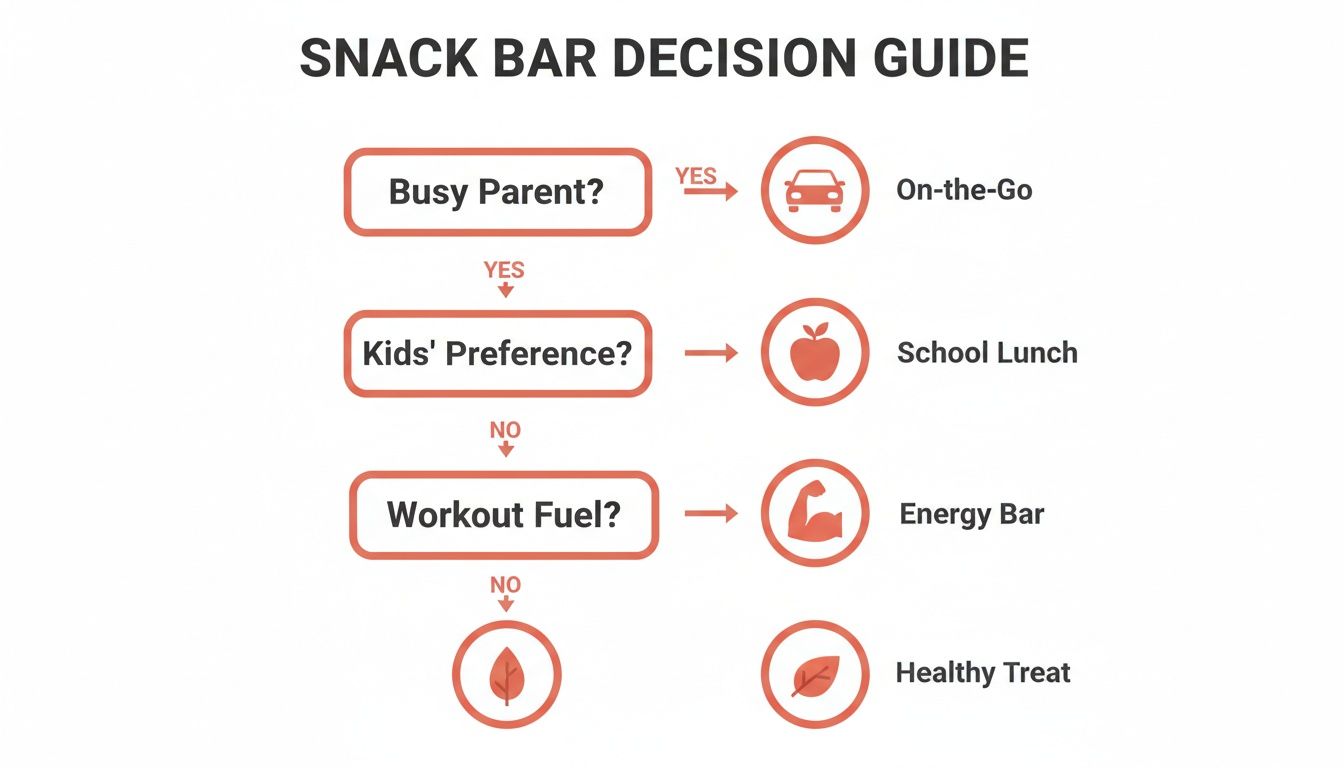
As you can see, the best bar often depends on the specific need, from on-the-go fuel to a balanced part of a school meal.
A Quick Cheat Sheet for the Aisles
To make it even easier, here's a quick checklist you can pull up on your phone at the grocery store. It's a simple way to vet any bar you pick up.
Healthy Snack Bar Nutritional Checklist
| Nutrient | What to Look For (The Good Stuff) | What to Limit (The Sneaky Stuff) |
|---|---|---|
| Sugar | 10 grams or less total | 0 grams of Added Sugar |
| Protein | 3-5 grams minimum | N/A |
| Fiber | 3 grams or more | N/A |
| Ingredients | Short list of recognizable whole foods | Artificial flavors, colors, preservatives, corn syrup |
Think of this as your go-to reference for making smart, fast decisions in the middle of a busy shopping trip.
The Power of Protein and Fiber
While keeping sugar low is critical, what a snack bar does contain is just as important. Protein and fiber are the dynamic duo of satisfying snacks. They work together to slow down digestion, which helps keep blood sugar levels stable and prevents hunger from striking again 30 minutes later.
This powerful combination is what transforms a simple snack into long-lasting fuel. A bar rich in both will keep your child feeling full, focused, and energized, whether they're in the classroom or on the soccer field.
It's clear that parents everywhere are focusing more on quality nutrition. The global market for healthy kids' snacks, with snack bars as a top product, was valued at USD 6.57 billion and is expected to hit USD 12 billion by 2035. That's a huge shift toward better-for-you options!
By focusing on these three key elements—low added sugar, adequate protein, and sufficient fiber—you can confidently decode any label. You'll be able to quickly identify the genuinely healthy kids snack bars and cookies that will truly nourish your little one.
Your Secret Weapon: The Ingredient List
If the nutrition label is the secret code, the ingredient list is the treasure map. While numbers for sugar and protein tell an important part of the story, the list of what's actually in the bar tells you everything else. This is where you can instantly tell if you're holding a snack made from real food or one born in a science lab.
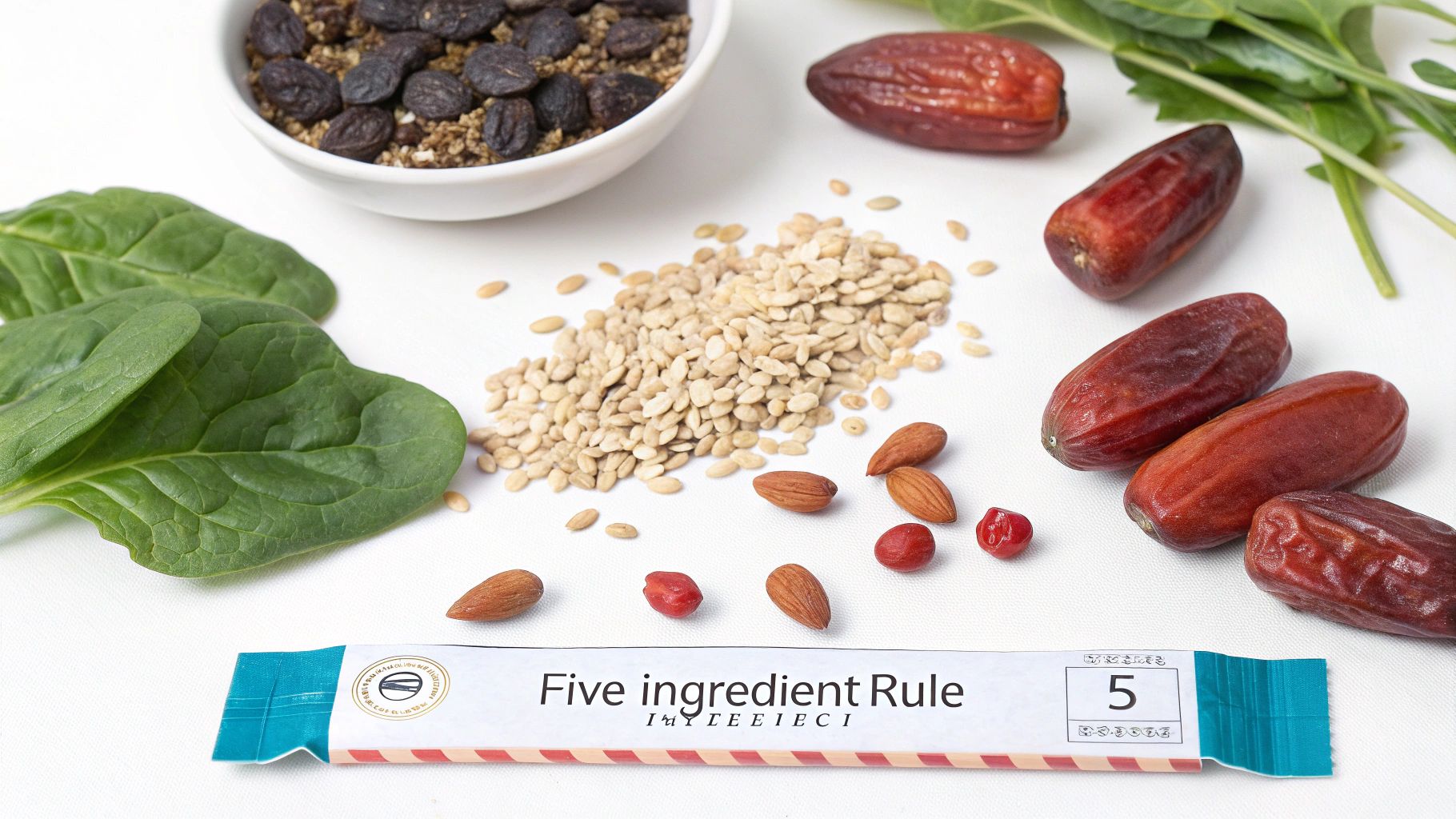
Think of it this way: a clean ingredient list should read like a recipe you’d make in your own kitchen. You’ll see things like dates, organic oats, almonds, and sunflower seeds. A complicated one? It looks more like a chemistry experiment, packed with things you can't pronounce.
The Five Ingredient Rule
Here’s a fun and easy game to play in the snack aisle: The Five Ingredient Rule. While not a hard-and-fast law, it’s a brilliant guiding principle. The idea is simple: the fewer ingredients a snack bar has, the more likely it is to be made from whole, unprocessed foods.
When you pick up a bar, just glance at the list. If it has only a handful of recognizable items, you’re probably on the right track. This approach helps you quickly filter out overly processed options without getting bogged down in the details.
A short ingredient list is a sign of confidence. It means the brand isn't trying to hide anything behind complex additives or chemical fillers. It's just simple, good food.
This principle is a great starting point for finding genuinely healthy snack bars for kids. A snack with five or six whole-food ingredients will almost always be a better choice than one with twenty, even if their nutrition numbers look similar at first glance.
Spotting Whole Foods vs. Science Experiments
So, how do you tell the difference between a recipe and a science experiment? It really just comes down to recognizing the names.
-
Recipe Ingredients (The Good Stuff): These are foods you know and probably have in your pantry. Think oats, dates, apples, peanuts, cinnamon, and sea salt. If you can picture it growing on a plant or tree, it’s a great sign.
-
Science Experiment Ingredients (The Red Flags): These are the long, confusing words that make you pause. Watch out for artificial sweeteners (like sucralose), hydrogenated oils, artificial colors (like Red 40), and preservatives you can’t pronounce.
For example, a great kids' snack bar might list: Organic Dates, Organic Sunflower Seeds, Organic Apricots, and Organic Chia Seeds. That’s it! It’s clean, simple, and you know exactly what your child is eating. You can see how simplicity makes all the difference in our guide to understanding pure protein bar ingredients.
Why Simple Ingredients Matter Most
A focus on simple, organic ingredients ensures your child is getting nutrients from real food sources, not from synthetic fortifications. Real foods come packed with vitamins, minerals, and phytonutrients that work together in ways that isolated, lab-created nutrients just can't replicate.
Kids' bodies are also still developing. Exposing them to a constant stream of artificial additives, preservatives, and dyes can be taxing on their systems. Choosing bars and cookies with clean, simple ingredient lists reduces this chemical load and provides pure, wholesome energy.
Ultimately, by making the ingredient list your secret weapon, you empower yourself to make the best choices. You can confidently pick up any snack bar, scan the list in seconds, and know you're giving your little one the simple, nourishing fuel they deserve. No chemistry degree required.
Navigating Food Allergies and Sensitivities
For so many families, the snack hunt is about more than just reading nutrition labels—it’s about keeping their kids safe. Food allergies and sensitivities add a serious layer of complexity to choosing snacks, turning what should be a simple task into a stressful one. If this is your world, you know the constant vigilance required for every single bite.
The good news? You're not alone, and finding safe, delicious kids snack bars and cookies is more possible now than ever before. With a little know-how, you can confidently stock your pantry with goodies that everyone can enjoy, whether at home, in the classroom, or at team practice.
Becoming a Confident Label Detective
When allergies are in play, the ingredient list becomes the most critical part of the package. It’s your first and best line of defense. Luckily, federal law requires that the top major allergens be clearly identified on labels, which makes your job a little easier.
You’ll typically find allergens listed in one of two ways:
- In the ingredient list itself: For example, the list might say "flour (wheat), milk, and eggs."
- In a separate "Contains" statement: This is often found right below the ingredient list and will clearly state "Contains: Wheat, Milk, and Eggs."
This makes it much easier to quickly scan and identify potential risks right off the bat.
Understanding Cross-Contamination Warnings
Beyond the "Contains" statement, you’ll often see advisory warnings like "May contain nuts" or "Processed in a facility that also handles soy." These are voluntary statements from manufacturers, and honestly, they can be confusing. They mean that while an allergen isn't an intended ingredient, accidental contact—or cross-contamination—is possible.
For a child with a severe allergy, these warnings are crucial. A snack bar made without nuts but produced on the same equipment as peanut-filled bars could pose a serious risk. This is why choosing products from brands that prioritize allergen safety is so important. For example, finding reliable school-safe options is a common challenge, and our guide on selecting the best nut-free bars can help simplify the process.
What Do Certifications Really Mean?
To offer even greater peace of mind, many brands pursue third-party certifications. These labels provide an extra layer of trust, showing that the product has been verified by an outside party to meet specific standards.
Think of a certification as a co-signer on a promise. It’s an independent organization verifying that the brand is doing what it says it's doing, from ingredient sourcing to manufacturing processes.
Here are a few common ones to look for when choosing healthy snack bars for your kids:
- Certified Gluten-Free: This means the product has been tested and contains less than 20 parts per million of gluten, the standard set by the FDA. It’s a crucial seal for children with Celiac disease or a high gluten sensitivity.
- Certified Vegan: This indicates the product contains no animal products whatsoever—including meat, dairy, eggs, and honey. It's a quick way to ensure a bar is dairy-free and egg-free.
- Certified Organic: While not strictly an allergy certification, this seal ensures ingredients are grown without synthetic pesticides or GMOs, which is a priority for many health-conscious families.
These certifications remove the guesswork, empowering you to make safe choices quickly and confidently. They help transform a stressful shopping trip into a simple, successful mission to find yummy, worry-free snacks for your child.
Fun Ways to Boost Your Snack Routine
A great, healthy snack bar is a total lifesaver in any parent's toolkit, but it's just one piece of the puzzle. Think of it as the reliable starting player on your snack-time team. Now, let's get creative and bring in some all-stars to make snack time an exciting, nutritious, and engaging part of the day.
The goal is to move beyond just handing over a bar and explore simple strategies to boost its nutritional power and fun factor. After all, variety isn't just the spice of life—it's also key to a balanced diet for growing kids.
Simple Snack Pairings for a Nutrient Boost
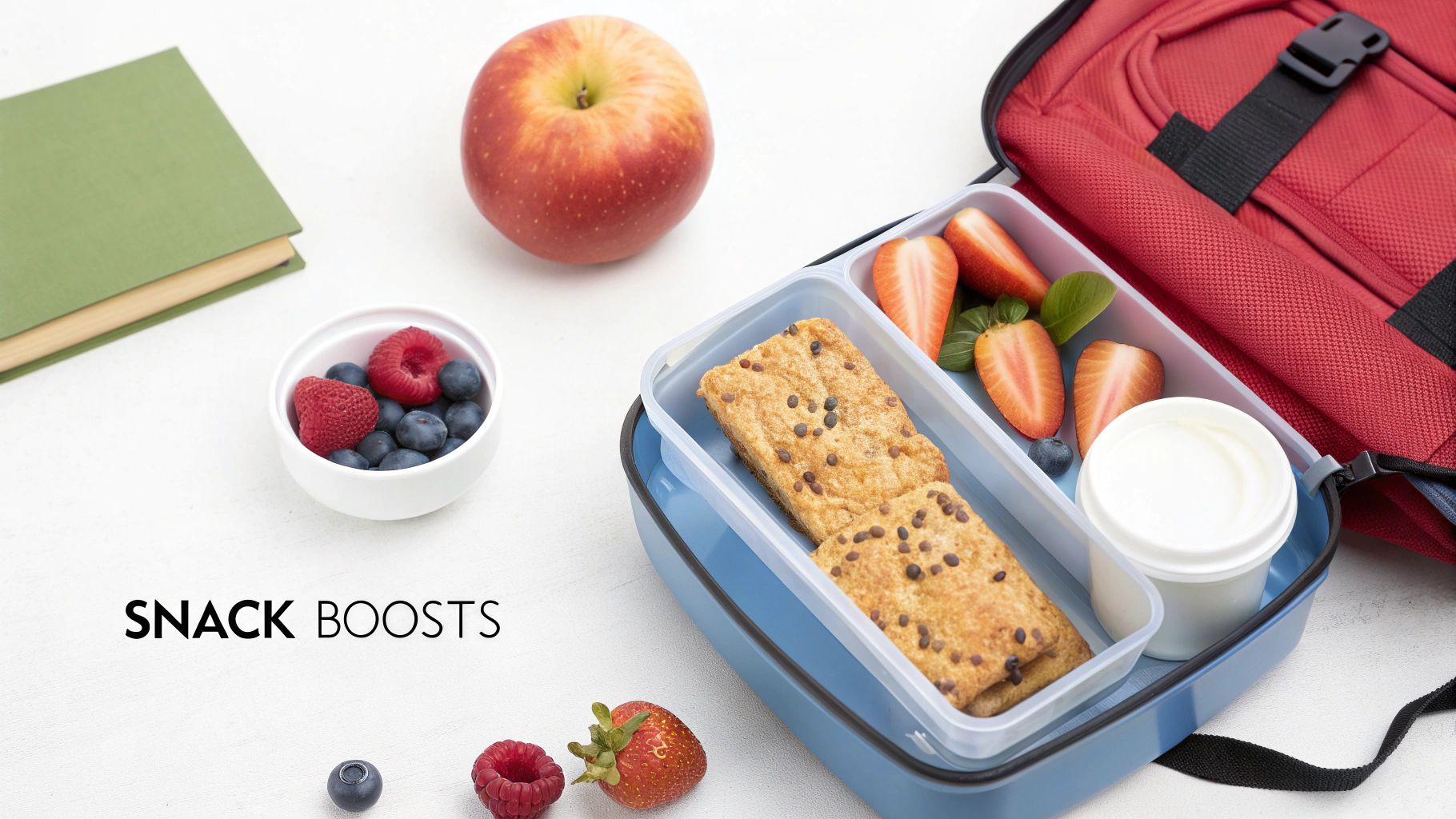
Pairing a high-quality snack bar with another whole food is one of the easiest ways to turn a simple snack into a more complete "mini-meal." This helps round out the nutrients, adding extra vitamins, protein, or healthy fats to keep little ones full and focused for longer.
We suggest trying these super-simple ideas:
- Pair with Fresh Fruit: Serve a bar alongside a handful of berries, apple slices, or a small banana. This instantly adds a boost of Vitamin C, antioxidants, and extra fiber.
- Add a Protein Punch: For active kids who need more staying power, add a side of plain Greek yogurt or a cheese stick. The extra protein helps with muscle repair and keeps them satisfied until dinner.
- Serve with Veggie Sticks: Sliced cucumbers, bell peppers, or carrot sticks offer a satisfying crunch and a dose of essential vitamins. Add a side of hummus for even more fiber and protein.
These pairings take just a few seconds to assemble but can dramatically increase the nutritional value of your child's snack.
Get Creative with a DIY Snack Mix
Who doesn't love a good trail mix? This is a fantastic way to stretch a snack bar further while adding texture and nutrients. Simply break up your child’s favorite healthy snack bar or cookie into smaller, bite-sized pieces and toss it into a bowl with other yummy, kid-friendly ingredients.
Think of the snack bar as the flavorful, chewy base for a custom creation. It holds everything together and ensures you're starting with a solid, nutritious foundation.
Here are some fun additions to suggest to your little chef:
- Unsweetened coconut flakes
- Pumpkin or sunflower seeds (a great nut-free option)
- Freeze-dried strawberries or raspberries
- A sprinkle of whole-grain, low-sugar O's cereal
Let your kids help mix it all up! Getting them involved makes them way more excited to eat the final product. And if you need more ideas for keeping them occupied, explore these fun and screen-free activities to keep kids busy.
A Super-Simple No-Bake Recipe to Try
Making snacks together is a wonderful, hands-on way to teach kids about whole-food ingredients. This no-bake energy ball recipe is incredibly easy and perfect for little hands to help with—no cooking required.
Easy 4-Ingredient Energy Balls
- Combine in a bowl: 1 cup of old-fashioned oats, ½ cup of creamy nut or seed butter, and ¼ cup of honey or maple syrup.
- Add your mix-in: Stir in ¼ cup of your favorite mix-in, like mini chocolate chips, shredded coconut, or finely chopped dried fruit.
- Mix and chill: Mix everything until well combined. The "dough" will be sticky. Chill the mixture in the refrigerator for about 15-20 minutes.
- Roll and enjoy: Roll the chilled mixture into small, one-inch balls. Store them in an airtight container in the fridge for a quick and healthy grab-and-go snack.
Granola bars, a key player among healthy snack bars for kids, have long been a parent favorite. This category recently led the market with a valuation of USD 1.2 billion and is projected to reach USD 2.1 billion by 2035. This popularity comes from their amazing versatility—blending oats, nuts, and fruits into formats kids love. Discover more insights about the snack bar market on grandviewresearch.com.
Why Simple Ingredients Are Always the Answer
After navigating the twists and turns of the snack aisle, decoding labels, and getting a crash course in allergen safety, one simple truth shines through: the best fuel for your kids comes from real, recognizable food. You now have all the tools to see why the "simple is better" philosophy isn't just a trend—it's the foundation of genuinely healthy snacking.
Think of yourself as a newly trained snack detective. You’re no longer just grabbing a convenient box off the shelf; you know exactly what to look for and, more importantly, what to avoid. The core principles are refreshingly straightforward, and they’re the key to choosing the best healthy snack bars for kids.
The Four Pillars of a Truly Healthy Snack
So, what have we learned? A truly great snack for your child, whether it's a bar or a cookie, is built on four non-negotiables. These are the markers that separate the wholesome heroes from the candy bars in disguise.
-
Clean, Simple Ingredients: The ingredient list should read like a recipe you’d make at home, not a science experiment. Look for whole foods you actually know, like organic dates, sunflower seeds, and real fruit.
-
Zero Added Sugar: Natural sweetness from fruit is fantastic—it comes packaged with fiber and nutrients. Added sugars, on the other hand, just bring empty calories and set your kid up for that inevitable energy crash.
-
Balanced Nutrition: A smart snack provides lasting fuel. That comes from a balanced mix of natural carbohydrates for immediate energy, protein for staying power, and fiber to keep them full and focused between meals.
-
Allergy-Friendly Peace of Mind: Safety is everything. Brands that produce their snacks in dedicated allergen-free facilities offer priceless peace of mind for school lunches, team events, and playdates.
When you choose a snack that checks these boxes, you're doing more than just calming a rumbling tummy. You're providing pure, unadulterated fuel that supports their growth, energy, and focus—without any of the junk.
Making the Smart Choice Feel Easy
Armed with this knowledge, your trips down the snack aisle are about to feel a whole lot different. Instead of confusion, you’ll feel confident. You can quickly scan a package, spot the markers of a high-quality product, and make a choice you feel great about. Suddenly, picking out simple, healthy, and delicious snacks feels obvious.
It’s all about connecting what you’ve learned with brands that share this simple food philosophy. Companies that prioritize wholesome, organic ingredients are the ones creating the kids' snack bars and cookies you can trust—and that your kids will actually get excited to eat. Your newfound skills mean you're officially a pro at finding snacks that are simple, nutritious, and kid-approved.
A Few Questions from the Pantry
Let's be honest, even when you know what to look for, the real world of feeding kids brings up a whole new set of questions. Standing in the snack aisle can feel like a pop quiz.
Here are the answers to some of the most common things we hear from parents, designed to help you feel totally confident in your snack game.
At What Age Can My Child Start Eating Snack Bars?
This is less about a number and more about your child’s own developmental stage, especially their chewing skills. Softer bars made with simple, whole-food ingredients (like Skout bars!) can often be introduced once a toddler is a confident eater of solid foods.
The golden rule is to always break bars into small, manageable pieces to prevent any choking hazards. And, of course, keep a close eye on them while they’re enjoying their snack. If you’re ever unsure, we suggest a quick chat with your pediatrician—it's always the best move.
Are Fruit-Based Snack Bars Just Candy in Disguise?
Some definitely are, but the ingredient list is your secret weapon for telling the difference. A truly healthy fruit bar gets its sweetness from only real, whole fruit—think dates or apples—which also pack in fiber and other nutrients.
The ones to watch out for are loaded with added fruit juice concentrates, cane sugar, or different kinds of syrups. Those extras are what can turn a potentially great snack into a sugar bomb that leads to the dreaded energy crash and burn.
A great rule of thumb we suggest: If the sweetness comes from something you can picture growing (like a date), you're in the clear. If it's from something made in a factory (like high-fructose corn syrup), it's probably best to skip it.
How Many Snack Bars Should My Kid Eat Per Day?
It's best to think of a snack bar as just one component in a varied, balanced diet—not a meal replacement. For most kids, one bar a day is a perfect amount, whether it's an after-school pick-me-up or a super-easy addition to their lunchbox.
Just be sure to round out their day with other healthy foods like fresh fruits, crunchy veggies, and yogurt. This helps ensure they're getting the wide range of nutrients their growing bodies need to thrive.
Ready to stock your pantry with snacks that are simple, delicious, and kid-approved? Explore the full range of organic, plant-based kids' bars and cookies from Skout Organic and build your custom box today.