
So, what actually makes a granola bar healthy? It's pretty simple: a short list of ingredients you can actually recognize, very little added sugar (aim for under 5 grams), and a decent dose of fiber (at least 3 grams). A truly good-for-you bar skips the processed oils and syrups in favor of whole foods like nuts, seeds, and real fruit.
It’s all about real nutrition, not just clever packaging. Let's dig in and find some awesome snacks!
The Great Granola Bar Disguise
Ever feel like you need a detective’s license to navigate the snack aisle? It happens to the best of us. You grab a box with pictures of mountains and sunshine, thinking you’ve made a great choice for your family. But when you get home, you realize you've accidentally bought a candy bar dressed up in a "healthy" costume.
It’s a classic bait-and-switch, and you're not alone in falling for it.
The real challenge, especially when shopping for kids, is that so many of those "healthy" kids snack bars are packed with the same sneaky stuff—hidden sugars, refined grains, and unhealthy fats. They promise whole-grain energy but deliver a sugar crash just in time for homework meltdowns. Why not try a bar made with real fruit and no added sugar? You'll be amazed at how tasty they can be!
Unmasking the Sugar Problem
So, how do you find a genuinely healthy granola bar when so many are misleading? The secret is to ignore the flashy claims on the front of the box and head straight for the nutrition label. Sugar is almost always the biggest offender hiding in plain sight.
A key benchmark for a healthy bar is keeping added sugar to a minimum. Aiming for 5 grams or less per serving is a great rule of thumb to avoid an unintentional sugar bomb.
Tons of popular brands blow right past this simple guideline. In fact, some of the most common granola bars on the shelf pack over 10 grams of added sugar per serving—more than double what you should be looking for. It’s no wonder they taste so sweet!
Finding a truly healthy option means becoming a savvy snack detective. It’s about picking bars that fuel your family with lasting energy from fiber and protein, not just a quick hit of sugar. To dive deeper into what makes a granola bar truly nutritious, check out our complete guide to granola bar nutrition.
How to Decode Nutrition Labels Like a Pro
Alright, it’s time to put on your detective hat and figure out what’s really inside that granola bar. Think of yourself as a secret agent on a mission to find what is the healthiest granola bar, and the nutrition label is your secret code. It’s where all the juicy details are, especially for kids' snack bars and cookies that often hide behind playful packaging.
Once you know what to look for, decoding labels becomes a superpower. It lets you see past the marketing fluff and choose snacks that will genuinely fuel your family’s day.
Look for Low Added Sugar
First on the checklist: added sugar. This isn’t the sugar naturally found in fruit; it's the stuff manufacturers sneak in during processing. Your mission, should you choose to accept it, is to find bars with less than 5 grams of added sugar per serving.
So many “healthy” kids' snack bars are actually sugar bombs in disguise. You can also explore various sugar-free options if you're looking to cut back even more. Keeping sugar low is the golden rule for avoiding that dreaded afternoon crash.
Prioritize Fiber and Protein
Next up, scan the label for fiber and protein. These two are the dynamic duo that keeps everyone feeling full, energized, and satisfied. A great benchmark is a bar with at least 3 grams of fiber and a few grams of protein to back it up.
Fiber helps slow down digestion, keeping hunger pangs at bay, while protein provides that steady, sustained energy. Together, they turn a simple snack into a powerful pick-me-up that lasts way longer than a sugar rush. For a deeper dive, check out our guide on how to read food labels.
Check the Fat Source and Ingredients
Finally, take a peek at the fat source and the full ingredient list. You want to see healthy fats from whole-food sources like nuts and seeds—think almonds, chia seeds, or sunflower seeds. These are the good guys that support brain health and keep you feeling full.
The ingredient list should be short, sweet, and recognizable. If you can't pronounce half the ingredients, it’s probably not the best choice. A typical granola bar can be calorie-dense, often around 471 kcal per 100g, but their low glycemic index means they won't cause a huge spike in blood sugar.
Ranking Popular Granola Bars From Good to Best
Alright, you’ve got your snack detective skills sharpened—now it's time to put them to the test. Let's line up some of the most popular granola bars and see how they really stack up in a real-world showdown.
This isn’t about shaming any brands; it’s about making you feel totally confident when you’re standing in that snack aisle. Think of it as a friendly competition where the prize is your family's health and wellness. Some bars are solid all-around players, while others are definitely more of a once-in-a-while treat. Knowing the difference is your secret weapon.
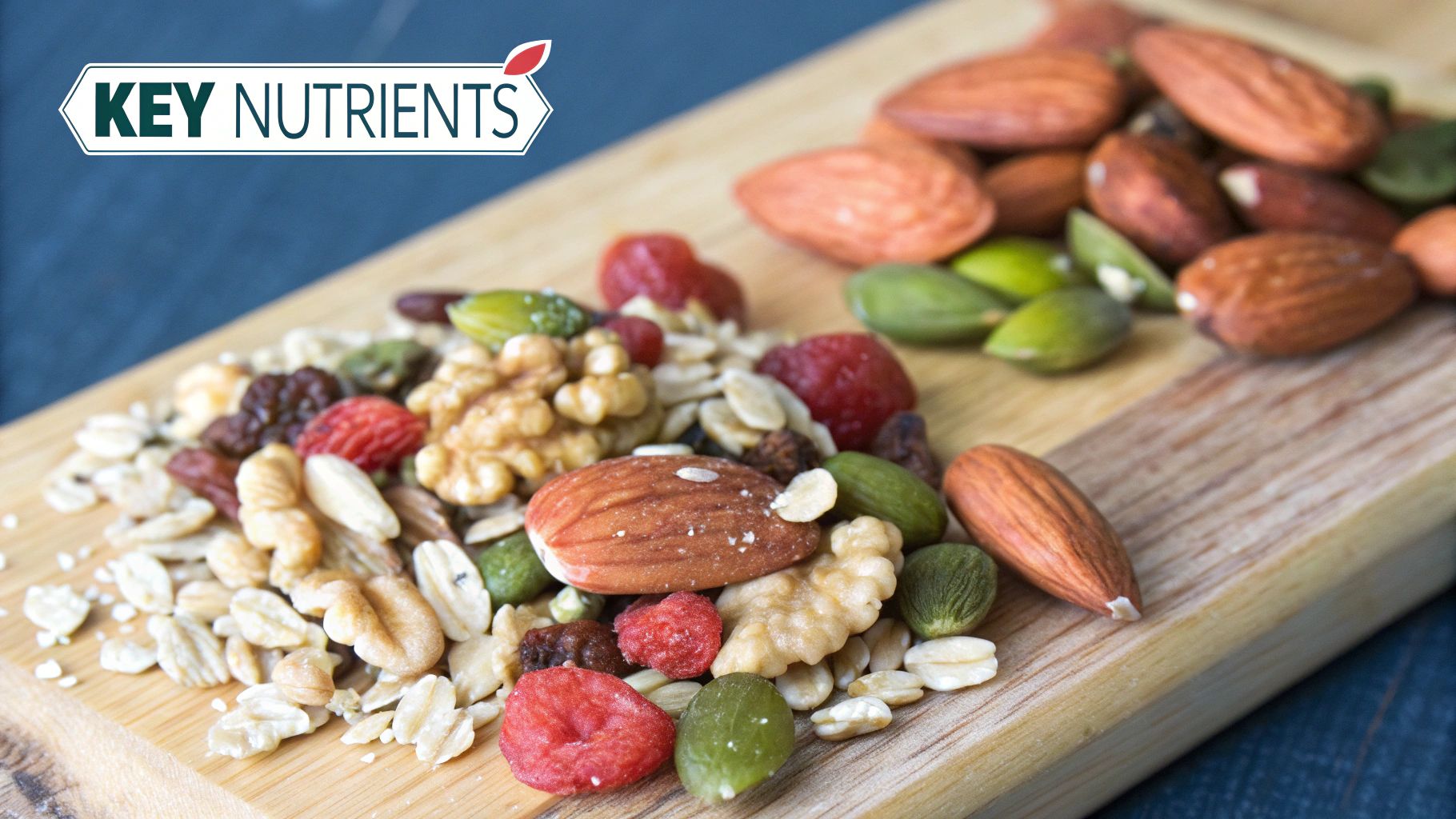
The healthiest granola bar isn't always the one with the flashiest packaging. This visual guide below breaks down the top-tier ingredients you should be looking for—things like whole almonds, chia seeds, and real dried fruit.

Seeing these whole foods is a great reminder that simple, recognizable ingredients are the true foundation of a nutritious snack.
From Good to Best in the Snack Aisle
So, what really separates the best from the rest? It all comes down to those key clues we've been talking about: low sugar, high fiber, and a short list of whole-food ingredients. When a bar hits all three of those marks, it earns a top spot in our book.
For example, some of the strictest nutritional reviews out there have spotlighted bars that meet these tough criteria.
A great example is the Back Roads Original granola bar, which has 200 calories, 4g of fiber, and only 3g of added sugars. Another fantastic choice is Cascadian Farm’s No Added Sugar Blueberry Vanilla bar, with 165 calories, 3g of fiber, and zero added sugars.
These bars prove it’s totally possible to find delicious options that aren’t just candy bars in disguise. By keeping an eye out for brands like these, you can start building a mental shopping list of trusted go-tos.
Healthy Granola Bar Comparison
To make it even easier, here’s a quick-glance table comparing a few popular bars. Use it to see how your current favorites measure up and to spot healthier alternatives based on sugar, fiber, and protein.
| Brand/Bar Name | Calories | Added Sugar (g) | Fiber (g) | Protein (g) | Health Rating |
|---|---|---|---|---|---|
| Skout Organic Apple Pie Bar | 210 | 0 | 4 | 7 | Best |
| KIND Dark Chocolate Nuts & Sea Salt | 200 | 5 | 7 | 6 | Better |
| Nature Valley Oats 'n Honey | 190 | 11 | 2 | 3 | Good (In Moderation) |
| Clif Bar Chocolate Chip | 250 | 17 | 4 | 10 | Good (Performance Fuel) |
| Quaker Chewy Chocolate Chip | 100 | 7 | 1 | 1 | Okay (Treat) |
This side-by-side view really highlights the differences. Notice how a lower calorie count doesn't always mean it's the healthiest choice—the sugar and fiber content tell a much bigger story. If you want to dig deeper, you can learn more about how experts rate granola bars to help your search. This hands-on comparison should make your next grocery trip a whole lot easier.
Finding Healthy Snacks Your Kids Will Actually Eat

Let's be real: finding healthy snacks for your kids can feel like an impossible mission. You're up against a wall of flashy packaging, cartoon characters, and the notoriously picky palates of the world's toughest food critics. So many "kids" snack bars and cookies are just dessert in disguise, packed with enough sugar to fuel a rocket launch (and the inevitable crash that follows).
The struggle is real, but so is the reward. When we build healthy habits early, we're setting the foundation for a lifetime of wellness. The trick is to find that sweet spot—snacks that meet your nutritional standards but also pass the all-important kid taste test. It's about making healthy feel like a treat, not a chore.
Turning Snack Time into a Fun Game
One of the best ways to get buy-in is to involve your kids in the process. Instead of just handing over a snack, make choosing one a fun activity. Let them be your "snack detectives" at the grocery store. Give them a simple mission, like finding a bar with strawberries or spotting one with a green wrapper.
This simple shift empowers them and makes them way more excited to try what they’ve picked out themselves. It turns a potential power struggle into a fun, collaborative game. You can find more great tips on this in our guide to healthy snacks for kids.
Another fun idea? Hold a "flavor vote." Let them try two healthy options and decide which one becomes the family's official "Snack of the Week."
The goal is to make healthy eating a positive and shared experience. When kids feel like they have a say in what they eat, they are far more likely to embrace nutritious options without the mealtime drama.
Brands like MadeGood and Skout Organic have totally nailed this balance. They create delicious, kid-approved bars with clean ingredients and minimal sugar, proving you don't have to sacrifice taste for nutrition.
For even more inspiration, you can explore more healthy snack options to keep your pantry stocked with winners. By making a few smart swaps and getting your little ones involved, you can officially conquer the snack time challenge.
Healthy Snack Alternatives Beyond the Wrapper
While finding the healthiest granola bar is a great goal for those on-the-go days, sometimes the best snacks don’t come in a wrapper at all. Moving beyond pre-packaged options opens up a world of fresh, fun, and nutritious possibilities for the whole family.
Think of it as a creative kitchen adventure where you’re in complete control of every single ingredient. This is especially true when it comes to kids' snacks. The aisles are full of bars and cookies promising wholesome goodness, but a simple whole-food alternative often delivers better nutrition without any sneaky sugars.
Create a DIY Snack Station
One of the easiest ways to make healthy snacking a blast is to set up a "build-your-own" station. This works perfectly for things like trail mix or yogurt parfaits and gets kids involved in a fun, hands-on way.
- DIY Trail Mix: Set out small bowls of nuts (almonds, walnuts), seeds (pumpkin, sunflower), unsweetened dried fruit (raisins, apricots), and maybe a few dark chocolate chips. Let everyone create their own custom blend.
- Yogurt Parfaits: Offer plain Greek yogurt, fresh berries, and a sprinkle of low-sugar granola. Kids absolutely love layering the ingredients in a clear cup to make their own edible art.
These simple setups empower kids to make their own choices while ensuring all the options are healthy ones. It's a total win-win that turns a routine snack into a memorable activity.
A great homemade option gives you complete control over what goes into your family's snacks. You can ditch the preservatives and refined sugars found in many store-bought bars and cookies, and tailor the ingredients to your family's tastes and dietary needs.
And remember, making your own snacks doesn't have to be complicated. Simple pairings like apple slices with natural peanut butter or celery sticks with hummus are classics for a reason—they're delicious, easy, and packed with nutrients.
Your Top Granola Bar Questions, Answered
Let's clear up a few of the biggest questions that pop up in the snack aisle. Having simple, straight answers makes all the difference when you're trying to pick a truly healthy granola bar, especially when the kids are starting to get hangry.
Think of this as your personal cheat sheet for cutting through the marketing hype and finally getting the real story.
Are Organic Granola Bars Always Healthier?
Not necessarily, and this is probably one of the biggest misconceptions out there. The word "organic" simply tells you how the ingredients were farmed—without synthetic pesticides or fertilizers. It’s a fantastic standard for agriculture, but it doesn't automatically make a snack nutritious.
An organic granola bar can still be packed with added sugar, low in fiber, and made with refined oils. Our advice? Always check the nutrition label. It’s your ultimate source of truth, whether the package says organic or not. It tells the real story.
Should I Choose a Protein Bar Instead?
It really depends on what you're looking for. Protein bars are usually designed for a specific job, like post-workout muscle recovery or as a meal replacement. They often pack a serious protein punch—sometimes 20 grams or more—but can also come with a laundry list of ingredients, including sugar alcohols or artificial sweeteners that can upset sensitive stomachs (especially for little ones).
For a simple, energizing snack to get you or your kids through the afternoon, a well-chosen granola bar with whole food ingredients, healthy fats, and natural fiber is usually a much more balanced choice.
Key Takeaway: Ignore the flashy buzzwords on the front of the box. Terms like "natural," "wholesome," or "made with real fruit" aren't regulated and can be incredibly misleading. Your best defense is to flip the package over and focus solely on the ingredient list and the nutrition facts panel.
These two sections tell you everything you really need to know. After all, the healthiest choices are the informed ones, and now you have the power to find snacks that truly nourish your family.
Ready to stock up on snacks that are both delicious and genuinely healthy? Check out the full lineup of kids' snack bars and cookies from Skout Organic and build your own custom box today.
Kids Snack Bars
Soft-Baked Cookies
Protein Bars
Build A Box
Shop All