 Kids Snack Bars
 Soft-Baked Cookies
 Protein Bars
 Build A Box
 Shop All





Granola bars have this glowing "health halo" around them, right? We see them as the perfect, wholesome, grab-and-go snack. The packaging usually has pictures of mountains and fields of oats, but the truth about granola bars nutrition is often way more complicated. Let's just say a lot of them are more like candy bars in disguise, packed with sugar and processed junk behind some really smart marketing. Let's dive in and become snack detectives together!
Are Granola Bars Actually Healthy?
Let’s be real, we've all been there. You're in a rush, a tiny human (or your own stomach) is screaming for a snack, and you grab a granola bar feeling like you've made a pretty decent choice. It’s so easy to do! Granola bars feel like they tick all the boxes—they satisfy a sweet tooth and seem like the "healthy" option. But this is where we have to put on our detective hats.
The hard truth is that many snack bars, especially those colorful ones aimed at kids, are designed to be seriously irresistible. Unfortunately, that often comes at the cost of actual nutrition. They can be loaded with sugars that lead to that awful energy crash, leaving no room for the good stuff our bodies actually need to play, learn, and conquer the day.
What to Look For First
If you want to size up a granola bar quickly, here's a super-simple game plan. Just focus on these three things:
- Sugar Content: This is the big one! So many bars have as much sugar as a cookie. Our advice? Aim for bars with under 8 grams of sugar per serving if you can.
- Protein and Fiber: These two are your best friends for staying full and satisfied. A good bar should have at least 3-5 grams of each to help keep energy levels steady instead of bouncing off the walls.
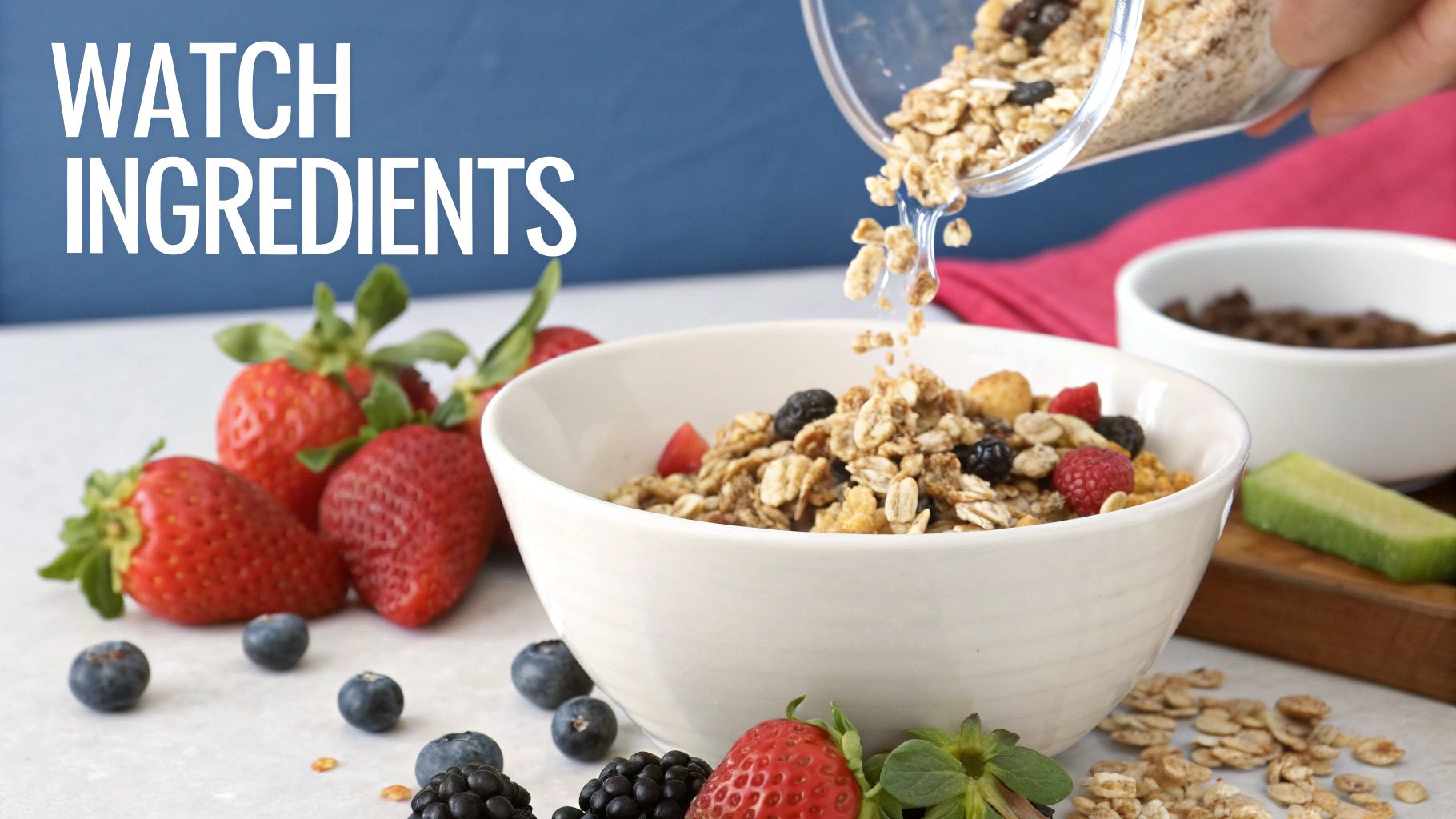
- Whole Ingredients: Check the first few ingredients. You want to see real, recognizable foods like oats, nuts, or seeds—not a long list of syrups and science experiments.
The goal isn't perfection, it's progress. Just swapping one high-sugar snack for a more balanced one is a huge win. It’s all about making small, smart choices that add up.
Thinking this way helps you shift from just grabbing whatever’s convenient to choosing a snack that truly fuels you and your family. It’s a balanced perspective on health that’s a core part of a holistic wellness approach.
When you learn to look past the flashy packaging and focus on what's really inside, you get the power back. The confusing snack aisle suddenly becomes a place where you can make confident choices for snacks that are both delicious and genuinely good for you.
Decoding the Nutrition Label on Your Bar
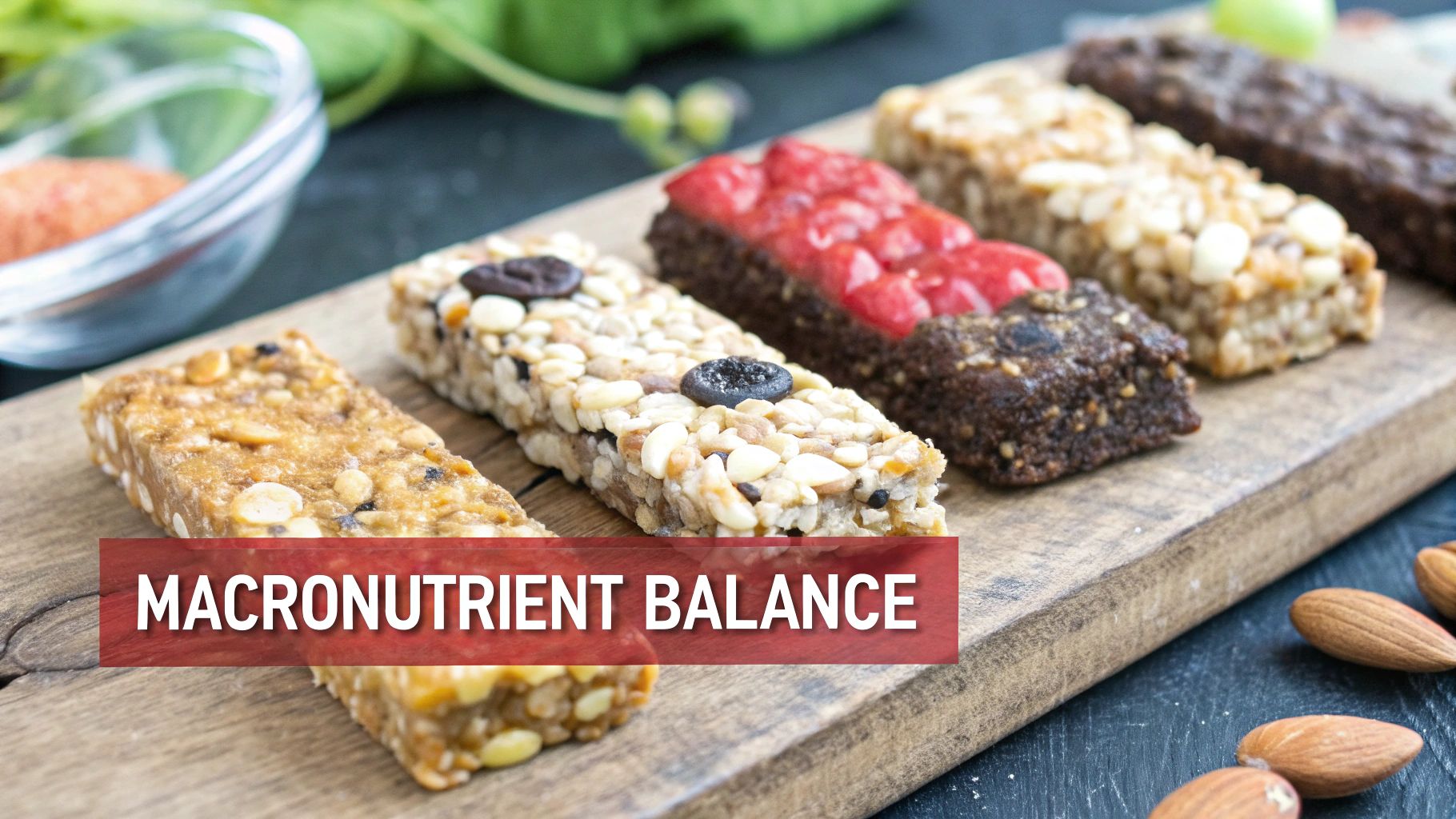
Alright, let's become nutrition detectives. Grabbing a granola bar and flipping it over to the label can feel like you're trying to decipher a secret code. But once you know what to look for, that confusing block of text turns into a simple roadmap. Let's crack this case!
Understanding the label is the key to telling a truly healthy snack apart from what's basically a cookie in a health-food costume. On average, a typical granola bar has about 120 to 200 calories, with carbohydrates making up 60-70% of that total.
The Energy Source: Carbohydrates
Carbs are the main fuel source in most granola bars, but they come in two very different forms. Think of it like building a fire.
- Complex Carbs: These are your slow-burning logs. Ingredients like whole rolled oats release energy gradually, keeping you full and focused without that dreaded sudden crash. Perfect for long afternoons of play!
- Simple Sugars: These are like tossing a match on the fire. They give you a quick, intense burst of energy that fades just as fast, often leaving you feeling sluggish.
Lots of kids' snack bars and cookies are packed with these simple sugars. When you're scanning the label, look for sugars listed high up in the ingredients, often hiding under names like corn syrup, dextrose, or cane juice. The less of these, the better.
Here's a great rule of thumb for a kid-friendly snack: find a bar with more fiber and protein than sugar. This simple check helps you pick options that provide lasting energy for playtime, not just a momentary sugar rush.
Protein and Fats: The Building Blocks
Next up are protein and fats—the dynamic duo that delivers satisfaction and staying power. Protein helps keep those "I'm still hungry!" complaints at bay, making a snack feel substantial. You'll find it coming from sources like nuts, seeds, and sometimes soy or whey isolates.
Fats have gotten a bad rap over the years, but healthy fats from ingredients like almonds, pumpkin seeds, or chia seeds are fantastic. They’re essential for brain health and help you feel full longer. The trick is to watch out for sneaky, less desirable fats like hydrogenated oils, which are best avoided.
Making sense of all these details can feel overwhelming at first. For anyone who wants to master this skill, our guide on how to read food labels breaks it down step-by-step to make it easy.
And if you're looking to really deepen your understanding of dietary components, exploring a comprehensive guide to nutrition can be an invaluable resource. By demystifying the label, you empower yourself to pick snacks that genuinely support your family's well-being. Suddenly, the grocery aisle goes from a confusing maze to a place of confident choices.
Healthy Hero vs. Candy Bar in Disguise
Let's draw a line in the sand. On one side, you have the granola bar that’s a true nutritional hero, ready to fuel your day. On the other, you have its evil twin: the candy bar wearing a clever disguise of oats and honey.
Telling them apart is the ultimate snack-aisle superpower, especially when you have hungry kids clamoring for a treat.
The biggest giveaway is often the sugar content. Many popular kids' snack bars and cookies pack in an alarming amount of sweeteners, sending little ones on a rollercoaster of energy spikes and epic crashes. True healthy heroes, however, prioritize whole-food ingredients that provide steady, reliable energy for all their adventures.
Spotting the Sneaky Sugars
Sugar is a master of disguise. It doesn't just show up on the ingredients list as "sugar." Food manufacturers use a long list of aliases to make their products seem healthier than they actually are. Getting familiar with these names is your first step to seeing past the marketing fluff.
Watch out for these common culprits hiding in plain sight:
- Syrups: High-fructose corn syrup, brown rice syrup, and agave syrup are all just sugar.
- "-ose" words: Sucrose, dextrose, and fructose are chemical names for different types of sugar.
- "Natural" sweeteners: Evaporated cane juice and fruit juice concentrate sound wholesome, but they are still simple sugars that can cause energy dips.
When you see one of these near the top of the ingredients list, it's a major red flag. The ingredients are listed by weight, so the first few items make up the bulk of the bar.
To make this crystal clear, let's break down the key differences you'll see on the nutrition label. Think of it as a quick field guide for spotting the good guys.
Healthy Granola Bar vs. Candy Bar in Disguise
| Nutritional Feature | Healthy Hero Bar | Candy Bar in Disguise |
|---|---|---|
| Primary Sweetener | Whole fruits (like dates), minimal honey or maple syrup | High-fructose corn syrup, cane sugar, brown rice syrup |
| Total Sugars | Typically under 10g per serving | Often 15g or more per serving |
| Fiber Content | At least 3g from whole grains, nuts, and seeds | Minimal fiber, usually less than 1g |
| Protein Source | Nuts, seeds, whole grains | Processed soy protein isolate, if any |
| Fat Source | Healthy fats from nuts and seeds | Saturated fats from palm kernel oil, hydrogenated oils |
| Ingredient List | Short and recognizable (oats, almonds, dates, sea salt) | Long, with words you can't pronounce (artificial flavors) |
This side-by-side view really shows how a few ingredient swaps can turn a snack from a source of steady fuel into a sugar bomb. Now you know exactly what to look for.
The Whole Food Checklist
A genuinely nutritious granola bar proudly showcases its whole-food ingredients. Instead of a long list of processed powders and syrups, you want to see things you could find in your own kitchen pantry.
Think of it as a simple mental checklist. Does the bar contain:
- Whole Grains? Look for rolled oats as a primary ingredient, not processed flours.
- Healthy Fats? Nuts and seeds like almonds, walnuts, chia, or flax should be front and center.
- Natural Sweeteners? If there is a sweetener, dates or a very small amount of honey or maple syrup are better choices than refined syrups.
For a deeper dive, learning what to look for in a nutrition bar can give you even more confidence when comparing options. It's about empowering yourself to make choices that nourish, not just satisfy a craving.
This chart highlights some of the key nutrients you can expect from a well-formulated granola bar.
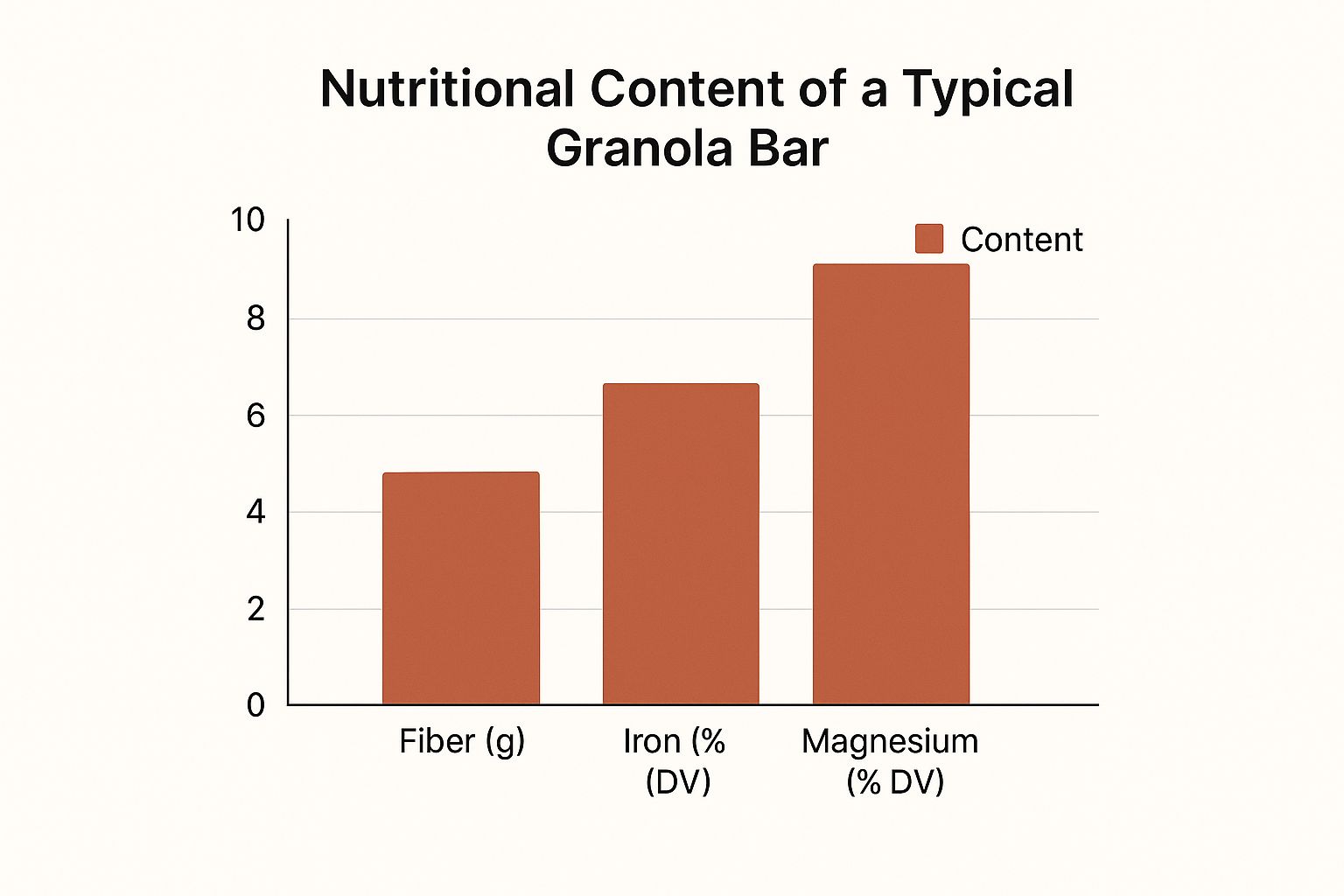
As you can see, a quality bar can be a decent source of essential micronutrients like iron and magnesium, alongside valuable fiber. Choosing a bar that is a hero, not a villain, means you're not just getting calories—you're getting real nutrition that works for your body.
Fueling Your Kids with Better Snack Choices
Let's be honest: navigating the kids' snack aisle can feel like dodging a minefield of sugar, artificial colors, and confusing health claims. We’ve all been there—a hungry kid, a ticking clock, and a wall of brightly colored boxes screaming for your attention. It’s way too easy to just grab the one with the cartoon character and hope for the best.
But here’s the thing. Many of those popular kids' snack bars and cookies are basically candy in disguise, packed with all the stuff we try to avoid. They deliver a quick sugar high that leads to an inevitable, cranky crash, leaving little room for the actual nutrients growing bodies need. Good granola bars nutrition for kids should be all about sustained energy, not a temporary sugar buzz.
What Growing Kids Really Need
Kids aren't just tiny adults; their nutritional needs are totally unique. They need a steady stream of energy to fuel their brains for learning and their bodies for, well, non-stop playing. Snacks should be a helpful bridge between meals, not a detour into junk food territory.
When you're picking a snack, think about what it’s actually providing:
- Steady Energy: Look for fiber from whole grains like oats to keep energy levels from spiking and dipping.
- Staying Power: Protein and healthy fats from ingredients like nuts and seeds are key to keeping them full and focused.
- Nutrient Density: Snacks should add valuable vitamins and minerals to their day, not just empty calories.
So many kids' snack bars miss the mark, with some containing over 12-15 grams of sugar per serving. That's more than half the daily recommended amount for a young child!
Think of a good snack as a mini-meal. It's an opportunity to pack in some goodness—fiber, protein, and healthy fats—to keep your little adventurer going strong until their next proper meal.
Making Healthy Snacking a Fun Adventure
So, what's the secret to getting kids on board with healthier snacks? Make it fun and give them a little ownership! Turning snack time into a family activity can transform healthy eating from a chore into an exciting new game.
Here's a fun suggestion: try involving them in the process! At the store, let them be the "Snack Detective." Give them a simple mission, like finding a bar with nuts on the ingredient list or one with less than 8 grams of sugar. This simple game empowers them and makes them feel like they're part of the decision.
Another fantastic idea to get them excited is to make your own bars at home. It’s surprisingly easy, and kids absolutely love getting their hands messy mixing oats, seeds, and their favorite dried fruits. Plus, you get to control every single ingredient, so there are no sneaky sugars or additives.
By making smart choices and involving your kids, you’re not just giving them a better snack; you’re teaching them valuable lessons about food and their bodies. For more inspiration, check out this fantastic guide on healthy snacks for kids—it’s packed with creative and simple ideas to provide snacks that truly nourish.
Exploring the Modern Granola Bar Aisle
Take a walk down the snack aisle today. It looks nothing like it did even ten years ago, right? It’s no longer a simple choice between a couple of oat and honey bars. The modern granola bar section is a jam-packed neighborhood of options, reflecting a huge shift in what we all want from our snacks.
This explosion in variety isn't random—it's driven by you. The demand for convenient, nutrient-dense snacks has completely reshaped the industry. The global granola bar market was valued at around USD 5.81 billion and is expected to hit nearly USD 8.25 billion by 2032. That's a pretty clear sign we're all voting with our wallets for better-for-you options. You can dive deeper into these granola bar consumer insights to see the trends.
Navigating the New Snack Landscape
Today's aisle is a showcase of innovation, with brands racing to meet every possible dietary need and lifestyle. This has led to an explosion of specialized products that go way beyond the original granola bar concept. The sheer number of choices can feel a little overwhelming, but it’s also incredibly empowering once you know what you’re looking for.
You'll now find entire sections dedicated to specific goals:
- High-Protein Powerhouses: Built for post-workout recovery or just to keep you feeling full longer.
- Keto-Friendly Bites: Low in carbs and sugars, perfect for anyone following that lifestyle.
- Gluten-Free & Allergen-Free: Safe and delicious choices for those with dietary sensitivities.
- Superfood-Infused Bars: Jammed with ingredients like chia, flax, and quinoa for an extra nutritional boost.
Think of the modern snack aisle as a build-your-own-adventure book. Your personal health goals and dietary needs are the storyline, and the bars on the shelf are all the different paths you can choose.
This evolution is fantastic because it means there's probably a perfect bar out there for you and your family. The trick is to ignore the flashy marketing on the front of the box and flip it over to the ingredient list. Look for those whole foods—oats, nuts, seeds, and fruits—that signal a bar is built on a solid foundation of real granola bars nutrition.
By understanding these trends, you’re no longer just a shopper; you're a savvy navigator, ready to find a snack that perfectly fits your life and fuels your day. Your choices are directly shaping a healthier, more diverse snack landscape for everyone.
Common Questions About Granola Bar Nutrition
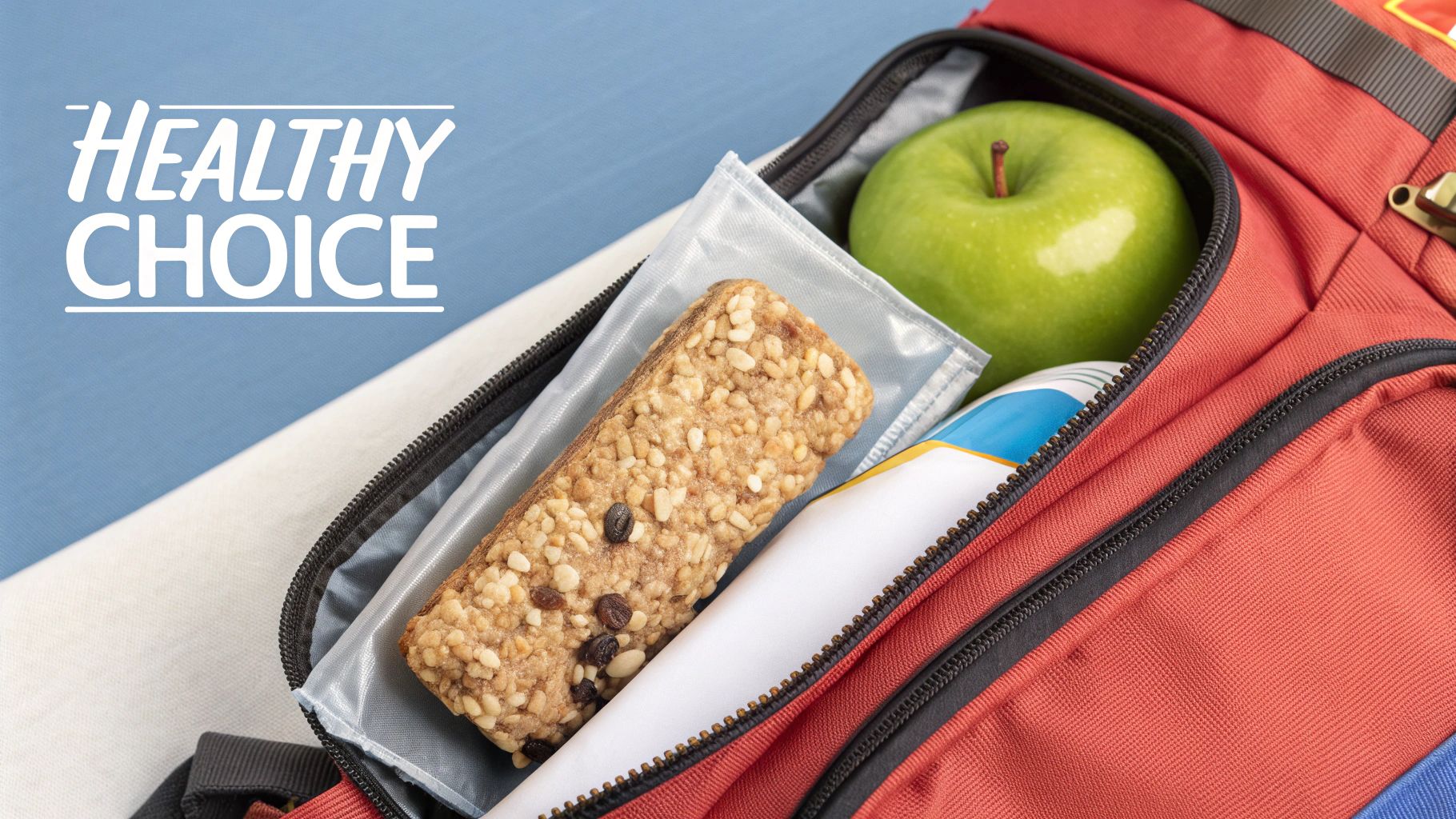
Even after you've learned to read labels like a pro, a few questions about granola bar nutrition always seem to linger. Let's clear up some of the most common ones so you can make fast, confident choices for your family.
Let’s be honest, the kids' snack aisle is a wild place. It’s a sensory overload of bright boxes, cartoon characters, and big promises. Most of those bars and cookies are engineered to be irresistible, but they often get there with heaps of sugar and not much else. The result? The dreaded sugar crash, usually right in the middle of playtime.
Your goal is to find a snack that fuels their fun, not one that brings it to a screeching halt. So, what’s the difference between a kids' snack bar and a regular one?
The best kids' snack bars are just simplified versions of healthy adult bars. They have less sugar, fewer complicated ingredients, and are portioned for smaller tummies, but they're built on the same foundation of whole grains, fiber, and protein.
Are Granola Bars Good for Weight Loss
They definitely can be! The right granola bar can be a smart player in your weight loss strategy. The key is finding one that works for you, not against you.
Our suggestion? Look for a bar that's high in protein and fiber—aim for at least 5g of each. This combo is your best friend for staying full and satisfied. Also, be a stickler about sugar; try to keep it under 8g. A lot of bars are just candy in disguise, so always check that label. Think of it as a strategic swap for a cookie, not a free pass.
Can I Eat a Granola Bar as a Meal Replacement
It’s tempting, but it’s generally not a great idea. Most granola bars just don't have the calories or balanced macro profile to stand in for a full meal like breakfast or lunch. They're designed to be a snack, usually landing somewhere around 150-250 calories.
If you try to make one your whole meal, you'll likely feel hungry and sluggish an hour later. We'd suggest thinking of them as a bridge between meals or as part of a bigger picture—like crumbling one over Greek yogurt with a handful of fresh berries.
How Do I Make Healthy Granola Bars at Home
Making your own bars is a fantastic way to get full control over the ingredients and have some fun in the kitchen with the kids! It’s way simpler than you think. Here's a basic formula you can riff on:
- The Base: Mix 2 cups of rolled oats with about a cup of your favorite add-ins. Think chopped nuts, seeds, or unsweetened dried fruit.
- The Binder: In a separate bowl, gently melt 1/2 cup of nut butter with 1/4 cup of a natural sweetener like honey or maple syrup.
- Combine & Press: Pour the wet mixture over your dry ingredients and mix it all up until everything is well-coated. Press the mixture firmly into a lined pan.
- Set It: For a chewy, no-bake bar, just pop the pan in the fridge for about an hour. If you like a crunchier bar, bake it at 350°F (175°C) for about 15-20 minutes.
This way, you end up with delicious snacks you can feel great about sharing with your family.
At Skout Organic, we believe snacking should be a joyful adventure, not a complicated puzzle. Our organic, plant-based kids' snack bars and cookies are made with simple ingredients you can pronounce, delivering the nutrition your family needs and the flavors they'll love. Build your custom snack box today and make snack time simple and delicious