 Kids Snack Bars
 Soft-Baked Cookies
 Protein Bars
 Build A Box
 Shop All





Ever find yourself staring at a snack bar wrapper, wondering what "Non-GMO" actually means? Let’s break it down in a way that’s fun, fast, and makes sense during a hectic grocery run with a kiddo begging for candy.
Think of an heirloom tomato from your grandpa's garden—it’s grown just as nature intended, season after season. That's the heart of what non-GMO foods are all about. They’re made from ingredients that haven't been tweaked in a science lab, staying true to their natural genetic blueprint.
Simply put, no genetic engineering was involved. No weird science experiments, just good old-fashioned food.
What Are Non-GMO Foods, Really?
GMO stands for Genetically Modified Organism. It sounds like something from a sci-fi movie, but the idea is pretty straightforward. It’s when scientists take the DNA from one organism (like a pest-resistant bacterium) and insert it into another (like a corn plant) to give it a new, desirable trait.
Non-GMO foods, on the other hand, skip all that. They're made from ingredients that are closer to their original, natural state. It’s a commitment to keeping things simple and clean—something we think is super important, especially when it comes to snacks for our little ones. Why not give your kids the real deal?
The core idea is simple: Non-GMO foods are produced without the use of genetic engineering techniques. It’s a commitment to keeping ingredients as close to how they are found in nature as possible.
The Growing Demand for "Back-to-Basics" Food
This focus on natural ingredients has created a huge movement among families everywhere. In fact, the global non-GMO foods market was valued at a massive USD 333.9 billion in 2023, and it's only expected to keep growing.
This trend highlights just how much parents value transparency and natural options, especially when picking out snacks like kids snack bars and cookies. You can discover more about this market growth on Mordor Intelligence.
It’s clear you're not alone in wanting simple, trustworthy options for your kids' lunchboxes and after-school treats. So go on, join the club!
GMO vs. Non-GMO at a Glance
To make it even simpler, here's a quick cheat sheet. This table will help you instantly grasp the fundamental differences between GMO and non-GMO foods next time you're browsing the snack aisle.
| Attribute | Non-GMO Foods | GMO Foods |
|---|---|---|
| Origin | Grown from traditional seeds using methods like cross-pollination. | Created in a lab by altering the plant or animal's DNA. |
| Genetic Makeup | Natural genetic code, as found in nature. | Contains genes from other species (like bacteria or viruses). |
| Common Examples | Certified organic produce, products with the Non-GMO Project Verified seal. | Certain varieties of corn, soy, canola, sugar beets, and papaya. |
| Farming Practice | Often aligns with organic or traditional farming methods. | Frequently designed to be herbicide-tolerant or pest-resistant. |
| Labeling | Can be certified by third-party labels like the Non-GMO Project seal. | Not required to be labeled as "GMO" in the U.S. (but may have "bioengineered" text). |
Ultimately, both paths lead to food on your table, but they take very different journeys to get there. Choosing non-GMO is about opting for the path that sticks closer to nature's original recipe. It’s a little suggestion from us: try sticking to the path of nature!
Navigating the Grocery Aisle: GMO vs. Organic
Feeling a little lost between all the labels in the snack aisle? You're not alone. When you're trying to quickly grab snacks for your kids, terms like "non-GMO" and "organic" can feel like a pop quiz you didn't study for.
Let's clear up the confusion so you can shop like a total pro.
Think of it this way: Certified Organic is the VIP ticket. It guarantees that a food is non-GMO, but it also goes much, much further. It's like the all-access pass to clean eating.
Organic certification has strict rules about how food is grown and handled, prohibiting synthetic pesticides, chemical fertilizers, and irradiation. For things like milk or cheese, it even sets standards for animal welfare and antibiotic use.
The non-GMO label, on the other hand, is more focused. Its one specific job is to confirm that a food was produced without genetic engineering. It's a fantastic standard, but it doesn't cover all the other aspects of farming that the organic seal does.
This simple diagram shows how all food starts from a natural source, but then branches off into either non-GMO or genetically modified paths.
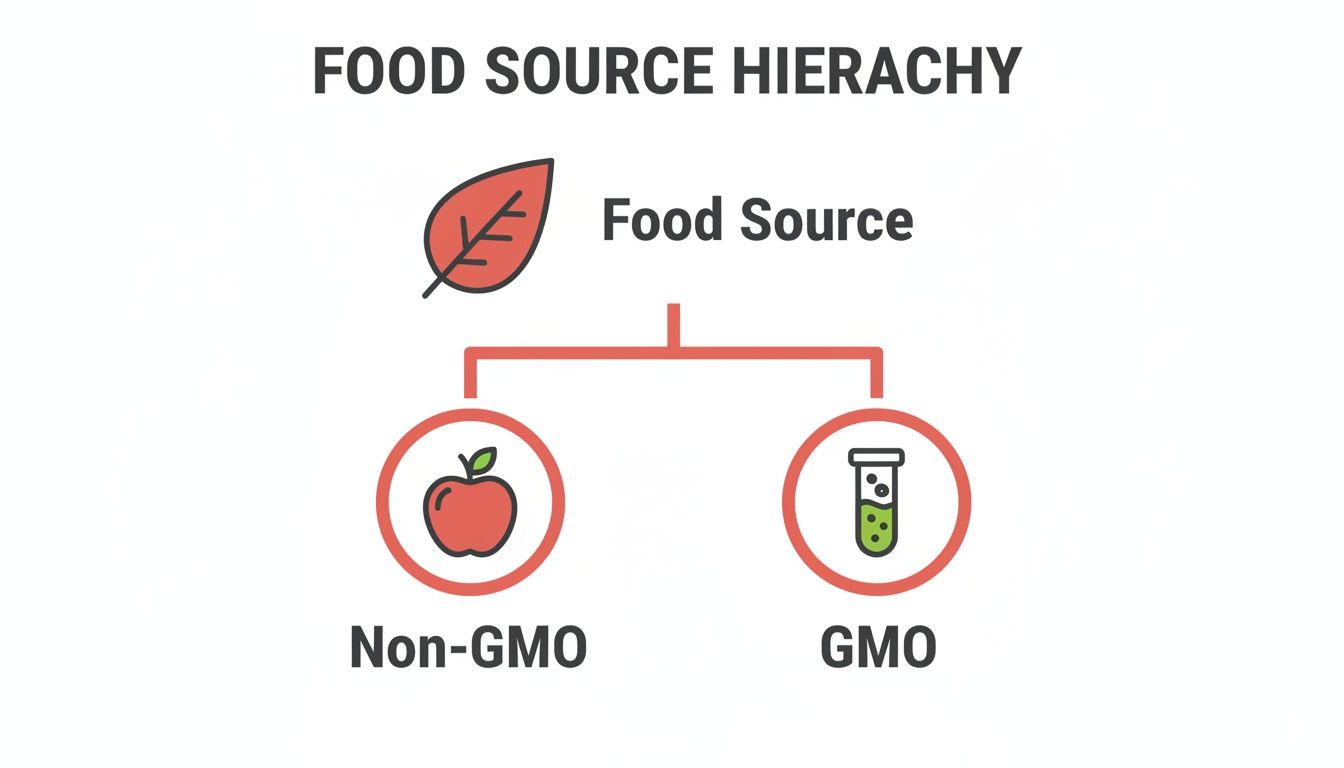
The key takeaway is that while they're related, they aren't the same. Both start from a natural origin but end up following very different production standards.
Thinking with Nesting Dolls
Let's try a fun analogy. Imagine a set of Russian nesting dolls.
- The biggest doll is Certified Organic. It's the most comprehensive standard you can find.
- When you open it up, the next doll inside is Non-GMO.
This means that all Certified Organic food is, by definition, also non-GMO. But—and this is the important part—not all non-GMO food is organic, just like the smaller doll doesn't contain the bigger one.
When you're choosing snacks, looking for a product that is both organic and non-GMO gives you the highest level of assurance. You get the peace of mind that comes from avoiding genetic modification plus all the benefits of organic farming practices. It’s the ultimate win-win for clean, simple ingredients your family can trust. For your next cookie craving, we suggest grabbing a pack of Skout Organic soft-baked cookies—they're both!
If you want to dive deeper into what goes into that big nesting doll, you can learn more about what certified organic really means in our guide. Knowing this difference empowers you to read labels with total confidence and choose the option that best fits your family's values.
How to Spot Non-GMO Foods Like a Pro
Ready to turn your next grocery run into a fun, empowering treasure hunt? Finding trusted non-GMO products is way easier than you think once you know the secret codes. Forget squinting at tiny ingredient lists—your field guide to spotting non-GMO foods boils down to looking for a couple of key symbols.
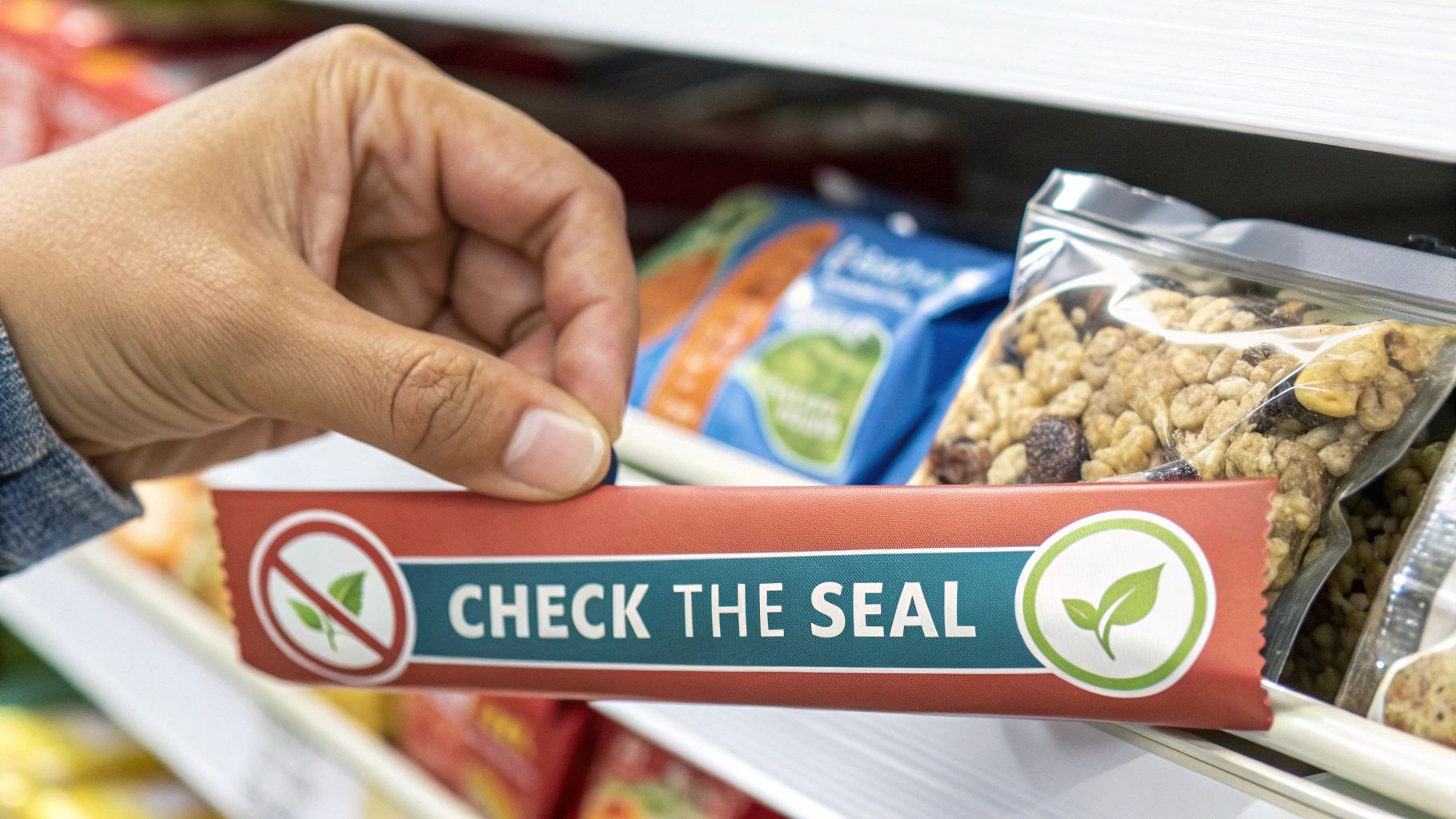
This simple shift turns label reading from a chore into a confident choice for your family. By focusing on trusted seals, you can quickly find delicious and reliable snacks without the headache. Let’s make it a game: how many seals can your kid spot?
Look for the Butterfly
The absolute gold standard for shoppers is the Non-GMO Project Verified seal. See that friendly orange butterfly? It’s your new best friend in the snack aisle.
This seal means a product has gone through rigorous third-party testing to ensure it meets strict standards for avoiding GMOs. It’s the most trustworthy and transparent certification out there, taking all the guesswork out of your decision.
When you see the butterfly, you can feel confident that you’re choosing a product committed to ingredient transparency, from the farm all the way to your kid's lunchbox.
Finding this little guy on items like kids' snack bars or cookies is an instant win. It’s a clear signal that the brand has gone the extra mile to verify its non-GMO claims, giving you total peace of mind.
Your Other Non-GMO Shortcut
Another fantastic shortcut is the USDA Organic seal. As we covered earlier, all certified organic products are required to be non-GMO. So, if you spot that familiar green-and-white circle, you’re in the clear.
This makes shopping for things like Skout Organic’s kids snack bars and cookies a breeze. Since they are Certified Organic, you automatically know they are made without genetically modified ingredients—no extra detective work needed.
- Non-GMO Project Verified: The most rigorous third-party verification specifically for non-GMO status.
- USDA Organic: A comprehensive certification that always includes non-GMO as a core requirement.
Understanding these labels is a total game-changer. For a deeper dive into decoding what’s on the package, check out our guide on how to read food labels and become an expert. Knowing these symbols helps you make quick, informed choices that you can feel good about.
Why Health-Conscious Parents Choose Non-GMO
For so many families, choosing non-GMO foods isn't about jumping on a trend. It's a thoughtful decision that comes from a place of wanting wellness and total transparency. It’s about knowing exactly what’s going into those little bodies, especially when it comes to daily staples like kids' snack bars and cookies.
When you reach for a non-GMO option, you’re often choosing food that feels a little closer to how nature intended. It’s a proactive step toward a "clean eating" lifestyle, where you can prioritize whole, simple ingredients. Honestly, this choice is less about fear and more about feeling empowered in your own kitchen. Our suggestion? Fill your cart with non-GMO goodies and feel awesome about it!
Embracing Ingredient Transparency
One of the biggest drivers for parents today is the simple desire for transparency. In a world of confusing labels and mile-long ingredient lists, choosing non-GMO is a vote for simplicity. You just want to recognize what's on the package and feel good about what you're serving.
This demand for clarity is actually reshaping the food industry. Consumer health concerns are propelling the non-GMO foods market forward, putting a spotlight on brands that get it. A huge part of this is the growing awareness that GMO crops are often designed to work with specific synthetic herbicides, which can leave residues behind. That concern alone prompts many to shift toward verified non-GMO alternatives. You can explore more insights into this trend at Technavio.
Making an informed choice starts with understanding all the little details that make a meal healthy. For parents focused on nutrition, that means looking beyond just non-GMO labels. It also means knowing what is the healthiest oil for deep frying and other cooking basics to build a truly wholesome diet from the ground up.
Making a Choice for the Planet
Beyond personal health, many parents choose non-GMO for environmental reasons, too. The conversation around non-GMO foods almost always leads to how they're grown and the ripple effect that has on our planet.
Choosing non-GMO is often seen as a small but meaningful way to support a more sustainable food system. It’s about investing in practices that align with long-term planetary health for future generations.
Some of the most common GMO crops, like corn and soy, are engineered to be "herbicide-tolerant." This means farmers can spray chemical weedkillers over their entire fields without harming the crop itself. But this practice has raised some serious questions about its impact on the surrounding ecosystems.
- Soil Health: An over-reliance on a single herbicide can mess with the delicate balance of microorganisms that keep soil healthy and thriving.
- Biodiversity: These broad-spectrum chemicals don't just kill weeds; they can harm other native plants, reducing biodiversity on and around farmland.
- Pollinator Protection: Certain agricultural chemicals have been linked to declining populations of vital pollinators, like bees and butterflies.
By choosing non-GMO and organic options, families feel they are supporting farming methods that work more in harmony with nature. Every time you grab a non-GMO kids' bar, you’re not just making a snack choice—you're casting a vote for the kind of food system you want your children to inherit.
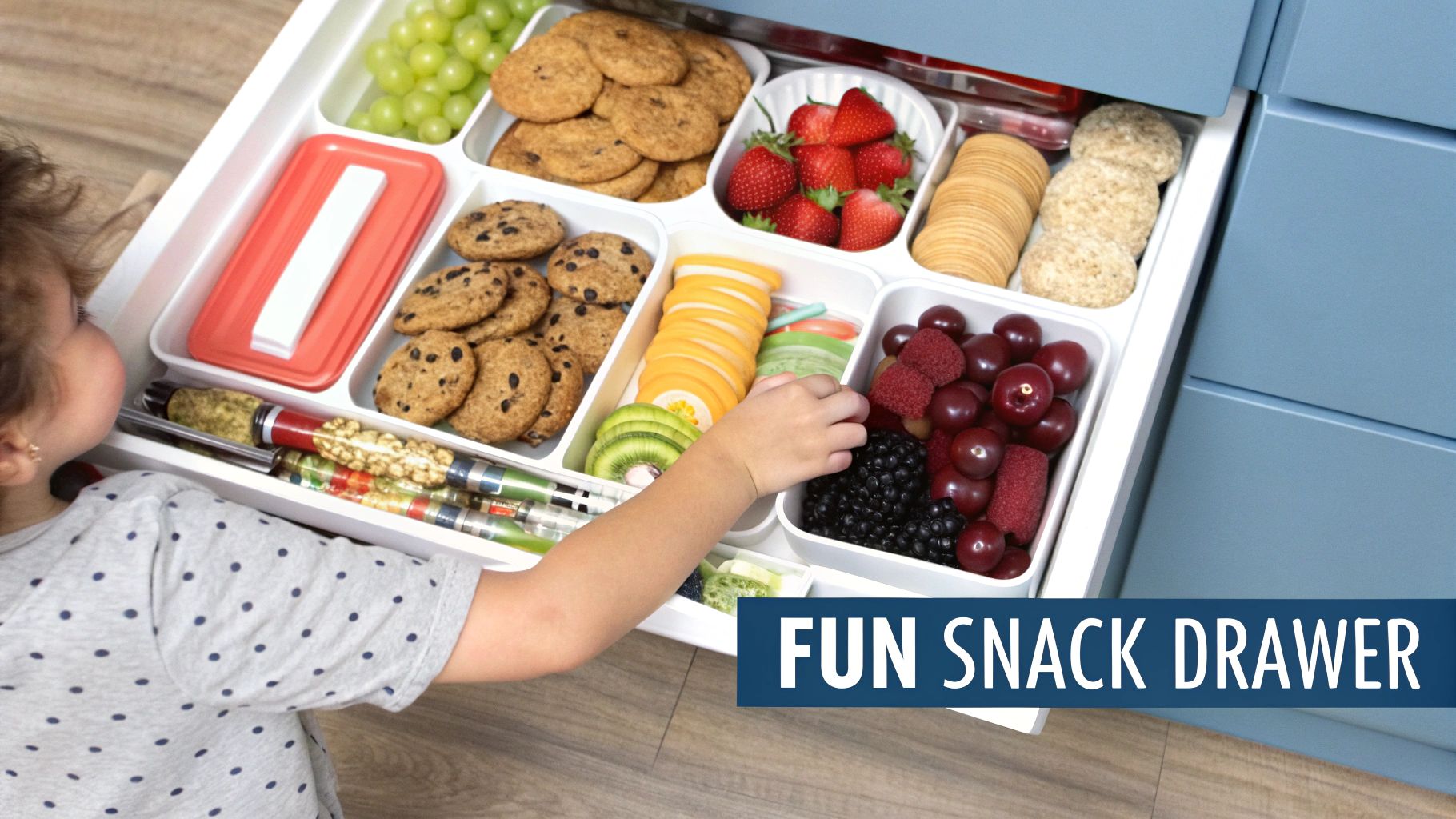
Building a Fun Non-GMO Snack Drawer for Your Kids
Alright, let's get to the best part. We've talked labels and definitions, now it's time to stock your pantry with delicious, kid-approved non-GMO snacks!
Creating a dedicated snack drawer is all about making healthy choices easy, accessible, and maybe even a little exciting. This isn’t about restriction; it’s about filling your home with an abundance of good stuff. The goal is to turn healthy snacking into an adventure your kids actually want to join.
Simple Swaps for Big Wins
You don't need a total pantry overhaul to get started. Honestly, small, simple changes can make a huge difference in reducing your family's exposure to GMOs. The key is to trade up, not give up, on the treats your kids already love.
For example, a lot of conventional crunchy snacks are made from GMO corn. An easy swap is to look for tortilla chips or corn puffs that carry the USDA Organic or Non-GMO Project Verified seal. These little upgrades ensure you’re getting the same satisfying crunch without the genetically modified ingredients. We suggest making it a family challenge: find one non-GMO swap on your next shopping trip!
The secret to a successful non-GMO pantry is making it feel effortless. Focus on one or two simple swaps at a time—like trading conventional applesauce pouches for organic ones—to build momentum without overwhelming your family (or yourself).
Stocking Up on Kid-Approved Favorites
Let's be real, having grab-and-go options is a lifesaver for busy parents. You need snacks that are not only healthy but also delicious enough that your kids actually ask for them. This is where finding trusted brands becomes your superpower.
Look for snacks that are both organic and non-GMO verified, which gives you the highest standard of clean ingredients. Skout Organic's kids snack bars and soft-baked cookies are a perfect example of this. They’re crafted with simple, recognizable ingredients, making them a tasty, non-GMO treat you can feel great about packing in a school lunch or offering after soccer practice. Grabbing one of these bars is so much better than a last-minute drive-thru stop.
Get Creative with Snack Time
Making food fun is the best way to get kids excited about healthy eating. Instead of just handing them a snack, why not turn it into an activity?
Here are a few ideas to get you started:
- Build-Your-Own Snack Boxes: Use sectioned containers and let your kids fill them with their favorite non-GMO goodies. Offer choices like organic berries, non-GMO crackers, nut-free butters, and pieces of a Skout Organic kids' bar.
- Themed Snack Days: Create fun themes like "Rainbow Day," where you challenge them to pick snacks of every color, or "Crunchy Day," with a variety of textures.
- "Top Chef" Junior: Let them help you prepare snacks. Even simple tasks like washing organic grapes or arranging non-GMO veggie sticks on a plate can make them more invested in what they're eating.
By transforming snack time into a playful experience, you're building positive associations with healthy food. For even more inspiration, check out our guide to some of the best healthy snacks for kids and keep the fun going.
Busting Common Myths About Non-GMO Foods
Walking through the grocery store can feel like you need a translator for all the labels. The world of non-GMO foods is especially full of chatter, with myths and half-truths getting passed around until no one’s quite sure what’s real.
Let's clear things up and bust a few of the most common myths so you can shop for your family with total confidence.
One of the biggest mix-ups is thinking that "non-GMO" is just another way of saying "healthy." While choosing non-GMO is a fantastic move toward cleaner eating, it’s not the whole story. After all, a cookie made with non-GMO sugar is still a cookie!
Myth: Non-GMO automatically means a food is healthy. Fact: A non-GMO label just confirms a product was made without genetic engineering. You still have to consider the overall nutritional value—like sugar, fat, and sodium.
This is why looking at the bigger picture is so important. When you find snacks that are both Certified Organic and Non-GMO Project Verified, you're getting double the assurance. That combo means the ingredients weren't genetically modified and were grown without synthetic pesticides. Our suggestion? Look for both seals on things like kids snack bars and cookies to get the best of both worlds.
Are All Fruits And Veggies GMOs Now?
This is a worry we hear all the time from parents. It's easy to see a few well-known GMO crops in the news and assume everything in the produce aisle has been genetically modified.
The good news? That’s just not true.
In reality, only a handful of fruits and veggies have commercially available GMO versions. We're talking about some varieties of summer squash, papaya, potatoes, and apples. The vast majority of produce you buy for your kids’ snacks are not—and have never been—genetically modified.
- Myth: Most fruits and vegetables at the grocery store have been genetically modified.
- Fact: The list of GMO produce is actually tiny. Common staples like berries, carrots, broccoli, and bananas are not GMOs.
So please, don't be afraid of that beautiful, colorful produce section! By understanding what non-gmo foods are, you can fill your cart with confidence. A simple and effective strategy is to focus on organic options for both fresh produce and packaged snacks, like kids snack bars. It's an easy way to steer clear of GMOs and keep your family’s snacks truly wholesome.
Still Have Questions? We’ve Got Answers.
We’ve covered a lot of ground, but you might still have a few questions buzzing around. Let's tackle them head-on so you can feel totally confident on your next grocery run for those all-important kids' snacks.
Are Non-GMO Foods Always More Expensive?
Not always! While some non-GMO products might have a slightly higher price tag, it’s helpful to think of it as an investment in transparency. You know exactly what you’re getting.
You can easily find affordable options by shopping for seasonal produce, buying store brands with the USDA Organic seal, and keeping an eye out for deals on pantry staples. We suggest making a budget for snacks and seeing how many awesome non-GMO treats you can find within it!
What Are the Most Common GMO Crops?
You don’t need to memorize a giant list. Honestly, just knowing a few key crops will cover most of what you'll find in processed foods like kids' cookies and snack bars.
The big ones to know are corn, soy, canola, sugar beets, and some summer squash. Since these are super common ingredients, looking for that Non-GMO Project butterfly on packaged snacks is the easiest shortcut to shop smart without reading every single ingredient.
Can I Trust a 'GMO-Free' Claim Without a Seal? This is a good one to be wary of. A "GMO-Free" claim on a package is really just the brand's own statement—there are no outside checks. For true peace of mind, always look for third-party verification from the Non-GMO Project Verified or USDA Organic seals. These certifications mean the product has met strict, independent standards, so you can trust the claim.
When it comes to your family's snacks, those seals are your best friends. They take all the guesswork out of finding clean, simple ingredients you can feel great about.
Ready to stock your pantry with delicious, trustworthy snacks your kids will actually love? Skout Organic makes it easy with our Certified Organic and Non-GMO Project Verified kids' snack bars and cookies. Build your custom snack box today!