 Kids Snack Bars
 Soft-Baked Cookies
 Protein Bars
 Build A Box
 Shop All





Ever found yourself in the snack aisle, staring at a wall of packages and wondering what non-GMO actually means? You’re definitely not alone. It can feel like you need a secret decoder ring just to pick out some cookies for the kids!
Simply put, non-GMO means that the ingredients in your food haven’t been genetically tinkered with in a lab. Think of it this way: a non-GMO recipe is like an old family classic, made with ingredients just as you’d find them in nature. A GMO recipe, on the other hand, is like a modern "remix" where scientists have swapped in genes from other organisms to give a plant a new superpower.
Your Quick Guide to Decoding Food Labels
Trying to navigate food labels can be a real adventure, especially when you’re on a mission for a healthy, quick snack for the kids. You’ll see terms like “non-GMO,” “organic,” and “conventional” everywhere. So, what’s the real difference between them?
It all comes down to the farming and production methods behind the food. Let's break it down so you can feel totally confident in what you’re tossing in your cart. No more guessing games!
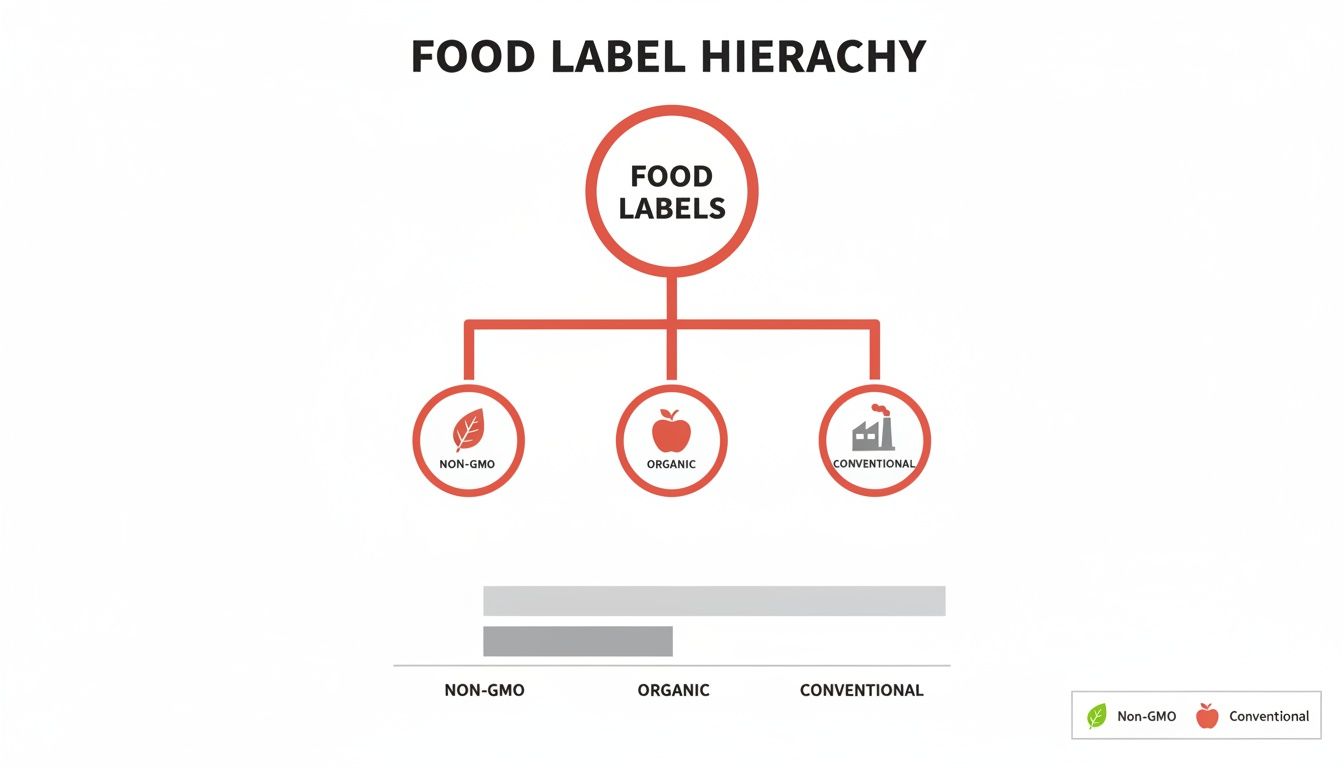
As you can see, these labels aren't just different words for the same thing. Each one follows a specific set of rules. Getting the hang of them is your first step toward choosing snacks that align with your family’s values—minus the usual grocery store headache.
Key Differences to Look For
So, what does each label really promise when it comes to that kids snack bar or bag of cookies you're eyeing?
- Non-GMO: This label has one specific job: to guarantee the ingredients were grown without genetic engineering. It’s a focused promise, plain and simple.
- Organic: This is the overachiever of food labels! It automatically includes the non-GMO requirement but goes much further, also banning synthetic pesticides, artificial fertilizers, and other yucky additives.
- Conventional: This is the default. Unless a product says otherwise, it was likely made using conventional farming methods, which can include both GMOs and synthetic pesticides.
For a deeper dive, check out our complete guide on https://www.skoutorganic.com/blogs/the-snack-guide/how-to-read-food-labels for even more pro tips.
This idea of checking labels for safer, higher-quality ingredients goes beyond just the pantry. If you're looking to apply the same care to other household items, this A Parent's Guide to Chemical Free Baby Products is a great resource.
The Science Behind Non-GMO Explained Simply
Let's pull back the curtain on "GMO" without needing a science degree. It all starts with the basic blueprint of life: DNA. Think of DNA as the master instruction manual for every living thing, from a tiny kernel of corn to your energetic toddler.
A Genetically Modified Organism (GMO) is what you get when scientists play editor on a microscopic level. They take a specific instruction—a gene—from one organism's manual (say, from a bacteria that is naturally pest-resistant) and carefully insert it into the manual of another, like a corn plant. The goal? To give that corn plant a new superpower, like the ability to fight off pesky bugs all by itself.
This lab-based process is way different from traditional farming, where farmers have cross-pollinated plants for centuries—like creating a new type of apple by breeding two existing ones. Genetic engineering creates changes that wouldn't happen out in the field.
Common GMOs in Kids' Snacks
So, where do these modified ingredients tend to show up? You'll find them in many common staples used in kids snack bars and cookies. When you're scanning an ingredient list, keep an eye out for these big four, as they represent the most common GMO crops in the U.S. food supply:
- Corn: Often found as cornstarch, high-fructose corn syrup, or corn oil.
- Soy: Used in the form of soy lecithin (an emulsifier) or soybean oil.
- Canola: A common source for vegetable oil in baked goods and snacks.
- Sugar Beets: A primary source for much of the sugar in packaged foods.
When you spot a "non-GMO" label on a snack, it’s a straightforward promise. It means the ingredients—from the corn in the crunchy clusters to the oil in the cookie—were grown using traditional methods, free from this type of lab-based genetic engineering.
Choosing non-GMO is often about more than just the science; it's about opting for foods made in a way that aligns with a more natural and transparent food system. It gives you peace of mind about what's fueling your kids' adventures.
The massive growth in the non-GMO food market shows that parents are voting with their wallets. With over 90% of U.S. corn and soy now being genetically modified, that little label has become a powerful tool for families who want to know exactly what’s on their plate. It signals a shift toward a food system that feels more transparent and connected to nature.
Understanding Non-GMO vs. Organic for Your Family
Here’s the million-dollar question every parent eventually asks in the grocery aisle: "Is non-GMO the same as organic?" It’s a great question, and the short answer is no. But getting the difference is your secret weapon for making quick, confident choices for your family.
Think of it like this: All certified organic food is required to be non-GMO, but not all non-GMO food is organic. They're related, but one is a much bigger commitment than the other.
Imagine you're building with blocks. A non-GMO kids snack bar is like making sure one specific type of block (the GMO one) is left out of the box. An organic snack, however, is like being handed a special box where that block is already gone, plus a bunch of other less desirable blocks—like synthetic pesticides and chemical fertilizers—have been removed, too. Fun, right?
The All-in-One vs. The Specialist
The USDA Organic seal is the all-in-one package. When you see it on a bag of your kids' favorite snacks, it’s a powerful guarantee. It means the product was made without:
- Genetically Modified Organisms (GMOs)
- Synthetic pesticides and herbicides
- Artificial fertilizers
- Sewage sludge or irradiation
It’s a comprehensive standard that covers everything from the soil the ingredients were grown in to the final product on the shelf. If you're looking for the highest level of assurance across multiple farming practices, organic is your go-to. To explore this further, you can learn more about what does certified organic mean in our detailed guide.
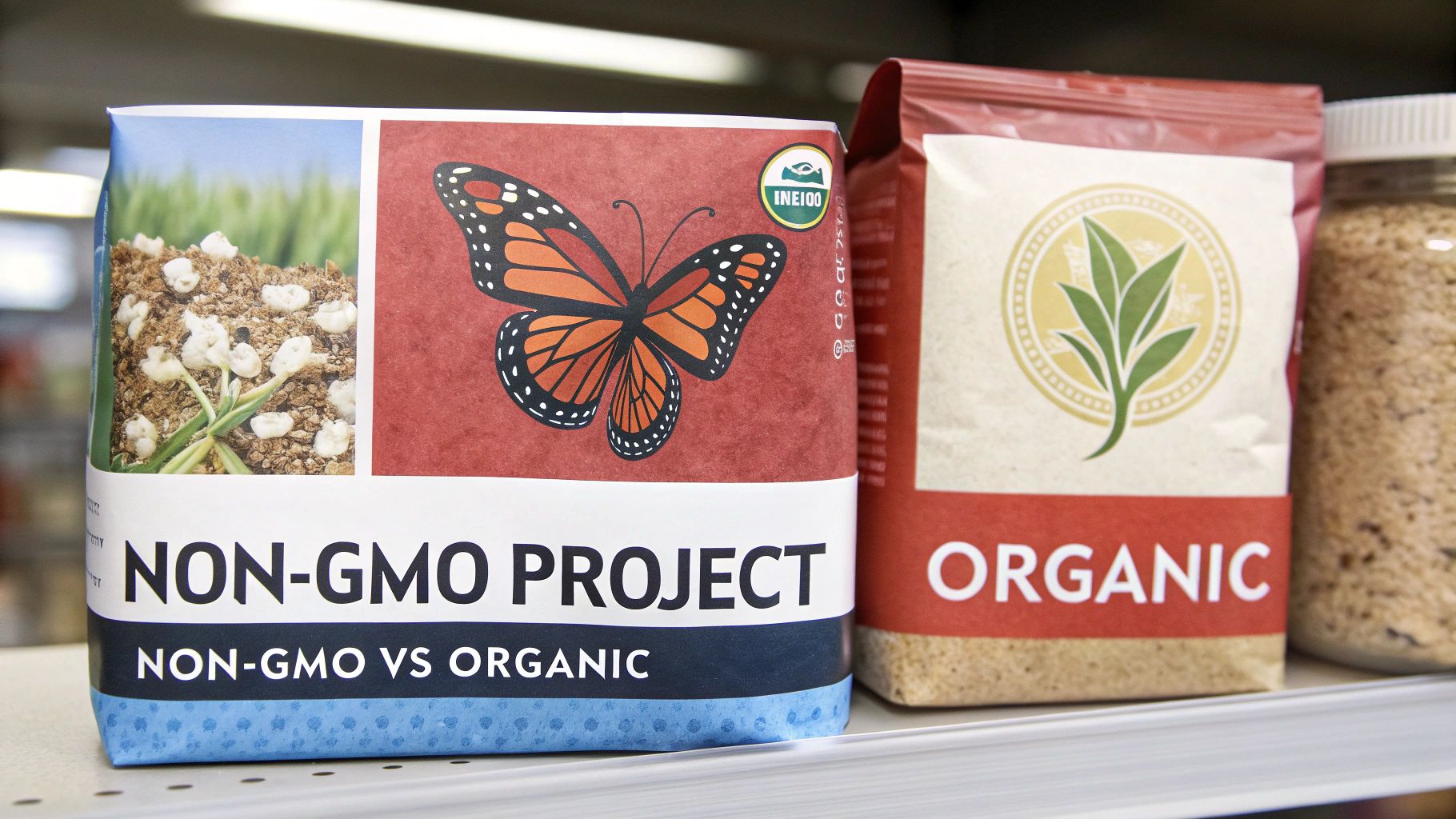
On the other hand, the Non-GMO Project Verified seal—with its iconic butterfly logo—is a specialist. Its mission is laser-focused on one thing and one thing only: ensuring a product is free of genetically modified ingredients.
A Non-GMO Project Verified label doesn’t make any promises about pesticide use, farming methods, or other factors. Its sole purpose is to provide transparency about genetic engineering, giving you a clear choice.
This distinction is crucial when you're deciding what matters most. If your primary goal is simply to avoid GMOs, the butterfly seal is a fantastic and reliable shortcut. It lets you know that a third party has rigorously tested the product from seed to shelf.
However, if your concerns extend to the broader use of chemicals in agriculture, the USDA Organic seal is the more fitting choice for your family's snack time.
How to Find the Best Non-GMO Snacks for Kids
Alright, let's get to the fun part—stocking your pantry with delicious, kid-approved snacks that also meet your standards. When you’re navigating the grocery store aisles, think of the Non-GMO Project Verified butterfly seal as your trusted shopping buddy.
Seeing that little monarch is a fantastic shortcut. It means a third-party organization has already done the homework for you, confirming the product meets strict standards all the way from seed to shelf.
But your label detective work doesn't stop with the butterfly. For snacks like kids snack bars and cookies, it’s always smart to look beyond just the non-GMO promise. A quick scan of the ingredient list can tell you everything you need to know about what you're really feeding your little ones.
Look for Simple Ingredients
When you turn that package over, what do you see? Is it a long list of words you can’t pronounce, or a short list of recognizable, whole-food ingredients? The best non-GMO snacks almost always keep it simple. Look for things like real dates, sunflower seeds, and berries.
Our suggestion? Aim for snacks that are as close to nature as possible. A simple ingredient list is a great sign that a brand is focused on clean, wholesome nutrition rather than fillers and artificial additives.
Brands like Skout Organic are a perfect example of this philosophy in action. We pair a solid commitment to non-GMO ingredients with clean, plant-based recipes you can actually read. This makes our kids snack bars and cookies ideal for school lunches, after-school energy boosts, and easy on-the-go fuel without the junk. You can find more inspiration in our guide to healthy snacks for kids.
Your Non-GMO Snack Shopping Checklist
Ready for a stress-free grocery run? Keep these simple tips in mind to find the absolute best non-GMO snacks for your family:
- Spot the Butterfly: First things first, look for the Non-GMO Project Verified seal. It's the most reliable indicator you can find.
- Read the Ingredients: Flip the package over. Are the ingredients simple and recognizable? Fewer ingredients often mean a cleaner product.
- Check the Sugar: A non-GMO label doesn't automatically mean low sugar. A non-GMO cookie is still a cookie! Always check the nutrition facts to make sure it aligns with your family’s goals.
This focus on verification is what makes the non-GMO food system work. It’s all about relying on traditional farming—without any lab-altered genes—and then confirming it through rigorous testing.
Take the US soybean industry, for example. In 2025, American growers planted 2.22 million acres of non-GMO soybeans specifically for food, driven largely by export demand for traditional soy foods. You can discover more insights about non-GMO soybean production on ussec.org. This just goes to show how strong the market is for foods made the old-fashioned way.
Why More Parents Are Choosing Non-GMO Foods
Have you noticed the non-GMO labels popping up everywhere in the kids' snack aisle lately? It’s not just a passing trend. It's a real shift driven by parents who want to feel confident about what they’re packing in lunchboxes and handing over for after-school snacks.
So, what’s really behind the move toward non-GMO kids snack bars and treats?
For so many families, it comes down to one core idea: transparency. We all want to know what’s actually in our kids’ food and where it comes from. Choosing non-GMO feels like a step toward a more honest, natural food system—one that’s closer to how food has been grown for generations. It’s about getting back to basics!
This push for cleaner options is making waves. The global non-GMO food market was valued at $309 billion in 2024 and is expected to climb to an incredible $476.08 billion by 2033. With more than half of all American shoppers now actively looking for non-GMO products, it’s proof that parents are using their buying power to demand better for their families.
Fueling Adventures with Peace of Mind
Let's be real: parenting is an endless series of decisions. From picking out snacks to figuring out healthy strategies for managing screen time, it’s all about creating a wholesome environment where our kids can thrive.
Choosing a non-GMO kids snack bar is a small but meaningful way to line up your grocery cart with your values. It’s about more than just what you’re avoiding—it’s about supporting a food philosophy you believe in and getting total peace of mind with every bite.
Being mindful of what’s on the label is just another way we ensure our kids are getting the best, just like we monitor their screen habits or make sure they get enough time to play outside.
Ultimately, the drive toward non-GMO comes straight from the heart. It’s about wanting our little adventurers to be fueled by simple, clean ingredients we can actually trust. Every time you pick a non-GMO snack bar or cookie, you're not just making a choice for your own child—you’re casting a vote for a more transparent food future for all of us.
Your Simple Action Plan for Going Non-GMO
Ready to get started? Shifting to more non-GMO foods for your family doesn’t have to feel like a giant, complicated mission. It’s all about easing in with a few simple, practical steps that make a real difference.
The goal is to make this journey feel easy and rewarding, not overwhelming. Let’s talk about how you can make choices for your family’s snacks and meals that you can feel awesome about.
Start with Smart Swaps
You don’t have to overhaul your entire pantry overnight! The best approach is to begin where it matters most.
- Focus on Produce: Use the “Dirty Dozen” and “Clean Fifteen” lists from the Environmental Working Group as your guide. This is a game-changer for prioritizing which fruits and veggies to buy organic (and therefore non-GMO), especially those known for higher pesticide residues.
- Spot the Butterfly: When you're shopping for packaged foods like kids snack bars and cookies, your new best friend is the Non-GMO Project Verified butterfly seal. It’s hands-down the quickest, most reliable way to know a product is free from GMOs.
Make it a Family Affair
Getting your kids involved is the secret sauce for building healthy habits that actually stick. Plus, it makes grocery shopping way more fun!
Turn your weekly trip into an exciting adventure and empower them to become little food detectives.
Try This: Turn grocery shopping into a "label scavenger hunt." Challenge your kids to find the butterfly logo on snack boxes or to spot a new non-GMO snack they’d like to try. It transforms a chore into an engaging game and teaches them what to look for.
Exploring brands that are transparent about where their ingredients come from, like Skout Organic, is another great move. When a company is proud to show you what's inside their products, it’s a good sign you’re making a choice you can trust.
Every small step helps build a pantry you can feel great about, one delicious, non-GMO snack at a time.
Got Questions About Non-GMO? We've Got Answers
Still have a few questions swirling around? Perfect. When it comes to feeding our kids, curiosity is a superpower. Let's clear up some of the most common questions parents have about what non-GMO really means for snack time.
Navigating food labels can feel like a pop quiz you didn't study for, but don't worry. These quick answers will help you feel like a label-reading pro in no time.
Are Non-GMO Foods Healthier?
While the scientific consensus says that current GMO foods are safe to eat, many parents choose non-GMO snacks for reasons that go beyond the ingredient list itself. For a lot of families, it's about supporting greater food transparency and more sustainable farming.
It often comes down to a preference for less processed options and the simple peace of mind that comes from knowing exactly what’s in your family’s food. Choosing non-GMO kids snack bars is a vote for clean, simple ingredients you can trust.
A non-GMO label isn't just about what's left out; it's about what you're choosing to support—a food system that values transparency and more traditional farming methods. It’s a small choice that makes a big statement.
Does Non-GMO Mean Low Sugar?
This is a fantastic question and a super important distinction! The non-GMO label is strictly about how the ingredients were grown—it doesn’t make any claims about the nutritional content of the final product.
A non-GMO cookie is still a cookie, and a non-GMO kids snack bar can absolutely be high in sugar. That's why it's so important to flip the package over and check the full nutrition label for details on sugar, fiber, and protein to make sure it fits your family’s needs.
Is It More Expensive to Buy Non-GMO?
Sometimes, yes. Non-GMO certified snacks, especially cookies and bars, can cost a little more. This is because of the rigorous sourcing, testing, and third-party verification process required to earn that trusted seal.
But you can definitely make it affordable with a few smart shopping strategies. Try buying your favorite non-GMO snacks in bulk, keeping an eye out for sales, and balancing your cart with naturally non-GMO whole foods like fresh fruits and veggies. Every little bit helps make clean snacking accessible for everyone.
Ready to stock up on snacks that are both delicious and transparent? Skout Organic makes it easy with our Certified Organic, non-GMO kids snack bars and cookies made from simple, plant-based ingredients you can actually pronounce. Fuel your family's next adventure by building your own snack box.