
 Kids Snack Bars
 Soft-Baked Cookies
 Protein Bars
 Build A Box
 Shop All





Ever hit that mid-run wall and wondered what went wrong? Or maybe you feel sluggish before you even manage to lace up your shoes? Don't worry, we've all been there. The secret to unlocking your best performance often starts on your plate, not on the pavement.
Figuring out what to eat before running isn’t about some complex, restrictive diet. It’s simply about giving your body the right fuel at the right time. Our suggestion? The best pre-run fuel is usually a simple, easy-to-digest carbohydrate snack eaten 30-60 minutes before you head out. Why not try a banana or a small handful of dates?
Why Your Pre-Run Meal Is Your Secret Weapon
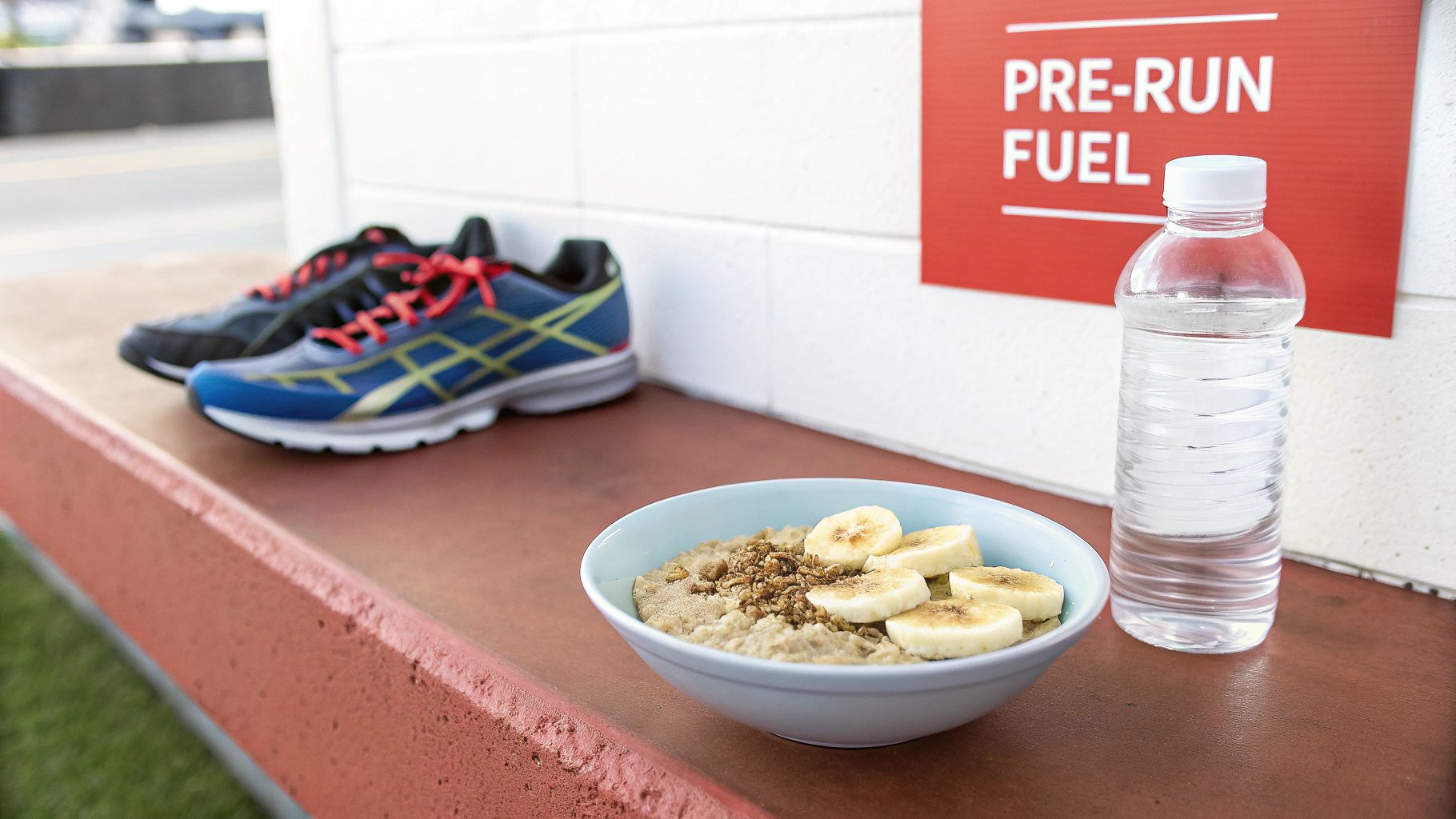
Think of your body like a high-performance car. You wouldn't fill it with the wrong fuel and expect a smooth ride, would you? The same logic applies to your muscles. The goal is to top off your energy stores so you feel strong from the first step to the last.
"The goal of a pre-run snack is simple: to provide accessible energy that prevents fatigue without causing digestive distress. It’s your first step toward a successful run."
Getting this balance right is everything. One study on marathon runners revealed a common mistake: while most nailed their hydration, they often fell short on carbohydrates. Runners in the study consumed less than half the recommended carbs needed to properly refuel after an overnight fast. This is a fast track to hitting the wall way too early.
The Power of Smart Snacking for All Ages
This isn’t just a rule for adults training for a marathon. It’s just as important for kids heading out for a fun run or playing sports. A well-timed snack can be the difference between a kid who has a blast and one who gets tired and grumpy halfway through. Trust us, nobody wants that!
This is where simple, fun options are a lifesaver. Easy-to-grab choices like kids' snack bars or cookies made with clean ingredients provide that quick burst of energy without weighing them down. Why not make pre-activity fueling an exciting part of the adventure? It’s a win-win for everyone involved.
Building Your Fueling Foundation
So, what does this all mean for you? It means focusing on easily digestible carbohydrates and, most importantly, keeping it simple. A good pre-run meal prevents low blood sugar, settles your stomach, and gives your mind the confidence that you're ready to tackle your run.
To truly master your pre-run routine, it helps to dig a little deeper. We suggest you check out this Your Ultimate Guide to Pre-Run Fueling to build on these fundamentals. Understanding the basics is the first step toward tailoring your nutrition for any distance or intensity, ensuring you feel fantastic every time.
For a quick reference, here’s a simple cheat sheet to help you plan.
Your Pre-Run Fueling Cheat Sheet
| Time Before Your Run | What Your Body Needs | The Performance Payoff |
|---|---|---|
| 2–3 Hours | A balanced meal with complex carbs, moderate protein, and a little healthy fat. | Sustained, slow-release energy for long or intense runs. |
| 60–90 Minutes | Mostly simple carbs with a small amount of protein. Think oatmeal or a bagel with peanut butter. | Easily accessible energy without the risk of stomach cramps. |
| 30–60 Minutes | A small, quick-digesting carb snack. A banana, a handful of dates, or an energy bar works perfectly. | A final top-off of your glucose stores for immediate power. |
This table is a great starting point, but always remember the most important rule: listen to your own body! Experiment to find what makes you feel your best.
Mastering the Macronutrients for Your Run
Think of your pre-run snack as the pit crew for your body, making sure you're tuned up and ready to go. To get the best performance, you need to understand the three key players on this crew: carbohydrates, protein, and fat. Each one has a specific job, and getting the balance right is the secret to a smooth, powerful run.
It’s all about giving your muscles what they need, right when they need it. Get it right, and you’ll feel energetic and strong. Get it wrong, and you might find yourself battling the dreaded side stitch or hitting the wall halfway through your route. Let’s break down what each one actually does.
Carbohydrates: The High-Octane Fuel
Carbohydrates are, without a doubt, the star of the pre-run show. They're your body's favorite and most efficient energy source. When you eat carbs, your body breaks them down into glucose and stores it in your muscles and liver as glycogen—this is your primary fuel tank.
There are two types you’ll want to know:
- Simple Carbs: These are the quick-release energy boosters. Think of them like a rocket launch—fast, powerful, and perfect for right before you head out. Bananas, honey, and dates are great examples.
- Complex Carbs: These are like a long-burning log on a fire, providing a slower, more sustained energy release. Oatmeal, brown rice, and whole-wheat bread are perfect for meals a few hours before a long run.
For most pre-run snacks, you’ll want to lean heavily on simple carbs to top off your energy stores without weighing you down.
Protein: The Muscle Maintenance Crew
Protein is the trusty sidekick to carbohydrates. While carbs provide the immediate fuel, protein acts like the maintenance crew, prepping your muscles for the work ahead and even getting a head start on recovery.
A small amount of protein before a run helps prevent muscle breakdown and can keep you feeling full, warding off hunger pangs on longer efforts. But be careful—too much protein right before a run can slow digestion, which is the last thing you want. Moderation is key here. For those looking to optimize their protein intake throughout the day, incorporating protein powder for cooking into other meals can be a great way to support muscle repair without overloading your pre-run snack.
A good rule of thumb is a 4:1 ratio of carbs to protein. This gives you plenty of quick energy from carbohydrates while providing just enough protein to support your muscles.
Fats: The Slow-Burning Reserve Tank
Fats are a valuable energy source for long, low-intensity exercise, but they take a really long time to digest. Eating a high-fat snack right before a run is a classic recipe for stomach cramps and digestive issues because your body has to work overtime to break it down.
While healthy fats are an essential part of any runner's overall diet, they should be kept to a minimum in the 1-2 hours before you start your run. Our suggestion? Save the avocado toast or nutty trail mix for a post-run recovery meal or for much earlier in the day. Keeping your pre-run snack low in fat ensures that the energy from your carbs is quickly available and ready to use. For more insights on building a strong foundation, check out our guide on a plant-based diet for athletes.
Perfecting Your Timing for Any Distance
Eating the right food at the wrong time can derail your run just as fast as eating the wrong food. Think of it like a perfectly timed pass in a relay race—get the handoff right, and you’ll fly. Get it wrong, and you’ll be left fumbling. The goal is to sync your fuel with your effort, making sure energy is ready the moment your muscles start asking for it.
This isn’t about following rigid rules. It’s about understanding how your body digests different foods. A small, quick-acting carb snack is perfect for a short jog, but a grueling long run demands a more substantial, carb-focused meal well ahead of time to keep you from hitting that dreaded wall.
Fueling for a Quick 30-Minute Jog
For a short run of about half an hour, your body already has plenty of stored glycogen to get you through. The snack you have beforehand is really just to top off your energy levels and keep any distracting hunger pangs at bay.
You don't need a full meal here. Just grab a small, easily digestible snack about 20-30 minutes before you head out the door. This gives your body just enough time to turn those simple carbs into ready-to-use glucose without weighing you down.
- Great options include: A small banana, a few dates, a spoonful of honey, or even a Skout Organic Kids Cookie. We highly suggest these for a quick energy lift without any digestive drama.
Fueling for a 10k or Mid-Distance Run
When you’re stepping up to a 10k or a run that lasts about an hour, your fueling strategy needs a bit more thought. These runs dip deeper into your glycogen stores, so you’ll want to start with a fuller tank.
Aim to eat a slightly larger, carb-centric snack or a small meal about 60-90 minutes before you run. That window gives your body enough time to digest everything and stabilize your blood sugar, providing steady, sustained energy for your entire effort.
A classic mistake is eating too much, too close to a medium-distance run. Give your body at least an hour to work its magic, and you’ll sidestep those potential stomach cramps and side stitches.
A small bowl of oatmeal with berries is a fantastic choice, as is a piece of toast with a thin layer of almond butter. This mix of simple and complex carbs delivers both immediate and lasting energy.
Fueling for Long Runs and High-Intensity Intervals
Long runs (anything over 90 minutes) and intense interval sessions are the heavy hitters. They’re the most demanding workouts on your energy systems, and for these, your pre-run meal is absolutely non-negotiable. Trying to skimp here means a serious performance drop.
Plan on having a more substantial meal 2-3 hours before you start. This meal should be rich in complex carbohydrates with a moderate amount of protein to help you feel satisfied and support your muscles.
This infographic gives you a great visual for how macronutrients should be timed around your run.
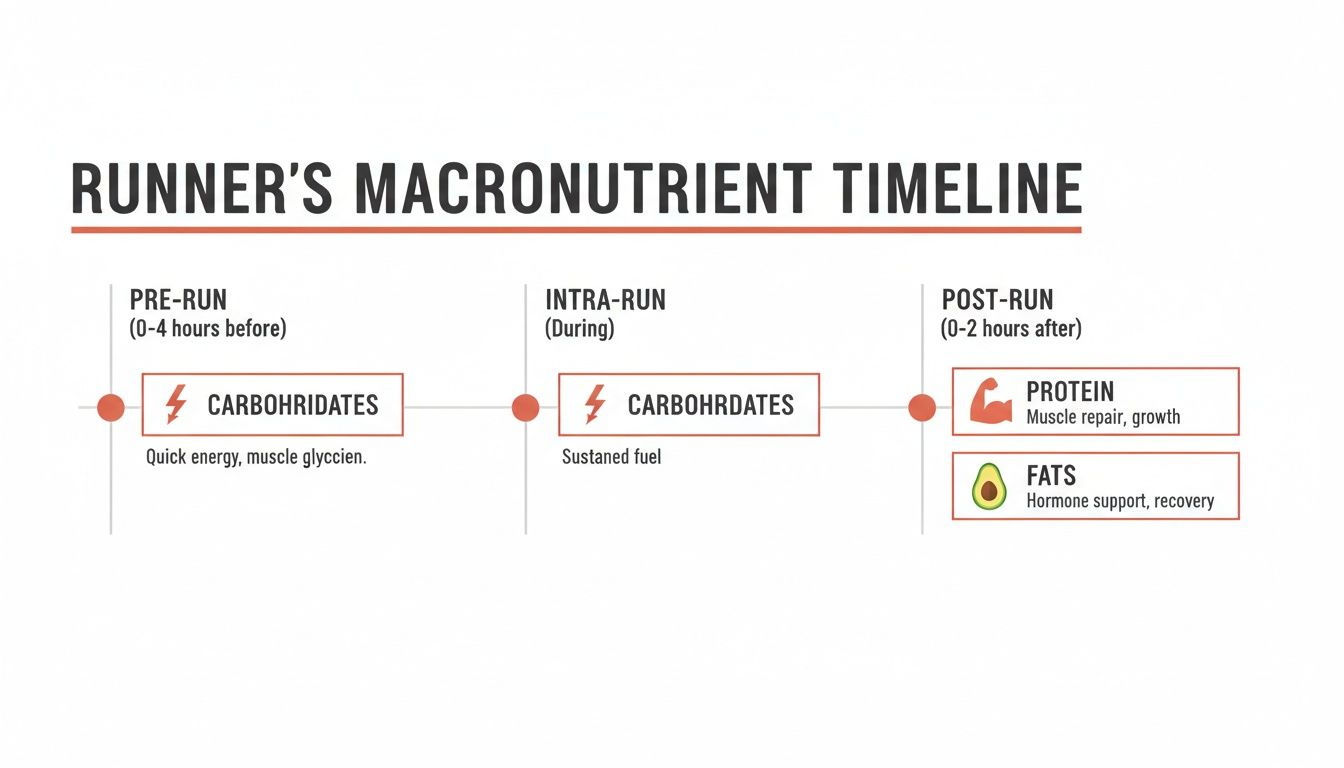
As you can see, carbohydrates are the star of the show before and during a run, while protein and fats are more critical for your post-run recovery. When you time your intake correctly, you ensure you’re always using the right fuel at the right time. For more ideas on convenient fuel, check out our complete guide to the best energy bars for running.
Fueling for Fun: Pre-Run Snacks for Kids
Getting kids to eat well before sports can sometimes feel like its own marathon. But fueling little athletes doesn't have to be a big, complicated thing. The goal is simple: give them easy-to-digest energy that keeps them happy and active, without the dreaded sugar crash just when the fun is getting started.
Unlike adults who might be tracking pace and distance, kids run on pure joy. Their smaller bodies and faster metabolisms just need the right kind of fuel in kid-friendly packages. The real key is finding snacks that are both functional and genuinely fun to eat.
The Kid-Friendly Fueling Philosophy
A kid's pre-run snack needs to be simple, yummy, and easy on smaller stomachs. Forget complex meals or ingredients that are tough to digest. Their fuel should be mostly carbohydrate-based to provide that quick, accessible energy their muscles need to run, jump, and play.
The perfect pre-run snack for a child is one they are excited to eat. Turning snack time into a positive part of their running routine helps build healthy habits that can last a lifetime.
Think of it like filling up a tiny race car. You don't need a huge tank of gas, just enough high-quality fuel to let them zoom around the track. This is where snacks with simple, organic ingredients really shine. They deliver energy without artificial additives or a mountain of sugar that leads to a quick spike followed by a tired slump.
Snack Ideas That Get a Gold Star
Honestly, the best snacks are usually the easiest ones. You need options that are quick to grab, easy to pack, and pretty much guaranteed to be eaten. Having a few trusted staples on hand makes all the difference.
- Skout Organic Kids Snack Bars: We suggest trying these because they’re made specifically for little ones. With simple ingredients and a great balance of carbs for energy, they’re easy for kids to eat and digest about 30 minutes before an activity.
- Skout Organic Soft-Baked Cookies: Who said cookies can't be good pre-run fuel? Made with wholesome ingredients, these give them a delicious energy boost that feels like a real treat. We think they’re a fantastic choice!
- A Small Banana or Applesauce Pouch: Classics for a reason! They offer natural sugars and simple carbs that provide a quick, effective energy source.
- Rice Cakes with a Drizzle of Honey: This combo is light, crunchy, and packed with easily digestible carbs for immediate fuel.
The demand for convenient, healthy snacks is definitely growing. And as we learn more about pre-run nutrition, snacks like organic bars are becoming game-changers for active people everywhere. The global sports nutrition market hit a whopping USD 49.60 billion in 2024 and is projected to reach USD 94.30 billion by 2033. This boom is powered by a bigger focus on health and a huge demand for grab-and-go options that fit an active lifestyle. You can discover more insights about this trend and how the market is expanding over at Straits Research.
Making Snack Time an Adventure
Try turning pre-run fueling into an exciting little ritual. Let your child help pick their snack from a few parent-approved options. Giving them that sense of ownership can make them way more enthusiastic about eating what’s good for them.
By choosing snacks that are both tasty and effective, you’re not just feeding them. You're teaching them to listen to their bodies and understand the awesome connection between good food and feeling great.
Grab-and-Go Snack Ideas and Simple Recipes
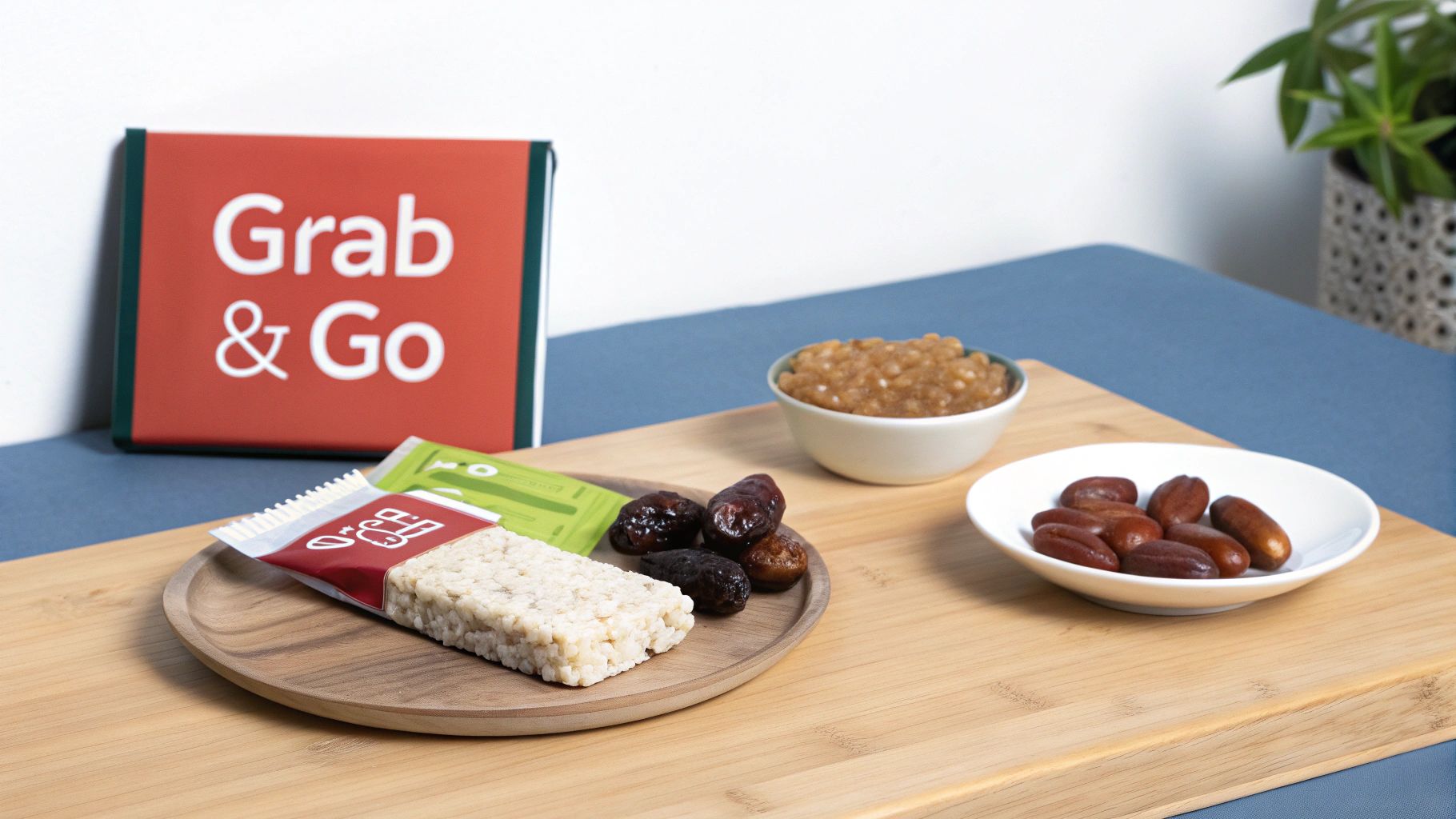
Knowing the science is great, but what does pre-run fueling actually look like on a busy Tuesday morning when you have ten minutes to get out the door?
This is where having a roster of quick, reliable, and easy-to-digest snacks becomes your secret weapon. The right grab-and-go option can make all the difference, providing that perfect energy boost without any fuss.
Let's move from theory to action with ideas you can use immediately. The goal is to find snacks that are high in simple carbohydrates and low in fat and fiber, ensuring your body gets fuel it can use right away without any digestive slowdowns.
Quick and Easy Pre-Run Snacks
When time is tight, you need fuel that’s effective and effortless. Think of these as your five-minute fueling solutions, perfect for grabbing on your way out the door.
- A Handful of Dates: Nature's energy bites! Dates are packed with natural sugars for a rapid energy release.
- Rice Cakes with Honey or Jam: This is a classic for a reason. It's incredibly light on the stomach and provides pure, simple carbs.
- Applesauce Pouch: Easy to pack and even easier to digest, an applesauce pouch offers a quick hit of carbohydrates.
- A Small Banana: The quintessential pre-run snack, bananas deliver carbs and potassium to support muscle function.
A Runner's Best Friend: Convenient Fuel
The modern sports nutrition scene, valued at USD 66.27 billion in 2024, is all about convenience. While sports drinks hold a big slice of the market, the demand for portable snacks like bars and cookies is surging.
Experts recommend aiming for 1-1.2g of carbohydrates per kg of body weight before a run, paired with about 0.4g of protein per kg to prep your muscles. This is precisely where a well-formulated snack bar fits perfectly into your routine.
This is where high-quality, convenient options become a runner’s ultimate ally. The right bar can deliver the perfect balance of macronutrients without requiring any prep work.
And that’s exactly why Skout Organic products are such a game-changer. A Skout Organic Protein Bar offers a balanced mix of plant-based protein and carbohydrates, making it an excellent choice 1-2 hours before a longer run.
For a quicker boost, a Skout Organic Kids Bar or a Soft-Baked Cookie provides simple carbs that are perfect 30 minutes before you start. They take the guesswork out of fueling.
Simple Recipes for Powerful Fuel
Have a little more time on your hands? Whipping up a batch of homemade fuel is a fantastic way to control your ingredients and tailor your snacks to your exact needs. These no-bake energy bites are simple, delicious, and incredibly effective.
No-Bake Energy Bites Recipe
- Combine: Mix 1 cup of rolled oats, ½ cup of nut butter, ⅓ cup of honey or maple syrup, and 2 tablespoons of chia seeds in a bowl.
- Roll: Roll the mixture into small, bite-sized balls.
- Chill: Place them in the refrigerator for at least 30 minutes to set.
These little powerhouses are packed with both simple and complex carbs for sustained energy. For more inspiration, we suggest you explore our collection of easy and healthy snack recipes.
To make your choices even simpler, here’s a handy guide to match your snack with your run.
Your Guide to Convenient Pre-Run Snacks
This quick guide helps you find the perfect grab-and-go option and the best time to eat it before you lace up.
| Snack Idea | Ideal Timing Before Run | Best For This Run Type |
|---|---|---|
| Handful of Dates or a Banana | 20–30 Minutes | Short Runs (Under 45 mins) |
| Skout Organic Kids Cookie | 20–30 Minutes | Quick Runs & Kid's Activities |
| Rice Cakes with Honey | 30–45 Minutes | Mid-Distance Runs (45-75 mins) |
| Skout Organic Protein Bar | 60–90 Minutes | Long Runs or Intense Workouts |
| Homemade Energy Bites | 45–60 Minutes | Any Run Over 45 Minutes |
With these ideas in your back pocket, you’ll never have to second-guess your pre-run fuel again.
Your Pre-Run Fueling Questions Answered
Alright, let's get into the nitty-gritty. When it comes to fueling before a run, a few questions pop up time and time again. Consider this your go-to FAQ for fueling with confidence.
Is It Okay to Run on an Empty Stomach?
Ah, the great debate over "fasted cardio." Here's the deal: for a short, easy-does-it run under 60 minutes, going out on an empty stomach can be totally fine. Some people find it even helps their body get better at using fat for fuel.
But if you’re planning a longer run or a high-intensity workout like intervals or hill repeats, it’s probably not your best move. Your body needs quick-access energy from carbs to really perform. Without it, you're risking that dreaded "bonk," feeling dizzy, or just watching your performance tank.
The golden rule? Always listen to your body. If fasted runs consistently leave you feeling weak or sluggish, that’s your body sending a pretty clear signal that it needs some fuel in the tank first.
What Should I Drink Before a Run?
Hydration is just as important as the food you eat! You want to be fully hydrated before your feet even hit the pavement.
A good rule of thumb is to aim for about 16-20 ounces of water 2-3 hours before your run. Then, top it off with another 8 ounces or so about 20 minutes before you head out the door.
This gives your body time to absorb what it needs and flush out any extra. For most runs under an hour, good old-fashioned water is perfect. If you’re going for over 90 minutes or running in serious heat, you might want to reach for a sports drink with electrolytes to replace the essential minerals you’ll lose through sweat. Just steer clear of sugary sodas or juices right beforehand—they can be a recipe for stomach trouble mid-stride.
How Do I Avoid Stomach Cramps When Running?
Nothing ruins a good run faster than a dreaded side stitch or stomach cramp. This is usually caused by eating too much, too soon, or choosing foods that are high in fat, fiber, or excessive protein—all of which take a while to digest.
To keep your stomach happy, give yourself plenty of time to digest. A snack or small meal should be eaten at least 60-90 minutes before you start. Stick with simple, easy-to-digest carbs that you know your stomach agrees with.
Think of your training runs as a personal food lab. This is your time to experiment and figure out what your go-to, "safe" foods are. What works for your running buddy might not work for you, so nailing down your personal plan is the key.
Fueling the Next Generation of Runners
What about the little athletes in your life? Their fueling needs are just as real! Kids burn through energy like nobody's business, and a well-timed snack can make a huge difference in their stamina and—most importantly—their mood.
The trick is finding snacks that are both effective and, let's be honest, fun. This is where options designed just for kids, like Skout Organic Kids Snack Bars or their Soft-Baked Cookies, are a total game-changer. They offer clean, simple carbs that are gentle on smaller stomachs, delivering energy without a massive sugar crash.
Think of it this way: a good pre-activity snack is one your kid is actually excited to eat. Turning snack time into a positive ritual builds healthy habits for life and ensures they’ve got the fuel they need to go play their hearts out.
When Should I Eat a Skout Organic Bar Before a Run?
Skout Organic bars are a fantastic pre-run option, but timing is everything. Different bars are built for different moments, making them a super versatile part of your running toolkit.
-
If you're grabbing a Skout Organic Protein Bar, which has a solid mix of carbs, protein, and healthy fats, you’ll want to eat it about 60-90 minutes before your run. This gives your body enough time to digest everything so the energy is ready to go when you are.
-
Need a quicker boost? We suggest a Skout Organic Kids Snack Bar or a Soft-Baked Cookie for that 20-30 minute window before you head out. They’re made with simpler carbs for more immediate energy that won’t weigh you down.
No matter what you choose, always test a new snack on a training run first!
Ready to make your pre-run fueling simple, delicious, and effective for the whole family? Skout Organic offers a range of plant-based, organic snacks perfect for any runner. From protein bars for your long runs to kid-friendly cookies for a quick energy boost, we have you covered. Build your custom snack box and discover your new favorite fuel.