
 Kids Snack Bars
 Soft-Baked Cookies
 Protein Bars
 Build A Box
 Shop All





Thinking a plant-based diet for athletes is just a trend? Think again. It's a powerhouse strategy for boosting endurance, building strength, and seriously speeding up recovery. This isn't about fads; it's a scientifically-backed approach that elite competitors and everyday fitness lovers use to get an edge by fueling their bodies with plants.
Fuel Your Performance With Plant Power
Welcome to the new frontier of athletic achievement. Going plant-based is one of the most effective ways to elevate your performance, whether you're a pro, a weekend warrior, or a parent just trying to keep up with your kids. This guide will show you exactly how.
We're ditching the old myths and focusing on what actually works. This isn't about restriction; it's about abundance. Imagine vibrant meals packed with energy-sustaining carbs, muscle-building proteins, and inflammation-fighting fats. It’s about feeling lighter, bouncing back faster, and unlocking a whole new level of vitality.
More Than Just a Diet a Performance Advantage
The idea that you need meat and dairy for peak physical performance is officially outdated. Some of the world's most dominant athletes are shattering records while powered entirely by plants.
Think of elite athletes like tennis star Venus Williams, basketball pro Kyrie Irving, and ultramarathon legend Scott Jurek. They're not just getting by—they're crushing it. And it's not just hype; a comprehensive meta-analysis showed that plant-based diets specifically boost aerobic performance without compromising strength or power.
This is a huge advantage for anyone who moves their body, including parents fueling active kids with snacks like organic plant-based protein bars for sustained energy without the crash.
"A plant-based diet is a powerful tool for any athlete. The reduction in inflammation means less joint pain and faster recovery, which is a significant advantage when you’re training hard day after day."
To help you get started, here’s a quick look at how the core benefits of a plant-based diet translate directly into better performance.
Plant Based Athlete Quick Start Guide
| Key Benefit | What It Means for Athletes | Simple Food Swap |
|---|---|---|
| Reduced Inflammation | Faster muscle recovery, less soreness, and quicker return to training. | Swap beef for lentils or black beans in tacos. |
| Improved Blood Flow | Better oxygen delivery to muscles, boosting endurance and stamina. | Swap whey protein for a high-quality pea protein shake. |
| Optimized Glycogen Stores | More energy from high-quality carbs to power through tough workouts. | Swap white pasta for whole-wheat pasta or quinoa. |
| Increased Antioxidants | Fights oxidative stress from intense exercise, supporting cellular health. | Swap a sugary sports drink for a berry and spinach smoothie. |
Making these small changes consistently can lead to big gains in how you feel and perform.
Fun Fuel for the Whole Family
Making healthy choices shouldn't feel like a chore, especially when it comes to your family. The beauty of a plant-based approach is its versatility. It can be as simple as swapping a few ingredients or as fun as discovering new snacks that everyone actually loves.
For active kids who are always on the move, finding snacks that are both nutritious and delicious is the ultimate win. Instead of reaching for sugary, processed options, think about clean-ingredient snacks like Skout Organic kids snack bars and cookies. They provide the perfect blend of taste and plant-based goodness to refuel after soccer practice or a day at the playground.
For a deeper dive into making this work for your family, you can learn more about harnessing the power of plant-based eating.
Mastering Your Plant-Based Macronutrients
Let's get right to it and clear the air on the biggest question every plant-based athlete hears: "But where do you get your protein?" It’s a fair question, but one that’s easy to answer once you understand your macros.
Think of macronutrients—protein, carbohydrates, and fats—as the three members of your performance band. Each one plays a critical role, and when they work in harmony, the results are incredible.
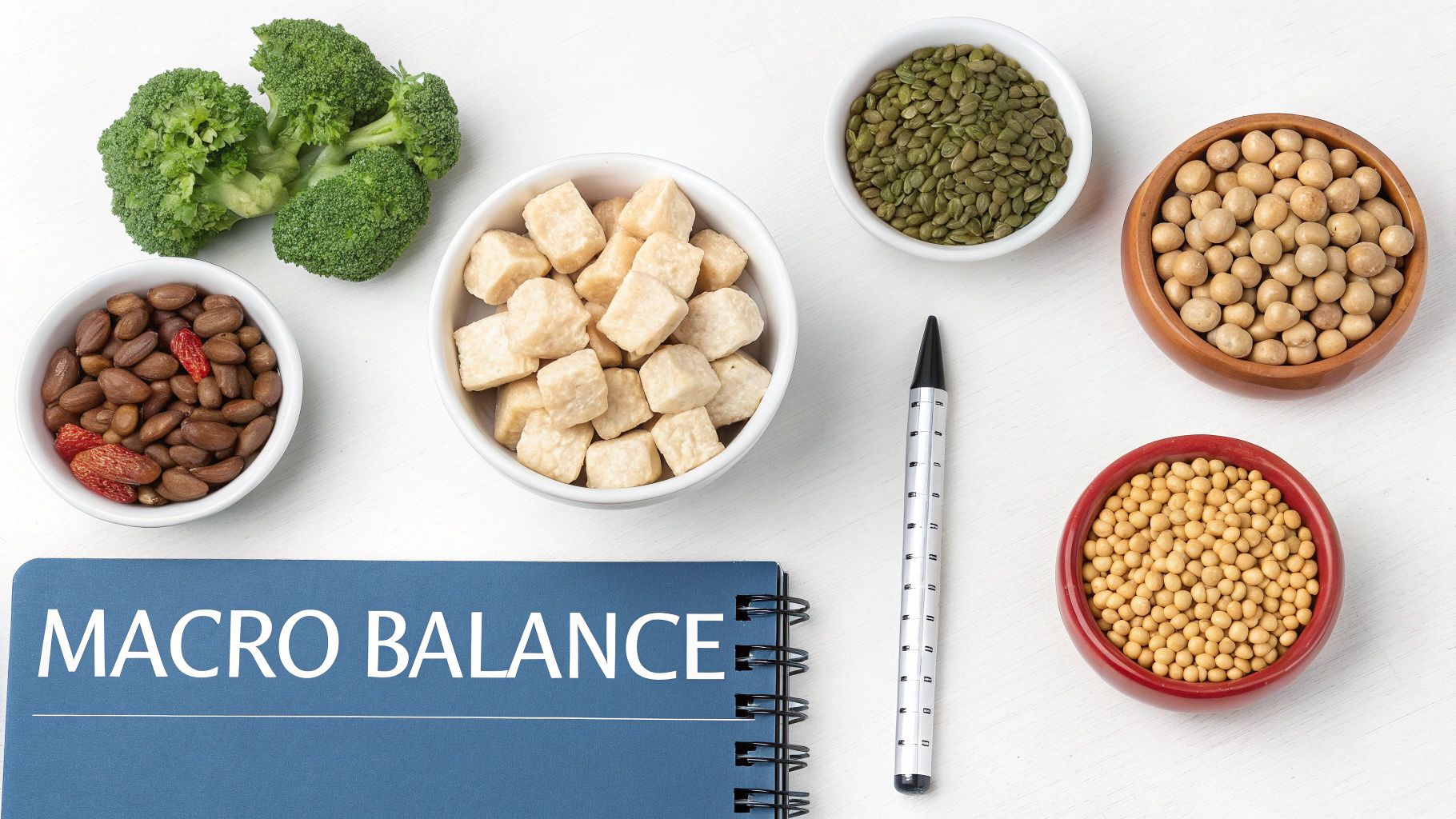
Going plant-based isn't about missing out; it's about upgrading your fuel sources. You're swapping out inflammatory, heavy ingredients for clean, efficient, and powerful alternatives. Let's break down how to nail your macros and build a vibrant, powerful plate.
The Protein Power Play
Protein is the repair crew for your muscles. After a tough workout, your muscle fibers have tiny tears, and protein swoops in to rebuild them stronger than before. The idea that you can't get enough high-quality protein from plants is just plain outdated.
Plant-based sources are everywhere, and they're incredibly effective. The trick is to eat a variety of them to make sure you get a full spectrum of amino acids—the building blocks of protein.
Here are some top-tier plant proteins to add to your rotation:
- Lentils and Beans: These are inexpensive powerhouses, packing both protein and fiber. A single cup of cooked lentils provides about 18 grams of protein.
- Tofu and Tempeh: Made from soybeans, these are incredibly versatile and soak up flavors beautifully. Tempeh brings a firm texture and around 31 grams of protein per cup.
- Quinoa: This ancient grain is a complete protein, meaning it contains all nine essential amino acids. It’s perfect as a base for bowls or salads.
- Nuts and Seeds: Almonds, chia seeds, and hemp seeds are fantastic for snacking and adding a protein boost to smoothies or oatmeal.
For a deeper dive into building your protein arsenal, check out our guide on high-impact plant-based protein sources.
Carbohydrates: Your Primary Energy Source
Carbohydrates are not the enemy. For an athlete, they're your body's preferred source of high-octane fuel. Skimping on carbs is like trying to drive a sports car on an empty tank. It just won’t work.
The key is to focus on complex carbohydrates over simple, refined ones. Think of simple carbs (like white bread or sugary snacks) as a quick burst of energy that fizzles out fast. Complex carbs, on the other hand, are like slow-burning logs on a fire, providing steady, sustained energy.
A diet rich in complex carbs from whole grains, legumes, and starchy vegetables ensures your glycogen stores are topped off, preventing the dreaded "bonk" during a long run or intense lifting session.
Fats: The Unsung Heroes
Healthy fats are essential for hormone production, vitamin absorption, and fighting inflammation. For athletes, their anti-inflammatory properties are a massive win, helping to soothe sore joints and speed up recovery.
Make a point to incorporate these healthy fat sources into your meals:
- Avocados: Perfect on toast, in salads, or blended into smoothies for a creamy texture.
- Nuts and Seeds: Walnuts, flaxseeds, and chia seeds are rich in omega-3 fatty acids.
- Olive Oil: A great choice for dressings and low-heat cooking.
Putting It All Together for Your Family
Mastering your plant-based macros isn't just for you; it's a fantastic habit to build for the entire family. Active kids, in particular, need the right fuel to power through school, sports, and playtime.
This is where smart snacking comes in. Finding snacks that balance these macros is key. Grabbing a Skout Organic protein bar on the way to practice provides a clean blend of protein, carbs, and fats to keep energy levels stable.
Even their kids' snack bars and cookies are designed with simple, organic ingredients to offer a much better alternative to processed junk food, making it easy for little athletes to refuel healthily. For plant-based athletes focused on muscle growth, understanding effective supplementation can be a game-changer. Explore a no-nonsense guide to the best supplements for building lean muscle to complement your dietary efforts.
Unlocking Recovery With Micronutrients
While macronutrients get all the glory as the high-octane fuel for your workouts, micronutrients are your secret weapon for bouncing back faster and staying healthy for the long haul. If macros build the house, think of micros as the expert crew that keeps everything running smoothly—from your immune system to your energy production.
For any plant-based athlete, getting these tiny powerhouses right is the key to unlocking consistent performance and feeling ready to go after a tough session.
Your Body's Personal Repair Crew
Think of intense training as putting your body through a controlled amount of stress. It’s a good thing! But it also creates inflammation and oxidative damage, which is a normal part of the muscle-building process. If you let that inflammation run wild, though, it can lead to lingering soreness, fatigue, and even injury.
This is where the magic of a plant-rich diet truly shines. Plants are absolutely loaded with antioxidants and phytonutrients, which act like your body’s personal repair crew. They rush to the scene to neutralize damaging free radicals and calm inflammation, meaning you spend less time feeling sore and more time getting ready for your next workout.
Plant-based diets are powering strength and recovery for athletes worldwide, proving there's no performance drop and even potential gains. Research on triathletes revealed that plant-based eaters not only matched their omnivore counterparts in protein intake but also showed improved recovery, likely due to the anti-inflammatory power of antioxidants and fiber. For busy families juggling workouts and school sports, faster bounce-back is a game-changer.
Key Micronutrients Every Plant-Based Athlete Needs
Let’s put the spotlight on the A-team of micronutrients that are absolutely crucial for athletic performance and where to find them in a plant-based diet.
1. Iron for Unstoppable Energy Iron is basically the oxygen delivery service for your body. Without enough of it, your muscles can't get the oxygen they need to perform, which leads to that dreaded feeling of fatigue and a drop in endurance. Plant-based (non-heme) iron is everywhere, but it absorbs best when you pair it with Vitamin C.
- Top Sources: Lentils, chickpeas, spinach, tofu, and pumpkin seeds.
- Pro Tip: Squeeze a lemon over your spinach salad or enjoy a handful of bell peppers with your lentil soup to really supercharge that iron absorption.
2. Calcium for Rock-Solid Bones Athletes put a ton of stress on their skeletal system. Calcium is essential for keeping those bones strong and helping prevent stress fractures. And no, dairy isn't the only game in town—plenty of plant sources are packed with this vital mineral.
- Top Sources: Fortified plant milks (like almond or soy), tofu, leafy greens like kale and bok choy, and chia seeds.
3. Zinc for Immune Defense and Repair Zinc is a total workhorse mineral. It plays a key role in immune function, building protein, and healing wounds—all critical for an athlete who is constantly breaking down and rebuilding muscle.
- Top Sources: Beans, nuts, seeds (especially pumpkin and hemp), and whole grains like oats.
4. Vitamin B12: The Essential Spark Plug Vitamin B12 is vital for nerve function and creating red blood cells. Since it's primarily found in animal products, this is the one micronutrient that all plant-based eaters, especially athletes, must supplement. Don't skip this one!
Fun Fueling for the Whole Family
Getting your micronutrients doesn't have to be a chore—it can be a delicious adventure! This is especially true when it comes to kids. Active children need a steady supply of vitamins and minerals to support their growing bodies and boundless energy.
This is where smart snacking comes to the rescue. Instead of reaching for empty-calorie snacks, think about fun, colorful options that pack a nutritional punch. A great example is incorporating snacks like Skout Organic's fruit-filled kids' bars. They're made with simple, recognizable ingredients and offer a blast of antioxidants from real fruit—a perfect way to boost your family's micronutrient intake without a fight.
Nutrition is the foundation of recovery, but it's not the only piece of the puzzle. Beyond what you eat, you can explore other science-backed strategies to recover faster from workouts for sustainable health and longevity. For a comprehensive look at what foods can aid this process, check out our guide on the best post-workout recovery foods.
Timing Your Meals For Peak Performance
What you eat is obviously a huge piece of the puzzle for a plant-based athlete, but when you eat can be a total game-changer for your performance.
Think of your body like a high-performance engine; it needs the right fuel at the right time to run at its absolute best. Nail your nutrient timing, and you’ll unlock more energy, prevent that mid-workout fatigue, and seriously speed up your recovery.
This isn’t about following rigid, complicated rules—it’s about having a smart strategy. By simply aligning your meals with your workouts, you ensure your muscles have exactly what they need, right when they need it.
Let’s break down the playbook for pre-workout, intra-workout, and post-workout fueling.
Fuel Up Before You Go
Your pre-workout meal is all about stocking your energy reserves for the session ahead. The goal here is to top off your muscle glycogen—your body's primary fuel source—so you don't run out of steam halfway through. A good rule of thumb is to eat 1 to 3 hours before your workout.
Focus on complex carbohydrates that give you a slow, steady release of energy. It’s like putting a slow-burning log on a fire instead of a piece of paper that just burns out in seconds.
Here are some fantastic plant-based ideas to get you started:
- A bowl of oatmeal topped with fresh berries and a sprinkle of chia seeds.
- A banana with a generous spoonful of almond butter.
- A simple slice of whole-wheat toast topped with avocado.
Powering Through Your Workout
For most workouts that are under an hour, water is all you really need to worry about. But if you’re pushing past that 75-90 minute mark, especially during intense stuff like a long run or a big cycling session, you’ll probably need to refuel mid-session.
This is where easily digestible, simple carbohydrates come into play. They provide a quick hit of energy to keep your muscles firing on all cylinders. Think about grabbing a handful of dates, a sports gel, or even a small, clean-ingredient snack bar. The key is to keep it simple and easy on the stomach.
The Golden Window For Gains
That post-workout period is your prime opportunity to kickstart recovery and maximize all your hard work. After you train, your muscles are like sponges, totally ready to soak up nutrients to repair and rebuild. Your mission is simple: replenish your glycogen stores and provide protein for muscle repair.
Aim for a meal or snack with a carb-to-protein ratio of roughly 3:1 or 4:1. This powerful combination works together to shuttle nutrients into your cells efficiently, getting the recovery process started ASAP.
This simple infographic breaks down the cycle of training, repairing with the right fuel, and then hitting peak performance.
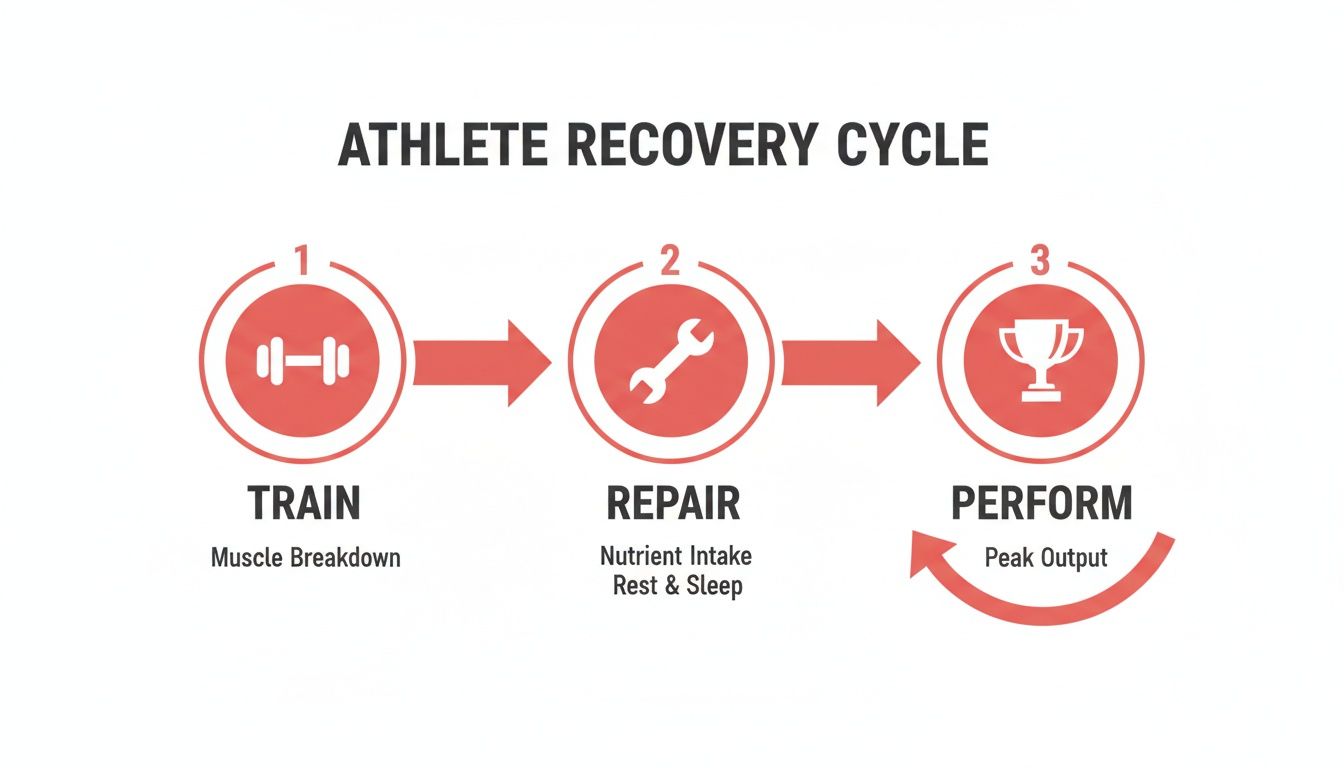 It’s a great visual reminder that the repair phase is just as important as the training itself for reaching that next level.
Smart Snacking For Active Kids
This post-workout window is especially important for active kids who might be rushing from school to sports practice. Their growing bodies need quality fuel to recover properly and stay energized for whatever comes next. This is where strategic, fun snacking makes all the difference.
Instead of sugary drinks or processed snacks, a clean, plant-based option can provide the ideal recovery fuel. It’s a simple swap that makes a huge impact on their energy and well-being.
Having something convenient and healthy on hand is a lifesaver for busy parents. Options like Skout Organic kids' snack bars and cookies are perfect for this. They’re made with simple, recognizable ingredients, offering that essential combo of carbs and protein without any junk. Tossing one in a gym bag is an effortless way to ensure your little athlete refuels properly after giving it their all.
This approach doesn’t just support performance—it contributes to better body composition, too. One of the biggest game-changers for plant-based athletes is achieving leaner physiques and major stamina surges. A study of 9,633 people found that those with the most plant-heavy diets saw the biggest drops in BMI, fat mass, and body fat percentage over time, which is ideal for optimizing speed and power. You can discover more insights about how plant-based eating impacts athletic performance right here.
Your Plant-Powered Meal and Snack Playbook
Alright, let's get down to the fun part. Knowing the science behind a plant-based diet is great, but putting it into practice on your plate is where the real magic happens. This is your go-to guide for fueling up with vibrant, whole-food meals and snacks that actually taste amazing.
We've put together a sample meal plan to show you just how simple, satisfying, and powerful this way of eating can be. Let’s dive in and see how easy it is to power your performance with plants.
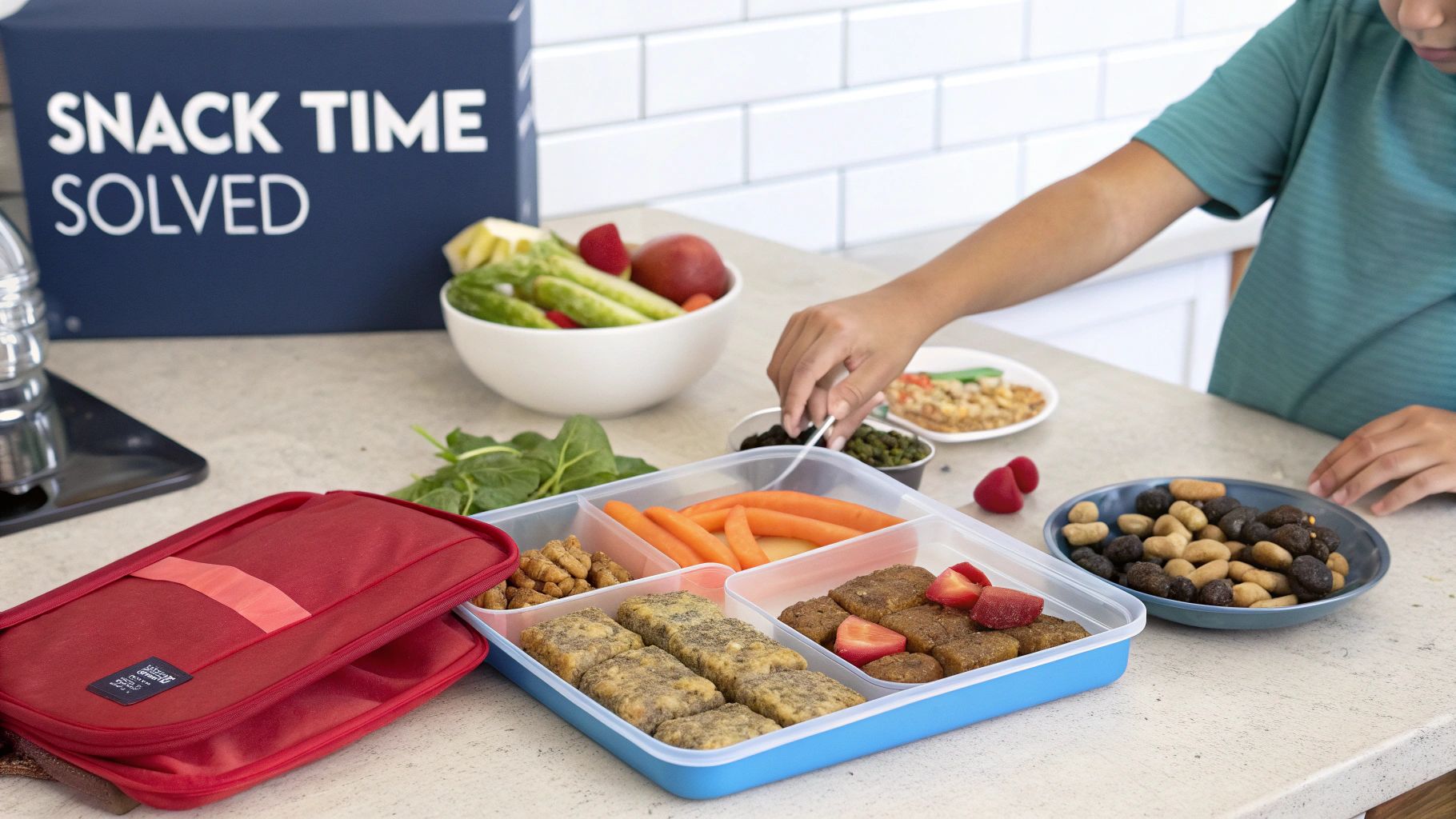
A Sample 3-Day Meal Plan
Think of this less as a strict prescription and more as a flexible template to spark your own kitchen creativity. The goal here is to show you just how balanced and flavorful your meals can be, focusing on whole ingredients that work for you.
Day 1: Endurance Focus
- Breakfast: A big bowl of oatmeal made with soy milk, topped with a sliced banana, a handful of walnuts, and a little maple syrup. This combo delivers that perfect mix of slow-release carbs and healthy fats for the long haul.
- Lunch: Hearty lentil soup with a slice of whole-wheat sourdough for dipping. Lentils are an absolute powerhouse of protein and iron, which are crucial for oxygen delivery during those long efforts.
- Dinner: A quinoa bowl loaded with roasted sweet potatoes, black beans, corn salsa, avocado, and a zesty lime-tahini dressing. This is a true powerhouse meal of complex carbs, complete protein, and anti-inflammatory fats.
Day 2: Strength and Power
- Breakfast: A protein-packed smoothie. Blend up spinach, pea protein powder, a frozen banana, almond milk, and a tablespoon of almond butter. It's a super fast and efficient way to get those muscle-repairing nutrients in first thing.
- Lunch: Leftover quinoa bowl from last night. Seriously, meal prep is your best friend on a busy schedule!
- Dinner: A tofu stir-fry with broccoli, bell peppers, and brown rice, all tossed in a savory peanut sauce. Tofu is fantastic because it’s a complete protein, delivering all nine essential amino acids.
Day 3: Recovery Day
- Breakfast: Whole-grain toast topped with mashed avocado, sliced tomatoes, and a sprinkle of hemp seeds for an extra boost of protein and omega-3s.
- Lunch: A massive "everything" salad. Think mixed greens, chickpeas, cucumber, cherry tomatoes, shredded carrots, and a light vinaigrette. All those different colors mean you're getting a wide range of antioxidants to help your body recover.
- Dinner: A comforting bowl of whole-wheat pasta with a rich marinara sauce loaded up with mushrooms and zucchini, plus a side of steamed green beans.
Snack Time Solved—Especially for Kids
For active families, snack time can feel like a constant battle. The kids are always hungry, especially after burning off tons of energy at school or practice. It's so tempting to just grab a highly processed, sugary snack, but there's a much better way to refuel those growing bodies.
A winning snack strategy is built on three things: simplicity, taste, and clean ingredients. This is where having trusted, grab-and-go options becomes a total game-changer for busy parents. You need snacks you can feel good about—ones that support their active lifestyle, not slow them down.
Finding the right snack isn't just about quieting a rumbling tummy; it's a crucial part of your child's recovery and energy management. A great snack provides the necessary bridge between meals, keeping blood sugar stable and focus sharp.
This is exactly why we're huge fans of brands like Skout Organic. Their line of kids snack bars and cookies are designed with active families in mind. They ditch all the artificial ingredients, high-fructose corn syrup, and weird preservatives you find in so many other "kid-friendly" snacks.
Instead, they keep it simple with recognizable and always organic ingredients. We're talking real fruit, whole-grain oats, and sunflower seeds. It’s the kind of clean fuel that helps kids bounce back after a soccer game or power through an afternoon on the playground.
Here are a few ways to make Skout Organic part of your routine:
- The School Lunch Hero: Tuck a Skout Organic Kids Bar into their lunchbox. It’s a delicious treat that provides lasting energy for the rest of the school day, unlike sugary snacks that lead to an inevitable crash.
- The Post-Practice Refuel: Keep a stash of their soft-baked cookies in your car or gym bag. They’re perfect for that crucial post-practice window when kids need to replenish their energy stores right away.
- The Road Trip Savior: Long car rides can get messy. Packing a variety of Skout Organic flavors keeps things interesting and helps you swerve past the unhealthy gas station junk food.
By choosing snacks with simple, high-quality ingredients, you’re doing more than just feeding your kids. You’re teaching them what real food tastes like and setting them up with healthy habits that can last a lifetime.
Common Questions About Plant-Based Diets For Athletes
Making the switch to a plant-based diet can feel like a big move, especially when you’re in charge of fueling your own performance—and maybe your family's, too. It’s completely normal to have questions! Let's tackle some of the most common concerns athletes and parents have, with straightforward answers to get you started with confidence. This journey is all about making food fun, informative, and seriously delicious for everyone.
Will I Lose Muscle and Strength?
Absolutely not! This is probably the most persistent myth out there, but both science and real-world results have put it to rest for good. Strength, power, and muscle mass are not compromised on a well-planned plant-based diet. In fact, many elite strength athletes, from NFL linemen to Olympic weightlifters, are thriving on plants.
The key isn't the source of the protein, but the quantity and quality. As long as you’re eating enough total protein from a variety of sources—like lentils, beans, tofu, tempeh, quinoa, and nuts—you will get all the essential amino acids your body needs to repair and build muscle.
Think of it like building a house: as long as you have all the right bricks (amino acids), it doesn’t matter which truck delivered them.
For that critical post-workout recovery window, a plant-based protein shake or a convenient, clean option like a Skout Organic protein bar gives your muscles the building blocks they need to get the job done right.
Is a Plant-Based Diet Safe For My Active Kids?
Yes! A well-planned plant-based diet is not only safe but can be incredibly beneficial for active kids. It helps establish healthy eating habits that can last a lifetime and introduces them to a whole world of flavors beyond the typical kid's menu.
The main focus for growing, active kids is ensuring they get enough calories and key nutrients to match their high energy needs. This includes iron, calcium, vitamin D, and vitamin B12 (which should be supplemented). A diet packed with fruits, veggies, whole grains, and legumes delivers a powerful punch of fiber, vitamins, and antioxidants—all essential for a strong immune system, healthy development, and sustained energy for both the classroom and the soccer field.
For busy parents, this is where smart snacking becomes your secret weapon. Let’s be honest, kids are always snacking! Instead of reaching for sugary, processed options, think about clean-ingredient snacks you can feel good about.
This is one of the most fun parts of going plant-based as a family. You get to discover delicious and healthy alternatives that your kids will genuinely love. It's about finding joy in food, not restriction.
Making healthy snacking easy is a must. That’s why incorporating trusted snacks like Skout Organic's kids' snack bars and cookies is such a game-changer. They offer clean, organic, nutrient-dense fuel that's perfect for tossing into a lunchbox or gym bag. It’s a simple way to ensure your little athletes are getting the goodness they need without any of the junk.
How Do I Handle Eating Out and Social Events?
Navigating social situations on a plant-based diet is easier today than ever before. You don't have to be "that person" who can't eat anything! Most restaurants now proudly offer dedicated vegan or vegetarian options, and plant-based eating has become incredibly mainstream.
A great tip is to do a little recon before you go. Check the menu online or give the restaurant a quick call. You’ll often find that many cuisines—like Thai, Indian, Mexican, and Ethiopian—are naturally packed with amazing plant-based dishes.
When you're heading to a party or a friend's house, offer to bring a dish to share. This isn't just a nice gesture; it’s a brilliant way to guarantee you have something delicious to eat while showing everyone else how incredible plant-based food can be. Your famous black bean brownies or creamy vegan mac and cheese might just be the star of the show!
For those times when you're traveling or at a long all-day event, being prepared is your best strategy. Always pack your own reliable snacks. Keeping Skout Organic bars or cookies in your bag is a lifesaver. It ensures you have a healthy, satisfying option ready to go, preventing you from getting stuck with a sad bag of chips from a vending machine.
Do I Need to Take a Lot of Supplements?
While a whole-foods plant-based diet is one of the most nutrient-dense ways you can eat, a few key supplements are recommended to make sure you're covering all your bases for optimal health.
- Vitamin B12: This is the non-negotiable one. B12 is produced by bacteria in the soil and isn't reliably found in plant foods, so a supplement is essential for everyone on a plant-based diet.
- Vitamin D: Often called the "sunshine vitamin," many people (plant-based or not) can be deficient, especially in the winter months. Supplementing can be a good idea.
- Omega-3s (DHA/EPA): While you can get the precursor (ALA) from flax and chia seeds, some athletes may benefit from an algae-based omega-3 supplement for its powerful anti-inflammatory properties.
Other nutrients like iron and calcium can typically be obtained through a well-balanced diet. It's always a smart move to get regular bloodwork done to check your levels and supplement only if you find you actually need it. The goal is always food-first, with smart, targeted supplementation to fill any gaps.
Ready to make snack time the best time? At Skout Organic, we believe that delicious and nutritious should always go hand-in-hand. Explore our family of organic, plant-based kids' snack bars, cookies, and protein bars to find your new favorite adventure in snacking. Visit us at https://www.skoutorganic.com and build your custom box today