 Kids Snack Bars
 Soft-Baked Cookies
 Protein Bars
 Build A Box
 Shop All





Let's clear up the confusion and get right to it: what exactly does "non-GMO" mean when you see it on a food label? In the simplest terms, non-GMO food is made without any ingredients that come from genetically modified organisms.
This means its genetic makeup hasn't been tweaked or altered in a lab. It’s food that’s kept as close to its original, natural state as possible. Think of it as food that likes to keep it real.
Decoding Your Pantry: What Is Non-GMO Food?
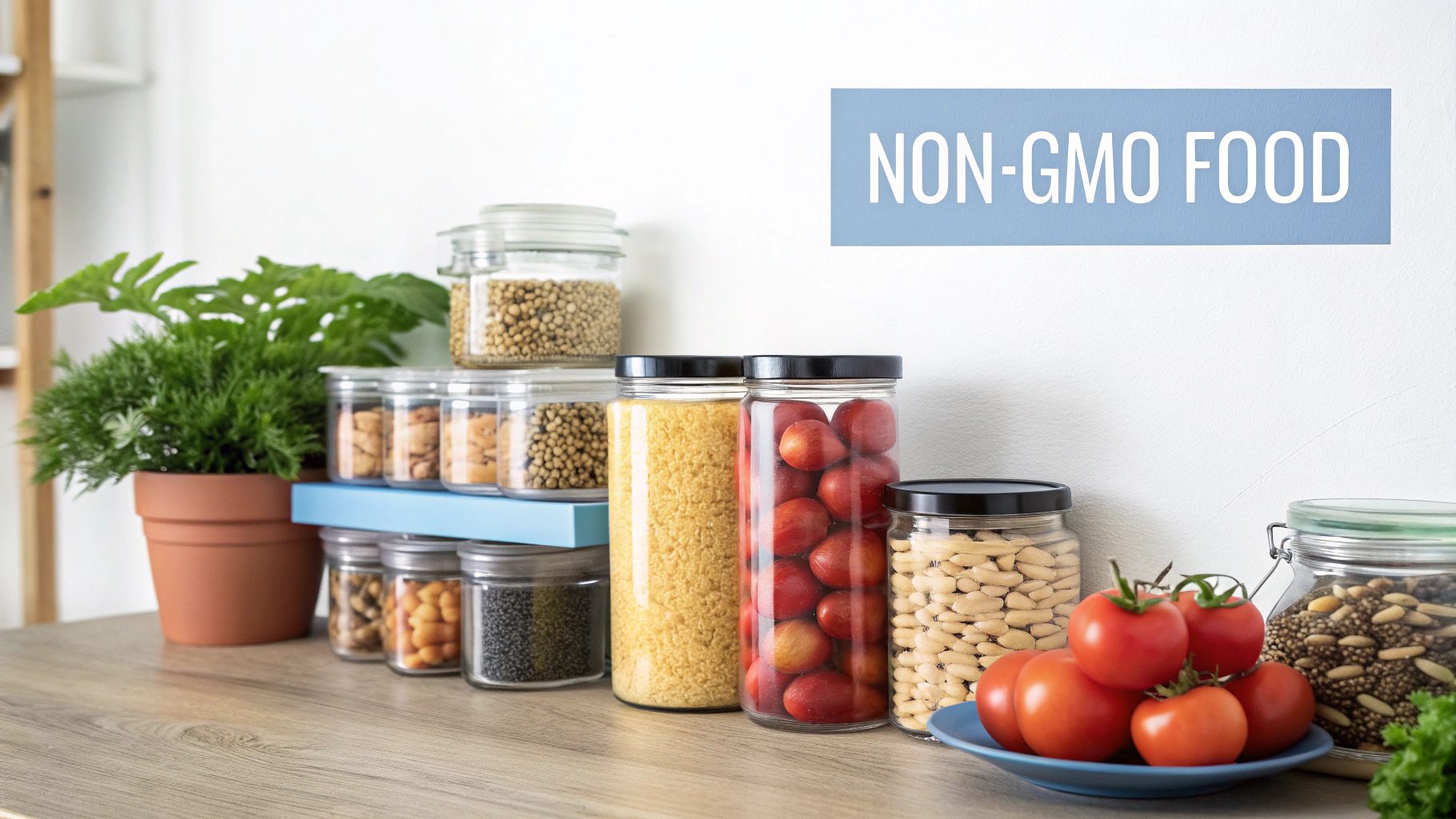
Imagine it like this: a non-GMO tomato grows from a seed that nature designed. Its DNA is the original blueprint, no edits needed.
A Genetically Modified Organism (GMO), on the other hand, is when a plant's DNA is intentionally changed in a laboratory. Scientists might do this to give the plant a new trait it wouldn't have naturally, like the ability to resist pests or survive being sprayed with certain weedkillers. It's a high-tech intervention at the genetic level.
Ready for a super-simple breakdown? Here’s a quick side-by-side comparison.
GMO vs Non-GMO At a Glance
| Attribute | Non-GMO Food | GMO Food |
|---|---|---|
| Genetic Makeup | Natural, unaltered DNA | DNA altered in a lab |
| Development | Traditional breeding/farming | Genetic engineering techniques |
| Common Traits | Grows as nature intended | Often has added traits like pest or herbicide resistance |
| Labeling | Can be certified "Non-GMO Project Verified" | Required to be labeled as "Bioengineered" in the US |
This table cuts through the noise, showing the fundamental difference is how the food's very blueprint is handled.
Why This Matters for Snack Time
When you're packing snacks for your kids, this distinction really hits home. You’re not just trying to get them through to the next meal; you’re helping shape their tastes and teaching them about food. Choosing non-GMO snacks is a simple way to feel more confident about the ingredients you’re handing over.
For so many of us parents, it boils down to transparency. We just want to know what’s really in those colorful packages. Seeing a "Non-GMO" label provides that peace of mind, confirming the ingredients haven't been scientifically altered at their core.
By opting for non-GMO, you're choosing food that has been grown and produced in a more traditional manner, aligning with practices that have sustained us for generations.
Keeping It Simple (and Fun!)
Choosing non-GMO doesn't have to feel like a huge, complicated task. Honestly, it can be a pretty fun adventure in discovering delicious, simple foods your whole family will love. A great place to start is with your kids' snacks—an easy win!
Instead of getting lost in complicated ingredient lists, we suggest looking for wholesome options. Swapping out conventional snacks for non-GMO certified kids snack bars or yummy cookies is a fantastic first step. These choices almost always feature simple, recognizable ingredients, which makes snack time both tasty and totally worry-free.
Here’s a quick rundown of what "non-GMO" really brings to the table:
- Back to Basics: Ingredients are kept closer to their natural form.
- Ingredient Transparency: You get a much clearer picture of how your food was made.
- Empowered Choices: You can actively pick snacks that feel right for your family.
At the end of the day, understanding what non-GMO food is gives you the power to stock your pantry with confidence.
Understanding the Science Behind GMOs
So, what’s really going on behind the curtain when we talk about GMOs? A Genetically Modified Organism (GMO) is any living thing—a plant, animal, or microorganism—whose genetic code has been changed in a lab.
Think of it like a computer programmer editing a single line of code to make an app do something new. Scientists can take a specific gene from one organism and insert it into another to give it a desirable trait, like the ability to fight off pests or survive being sprayed with weed killer.
This isn't the same as traditional cross-breeding, which farmers have been doing for centuries. It's a direct, high-tech intervention at the DNA level, creating combinations of traits that would never happen out in a field.
The Why Behind the Science
Why go through all this trouble in the first place? The main goal is usually to solve big farming challenges. For example, a crop might be engineered to produce its own bug repellent, which means farmers don't have to spray as many chemical pesticides.
Others are designed to be "herbicide-tolerant," allowing entire fields to be sprayed for weeds without harming the crop itself. While these innovations are meant to make farming more efficient, they also raise questions for parents who want to stick with more traditional food sources—especially when you're thinking about what goes into those little snack bags and lunchboxes.
When you reach for snacks like kids snack bars or cookies, you're not just looking for something tasty—you're looking for ingredients you can trust. The science of GMOs introduces a new layer to that decision-making process.
Where Do GMOs Show Up Most?
You might be surprised by how common GMO ingredients are, especially in processed foods. In fact, the vast majority of certain staple crops grown in the U.S. are genetically modified. In 2024, it's estimated that a whopping 94% of all corn planted in the country was a GMO variety.
Here are the big players you’ll often find on ingredient lists:
- Corn: Used for just about everything, from corn syrup in sodas to cornstarch in soups and sauces.
- Soybeans: Found in soy lecithin (an emulsifier in chocolate), soybean oil, and tofu.
- Canola: Primarily used to make canola oil for cooking and tons of processed foods.
- Sugar Beets: A major source of the refined sugar found in countless sweets and snacks.
Because these crops are everywhere, their derivatives sneak into thousands of products, from breakfast cereal to your kid's favorite cookies. This is what makes understanding what is non GMO food so important for families who prefer to opt out. Choosing snacks that are explicitly non-GMO is a simple way to sidestep these modified ingredients and feel confident about what your little ones are eating every day.
Why So Many Families Are Choosing Non-GMO Foods
Making thoughtful choices at the grocery store can feel like a superpower, especially when you’re in charge of feeding your family. For a growing number of parents, reaching for non-GMO foods isn't just about a trend—it's about a desire for transparency and a connection to farming that feels a little more traditional.
Simply put, it’s about wanting to know exactly what’s in the food you serve your kids. This desire for clarity is a huge driver behind the non-GMO movement. When you see that butterfly seal on a package of kids snack bars or cookies, it’s an instant signal that the ingredients haven’t been genetically altered in a lab. It just offers a bit of peace of mind.
It’s More Than Just an Ingredient List
Choosing non-GMO often means you're supporting a different kind of food system, one that encourages agricultural practices that work in harmony with nature and promote biodiversity.
Think of it as voting with your wallet. You're supporting farms that cultivate a variety of crops, rather than vast fields of a single, genetically uniform plant. This variety is crucial for a healthy ecosystem, supporting everything from the soil to the helpful insects that keep pests in check naturally. It's a small choice in the aisle that sends a big ripple effect.
And this isn’t just a niche interest; it's a global shift. The demand for non-GMO food is growing fast as more families seek out transparent options. The global non-GMO food and beverages market was valued at USD 333.9 billion in 2025 and is projected to reach USD 426.7 billion by 2030. That growth is powered by parents like you who want clearer labels and easier access to trusted products. You can discover more about the non-GMO market trends and see how consumer choices are shaping the future of food.
For many, choosing non-GMO is a vote for transparency. It's a simple, powerful way to say, "I want to know how my food is made, from the seed to the snack."
Making Snack Time Simple and Fun
Let's be real: snack time can be chaotic enough as it is. The last thing any parent needs is more stress. The beauty of choosing non-GMO snacks is that it often simplifies things. Products that avoid GMOs tend to have shorter, more recognizable ingredient lists.
Here’s a suggestion for making it a positive and easy part of your routine:
- Look for the Labels: Get familiar with the Non-GMO Project Verified seal. It’s your shortcut to confidence in the snack aisle.
- Embrace Whole Foods: Fruits, veggies, nuts, and seeds are nature’s original non-GMO snacks!
- Find Trusted Brands: Companies that prioritize non-GMO ingredients make it easy. Grabbing certified non-GMO kids snack bars or cookies means the vetting work is already done for you.
Ultimately, choosing non-GMO is an empowering act. It’s about feeling good about what you pack in that lunchbox and building a positive relationship with food for your entire family.
How to Read Labels and Shop with Confidence
Walking down the grocery aisle can feel like a pop quiz, especially when you're trying to find the best non-GMO options for your kids. But don't worry—once you know what to look for, spotting the good stuff becomes second nature. Think of it as having a secret decoder ring for food labels.
Your best friend in this mission is the Non-GMO Project Verified seal. This little logo, with its cheerful orange butterfly, is the gold standard for non-GMO assurance. It's not just a pretty picture; it means a product has gone through a tough, third-party verification process to ensure it meets strict standards for avoiding GMOs. When you see it on a package of kids snack bars or cookies, you can feel totally confident in your choice.
This infographic breaks down the "why" behind choosing non-GMO, from wanting to know exactly what's in your family's food to supporting a healthier planet.
As you can see, it's about more than just an ingredient list—it's about aligning your shopping cart with your values.
The Gold Standard: The Butterfly Seal
So, what makes this butterfly seal so special? The Non-GMO Project is a non-profit organization dedicated to building and protecting a non-GMO food supply. Their verification is the most trustworthy in North America because their standards are just so thorough.
The project tests ingredients that are at high risk of being genetically modified, like corn, soy, and sugar beets—all super common in processed snacks. This is a big deal because the U.S. government’s "Bioengineered" label has loopholes that can leave a lot of GMO ingredients undisclosed. The butterfly seal closes those gaps.
The Non-GMO Project Verified seal is your most reliable shortcut. When you see it, you know the product has passed a comprehensive third-party verification, giving you true transparency.
The Organic Connection
Another powerful label to look for is the USDA Organic seal. This is a fantastic shortcut because, by law, any product certified as organic must also be non-GMO. The organic standards flat-out prohibit the use of genetically modified seeds and ingredients. Easy, right?
So, our suggestion is simple: if you're reaching for an organic snack, you're automatically choosing a non-GMO one.
This makes shopping for snacks like Skout Organic’s kids snack bars and cookies incredibly simple. Because all our products are USDA Certified Organic, they are inherently free from GMOs—no extra detective work needed! If you're looking to become a pro, you can learn more about how to read food labels in our detailed guide.
Simple Swaps for Non-GMO Kids Snacks
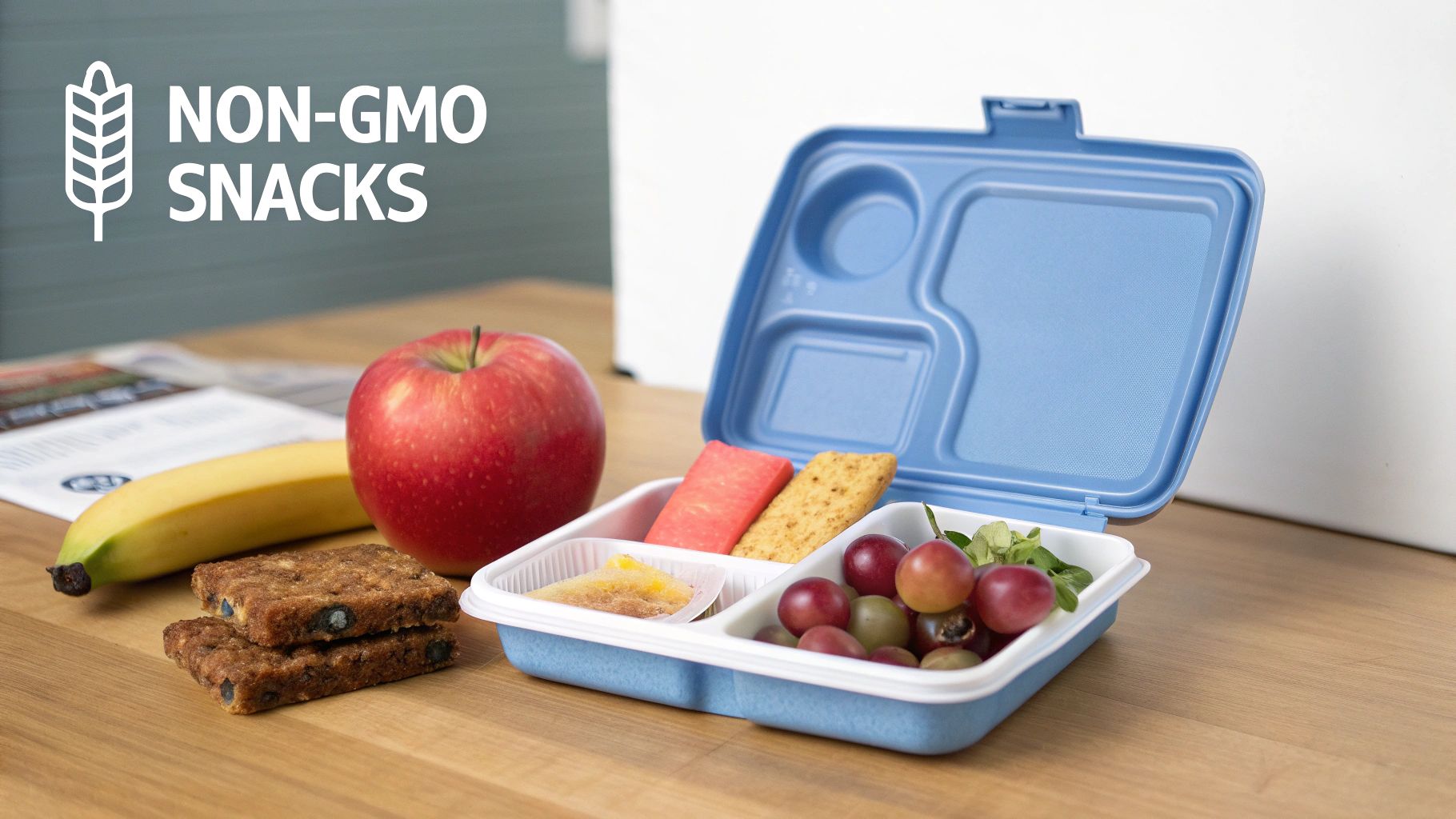
Okay, let's talk about the most important meal of the day—snack time! This is where the rubber meets the road, turning what you know about non-GMO food into fun, delicious, and super simple choices for your kids.
Switching to non-GMO snacks doesn't mean you have to give up the convenience or flavors your little ones love. Honestly, it often leads you to discover even tastier options with ingredients you can actually pronounce. It’s all about making small, easy swaps that add up to a big win for your pantry.
Building a Better Snack Stash
A great first step is to prioritize snacks with short, recognizable ingredient lists. If you can picture the ingredients growing in a field or on a tree, you're on the right track. We suggest you think of it as a fun pantry makeover, trading out complex processed items for simpler, more wholesome alternatives.
Another easy win? Reaching for whole foods first. A crunchy apple, a handful of berries, or some sweet baby carrots are nature’s original non-GMO snacks. They’re packed with nutrients and totally free from confusing labels, making them a perfect go-to.
Choosing non-GMO snacks is about more than just avoiding certain ingredients; it’s about embracing foods that are simple, clean, and delicious by design. It’s a positive choice that makes snack time feel great.
This shift toward cleaner eating is becoming more and more common. The global non-GMO food market was valued at USD 168.35 billion in 2025 and is expected to soar to USD 375.42 billion by 2034. That incredible growth is driven by families just like yours looking for healthier, more transparent food options. You can discover more insights about the non-GMO food market and see how consumer demand is reshaping grocery store shelves.
Finding Your Go-To Non GMO Brands
Life gets busy, and sometimes you just need a grab-and-go option you can trust. This is where finding reliable non-GMO brands becomes a total game-changer. Companies dedicated to clean ingredients do all the hard work for you, so you don't have to spend hours playing detective with food labels.
Brands like Skout Organic make it incredibly easy for parents. Our entire line of kids snack bars and cookies is not only delicious but also Non-GMO Project Verified. That means you can toss them into a lunchbox or backpack with total confidence, knowing they’re made with simple, organic ingredients that taste amazing.
Here are a few practical ideas for simple snack swaps we suggest:
- Swap Conventional Crackers for organic, whole-grain options with the Non-GMO Project seal.
- Trade Sugary Fruit Snacks for real, organic fruit or a Skout Organic Kids Bar made with simple ingredients like dates and blueberries.
- Replace Standard Cookies with a soft-baked, certified organic and non-GMO alternative that delivers on flavor without the mystery ingredients.
Choosing these easy swaps helps you understand not just what non-GMO means on a label, but what it looks like in your everyday life. For a deeper dive, check out our guide on what does non-GMO mean and feel even more empowered on your next grocery run.
The Bigger Impact of Your Food Choices
Your grocery cart has more power than you might think. Every time you choose a non-GMO snack for your kids, you’re not just filling their lunchbox—you’re casting a vote for the kind of food system you want for your family.
This collective demand sends a powerful message to the entire food industry. It's a movement led by families like yours, supporting farmers who use traditional, time-tested methods. These choices help preserve agricultural biodiversity, ensuring our food supply stays resilient and varied for generations to come.
Shaping the Future of Food
The incredible growth of the non-GMO market isn’t just a fleeting trend. It shows that families everywhere are asking for more transparency and a return to simpler ingredients. When you grab a package of non-GMO certified kids snack bars or cookies, you're contributing to a bigger, positive shift.
This growing preference for clean-label products is reshaping grocery store shelves. In fact, one report estimates the global non-GMO food market will skyrocket from USD 895.36 billion in 2025 to over USD 2 trillion by 2032. While figures can vary between studies, they all point to one clear conclusion: consumers are driving a massive change. You can learn more about these market projections and see the data for yourself.
Every non-GMO choice is a step toward a more sustainable and transparent food future. You're not just buying a snack; you're supporting a system that values health, nature, and honesty.
Choosing non-GMO often goes hand-in-hand with seeking out organic options. Both certifications signal a commitment to clean, trustworthy ingredients. Understanding why organic certifications matter can further empower you to make the best choices for your family's health and the planet. At the end of the day, your individual decisions create a ripple effect, encouraging more brands to prioritize what truly matters.
Got Questions About Non-GMO? We've Got Answers.
Feeling like you've got this non-GMO thing down? Awesome. But let’s be real, the world of food labels can still feel a bit confusing. Let’s tackle a few common questions that pop up, just to make sure you're feeling totally confident. Think of it as the lightning round for your food detective skills.
One of the biggest mix-ups is the difference between "natural" and "non-GMO." A product labeled "natural" isn't necessarily free from genetically modified ingredients. The term "natural" is loosely regulated and often just means a food has no artificial colors, flavors, or preservatives. It doesn't say a thing about how the ingredients were grown or their genetic makeup.
Is Organic Always Non-GMO?
Yes! And this is one of the best shortcuts for busy parents. If you see the USDA Organic seal on a package of kids snack bars or cookies, you can rest easy.
By law, any product certified as organic must also be non-GMO. The standards for organic certification strictly prohibit the use of any genetically modified organisms. It's a two-for-one deal.
This makes shopping so much simpler. Grabbing an organic snack is a surefire way to know you're also getting a non-GMO product, which is a fantastic win when you're trying to make quick, healthy choices.
The bottom line is this: All organic food is non-GMO, but not all non-GMO food is organic. Keep an eye out for both the USDA Organic seal and the Non-GMO Project Verified butterfly to make the most informed choices for your family's snack time.
Ready to make snack time both simple and delicious? Skout Organic has you covered with our range of certified organic and non-GMO kids snack bars and cookies. Explore our yummy, worry-free snacks today!