
 Kids Snack Bars
 Soft-Baked Cookies
 Protein Bars
 Build A Box
 Shop All





When it comes to your digestive system, think of prebiotics and probiotics as the ultimate dynamic duo. Let's break it down simply: probiotics are the tiny, friendly microorganisms (the good bugs) living in your gut, and prebiotics are the special food that helps those good bugs thrive.
Your Gut Is a Thriving Garden
Have you ever thought about your gut as a garden? It's a surprisingly perfect analogy! To grow a lush, healthy garden, you need two key things: good seeds and the right fertilizer.
In the world of gut health, probiotics are the seeds, and prebiotics are the fertilizer.
Just like planting seeds introduces beneficial plants, consuming probiotics adds helpful bacteria to your inner ecosystem. These microscopic allies work hard to support digestion and overall wellness. But seeds can’t grow without nourishment, which is where their trusty sidekick comes in.
Prebiotics are unique types of fiber your body can't digest. Instead, they travel down to your gut and become the perfect meal for your friendly probiotic bacteria. By feeding them well, you help them flourish, creating a balanced and happy internal environment. If you're looking to really cultivate a thriving internal garden, you should totally check out this practical guide to improving gut health.
Prebiotics vs Probiotics At a Glance
Still a little fuzzy on the details? This quick table breaks down the key differences to help you see how these two work together.
| Feature | Probiotics (The Seeds) | Prebiotics (The Fertilizer) |
|---|---|---|
| What are they? | Live, beneficial bacteria and yeasts. | Non-digestible fibers that feed good bacteria. |
| Their Main Job | To populate the gut with healthy microorganisms. | To nourish the existing good bacteria, helping them grow. |
| Common Food Sources | Yogurt, kefir, kimchi, sauerkraut, kombucha. | Onions, garlic, bananas, oats, apples, chicory root. |
| Analogy Role | The seeds you plant to grow beneficial "plants" in your gut. | The fertilizer that helps those seeds sprout and flourish. |
Think of it this way: you can keep planting seeds (probiotics), but without the right fertilizer (prebiotics), your garden will never reach its full potential.
Nurturing Your Family's Inner Garden
This concept is especially fun to think about when it comes to kids' snacking. Let's be honest, getting kids to eat healthy can feel like a mission! But it’s not just about filling bellies; it’s an awesome opportunity to tend to their tiny gut gardens!
Choosing snacks rich in prebiotic fiber—like kids snack bars made with oats or cookies packed with real fruit—is a super simple way to provide that essential fertilizer. These are the kinds of treats that do double duty: they're yummy and they're feeding all the good stuff inside.
This simple concept map shows how prebiotics feed probiotics to support overall gut health and immunity.
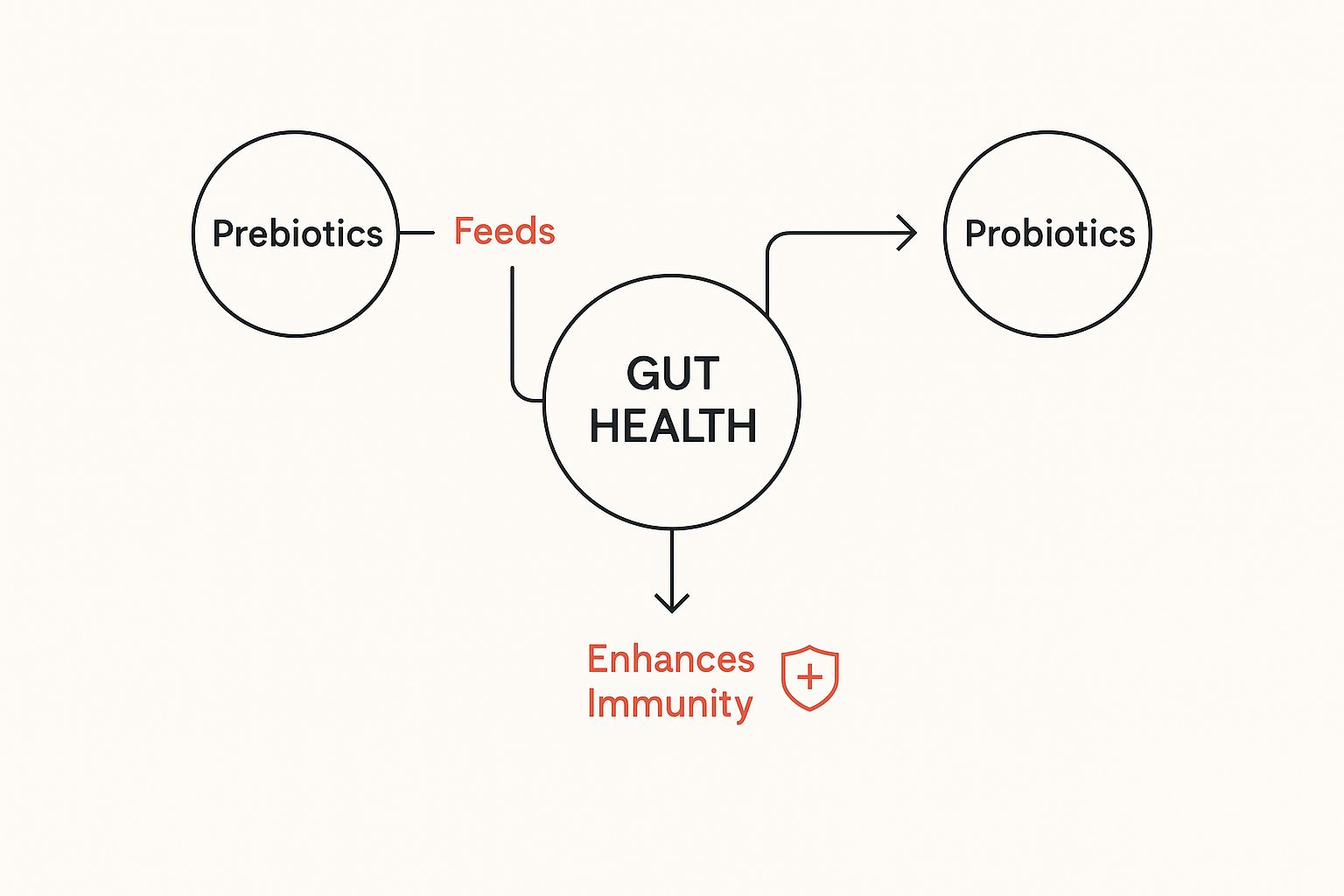
As you can see, prebiotics are the fuel that powers probiotics, leading to better gut health. This powerful partnership has gained serious attention for its health benefits, and for good reason. The global market for these gut-friendly helpers was valued at USD 87.70 billion in 2023 and is projected to skyrocket, showing just how many people are investing in their digestive wellness.
Meet the Probiotics: Your Gut's Live-In Helpers
If prebiotics are the fertilizer for your gut garden, then probiotics are the actual seeds that blossom into a vibrant ecosystem. These are the good guys—the live microorganisms that take up residence in your digestive tract and work tirelessly to keep things running smoothly.
Think of them as a highly specialized workforce inside your body. Each type of probiotic, or "strain," has a specific job to do. It’s like having a team where one person is a master plumber and another is an expert electrician; you need both for a fully functional house.
Your Gut's A-Team
You’ve probably heard of Lactobacillus. This is the hardworking strain often found in yogurt and other fermented dairy products. Its specialty? Helping your body break down lactose, the sugar in milk. This is exactly why some people who are sensitive to dairy find they can tolerate yogurt just fine!
Then there's Bifidobacterium, another superstar strain. These little helpers are champions at digesting dietary fiber, something your body can't break down on its own. They turn that fiber into valuable compounds that nourish your gut lining and support your immune system.
These microscopic allies do more than just aid digestion. A balanced gut microbiome, populated by diverse probiotics, is linked to a stronger immune response, improved nutrient absorption, and even a better mood. They are truly foundational to your overall well-being.
Using beneficial bacteria for health isn't some new-age concept; it’s rooted in traditional diets that have included fermented foods for centuries. What is new is how we’re weaving them into our everyday lives. The probiotic food and beverage market is booming, commanding a massive revenue share of over 61.2% in 2023. That’s a clear sign of just how popular it is to add these helpers to our daily meals and snacks. You can learn more about the probiotics market trends on Precedence Research and see just how big this movement has become.
Probiotics for the Whole Family
This is especially exciting when you think about kids snacking. It’s a perfect opportunity to introduce these friendly helpers in a fun and delicious way. Instead of just another empty-calorie snack, you can offer them something that actively supports their developing gut gardens.
That’s where thoughtful snacks come into play. A yogurt parfait, a kefir smoothie, or even specially crafted kids snack bars and cookies can be fantastic vehicles for delivering probiotics. It’s all about making gut health an easy and tasty part of your family’s routine, one bite at a time. The goal is to populate their little gut gardens with a diverse team of helpers that will support them as they grow.
Understanding Prebiotics: The Fuel for Your Good Bacteria
If probiotics are the hardworking little seeds you plant in your gut garden, then prebiotics are their favorite five-star, gourmet meal.
These aren't living organisms like their probiotic pals. Instead, they're a special kind of dietary fiber that your body can't digest. Now, that might sound like a bad thing, but it’s actually their superpower. Because your system can’t break them down, these fibers make the long journey to your colon completely intact.
Once they arrive, they become the perfect food source for all those beneficial gut bacteria you want to encourage. Think of it like this: you can’t have a flourishing garden without good soil and fertilizer. Prebiotics are that rich, nourishing fertilizer.
By feeding your good bacteria, prebiotics help them multiply and thrive. This process creates a more balanced and robust internal ecosystem, turning a gut that’s just surviving into one that’s truly flourishing.
Making Snack Time Count
This is where the real magic happens, especially when it comes to kids. Every single snack is a chance to provide this essential fuel, making it a fun and fuss-free way to support their gut health.
Instead of reaching for a sugary treat with zero nutritional benefits, why not offer them something that actively nourishes their inner garden from the inside out? That's the beauty of snacks designed with a purpose.
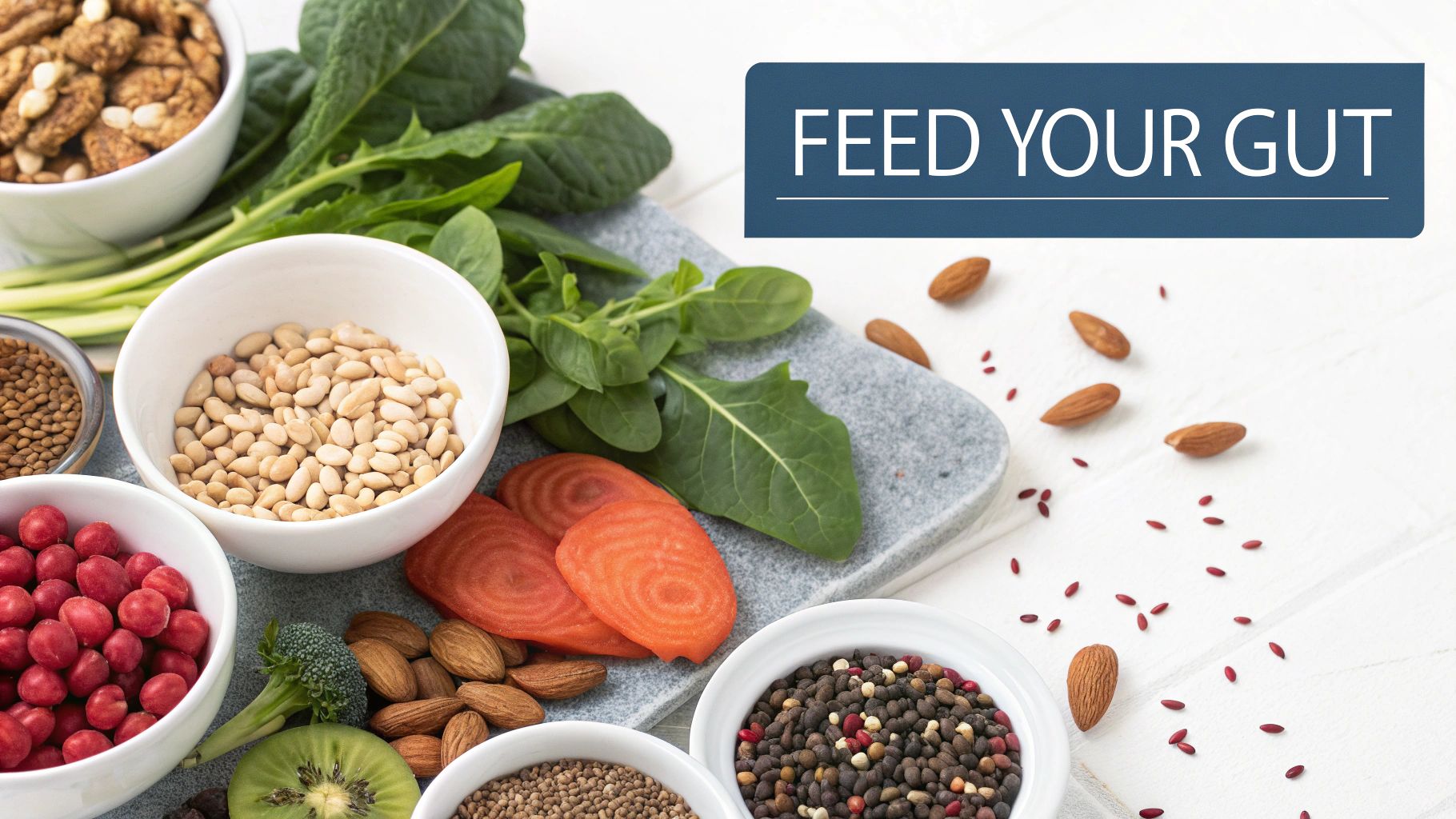
Choosing snacks like kids snack bars or cookies made with prebiotic-rich ingredients is a simple yet powerful swap. Ingredients like oats, bananas, and apples are packed with the fiber that beneficial gut bacteria love to eat.
This easy shift turns snack time from a simple hunger-buster into a proactive step for better digestive wellness. You’re not just giving them a treat; you're giving their good bacteria a feast!
The Benefits of a Well-Fed Gut
So, what actually happens when your good bacteria are well-fed and happy? The benefits ripple out far beyond just good digestion. A healthy, prebiotic-fueled gut microbiome is linked to a ton of positive outcomes:
- Improved Digestion: A thriving community of good bacteria helps keep things moving along smoothly and promotes regularity.
- Better Mineral Absorption: Some prebiotic fibers can actually enhance your body's ability to absorb essential minerals like calcium.
- Stronger Gut Barrier: Well-nourished bacteria help maintain the integrity of your gut lining, which is a huge deal for overall health.
Ultimately, you can't just plant the seeds; you have to water and fertilize them, too. Providing that "fertilizer" through delicious, fiber-rich foods and snacks ensures your family's gut garden has everything it needs to thrive.
Your Gut-Friendly Grocery List
Ready to turn your kitchen into a gut-health powerhouse? Knowing the difference between prebiotics and probiotics is the first step, but the real magic happens at the grocery store. Stocking your pantry and fridge with the right foods is way easier than you might think—no specialty stores or complicated recipes needed.
Think of this as your treasure map to a happier tummy. We’re focusing on delicious, everyday foods that are easy to find and even easier for your family to love. Let’s start by loading up your cart with some probiotic all-stars.
Power Up with Probiotics
Probiotics are the live, beneficial bacteria that help your gut garden flourish. You'll find them in fermented foods, where the fermentation process naturally creates these helpful microorganisms.
Here are some tasty probiotic sources to look for:
- Yogurt: Keep an eye out for brands with "live and active cultures" on the label. Greek yogurt is always a fantastic option.
- Kefir: Think of this as a tangy, drinkable yogurt. It’s a fermented milk drink that’s often packed with even more probiotic strains than regular yogurt.
- Kimchi & Sauerkraut: These fermented cabbage dishes are tangy, crunchy, and incredible for your gut. Just be sure to grab the refrigerated kind to ensure the cultures are still alive and kicking.
These foods are simple to add to any meal. A dollop of yogurt on oatmeal, a splash of kefir in a smoothie, or a side of kimchi with dinner can make a huge difference.
Fuel Up with Prebiotics
Next, it’s time to grab the "fertilizer"—the prebiotic fiber that feeds all those good bacteria you’re adding. The great news is that prebiotic-rich foods are probably already on your shopping list! They are often found in plant-based sources, which is a win for your overall health. If you want to dive deeper, you can learn about the many reasons to eat a plant-based diet right here on our blog.
Your prebiotic shopping list includes:
- Fruits: Bananas (especially the slightly green ones), apples, and berries are fantastic sources.
- Veggies: Garlic, onions, and asparagus are prebiotic powerhouses that add a ton of flavor to any dish.
- Grains: Oats are one of the best and most kid-friendly sources of prebiotic fiber out there.
Synbiotic Superstars: Some foods are the ultimate two-for-one deal! Foods that naturally contain both probiotics and prebiotics are called synbiotics. A perfect example is a bowl of yogurt (probiotic) topped with sliced bananas and oats (prebiotics).
Common Probiotic and Prebiotic Foods
To make things even easier, here's a quick cheat sheet you can use on your next grocery run.
| Food Category | Examples of Probiotic Sources | Examples of Prebiotic Sources |
|---|---|---|
| Dairy | Yogurt, Kefir, Aged Cheeses (Gouda, Cheddar) | |
| Vegetables | Sauerkraut, Kimchi, Pickles (unpasteurized) | Garlic, Onions, Leeks, Asparagus |
| Fruits | Bananas, Apples, Berries | |
| Grains/Legumes | Oats, Barley, Chickpeas, Lentils | |
| Beverages | Kombucha, Water Kefir |
Keeping these items on hand makes it simple to build a gut-friendly plate at every meal.
Making sure these foods make it into your weekly rotation is key. To make stocking your kitchen with these beneficial foods easier and more efficient, you should try to create a simple weekly meal planner that takes the guesswork out of healthy eating. It’s all about creating simple, sustainable habits that your whole family can enjoy.
Upgrading Your Family's Snack Time
Let's be real—snack time, especially with kids, can feel like navigating a minefield of picky eaters and sugar-laden temptations. That daily question, "What can I have for a snack?" often ends with you reaching for the easiest option, not always the healthiest one. But what if snack time could be your secret weapon for supporting your family’s gut health?
It absolutely can be. The key is to make simple, delicious swaps that your kids won't even realize are secretly working wonders for their inner garden. This is where understanding what are prebiotics and probiotics really comes in handy for making smart, convenient choices that everyone will actually love.
Snacking With a Purpose
The goal isn't to overhaul your entire pantry overnight. It's about making small upgrades that deliver big benefits. Think about it: a lot of classic kid snacks are loaded with refined sugars and have almost no fiber, offering little more than a quick burst of empty calories. Swapping those out for options rich in prebiotic fiber provides the essential fuel those good gut bacteria need to thrive.
This is exactly why we created our line of Skout Organic Kids Snack Bars and Cookies. We believe that convenient snacks can and should be packed with goodness. By using wholesome, organic ingredients like oats and real fruit, we make sure every bite is not only delicious but also a great source of prebiotic fiber. It’s the perfect way to turn a routine snack into a gut-supporting powerhouse.
Choosing snacks with purpose means you're not just quieting a rumbling tummy; you're actively investing in your child's digestive wellness. It’s a simple shift in mindset that proves convenience and health can happily coexist.
Smart Snack Swaps Kids Will Love
Making the switch to gut-friendly snacking is way easier than you think. It's all about finding tasty alternatives that still feel like a treat. Need a little inspiration? You should check out our guide to clean eating snack ideas for even more family-approved options.
Here are a few simple swaps to get you started:
- Instead of a sugary granola bar, try a Skout Organic Kids Snack Bar. They’re made with minimal ingredients like organic dates and sunflower seeds, offering natural sweetness and that all-important fiber.
- Instead of a packaged cookie full of artificial ingredients, reach for a Skout Organic Kids Cookie. They're soft-baked and made with real fruit, making them a treat you can feel good about giving.
- Instead of chips or crackers, offer apple slices with a sprinkle of cinnamon. Apples are a fantastic—and kid-friendly—source of prebiotic fiber.
By making these small changes, you're empowering your family with snacks that are both tasty and beneficial. You're not just feeding your kids—you're feeding their trillions of tiny gut helpers, setting them up for better health one delicious bite at a time.
Building a Gut-Healthy Family Lifestyle
So, you know what prebiotics and probiotics are. Now what? The real magic happens when you move beyond definitions and start weaving small, gut-friendly habits into your family's daily rhythm. Creating a healthy gut isn't about a single meal; it’s about building a lifestyle that supports it day in and day out.
Think of your family’s collective gut microbiome as a garden you’re tending together. To make it flourish, you need to plant a wide variety of seeds—and that means dietary diversity.
A super fun way to do this? Challenge your crew to a "Rainbow Week." The goal is simple: try one new, colorful fruit or vegetable every single day. Making a balanced meal doesn't have to be complicated, it can be a family adventure. If you need a little inspiration to get the ball rolling, you should take a peek at these dietitian-approved colorful lunch ideas.
More Than Just Food
While a vibrant, varied diet is the star of the show, other habits play a huge supporting role in cultivating a happy gut. Think of these as the essential pillars holding up your family's digestive wellness.
- Stay Hydrated: Water is absolutely key. It helps all that prebiotic fiber do its job, keeping digestion smooth and regular. Pro tip: Get the kids cool, reusable water bottles to make hydration fun!
- Manage Stress: Yep, stress can mess with your gut. Gentle activities like family walks, reading a book together, or even a spontaneous silly dance party can help everyone unwind and de-stress.
- Prioritize Sleep: Quality sleep is when the body—including the gut—gets to work repairing itself. Sticking to consistent bedtimes for everyone helps regulate this crucial process.
When you make gut health a shared family goal, you’re doing so much more than just teaching your kids about nutrition. You’re building lifelong wellness habits, together.
Tackling a new recipe or trying a funky-looking vegetable as a team makes the whole journey more enjoyable for everyone.
And you're not alone in this. The global market for probiotics, which was valued at USD 62.4 billion in 2022, is projected to skyrocket to USD 131.0 billion by 2032. This incredible growth shows a massive shift toward foods that support our overall health from the inside out. By making these simple lifestyle tweaks, you’re putting your family at the forefront of this wellness movement.
Common Questions About Prebiotics and Probiotics
Let's clear up some of the common questions that pop up when we talk about prebiotics and probiotics. Getting straightforward answers can help you feel totally confident in supporting your family's gut health, one yummy snack at a time.
Should I Get These From Food or Supplements?
For most families, a balanced diet filled with diverse, whole foods is the absolute best way to go. Think of it as nature's perfect delivery system—foods are a delicious and natural way to get your daily dose of gut goodness.
A colorful plate is a happy gut! Yogurt, kefir, fermented veggies, oats, and bananas are all fantastic sources. While supplements can be a great backup in certain situations (like after a round of antibiotics), a food-first strategy is a sustainable and effective way to support gut health for the whole family. We highly recommend this approach!
For kids especially, a food-first approach is fun and educational. It teaches them that the foods they eat are actively helping their bodies stay strong and healthy, turning mealtime into a positive experience.
Are Prebiotics and Probiotics Safe for Kids?
Yes, they are generally very safe and incredibly beneficial for little ones! Introducing them through kid-friendly foods is the ideal way to start.
Think yogurt parfaits for probiotics and yummy snacks made with oats or real fruit for prebiotics. It’s all about making gut health a normal, tasty part of their day.
This is exactly why we designed Skout Organic's Kids Snack Bars and Cookies. We use ingredients like organic oats to create delicious snacks that also happen to be a great source of prebiotic fiber. Of course, if your child has any underlying health conditions, it's always smart to check in with your pediatrician first.
Is It Possible to Have Too Much?
It's extremely difficult to "overdose" on prebiotics and probiotics from the foods you eat. Your body is pretty smart about handling them!
If you suddenly introduce a ton of prebiotic fiber into your diet, you might notice some temporary gas or bloating. This is just your gut microbiome adjusting to all the new, awesome fuel. The simple fix is to increase your intake gradually to give your system time to adapt. And when it comes to supplements, just stick to the recommended dose on the package.
Ready to make snack time both delicious and gut-friendly? Skout Organic makes it easy with our tasty, organic Kids Snack Bars and Cookies packed with prebiotic-rich ingredients.