
 Kids Snack Bars
 Soft-Baked Cookies
 Protein Bars
 Build A Box
 Shop All





Ever feel like you need a secret decoder ring just to figure out what's in your snack? You're not alone. Reading protein bar nutrition facts can be a real head-scratcher, but don't worry, we're about to make it super simple and maybe even a little fun.
Your Guide to Choosing the Best Protein Bars
The protein bar aisle has totally exploded. What used to be fuel for bodybuilders is now a go-to for pretty much everyone—tucked into office drawers, hiking packs, and, yep, school lunchboxes. With so many choices, it’s way too easy to grab something that looks healthy but is really just a candy bar in a clever disguise.
This guide is your new superpower! We'll give you a simple framework to see past the flashy packaging and find bars that are genuinely good for you and your family.
This boom isn't just in your head—it's a massive trend. The global protein bar market hit nearly $15 billion in 2024, which shows just how much we all lean on these convenient, protein-packed snacks. And it's only expected to keep growing. If you're curious, you can discover more insights on the protein bar market to see the full picture.
Snacking for the Whole Family (Yes, Even the Picky Eaters!)
Let’s be real, it’s not just about post-workout fuel anymore. Parents are always on the hunt for snacks that their kids will actually eat and that aren't loaded with sugar and a list of ingredients you can’t pronounce. We get it!
A great snack for kids should offer sustained energy from simple, whole-food ingredients—not a quick sugar rush followed by an inevitable crash. The goal is clean fuel for playground adventures and focused learning. So, let's find some winners!
We’re going to demystify the labels on everything from high-performance bars to kid-friendly snack bars and cookies. Consider this your roadmap for cutting through the marketing noise. By the end, you'll be able to confidently choose the perfect bar for:
- Your personal fitness goals
- A quick and satisfying meal on the go
- A healthy, parent-approved treat for your kids
Let's dive in and make your next trip down the snack aisle a whole lot easier (and tastier!).
The Big Three: Unpacking Your Macros
Think of the nutrition facts label like a car's dashboard. The macros—protein, carbohydrates, and fat—are your main gauges, telling you exactly what kind of fuel you're putting into your body. Getting a handle on these "Big Three" is the first step to picking a snack that actually works for you, not against you.
Each one has a critical job. Protein is the building block, repairing tissues and building muscle. Carbs are your quick fuel, delivering that immediate energy boost. Fats are the long-term energy source, keeping you fuller for longer and supporting your overall health. The right balance all comes down to your goal, whether you're refueling after a tough workout or just looking for a satisfying snack to get you through the afternoon.
Protein: The Powerhouse
When you flip over a bar and scan the protein bar nutrition facts, this is usually the first number people look for. If you're grabbing a bar for post-workout recovery, you'll probably want something in the 15-20 gram range, or even more. But for a simple snack to tide you over until dinner, 10 grams is often plenty.
The source matters, too! While dairy-based options like whey are everywhere, plant-based sources like pea, pumpkin seed, and sunflower seed protein are fantastic, clean alternatives that are easy on the system. Give them a try!
This infographic paints a clear picture of just how big the protein bar industry has become.
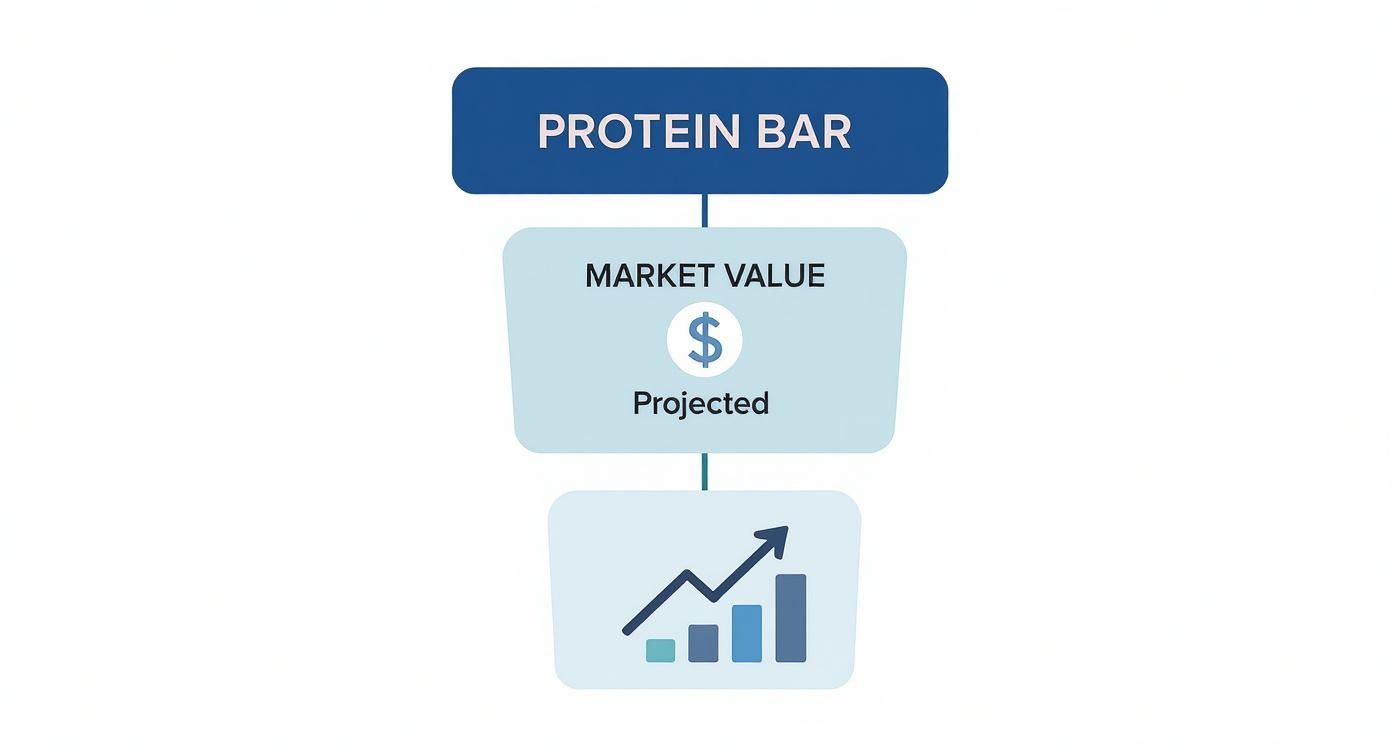
With more people than ever relying on bars for convenient nutrition, it's never been more important to know what you're actually buying.
Carbs and Fats: Fuel and Fullness
Next up, let's talk carbs. The real key here is to focus on dietary fiber instead of just the total carb count. Fiber is your friend—it slows down digestion, which keeps you feeling full and helps prevent that dreaded blood sugar spike and crash. As a general rule, we suggest looking for a bar with at least 3 grams of fiber.
When it comes to fats, you want to see sources from whole foods. Think nuts and seeds, which provide healthy, unsaturated fats that your body loves.
For kids, the goal isn't a massive protein hit. You're looking for a balanced snack with clean carbs for energy and healthy fats to keep them full. This is why kids' snack bars and cookies made with simple, organic ingredients are a perfect choice for the lunchbox or after-school fuel. They're built for fun, not for the gym!
For a deeper dive into fueling your body for any activity, check out these general nutrition tips for enhanced performance. Understanding the bigger picture helps you make smarter choices across all your meals, not just when you're standing in the protein bar aisle.
Decoding Your Protein Bar Macros
Not sure what numbers to look for? This quick guide breaks down the ideal macronutrient ranges to help you find the perfect bar for your needs. Why not screenshot it for your next grocery run?
| Snacking Goal | Ideal Protein (g) | Ideal Fiber (g) | Look For |
|---|---|---|---|
| Post-Workout Recovery | 15-20+ | 3+ | Fast-digesting protein sources |
| Midday Snack / Hunger-Buster | 8-12 | 5+ | Balanced macros, healthy fats |
| On-the-Go Energy | 5-10 | 3+ | Clean carbs from real foods |
| Kids' Lunchbox Treat | 3-7 | 2+ | Simple ingredients, low sugar |
Remember, these are just guidelines. The perfect bar for you will always depend on your personal goals and dietary needs, but this table is a great starting point for making a more informed choice.
Becoming A Sugar And Sweetener Detective
Let's pull back the curtain on the sneakiest ingredient in the snack aisle: sugar. It’s a sad truth, but many protein bars on the shelf are just candy bars with a clever marketing team. But once you know what to look for, you can spot these sugar traps from a mile away and become an expert at reading protein bar nutrition facts.
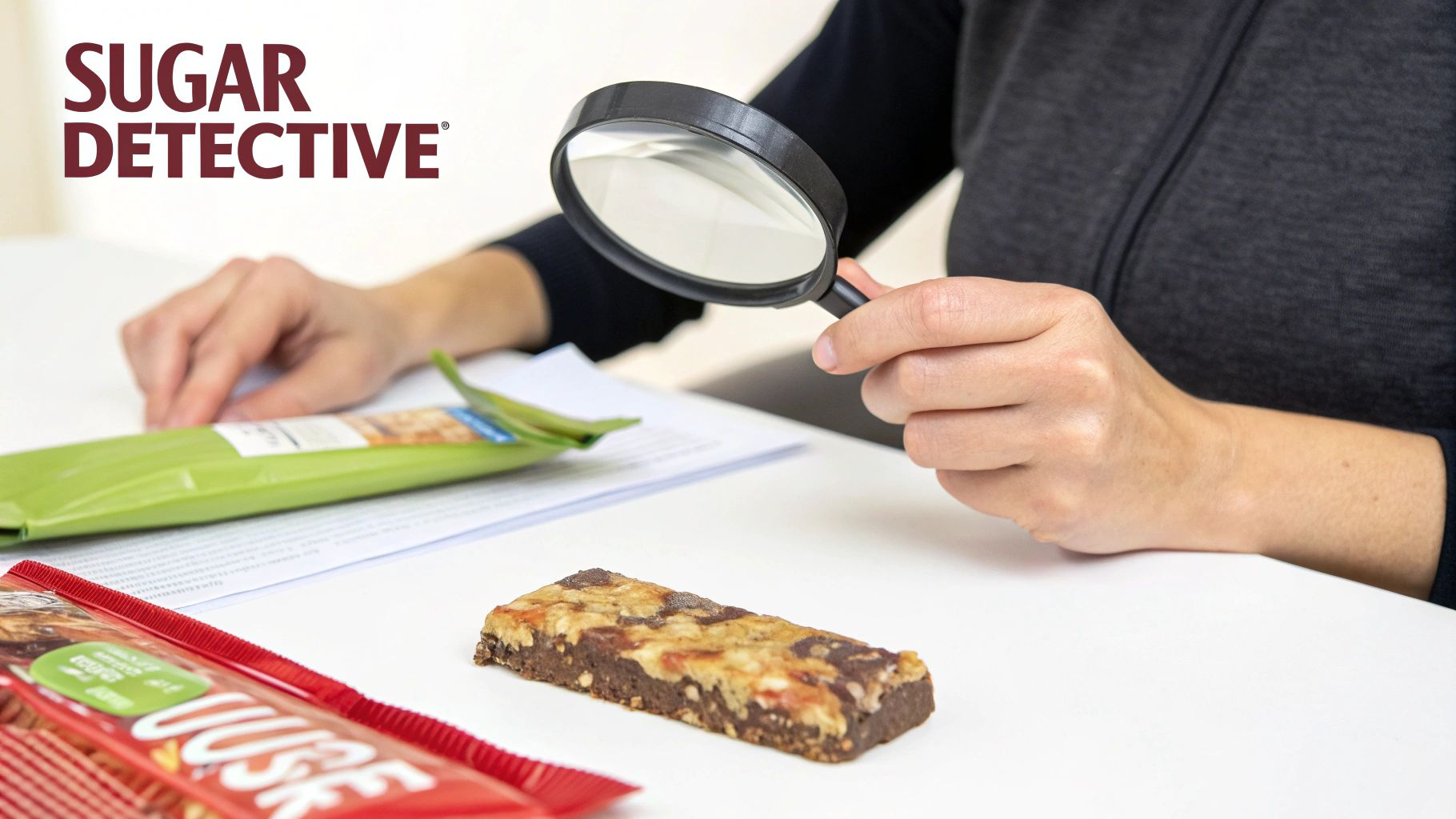
The first place your eyes should go is the "Added Sugars" line on the nutrition panel. This number tells you exactly how much sugar was put in during processing, completely separate from what's naturally in the ingredients. Your mission, should you choose to accept it? Aim for single digits here—or even better, zero!
But your detective work doesn't stop there. The ingredients list is where sugar reveals its secret identities. It’s a master of disguise, so keep an eye out for aliases like:
- High-fructose corn syrup
- Dextrose
- Maltodextrin
- Cane juice
- Rice syrup
If you see any of these near the top of the ingredients list, it’s a major red flag. That bar is likely to give you a quick sugar spike followed by an energy crash. This is especially important when picking out snacks for kids, since a sugar-loaded bar can completely derail their energy and focus just in time for math class.
Natural Sugars vs. Artificial Sweeteners
Not all sweetness is created equal. A bar sweetened only with whole foods like organic dates is playing a completely different ballgame. Your body processes the natural sugars in fruit alongside fiber, which slows everything down for sustained, steady energy. Think of it as the difference between a slow-burning log and a quick flash of kindling.
Then you have the lab-created options. Sugar alcohols (like erythritol or maltitol) and artificial sweeteners (like sucralose) are often used to add sweetness without the calories. While they might keep the official sugar count low, they can also cause some serious digestive upset for a lot of people. (No fun!)
This is where simplicity wins, especially for kids' snack bars and cookies. Choosing snacks with minimal, recognizable ingredients means you're getting fuel from real food, not a science experiment. Our suggestion? Stick to what nature made!
When it comes to your family's snacks, sticking to the basics is always a smart move. If you're looking for more guidance, our deep dive on finding tasty and healthy protein bars without added sugar is a fantastic resource.
By learning to spot hidden sugars and understand where the sweetness comes from, you can confidently choose bars that provide clean, lasting energy for both you and your little adventurers.
Reading The Ingredients List Like A Pro
While the nutrition panel gives you the numbers, the ingredients list tells you the real story. Think of it as the guest list for an awesome party—the most important, high-quality guests should always be right at the top. When you’re scanning protein bar nutrition facts, this list reveals whether you’re getting clean energy or just a bunch of party crashers you don’t recognize.
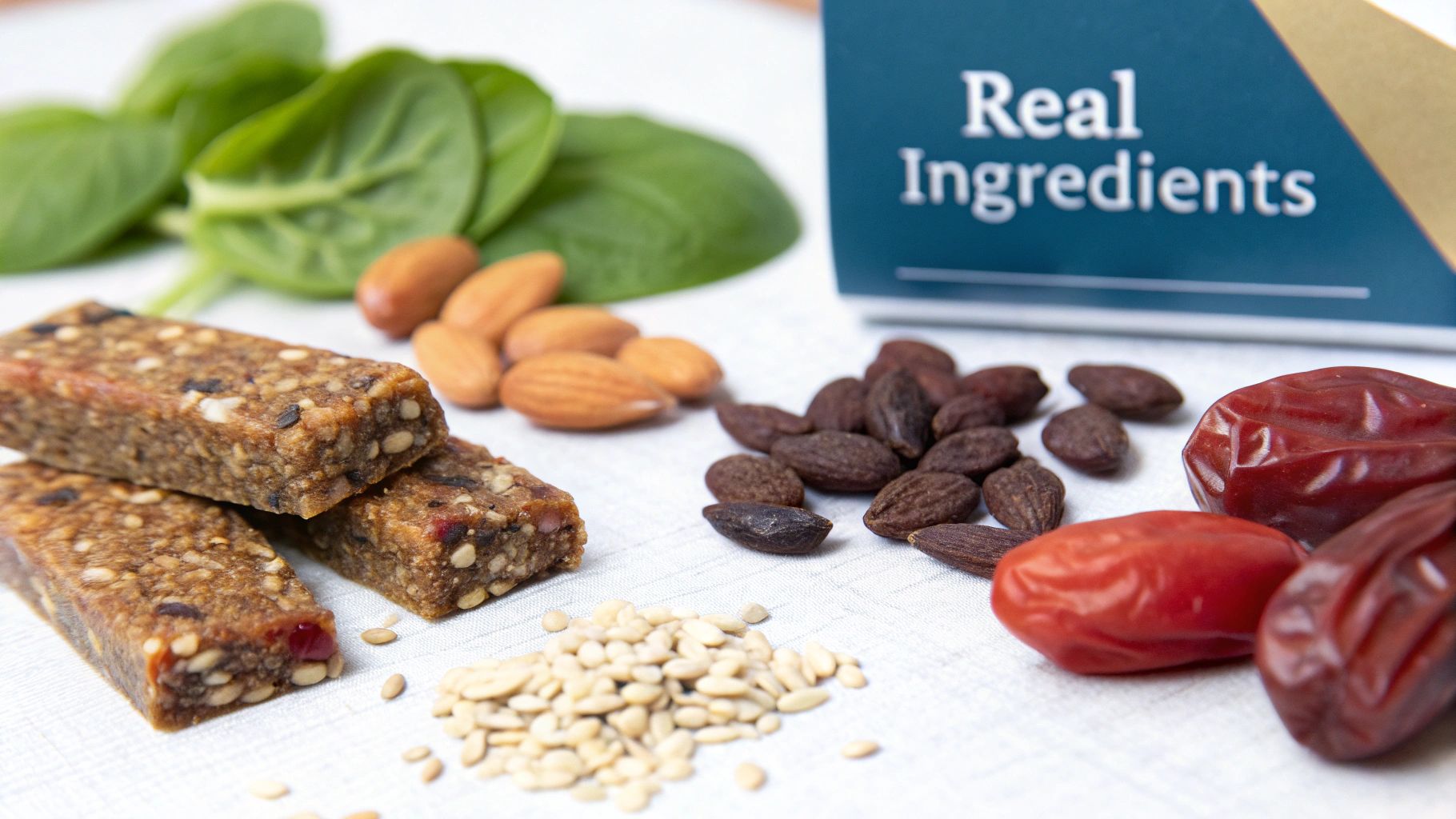
Your best strategy here is to look for a short, simple list filled with whole foods you can actually picture in your mind. Ingredients like organic dates, sunflower seeds, pumpkin seeds, and real fruit are the A-listers you want to see. This is where you truly gauge if a bar is built for wholesome nutrition or just held together by artificial fillers and preservatives.
Whole Foods vs. Chemical Fillers
Let’s put this into practice. Imagine two different bars side-by-side. One proudly lists ingredients like organic cherries, pumpkin seeds, and pea protein. The other starts with a “protein blend” followed by palm kernel oil, maltitol, oligofructose, and a host of other things that sound like they belong in a science lab.
Which one would you rather eat? The first bar offers energy from sources your body understands and can easily use. The second? It's often a shortcut, using fillers to create texture and chemical sweeteners to cut down on sugar while potentially causing digestive issues. It's a classic case of quality over quantity.
For a comprehensive guide on deciphering labels, our article on how to read food labels breaks it all down, step by step.
What This Means For Kids Snacking
This is doubly important when you're choosing snacks for your little ones. Kids have smaller, more sensitive systems, and what they eat directly impacts their energy, focus, and mood. You wouldn't want to pack their lunchbox with a snack full of hard-to-pronounce chemicals, right?
When it comes to kids' snack bars and cookies, a simple, recognizable ingredient list is non-negotiable. Real food ingredients provide sustained energy for the playground and classroom, not a rollercoaster of highs and lows.
A great rule of thumb is this: If you can't pronounce it, you probably don't want your kids eating it. We recommend looking for a short list of organic, whole-food ingredients. It's the quickest way to ensure you're giving them a snack that's both delicious and genuinely nourishing. This simple check moves you beyond just the numbers and helps you choose snacks based on true nutritional value.
Choosing Healthy Snacks For Your Kids
Walking down the snack aisle for your kids can feel like mission impossible. You need something they'll actually eat, but you also want it to be good for them. This is where your new label-reading skills become a true parenting superpower, especially when you're looking at the protein bar nutrition facts on snacks made for kids.
Kids aren't just mini-adults, and their nutritional needs are totally different. They need clean, simple, sustained energy to get them through an afternoon of tag on the playground or a long day at school—not a huge protein load meant for a bodybuilder after a workout. The real goal is wholesome fuel, not a full meal replacement squeezed into a bar.
That’s why the winning strategy is to look for smaller portions, minimal added sugar, and a short list of simple, whole-food ingredients you can actually pronounce. Think of it as finding the perfect sidekick for their lunchbox, not the main event.
What To Look For In Kids Snack Bars
When you're comparing kids' snack bars and cookies, the same rules apply, but your priorities will be a little different. You're searching for a balanced snack, not just a way to pack in as much protein as possible.
Here’s a quick checklist we suggest you keep in mind on your next shopping trip:
- Simple Ingredients: You want a short list of things you recognize, like organic dates, sunflower seeds, or real fruit. If it reads like a chemistry textbook, it’s probably best to put it back.
- Low Added Sugar: Aim for single digits. Ideally, you want a snack that’s sweetened only with whole foods, which provides a gentler energy release.
- Appropriate Protein: For a kid's snack, 3-7 grams of protein is the sweet spot. It provides enough staying power to keep them full without overloading their smaller systems.
- A Good Source of Fiber: Look for at least 2 grams of fiber. This helps stabilize their energy levels and keeps them satisfied between meals.
The best kids' snacks offer a gentle energy curve, not a sudden spike and crash. Simple, organic ingredients give them fuel that supports their focus and mood all day long, making your trip down the snack aisle a clear win.
This growing demand for better kids' snacks is part of a much bigger shift in how we all think about food. People are more health-conscious than ever, which is fueling the growth of the entire protein bar market. This was only accelerated by recent changes in shopping habits, proving that consumers are actively searching for healthier products for the whole family. You can dive deeper into these global protein bar market trends to see just how this movement is shaping the options you find on your grocery shelf. It's now easier than ever to use what you know to find delicious, nutritious fuel for your little ones.
Your 5-Step Protein Bar Shopping Guide
Okay, you've got the science behind the label down—now it's time to put that knowledge into action! We all know how hectic the snack aisle can be, especially with a little one in tow. This simple 5-step scan is your new secret weapon for making quick, confident choices right there in the grocery store.
Think of it as your in-the-moment checklist. No more getting lost in the fine print or second-guessing yourself. This is a fast, effective way to decipher any bar's protein bar nutrition facts and know if it’s a winner for you and your family.
Your Quick-Scan Checklist
Here’s what to look for the moment you pick up a bar. This whole process takes about 30 seconds, and it will save you from accidentally bringing home a glorified candy bar.
-
Check the Protein: First, ask yourself, "What's this bar for?" If you need a post-workout boost, you'll want something in the 15-20 grams range. But for a simple afternoon snack or something for the kids, 5-10 grams is the perfect amount.
-
Hunt for Added Sugar: Flip the bar over and find this line immediately. Your goal should always be single digits. The lower, the better!
-
Find the Fiber: A good bar should have at least 3 grams of fiber. This is what helps keep you (and your kids) feeling full, satisfied, and happy between meals.
-
Scan the Ingredients: Take a quick glance at the ingredient list. Is it short? Is it full of things you actually recognize? You want to see whole foods like seeds, nuts, and fruit right at the top.
-
Consider the Source: We always suggest prioritizing clean, simple recipes. You'll find that brands focusing on organic, plant-based ingredients are almost always delivering better overall quality.
This quick scan turns label-reading from a chore into a skill. It empowers you to confidently choose nutritious fuel, whether you’re grabbing a snack for yourself or stocking up on kids' snack bars and cookies for the week.
Using this method, you can easily compare a few options on the shelf and find the perfect fit. For a head start, you can check out our curated list of the best organic protein bars that already meet these high standards.
Got Questions? We've Got Answers
Alright, let's tackle a few of the questions we hear all the time. Now that you're practically a pro at decoding protein bar nutrition facts, you can walk down that snack aisle like you own the place. But there are always a few lingering thoughts, especially when you're trying to find healthy options for the whole family.
One of the big ones is: "Can I really eat a protein bar every day?"
You bet! As long as you’re reaching for high-quality bars, there's no reason you can't. Just think of them as a helper in your diet—a great supplement to a balanced plate of whole foods, not a total meal replacement. They're perfect for filling in those nutritional gaps on super busy days.
Another common one is about timing. The best time to grab a protein bar really comes down to what you're trying to achieve. They're fantastic for helping your muscles recover after a workout, crushing those 3 p.m. hunger pangs, or even as a quick breakfast when you're flying out the door.
Are Protein Bars Good for Weight Loss?
Yes, they absolutely can be a great tool if you're trying to lose weight! Here's why: protein is the most satiating macronutrient out there. That means a quality bar can help you feel full and satisfied for much longer, keeping those pesky cravings at bay. It's a simple way to stop yourself from mindlessly reaching for less-than-healthy options.
Of course, the key is choosing the right bar. One that's packed with sugar and empty calories will probably work against your goals. To make sure your bar is on your team, we recommend sticking to options with plenty of fiber, very little added sugar, and a clean, simple ingredient list.
The real magic isn't just in the bar itself, but in how it fits into your day. A good protein bar helps you stay full and sidestep higher-calorie temptations, making it a smart part of your overall healthy eating strategy.
If you're curious to learn more beyond the world of protein bars and want to take a broader look at health and nutrition, there are some amazing resources out there. You can explore more health and nutrition articles for a deeper dive.
Here at Skout Organic, we believe that snacking should be a joyful adventure for the whole family. Our protein bars, kids' snack bars, and cookies are always crafted with simple, plant-based, and organic ingredients you can actually feel good about. Build your own custom snack box today and taste the difference real food makes