 Kids Snack Bars
 Soft-Baked Cookies
 Protein Bars
 Build A Box
 Shop All





So, you’re standing in the grocery aisle, staring down two apples. They look almost identical, but one has an “organic” sticker and a higher price tag. What’s the deal? Is it worth it?
It’s a question every parent asks, especially when you're just trying to pick out snacks for your kids and make the best choice without getting a major headache. The whole "organic vs. conventional" debate can feel way more complicated than it needs to be, but don't worry, we're going to break it down.
Let’s clear things up. At its core, the difference between organic and conventional food all comes down to one thing: how it was grown.
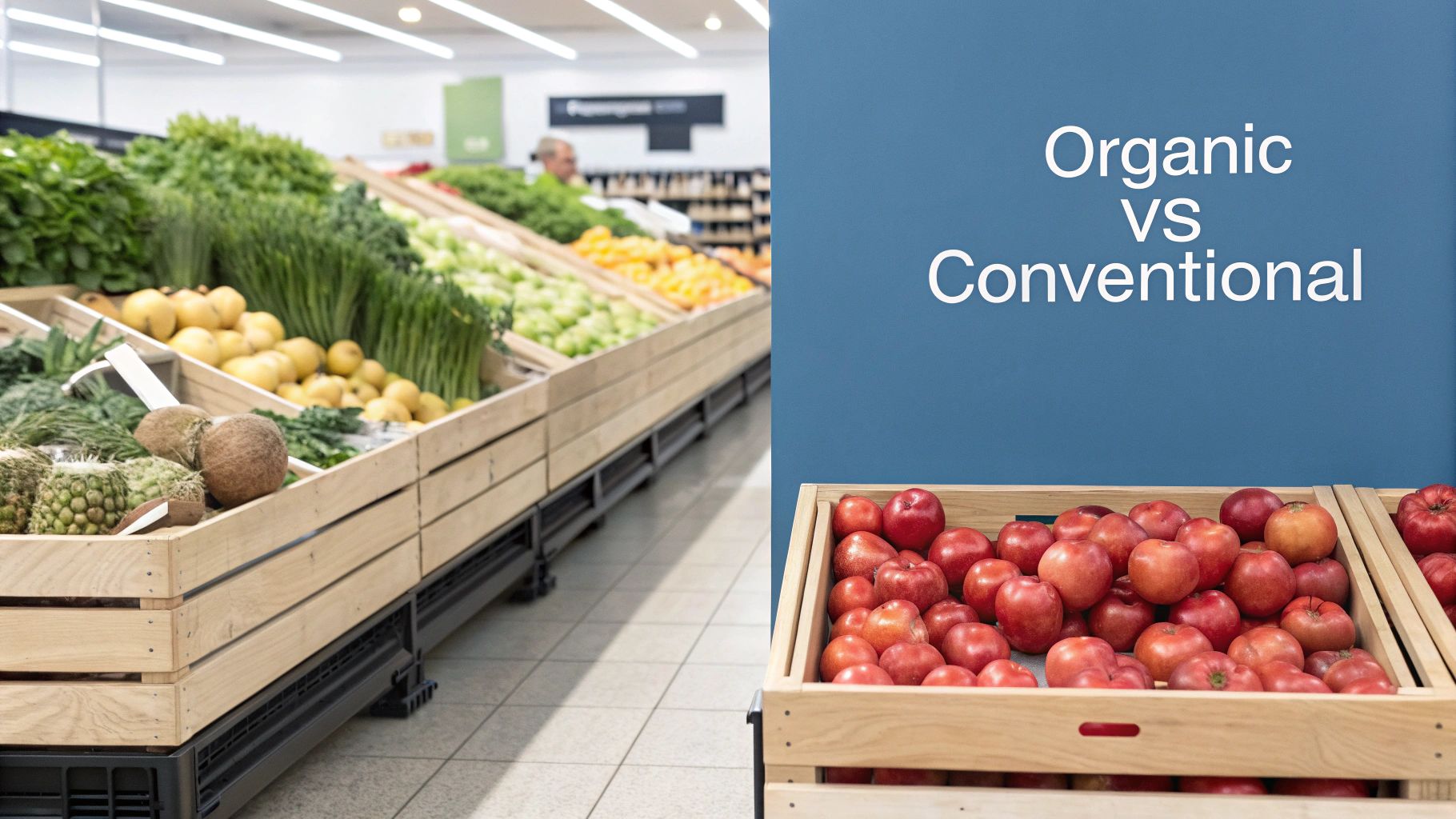
The “organic” label isn't just a trendy buzzword. It's a promise, backed by strict government regulations. When you see that USDA Organic seal on a pack of kids' snack bars or cookies, it means the ingredients were produced without synthetic pesticides, chemical fertilizers, or GMOs. It’s a whole system designed to work with nature, not against it. Think of it as old-school farming with modern-day standards.
On the other hand, conventional farming is what most of us grew up with. It’s the standard modern method that often uses synthetic inputs—like chemical fertilizers and pesticides—to boost crop yields and keep pests away. While all food sold in the U.S. has to meet safety standards, the philosophies behind how the food gets to your table are worlds apart.
What the Labels Really Mean
Imagine the ingredients in an organic snack bar. They were likely grown on a farm that used rich compost for fertilizer and clever crop rotation to manage weeds. Its conventional counterpart? Probably grown with the help of synthetic chemical fertilizers and herbicides.
This fundamental difference in approach touches everything from soil health to pest control. Getting a handle on these distinctions is the first step, and if you want to dive deeper, you can learn more about why organic certifications matter in our detailed guide.
To make it even simpler, here’s a quick side-by-side look.
Organic vs Conventional At a Glance
Use this table as a handy cheat sheet for the main differences between organic and conventional farming.
| Key Aspect | Certified Organic Approach | Conventional Approach |
|---|---|---|
| Pesticide Use | Prohibits synthetic pesticides; relies on natural methods. | Uses synthetic pesticides to manage pests and weeds. |
| Fertilizers | Uses natural fertilizers like compost and manure. | Uses synthetic chemical fertilizers for growth. |
| Weed Control | Relies on crop rotation, mulching, and manual weeding. | Often uses synthetic herbicides for weed management. |
| GMOs | Genetically Modified Organisms are strictly prohibited. | Permits the use of GMOs in crops and ingredients. |
In the end, choosing between organic and conventional is your call. You might be focused on reducing your family's exposure to synthetic chemicals, supporting farming practices that are kinder to the environment, or simply managing your grocery budget.
The good news? Now you know exactly what those labels mean. Next time you're on the hunt for the perfect kids' snack bar, you can feel totally confident in your choice.
Understanding Pesticides and Your Family's Health
Alright, let’s talk about the big one: pesticides. For most parents weighing the organic food vs conventional decision, this is the main event. It’s the reason you pause in the produce aisle and wonder if you should spend a little extra, especially when picking out snacks for the kids.
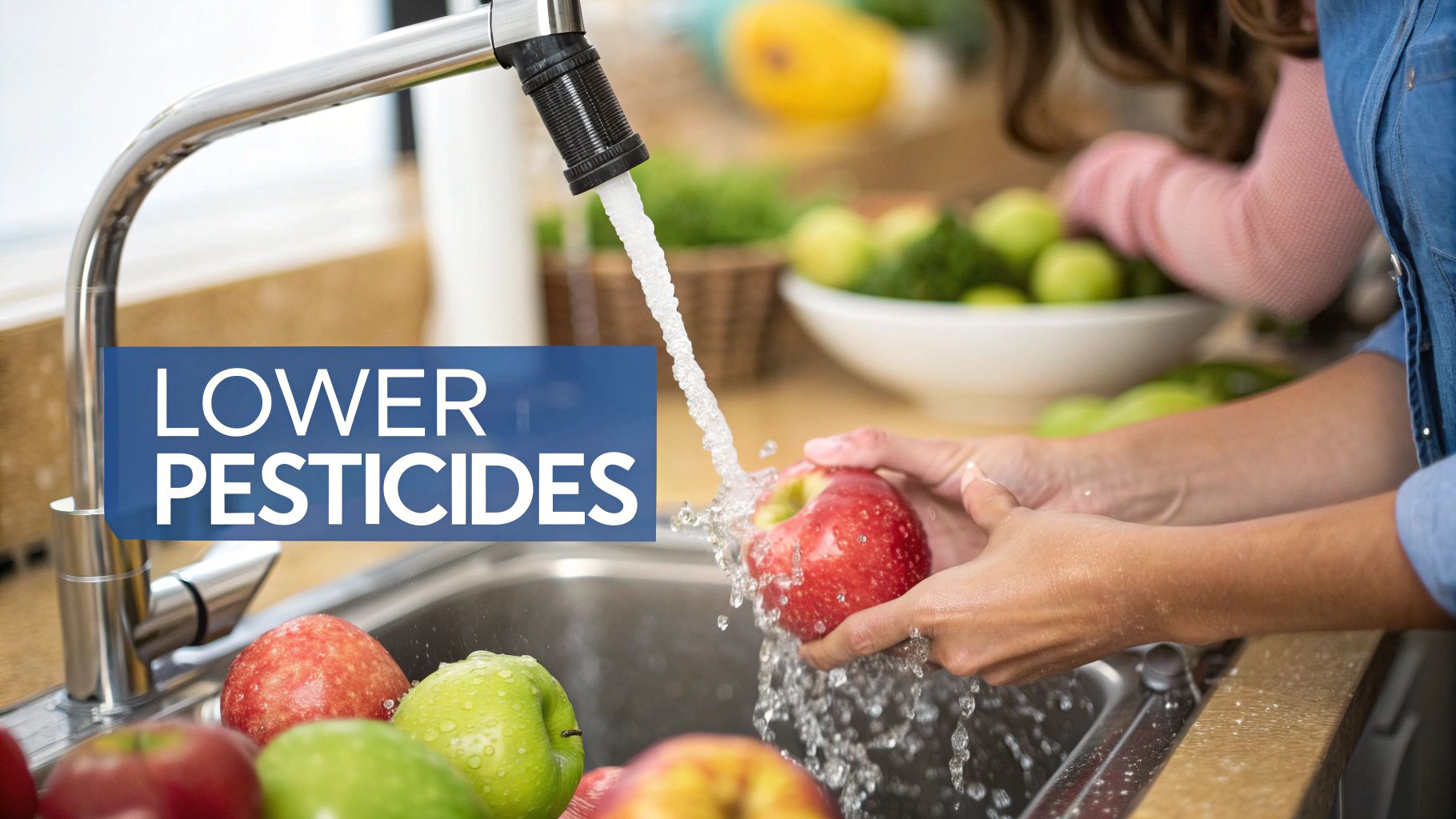
Conventional farming often relies on synthetic pesticides to protect crops. And while these chemicals are regulated, residues can definitely linger on the foods we eat. Giving that apple a good scrub helps, but it doesn't remove everything—especially systemic pesticides that are absorbed into the plant itself. Yikes!
The big question is, does this residue actually matter? For adults, occasional exposure is generally considered low-risk. But growing children are a different story. Their smaller bodies and developing systems can be more vulnerable to the effects of chemical exposure over time.
Why Little Bodies Are Different
When it comes to snack time, consistency is key. Kids often eat the same favorite foods over and over (we see you, apple slices and snack bars!). This repeated exposure, even to low levels of pesticide residue, is what concerns many parents and health experts.
Think of it like this: an adult's body is a fully built house, capable of weathering a storm. A child's body is a house still under construction, where every single material counts. Minimizing their exposure to potentially harmful substances just gives them the best possible building blocks.
Studies have shown that switching to an organic diet can dramatically reduce the levels of certain pesticides in a person's body in just a matter of days. This highlights a direct link between what we eat and our chemical load.
This is especially true for snacks like fruit bars that use concentrated ingredients. Choosing organic versions means you're not just getting delicious flavor; you're getting peace of mind, knowing the ingredients were grown without prohibited synthetic pesticides. It's a simple swap that can significantly lower your family's daily pesticide intake.
Making Smart Choices: The Dirty Dozen and Clean Fifteen
Feeling overwhelmed? Don't be. You don't have to buy everything organic to make a big impact. A super helpful tool is the Environmental Working Group's (EWG) annual "Dirty Dozen" and "Clean Fifteen" lists. They're a parent's best friend for prioritizing the grocery budget.
-
The Dirty Dozen™: This is your priority list for buying organic. These are the 12 fruits and veggies that, when grown conventionally, test highest for pesticide residues. Think strawberries, spinach, kale, and apples—all kid favorites.
-
The Clean Fifteen™: This list includes produce with the lowest levels of pesticide residues. Avocados, sweet corn, and pineapples are often on this list, meaning you can feel more comfortable buying them conventionally if you need to.
Our suggestion? Use these guides strategically. You can focus your organic dollars where they matter most, especially on the snacks and foods your kids eat every single day.
When you're grabbing a pack of Skout Organic snack bars, you're not just picking a treat. You're choosing snacks made with ingredients like organic strawberries and organic blueberries—items that frequently appear on the Dirty Dozen list. This makes organic snacking an easy win.
Ultimately, the goal isn't to create fear around food. It’s about empowerment. By understanding where pesticides are most prevalent, you can make informed, practical choices that align with your family's health goals without adding stress to your shopping trip.
Does Organic Mean More Nutritious?
So, is an organic apple actually packed with more good stuff than a conventional one? This is a huge piece of the organic food vs conventional puzzle, and the answer isn't a simple yes or no. It’s more of a “sometimes, and in specific ways that might really matter.”
When it comes to the big-name vitamins and minerals, most studies show that the levels are pretty similar. An organic carrot and a conventional one will likely give you comparable amounts of Vitamin A.
But things get interesting when we look at other compounds. Research suggests that organic produce often has higher levels of certain beneficial antioxidants. These are the plant world's tiny bodyguards, helping protect cells from damage, and some studies show organic fruits and veggies have more of them.
Antioxidants and Beyond
Think of it this way: without synthetic pesticides to protect them, organic plants have to work harder to defend themselves against pests and diseases. This extra effort can cause them to produce more of their own protective compounds—which happen to be the very antioxidants we benefit from. How cool is that?
Plus, some evidence points to organic crops having lower levels of certain heavy metals, like cadmium. This is likely because organic farming standards prohibit many of the synthetic fertilizers that can introduce these contaminants into the soil.
The nutritional conversation goes beyond just what’s in the food. It's also about what's not in it. A key benefit for many families is the significantly reduced exposure to synthetic pesticide residues and certain heavy metals.
This difference is a big reason why many parents feel confident choosing organic snacks. When you're handing your kid an organic snack bar, you're not just hoping for more antioxidants; you're also getting peace of mind from fewer unwanted extras.
Making Nutrition Practical for Kids
At the end of the day, consistency and variety are everything for kids. The most important goal is getting a wide range of fruits and vegetables into their diet, whether they're organic or conventional. If you're looking for new ways to do that, exploring resources with healthy kid-friendly recipes can offer some great, practical ideas for family meals.
The conversation around organic nutrition isn't just about a single apple; it's about the bigger picture. Retail sales of organic fruits and veggies hit an estimated $21.5 billion recently and have been climbing for two decades. This incredible growth is largely driven by families wanting to reduce pesticide exposure, since organic farming eliminates the synthetic chemicals used in conventional agriculture.
The Snack Time Takeaway
So, what does this all mean when your toddler is demanding a snack right now?
- Focus on the Big Picture: A diet rich in fruits and vegetables is priority number one, period.
- Consider the "Extras": Choosing organic often means more of the good stuff (like antioxidants) and less of the bad (like unwanted residues).
- Snacks are a Great Place to Start: For foods your kids eat daily, like fruit-based snack bars or cookies, going organic is an easy and impactful way to lean into those benefits.
Ultimately, the organic vs. conventional nutrition debate has its nuances. While major vitamin content may be similar, the potential advantages in antioxidants and lower contaminant levels are compelling reasons why many families fill their pantries with organic options. It’s a choice that reflects a desire for wholesome, clean ingredients, from the ground up.
Why More Families Are Choosing Organic
Walk down any snack aisle today, and you’ll feel it. Things are different than they were a decade ago. The move toward organic isn't some niche health trend anymore—it’s a full-blown movement, especially when it comes to what parents are buying for their kids.
And it’s not just a feeling. The numbers tell the same story. The global organic food market is exploding, hitting around $279.19 billion last year alone. Projections show it soaring past $559.59 billion within the next five years. Here in the U.S., organic sales are growing at double the rate of the total food market. That’s a clear signal that shoppers are actively choosing organic, and grocery stores are scrambling to keep up. You can dig into the impressive market growth data here.
So, what’s behind this massive shift? It boils down to two things: parents are more informed than ever, and they’re demanding transparency. They want to flip over a snack bar and recognize every single ingredient. No chemistry degrees required.
The Real Reason Behind the Purchase
For most families, buying organic isn't about status. It’s a deliberate choice for a healthier lifestyle, especially when you have little ones growing and developing at lightning speed. It's about doing what you can to minimize their exposure to synthetic pesticides and questionable additives.
This mindset turns a simple grocery run into something more—it’s a proactive step toward long-term well-being for the people you love most.
When a parent chooses an organic snack, they’re not just buying food. They’re buying peace of mind. They’re buying the confidence that comes from knowing their child’s health was the number one priority.
This is exactly why trusted, transparent brands are winning. Parents are over trying to decipher confusing labels packed with artificial flavors, preservatives, and things they can’t even pronounce. They’re looking for simplicity and quality, and that’s precisely what the organic seal promises.
Snack Time is a Big Deal
Nowhere is this change more obvious than in the world of kids' snacks. Snack time is a daily ritual, and parents see it as a huge opportunity to provide real nourishment, not just empty calories. They want snack bars and cookies made from simple, wholesome stuff like real fruit and whole grains—without all the junk.
When a parent picks an organic snack, they're voting with their dollar for a food system that aligns with their values. It’s a conscious choice for clean, transparent, and thoughtfully sourced ingredients. The explosive growth we're seeing isn't just a trend; it's a clear message that families are demanding better food for a healthier future.
Finding the Best Organic Snacks for Kids
Snack time can feel like a high-stakes negotiation. You want something healthy; they want something that tastes good. The whole organic food vs conventional debate just adds another layer to this daily challenge. But here's the good news: turning snack time into a nutritional win is actually easier than you think.
Choosing organic is especially powerful for the snacks kids eat the most. Think about it—those daily snack bars, cookies, and fruit pouches really add up. Opting for organic versions of these go-to items is a simple swap that can significantly cut down their cumulative exposure to synthetic pesticide residues over time. It’s a small change with a pretty big impact.
This is exactly where brands that prioritize clean, simple ingredients, like Skout Organic, make a parent’s life a whole lot easier. Our snack bars and cookies are built on a foundation of real, organic ingredients you can actually recognize. No artificial flavors, no preservatives, and no need to pull out your phone to Google a long list of chemicals. It’s just wholesome, delicious fuel for their next adventure.
This simple decision tree helps visualize why so many families land on organic when they're prioritizing their health and clean ingredients.
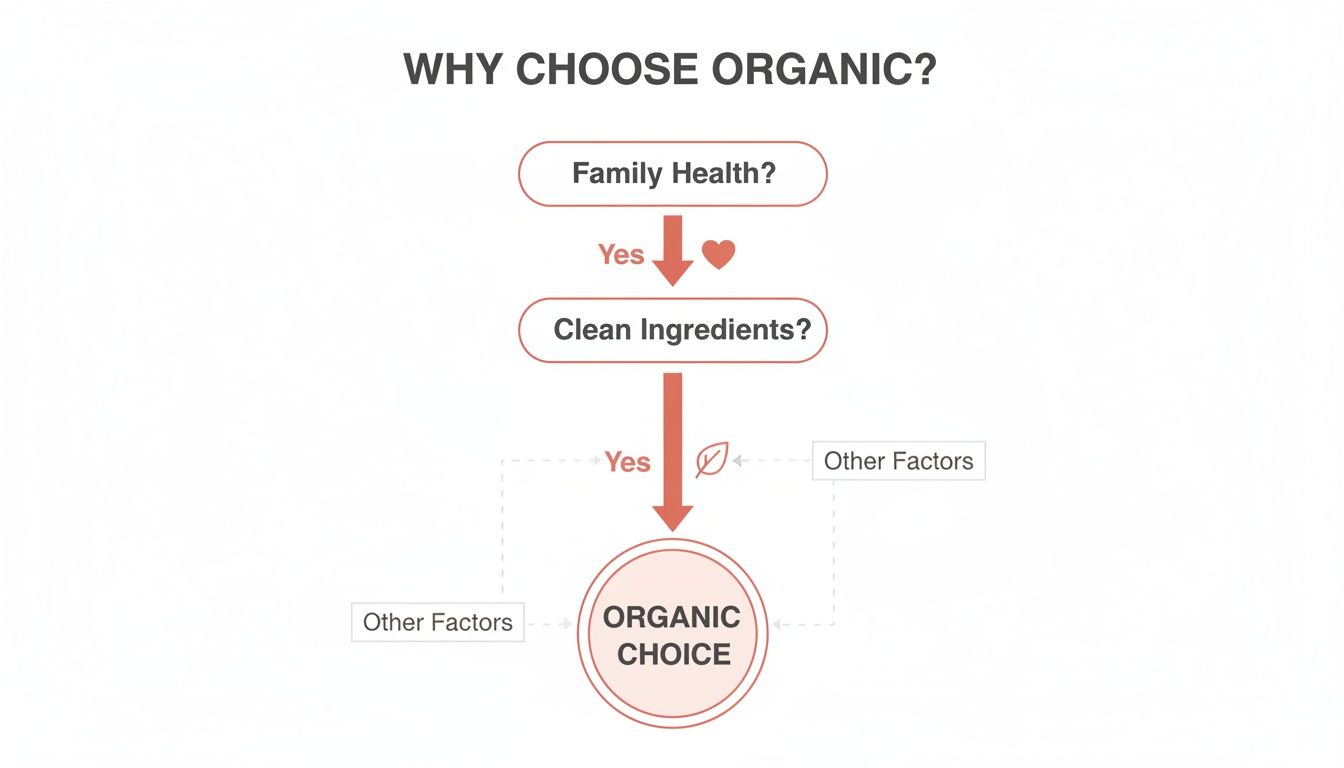
The key takeaway? The path to choosing organic is often paved by a desire for both family well-being and knowing exactly what's in your food.
Decoding the Snack Aisle
Okay, let's get practical. When you're standing in that overwhelming snack aisle, how do you spot the truly good stuff? It starts with looking past the flashy cartoons on the box and turning it over to read the label.
First, look for the USDA Organic seal. This is your guarantee that the product meets strict federal guidelines. It's not just a marketing buzzword; it’s a legally protected term that means the ingredients were grown and processed without synthetic pesticides, GMOs, or artificial preservatives. It's the most straightforward way to know you're getting a genuinely organic product.
Next, scan the ingredient list. The best kids' snacks have short, simple lists filled with words you actually recognize, like "organic dates," "organic blueberries," or "organic sunflower seeds." If the list is a paragraph long and reads like a science experiment, we suggest putting it back on the shelf.
Watch Out for Health-Washing
Marketers are clever. They use words like "natural," "wholesome," and "clean" to make products sound healthier than they really are. This tactic is known as "health-washing."
Remember, "natural" is not the same as "organic." The term "natural" isn't regulated by the USDA in the same way, meaning it can be used on products that contain GMOs or were grown with synthetic pesticides. The USDA Organic seal is your only surefire bet.
To avoid being misled, always rely on the official certification and the ingredient list, not just the claims on the front of the package. A truly great kid's snack doesn't need to shout about being healthy; its ingredients will speak for themselves. You can dive deeper and find more tips in our complete guide to choosing healthy organic snacks.
Choosing Your Child's Next Snack
So, what should you really be looking for on your next grocery run? This simple table breaks down the key differences between organic and conventional snacks to help you make a confident choice.
| Feature | Organic Snacks (like Skout Organic) | Conventional Snacks |
|---|---|---|
| Pesticide Residue | Grown without synthetic pesticides, minimizing exposure. | May contain residues from synthetic pesticides used in farming. |
| Ingredient List | Typically short, with recognizable whole foods like fruits and seeds. | Often long, with artificial flavors, colors, and preservatives. |
| GMOs | Prohibited. Must be non-GMO. | Can contain genetically modified ingredients. |
| Key Certification | Look for the USDA Organic seal for verification. | May use unregulated terms like "natural" or "wholesome." |
Ultimately, choosing organic means you're not just avoiding the bad stuff; you're actively choosing simpler, cleaner ingredients for your kids.
Here’s a final checklist for your next shopping trip:
- Simple, Recognizable Ingredients: The fewer ingredients, the better. Look for whole foods like fruits, nuts, and seeds at the top of the list.
- No Artificial Additives: Steer clear of artificial colors, flavors, and preservatives. Kids don’t need them, and their growing bodies are better off without them.
- Certified Organic: The USDA seal is your best friend. It takes the guesswork out of finding clean, high-quality snacks.
- Kid-Approved Taste: Health is key, but if they won't eat it, it doesn't matter. Brands like Skout Organic nail this balance, creating snacks that are both nutritious and genuinely yummy.
By focusing on these simple principles, you can confidently choose snacks that nourish your kids and give you peace of mind. You're not just buying a snack; you're investing in their health, one delicious, organic bite at a time.
How to Make Organic Fit Your Budget
Let's be real, the biggest hurdle in the organic vs. conventional choice often comes down to the price tag. You want to give your kids the best, but you also have a real-world budget to manage. The great news? Choosing organic doesn't have to mean emptying your wallet.
With a little strategy, you can make organic eating totally achievable. It's not an all-or-nothing game; it's about making smart swaps where they count the most, especially when it comes to those daily kids snack bars and cookies your family lives on.
One of the easiest ways to start is by prioritizing. You don’t need to buy every single item with that green and white seal. Instead, we suggest focusing your budget on the foods your kids eat most often and on produce with the highest pesticide loads (hello, "Dirty Dozen").
Smart Strategies for Organic Shopping
Think of yourself as a savvy organic shopper. A few simple habits can make a huge difference in your grocery bill, allowing you to get all the benefits without the financial stress. The goal is to work smarter, not spend harder.
Here are some practical tips to get you started:
- Buy In-Season Produce: Organic fruits and veggies that are in season are more abundant and almost always cheaper. Plus, they taste way better!
- Check the Freezer Aisle: Frozen organic produce is just as nutritious as fresh and is often more affordable, especially for out-of-season favorites.
- Embrace Store Brands: Many grocery stores now have their own line of organic products, which are typically less expensive than name-brand versions.
- Plan Ahead: A little planning goes a long way. Check out these budget-smart meal prep ideas to manage food costs and make organic options more affordable.
The New Age of Organic Accessibility
Not long ago, finding organic options meant a special trip to a health food store. Those days are over. Supermarkets now account for 36.5% of the market share, making organic products easier to find than ever.
Even more exciting is the boom in online shopping. Internet sales of organic food have jumped from just 2% to 6.7% in recent years, showing how comfortable families have become with buying online.
This shift means more convenience and better prices for you. You no longer have to hunt for high-quality organic options; they can come right to your door.
This is where subscription services and direct-to-consumer brands like Skout Organic really shine. We make it incredibly easy to stock up on the kids' snack bars and cookies you need without any hassle. You can build a custom box filled with your family's favorites and have it delivered, often at a better value than buying individual packs at the store.
This model not only saves you time but also ensures you never run out of the wholesome, organic snacks your kids crave. It’s a fun, simple, and budget-friendly way to keep your pantry stocked with the good stuff, making the organic lifestyle a perfect fit for your family.
Your Organic Food Questions Answered
Still wrestling with the organic vs. conventional decision? You're not alone! It’s a topic with a lot of layers. Let's clear up a few final questions so you can feel totally confident in the snack aisle.
The biggest question we hear is: "Do I have to buy everything organic for my kids?" Absolutely not! Think of it as a smart, targeted approach. If your budget is a concern, we suggest focusing on the foods your little ones eat most frequently—like their favorite snack bars, cookies, and produce from the "Dirty Dozen" list.
Is "Natural" the Same as "Organic"?
This is a big one. No, they are very different! The word "organic" is highly regulated by the USDA. It’s a legal guarantee of specific farming and production standards.
The term "natural," on the other hand, is pretty much the wild west of food labeling. It isn't well-regulated and can be used loosely by marketers, which means it doesn’t guarantee a product is free from GMOs or synthetic pesticides. For a standard you can actually trust, always look for the official USDA Organic seal on the package. This is especially important when choosing snacks like kids' snack bars and cookies.
The USDA Organic seal is your shortcut to peace of mind. It takes the guesswork out of label reading and confirms the product meets strict, legally enforced standards from farm to pantry.
Does Washing Conventional Produce Remove All Pesticides?
Giving conventional fruits and veggies a good wash is always a smart move. It definitely helps reduce some pesticide residues on the surface.
But—and this is a big but—it doesn’t get rid of everything. Some pesticides, known as systemic pesticides, are absorbed directly into the plant’s tissue as it grows. You simply can't wash them off. That's why choosing organic for produce with the highest residue levels (like strawberries and apples) is the most effective way to lower your family’s exposure. You can learn more about related topics like what non-GMO food really means in our other guides.
Making a choice between organic and conventional doesn't have to be an all-or-nothing game. It's about making small, informed decisions that align with your family's priorities. By focusing on the snacks they eat daily and high-priority produce, you can make a big impact on your family’s diet, one delicious and wholesome bite at a time.