 Kids Snack Bars
 Soft-Baked Cookies
 Protein Bars
 Build A Box
 Shop All




You see "natural flavors" on the back of your kid's favorite snack bars and breathe a sigh of relief. Phew! It sounds so much better than artificial flavors, right? While that’s partly true, the reality of natural flavors in organic food is a bit more complicated. They're often lab-created concentrates, derived from natural sources but heavily processed to get a specific taste.
Let's unpack this mystery so you can become a snack-aisle superstar.
Decoding the Natural Flavors Mystery
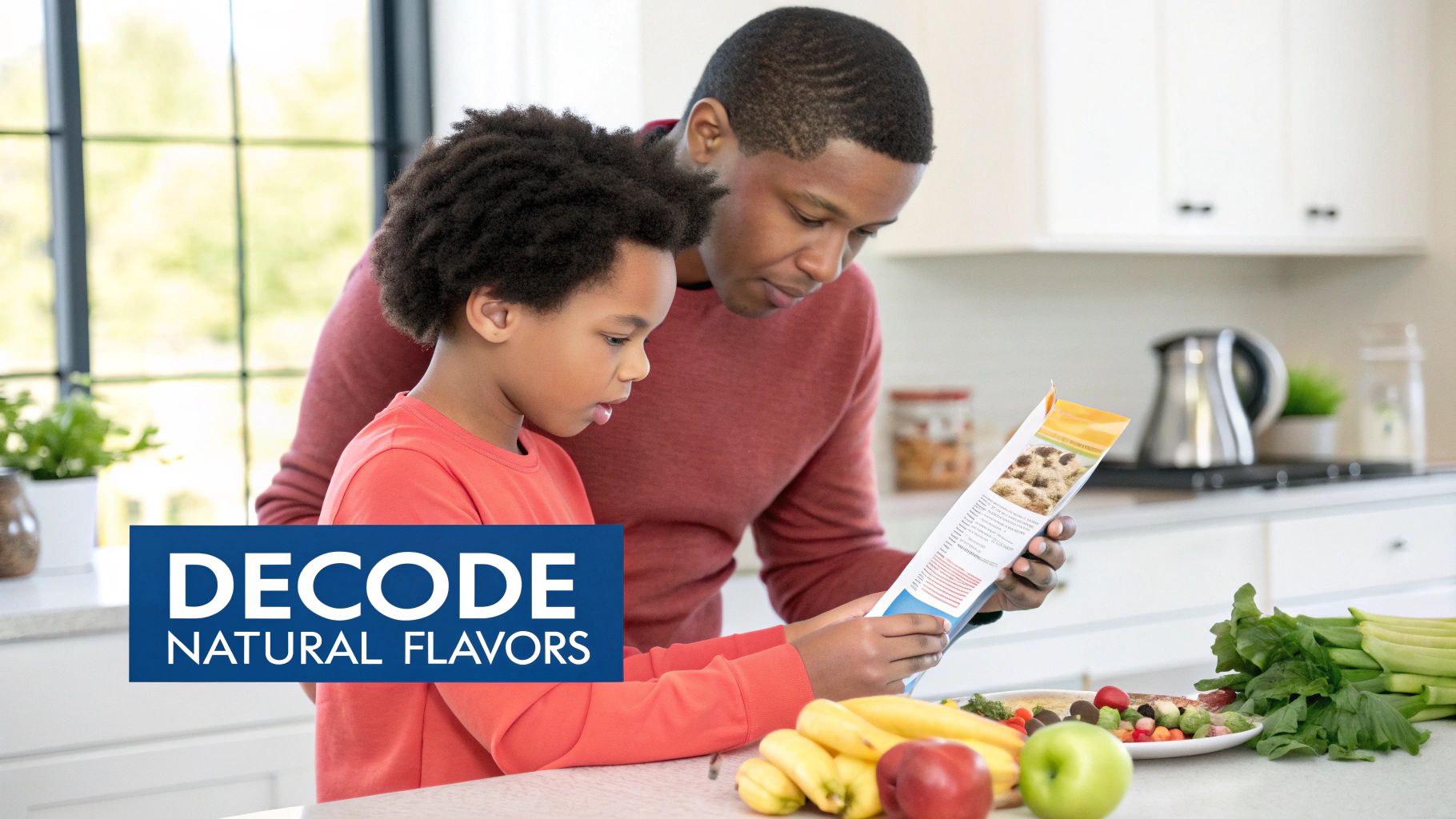
When you’re juggling school pickups, soccer practice, and a mountain of laundry, trying to decipher food labels can feel like a full-time job. "Natural flavors" is one of the most confusing ingredients you'll run into, especially when you're on a mission for healthy, organic snacks for your kids.
So, what are they, really? The FDA says a natural flavor's main job is flavoring, not nutrition. To qualify, it has to start from a natural source, like:
- A spice or herb
- Fruit or fruit juice
- A vegetable or vegetable juice
- Meat, seafood, or eggs
- Dairy products
Think of it this way: a food scientist can isolate the single chemical compound that makes a strawberry taste like a strawberry. In a lab, they can then replicate and concentrate this compound into a powerful flavor essence. That essence gets added to snack bars and cookies to make them irresistibly delicious and taste exactly the same, every single time.
Why Are Natural Flavors So Common in Kids Snacks?
Brands use these flavorings for a few key reasons. First, they deliver a consistent and potent taste that real, whole ingredients sometimes can't match after going through processing and packaging. A dash of "natural strawberry flavor" can make a snack bar taste intensely fruity, even if it has very little actual fruit in it. This is why so many kids' snack bars and cookies have that super-punchy flavor!
This creates a "hyper-palatable" experience that kids, understandably, tend to love. The downside? It can make the subtle, genuine taste of a real strawberry or a fresh-baked cookie seem a lot less exciting by comparison.
The real puzzle for parents is the lack of transparency. The term "natural flavors" can be a catch-all for dozens of ingredients, and companies aren't required to disclose the specific sources or processing agents used.
This ambiguity is why understanding natural flavors in organic food is so important. As we'll get into, the rules change when you see that USDA Organic seal on the package, which can give you a bit more peace of mind. Our goal is to arm you with clear, simple knowledge, so you can feel confident about what you’re really feeding your little ones during snack time.
Understanding FDA Rules vs USDA Organic Standards
Here's where the snack aisle gets a little tricky for parents trying to shop clean. When you see "natural flavors" on a label, its meaning changes dramatically depending on one key factor: the USDA Organic seal.
There are two very different rulebooks at play, and knowing the difference is your secret weapon for picking genuinely healthy kids' snack bars and cookies.
First, let's look at the standard Food and Drug Administration (FDA) rules. The FDA's definition of "natural flavor" is incredibly broad. It essentially means the flavor had to start from a natural source, but the journey to your kid's cookie can involve processing aids, synthetic solvents, and other chemical assistants that don't exactly sound like they came from a farm. It’s a huge gray area that leaves a lot of room for interpretation and very little transparency for parents.
Why the USDA Organic Seal is Your Best Friend
This is where the green and white USDA Organic seal comes to the rescue. When you see that seal, the rules for natural flavors in organic food become much stricter and more defined. It acts as a trusted filter, ensuring what's inside aligns with a clean and non-toxic lifestyle for your family.
To be included in a certified organic product, natural flavors must follow a tougher set of guidelines. This provides a critical layer of protection and assurance that standard products simply don't offer.
The most significant difference is that natural flavors in organic food must be produced without the use of synthetic solvents, artificial preservatives, or irradiation. This single rule closes many of the loopholes found in the FDA's general definition.
Here’s a quick breakdown of how these two standards stack up against each other:
Natural Flavors FDA General Rules vs USDA Organic Standards
| Regulation Aspect | FDA General Standard | USDA Organic Standard |
|---|---|---|
| Source Origin | Must originate from a plant or animal source. | Must originate from a plant or animal source. |
| Synthetic Solvents | Allowed during processing. | Prohibited. |
| Artificial Preservatives | Allowed. | Prohibited. |
| Irradiation | Allowed. | Prohibited. |
| Genetic Modification (GMOs) | No specific prohibition. | Prohibited. |
| Labeling Transparency | Generally low. | Higher standards for transparency. |
As you can see, the USDA Organic seal isn't just a suggestion; it's a strict set of rules that ensures ingredients are held to a much higher standard.
Furthermore, any natural flavors used in a certified organic product must be non-GMO. This is a core principle of the organic standard. If you're looking to avoid genetically modified ingredients in your kids' snacking, that seal is a non-negotiable checkpoint. It simplifies your decision-making process, letting you shop with confidence. To dive deeper into this topic, you can learn more about why organic certifications matter and how they empower you as a consumer.
Ultimately, the USDA Organic seal is more than just a label; it’s a promise. It guarantees that the natural flavors in organic food adhere to higher standards, making it your most reliable ally in the grocery store. It ensures the snack bars and cookies you toss in your cart for your little ones are made with the integrity and care you expect.
The Surprising Journey From Real Food to Lab-Made Flavor
Ever wondered how a kids' snack bar gets that "berry blast" flavor? You might picture someone mashing up fresh raspberries, but the real story is often a fascinating journey from a real food source to a lab-created essence. This isn't about spooky science; it's just about pulling back the curtain on a common ingredient.
To create "natural raspberry flavor," scientists start with an actual raspberry. Their goal isn't to use the whole fruit, but to pinpoint the exact chemical compounds that scream "raspberry!" to our taste buds. They then use some pretty sophisticated methods to isolate and concentrate just those molecules.
From Farm to Flask
This extraction process can happen in a few different ways, each designed to capture the purest essence of a flavor. The most common methods are:
- Distillation: Think of it like making spirits. A liquid, like fruit juice, is heated to separate its components by their boiling points, capturing the volatile flavor compounds that float off.
- Enzymolysis: This technique uses special enzymes to break down parts of the original food, which helps release the specific flavor molecules they're after.
- Extraction with Solvents: Sometimes, solvents are used to pull the flavor compounds out of the source material, creating a super-concentrated liquid flavor.
So while these flavors do originate from something in nature, the end product is a carefully engineered ingredient. It's designed to deliver a consistent, powerful taste that can withstand a long shelf life—something that can be tough to achieve with whole-food ingredients alone.
The demand for these ingredients is huge. The market for natural and organic flavors is projected to hit $13.7 billion by 2032, which tells you a lot about how much we love bold tastes. It's also driven by shoppers, especially Millennials and Gen Z, who are asking for more transparency in how their food is made. You can get more insights on this growing market at persistencemarketresearch.com.
As you can see from the chart below, the process for standard versus organic natural flavors can be quite different.
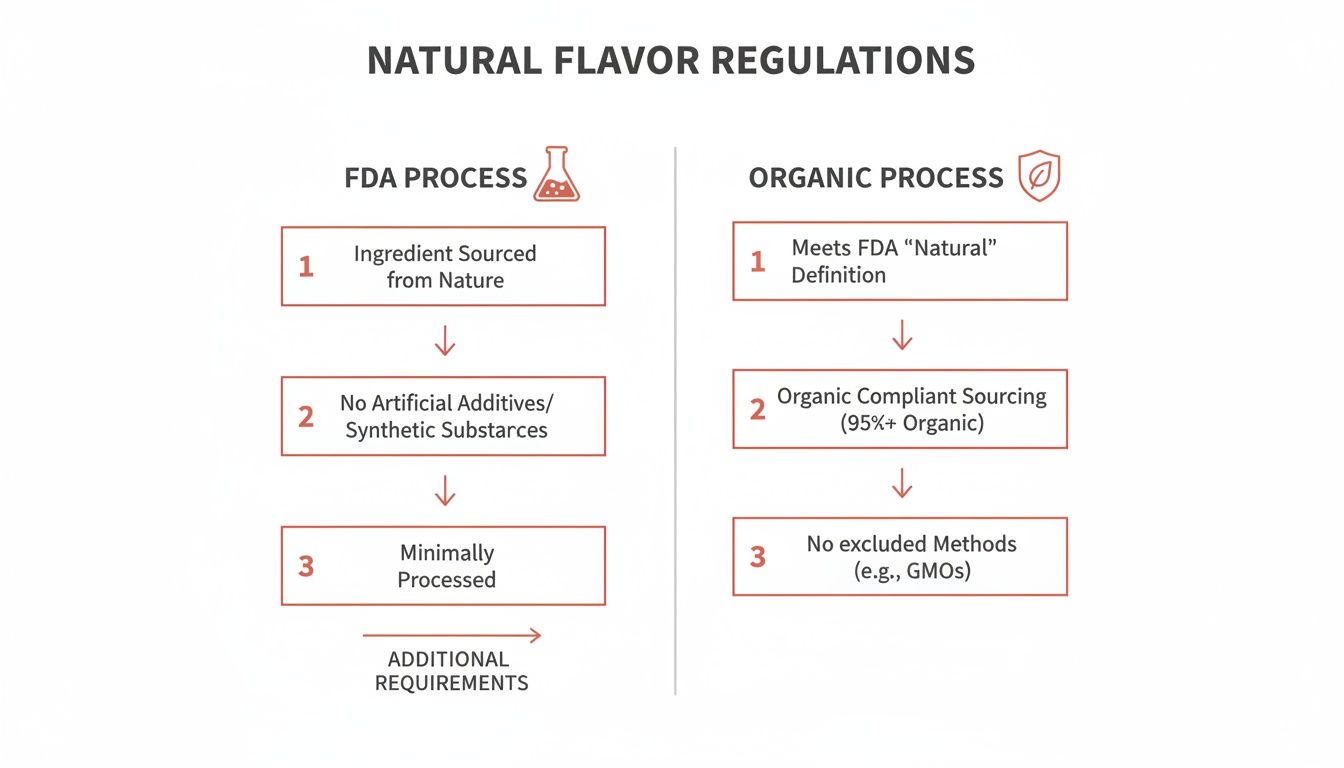
The key takeaway? While both start with a natural source, the path to being certified organic enforces much stricter rules, like prohibiting synthetic solvents and GMOs.
Our Suggestion for Parents: When you're scanning the aisle for kids' snacks, look for bars and cookies that list real ingredients for flavor—like "organic dates" or "organic vanilla extract"—instead of the catch-all term "natural flavors." This way, you know the flavor is coming from the whole food itself, not just an isolated component.
Knowing this journey from plant to package is empowering. It helps you see why brands that skip lab-made flavors and use simple, whole foods are making a powerful choice for your family. It's really a commitment to transparency and letting nature's true flavors shine.
Are Natural Flavors a Healthy Choice for Kids?
This is the big question every parent asks while staring at a wall of colorful kids' snack bars and cookies. Are these “natural flavors” actually a healthy choice? The answer, like most things in nutrition, is a little more complex than a simple yes or no.
While natural flavors in organic food are generally considered safe and have to meet stricter standards, the real issue for parents comes down to two things: transparency and taste training. Companies don’t have to tell you the specific sources of their flavor mixtures, which can be a real headache for families managing allergies or those who just want to know exactly what’s in their food.
More importantly, these super-concentrated flavors create a “hyper-palatable” experience. Think of it as turning up the volume on taste. A snack bar with "natural strawberry flavor" can deliver a candy-like intensity that a real, fresh strawberry simply can’t match.
The Palate Problem
This flavor intensity can inadvertently train a child's taste buds to expect and crave that same level of potent flavor in everything they eat. Over time, the subtle, complex sweetness of a real apple or a handful of fresh blueberries might start to seem bland or boring in comparison.
Our Suggestion for Parents: Choosing snacks flavored with real, whole ingredients is a much better strategy for fostering healthy, lifelong eating habits. It teaches kids to appreciate the authentic, nuanced tastes of food as nature intended.
This push for intense, clean-label flavor isn’t just happening here; it’s a global trend. The Asia-Pacific region, for example, is a major driver of natural flavors growth and is projected to hold 32.11% of the market by 2025. This boom is powered by consumer demand for non-toxic living and products flavored with real fruits, veggies, and dairy. You can get more details about the global natural food flavor market on mordorintelligence.com.
So, while natural flavors in organic food aren't inherently toxic or harmful, they can miss the point of whole-food nutrition. They add taste without adding the fiber, vitamins, and minerals that come from the actual source ingredient. It’s a similar concept to how some companies use additives to extend shelf life, which you can learn more about in our guide on what natural preservatives are.
Ultimately, the goal is to help your kids develop a love for real food. Opting for snacks that list "organic blueberries" or "organic cocoa" instead of a vague flavor blend is a simple way to ensure snack time is both delicious and genuinely nourishing.
How to Become a Pro Label Reader in the Snack Aisle
Ready to feel like a super-parent at the grocery store? The kids' snack aisle can be a maze of bright colors and bold claims, but once you know what to look for, you'll feel totally in control. It's all about flipping the box over and becoming a snack detective.
Your first clue is the USDA Organic seal. That little green and white circle is a powerful shortcut, telling you the product already meets a much higher standard. Think of it as your first line of defense in building a clean, simple pantry for your family's snacks and cookies.
Next, head straight for the ingredient list. This is where the real story is. You’re on the hunt for a list that’s short, simple, and filled with words you actually recognize. This one habit is the foundation of clean eating, and you can dive deeper into it with our full guide on how to read food labels.
Spotting the Difference in Flavor
As you scan that ingredient list, keep a sharp eye on how the snack gets its taste. It’ll almost always come down to one of two options:
- Option A: You see the words "natural flavors" listed.
- Option B: You see real, whole-food ingredients like "organic blueberries," "organic cocoa powder," or "organic vanilla extract."
Option B is the clear winner every single time. Why? Because you know exactly what you’re getting. When a real ingredient is listed, the flavor comes packaged with all the good stuff—the fiber, vitamins, and minerals of the original food, not just a lab-created essence of it.
Our Suggestion for Parents: This simple check is the most powerful tool you have. Choosing kids' snack bars and cookies flavored with real food is a direct vote for transparency and a great way to help your kids appreciate the authentic taste of nature.
The demand for clean-label products is exploding for a reason. Understanding natural flavors in organic food is more important than ever. In 2023, U.S. organic sales hit a staggering $69.7 billion, while North America held a 24.8% share of the natural flavors market. The trend is obvious: families want simpler, more trustworthy ingredients. You can find more data on the growth of the natural flavors market at grandviewresearch.com.
At Skout Organic, this is what we’re all about. We use real, organic ingredients—like the actual fruits and spices—to flavor our kids' snack bars and cookies. It keeps snack time simple, delicious, and totally worry-free for parents.
Choosing Snacks Flavored by Nature, Not a Lab
So, after navigating the maze of labels and lab processes, how does a busy parent make the best choice in the snack aisle? It’s actually simpler than you might think. The secret is to go for kids' snack bars and cookies with short, simple ingredient lists filled with words you already know.
Think of it as choosing real food over a lab formula. When you see "organic dates," "organic blueberries," or "organic cinnamon" on a label, you know exactly where that delicious taste is coming from. It’s flavor from the farm, not a factory.
Our Suggestion for Parents: The most trustworthy and delicious kids' snacks get their amazing taste directly from the organic fruits, vegetables, and spices they're made with. This isn't just about avoiding certain ingredients; it's about actively choosing whole-food nutrition.
At Skout Organic, this is our entire philosophy. Our kids’ snack bars and soft-baked cookies are flavored by nature itself. We let juicy organic berries, rich cocoa, and sweet apples do all the hard work, ensuring every bite is packed with authentic taste and whole-food goodness.
Make Snack Time an Adventure
Turn snack time into a fun discovery with your kids. Can they guess the ingredients just by tasting them? Ask them if they can pick out the real raspberry in their bar or the cinnamon in their cookie. It’s a great way to help them build an appreciation for authentic flavors and makes healthy eating an exciting part of their day.
By choosing snacks with clean, recognizable ingredient lists, you sidestep the whole debate around natural flavors in organic food. You’re not just handing over a snack; you’re offering a delicious, kid-approved treat that’s always organic, plant-based, and flavored exactly the way nature intended. It's about making choices that are simple, transparent, and genuinely nourishing for your little adventurers.
Let's Talk Natural Flavors
We get it. Seeing "natural flavors" on an ingredients list can feel a little confusing, especially when you're trying to choose the best organic snacks for your family.
Let's clear up some of the most common questions parents have. This quick Q&A will help you shop smarter and feel even more confident about what's going in the lunchbox.
Can Natural Flavors in an Organic Product Contain GMOs?
Nope, never. This is one of the biggest benefits of that little green seal.
A core promise of the USDA Organic certification is the strict ban on genetically modified organisms (GMOs). If a kids' snack has the official USDA Organic seal, you can trust that any natural flavors in organic food used within it are sourced from non-GMO ingredients. It’s a built-in safety check for busy parents.
Are Natural Flavors in Organic Food Always a Better Choice?
They're definitely a big step up from the mystery flavors you'll find in conventional snacks. Organic natural flavors have to follow much stricter rules, like being made without synthetic solvents or artificial preservatives. That makes them a cleaner choice overall.
However, the gold standard will always be snacks flavored directly with whole food ingredients. Let's be honest, seeing "organic raspberries" on a label is a lot more reassuring—and nutritious—than seeing "organic natural raspberry flavor."
So, Why Do Some Organic Brands Still Use Them?
Great question! Even in the organic world, getting that perfectly consistent taste in every single batch of snack bars or cookies can be a challenge.
Some brands use organic-compliant natural flavors to make sure their product tastes exactly the same every time you buy it. It can also help them create a specific flavor profile that's tough to achieve with whole ingredients alone, especially after the product has been baked and packaged.
At Skout Organic, we believe in radical simplicity. We've found that the best, most delicious flavors come directly from the real, organic ingredients themselves. We prefer to let the organic apples, berries, and cocoa do all the talking!
When you choose snacks flavored this way, you're helping your kids appreciate the true taste of nature. And you can feel good knowing their favorite treats are made with simple, recognizable ingredients.
Ready to make snack time simple and delicious? Skout Organic offers a huge variety of kids' snack bars and cookies flavored with real, organic ingredients—never mystery "natural flavors." Build your family's perfect snack box today!