
 Kids Snack Bars
 Soft-Baked Cookies
 Protein Bars
 Build A Box
 Shop All





Let's be honest: effective meal planning for busy families isn't about crafting Pinterest-perfect dinners every single night. It’s about creating a simple, flexible system that gives you back your time and sanity. Want to know the secret? Build your week around a few core 'anchor meals' your family actually loves, and watch the daily stress melt away. It's that easy!
Conquering Kitchen Chaos With A Simple Meal Plan
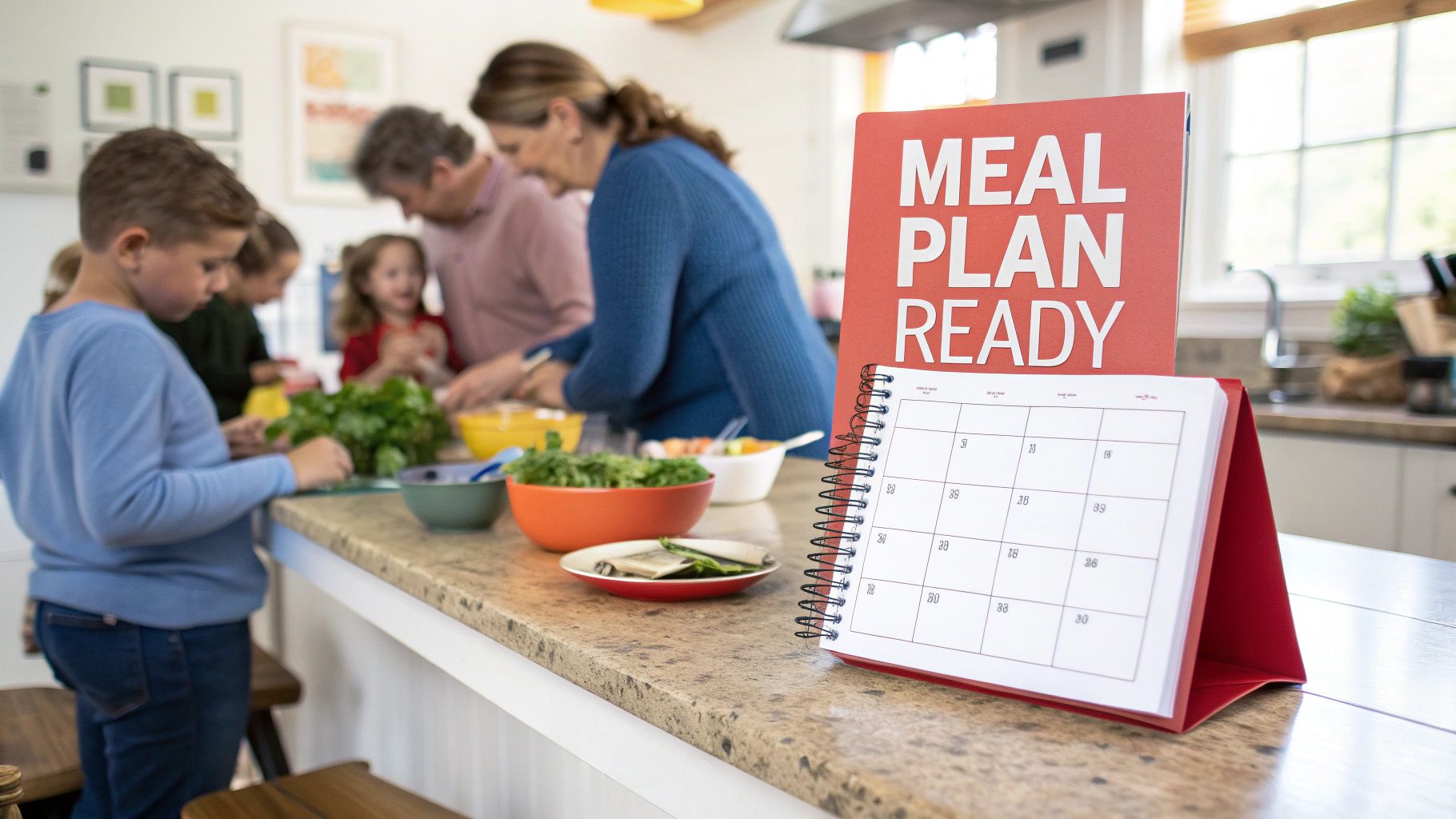
Does the daily 5 PM question, "What's for dinner?" send a jolt of panic through you? You're definitely not alone. When you're juggling work, school pickups, and after-school activities, dinnertime can feel less like a happy family gathering and more like a last-minute scramble.
The good news? You don’t need a rigid, color-coded spreadsheet to fix it. Think of meal planning as your secret weapon to bring a little calm back to the kitchen, freeing up your mental energy for what really matters—like surviving that epic toddler meltdown.
Why A Flexible Plan Is Your Best Friend
A successful meal plan has to work for your real life, which we all know is unpredictable. A meeting runs late, someone has a surprise soccer practice, or your kiddo decides that today is the day they suddenly hate chicken. Life happens.
That’s why a flexible approach is the only one that truly works. Instead of mapping out every single meal with military precision, the goal is to create a supportive structure.
- Embrace leftovers. Seriously, plan for them! A big batch of chili on Monday becomes an effortless lunch on Tuesday. High-five, past you!
- Keep it simple. Your plan should absolutely include a few 15-minute "emergency" meals for nights when you just can't.
- Prioritize connection. The goal isn't a flawless meal; it's a shared one.
Over 35 years of research has shown that family meals are linked to better physical and mental health for everyone. In fact, researchers found that the single biggest factor tied to higher happiness was how often people ate meals with others. You can learn more about the benefits of the family table.
The real goal of meal planning isn't just getting food on the table. It's about creating more space for connection by reducing the stress that gets in the way.
Your First Weekly Meal Plan Template
To get you started, here's a super simple template. Think of it less as a strict rulebook and more as a gentle guide. The idea is to plan your main dinners (the anchor meals) and leave room for flexibility with everything else.
| Day of the Week | Breakfast Idea (Quick & Easy) | Lunch Idea (Packable) | Dinner Theme (Anchor Meal) | Snack Slot |
|---|---|---|---|---|
| Monday | Yogurt & Granola | Leftover Dinner | Pasta Night | Apple Slices & Nut Butter |
| Tuesday | Oatmeal | Turkey & Cheese Wrap | Taco Tuesday | Cheese Stick & Crackers |
| Wednesday | Scrambled Eggs | Hummus & Veggie Sticks | Sheet-Pan Sausage & Veggies | Skout Organic Kids Bar |
| Thursday | Smoothie | Leftover Dinner | Breakfast for Dinner (Pancakes) | Yogurt Pouch |
| Friday | Toast with Avocado | "Snack Box" Lunch | Pizza Night (Homemade or Takeout) | Trail Mix |
| Saturday | Flexible | Flexible | Family Choice / Leftovers | Flexible |
| Sunday | Flexible | Flexible | Big Batch Meal (e.g., Chili) | Flexible |
Don't feel pressured to fill every single box. Just having your dinners planned is a huge win!
Introducing Anchor Meals And Snack Slots
The heart of this simple system is the 'anchor meal'. These are the 3-4 simple, home-cooked dinners that form the backbone of your week. Think Taco Tuesday, Pasta Night, or a quick sheet-pan meal. They’re familiar, everyone likes them, and they don't require a culinary degree to pull off.
But what about all the moments in between? Let's face it, kids are snacking machines. A smart meal plan acknowledges this by building in 'snack slots'.
Instead of fighting the constant requests, you plan for them. Stocking up on easy, organic options like kids snack bars and cookies means you’re always ready for the pre-dinner munchies or that after-school energy crash. This isn't cheating; it's being realistic—and it keeps the peace until dinner is on the table.
Building Your Fun And Flexible Weekly Framework

Alright, this is where the fun starts—creating your family's personalized meal-planning machine. This isn’t about strict rules or complicated spreadsheets. It’s about finding a rhythm that feels natural and, dare I say, enjoyable.
The goal is a simple, repeatable framework that makes weeknight dinners feel less like a mad scramble and more like a victory lap.
A great place to begin is with a master list of your family’s greatest hits. You don't need a hundred recipes—just 10-15 solid gold meals that you know (almost) everyone will eat without a fuss. This list becomes your secret weapon, saving you from that deer-in-the-headlights feeling when you sit down to plan.
Embrace The Power Of Theme Nights
One of the easiest ways to kill the "what's for dinner?" overwhelm is to introduce theme nights. This little trick instantly narrows down the infinite possibilities into a handful of easy choices. Plus, kids absolutely love the predictability and excitement.
When you know Tuesday is always Taco Tuesday, you’re not staring at a blank slate; you're just deciding between ground beef and chicken. It's a small mental shift that makes a huge difference.
Here are a few ideas to get you started:
- Meatless Monday: A great way to sneak in more veggies with black bean burgers, lentil soup, or cheesy quesadillas.
- Taco Tuesday: A classic for a reason! It’s customizable, fun, and easy to set up as a "build-your-own" bar.
- Pasta Friday: Whether it’s simple spaghetti and meatballs or a creamy fettuccine, pasta is always a family-friendly win.
- Soup & Sandwich Saturday: Cozy, low-effort, and perfect for a relaxed weekend meal.
The magic of theme nights is that they create structure without being restrictive. You're not locked into one specific recipe, but you have a clear direction that saves precious mental energy week after week.
Once you have your themes, just rotate the meals within them. One Pasta Friday might be lasagna, while the next is a quick pesto pasta with cherry tomatoes. It keeps things interesting without forcing you to reinvent the wheel every single week.
Master The Cook Once, Eat Twice Strategy
The "Cook Once, Eat Twice" philosophy is an absolute game-changer for busy families. The concept is simple: whenever you cook, intentionally make extra of at least one component to repurpose for another meal later. This isn't just about eating leftovers; it's about strategically creating building blocks for future meals.
Think of it like giving your future self a high-five. That tiny bit of extra effort upfront pays off massively on a chaotic Wednesday when you need to get food on the table, fast.
This works beautifully for versatile ingredients:
- Proteins: Grill extra chicken breasts on Sunday. On Monday, serve them with roasted potatoes. On Wednesday, slice the leftovers to top a salad or stuff into wraps.
- Grains: Make a double batch of quinoa or brown rice. Use it as a side dish one night, then mix it with black beans and corn for burrito bowls the next.
- Roasted Vegetables: A big sheet pan of roasted broccoli, bell peppers, and onions can be a side for salmon, then get tossed into a frittata or pasta salad later.
The key is to think in components rather than full meals. By prepping these foundational elements, you give yourself incredible flexibility to assemble quick, healthy meals without starting from scratch every single time. It's one of the most effective shortcuts in any meal-planning playbook.
Mastering The Art Of Smart Snacking
Let's talk about the unsung heroes of any family food plan: snacks. They aren't just little bites to tide everyone over. Nope. They are the mission-critical fuel that prevents a full-scale meltdown in the car, at the park, or ten minutes before dinner is ready. Forgetting snacks is a rookie mistake we’ve all made, and we’ve all paid the price.
Strategically planning for snacks is one of the biggest upgrades you can make to your meal planning for busy families. It turns the endless chorus of "I'm hungry!" from a point of stress into just another predictable part of your routine. Instead of scrambling for whatever you can find, you’ll have a smart, simple system already in place.
The Snack Station Solution
One of the most effective—and fun—ways to handle the snack chaos is to create a designated "snack station." This is simply a kid-friendly drawer in the pantry or a low shelf in the fridge stocked with parent-approved options. Trust me, it’s a total game-changer.
This simple setup empowers your kids to make their own choices, which builds independence and confidence. They feel in control, and you get peace of mind knowing that whatever they grab is a solid option. No more negotiating over a bag of chips right before dinner.
Here’s how you can set up a winning snack station:
- Pantry Drawer: Fill it with pre-portioned bags of trail mix, whole-grain crackers, and easy grab-and-go options like high-quality Kids Snack Bars.
- Fridge Bin: Stock it with cheese sticks, yogurt pouches, washed berries, and sliced cucumbers.
- Set Boundaries: Gently communicate the "snack rules," like one item from the pantry and one from the fridge, and stick to designated snack times.
Why Simple Ingredient Snacks Are A Parent's Best Friend
When you're running between school drop-off and soccer practice, convenience is everything. This is exactly where options like simple, organic Kids Snack Bars and Soft-Baked Cookies save the day. These aren't just sugary treats; they are smart solutions designed for real family life.
They're perfectly portioned, easy to toss in a bag, and made with ingredients you can actually pronounce. Think of them as your reliable backup for any situation—the perfect car ride companion, a quick pre-sports energy boost, or the after-school snack that holds them over without ruining their appetite for dinner.
The right snacks don't disrupt your meal plan; they support it. They fill the nutritional gaps in a hectic day and keep energy levels stable, making for happier kids and calmer parents.
The reality of modern family life often means dinners aren't always a shared, sit-down affair. A recent study of children in 43 countries found that only about 49.1% had daily family meals, meaning more than half were missing this routine touchpoint. For health‑conscious families, this is where simple, pre‑portioned options—like organic snack bars or soft‑baked cookies with short ingredient lists—can support meal planning by filling gaps while still supporting consistent family eating routines. You can read the full research about family meal frequency.
How To Read Labels Like A Pro
Becoming a savvy label-reader is a superpower. It helps you stock your snack station with the good stuff, and it's easier than you think. It can feel intimidating at first, but you only need to focus on a few key things to spot the imposters.
First, always glance at the ingredient list. If it’s a paragraph long and filled with words you can't pronounce, that’s often a red flag. A shorter list usually means a simpler, more wholesome product.
Next, check for sugar. Look for "added sugars" on the nutrition panel and be wary of sneaky sugar aliases hiding in the ingredients:
- High-fructose corn syrup
- Cane juice or cane syrup
- Dextrose or maltodextrin
- Barley malt
Finally, scan for artificial colors and flavors. Ingredients like "Red 40," "Yellow 5," or "artificial flavoring" are easy to spot and avoid. Choosing snacks made with real, organic fruit and spices for flavor is a much better bet.
Once you get the hang of it, you'll be able to scan a package in seconds and feel confident about the snacks you bring into your home. If you're looking for inspiration, check out our guide on easy and healthy snack recipes to complement your pre-packaged choices.
Your Time-Saving Grocery and Prep Game Plan
So, you’ve got your weekly framework and a smart snacking strategy. High five! But even the world's best meal plan can fall apart if you don't have a solid game plan for getting the food into your house and ready to go.
This is where we turn a dreaded chore into a time-saving superpower.
Let's transform your grocery runs from chaotic scavenger hunts into speedy, efficient missions. The secret weapon? A "running grocery list." Forget trying to remember everything on Saturday morning. Keep a notepad on the fridge or a shared list in a notes app on your phone.
When you use the last of the olive oil or grab the final box of Kids Snack Bars, add it to the list immediately. This simple habit ensures you never have that face-palm moment mid-recipe when you realize you’re missing a key ingredient. It’s a tiny shift that makes meal planning for busy families so much smoother.
Organize Your List Like a Pro
Once you have your running list, the next trick is to organize it by the store layout. Seriously, this is a game-changer. Group items together by department: produce, dairy, meats, pantry staples, and frozen foods. This simple step stops you from zigzagging across the store and slashes your shopping time.
Here’s a quick template to get you started:
- Produce: Onions, garlic, broccoli, bell peppers, apples, bananas
- Meat & Deli: Chicken breasts, ground turkey, sliced cheese
- Dairy & Eggs: Milk, yogurt, eggs, butter
- Pantry Aisles: Canned tomatoes, black beans, pasta, rice, Skout Organic Cookies
- Frozen: Frozen peas, corn, emergency pizza crust
For some great visual inspiration on how to structure your list, check out this ultimate plant-based diet grocery list. While it's focused on plant-based eating, its organized categories are a fantastic model for any family.
Unleash the Power Hour Prep
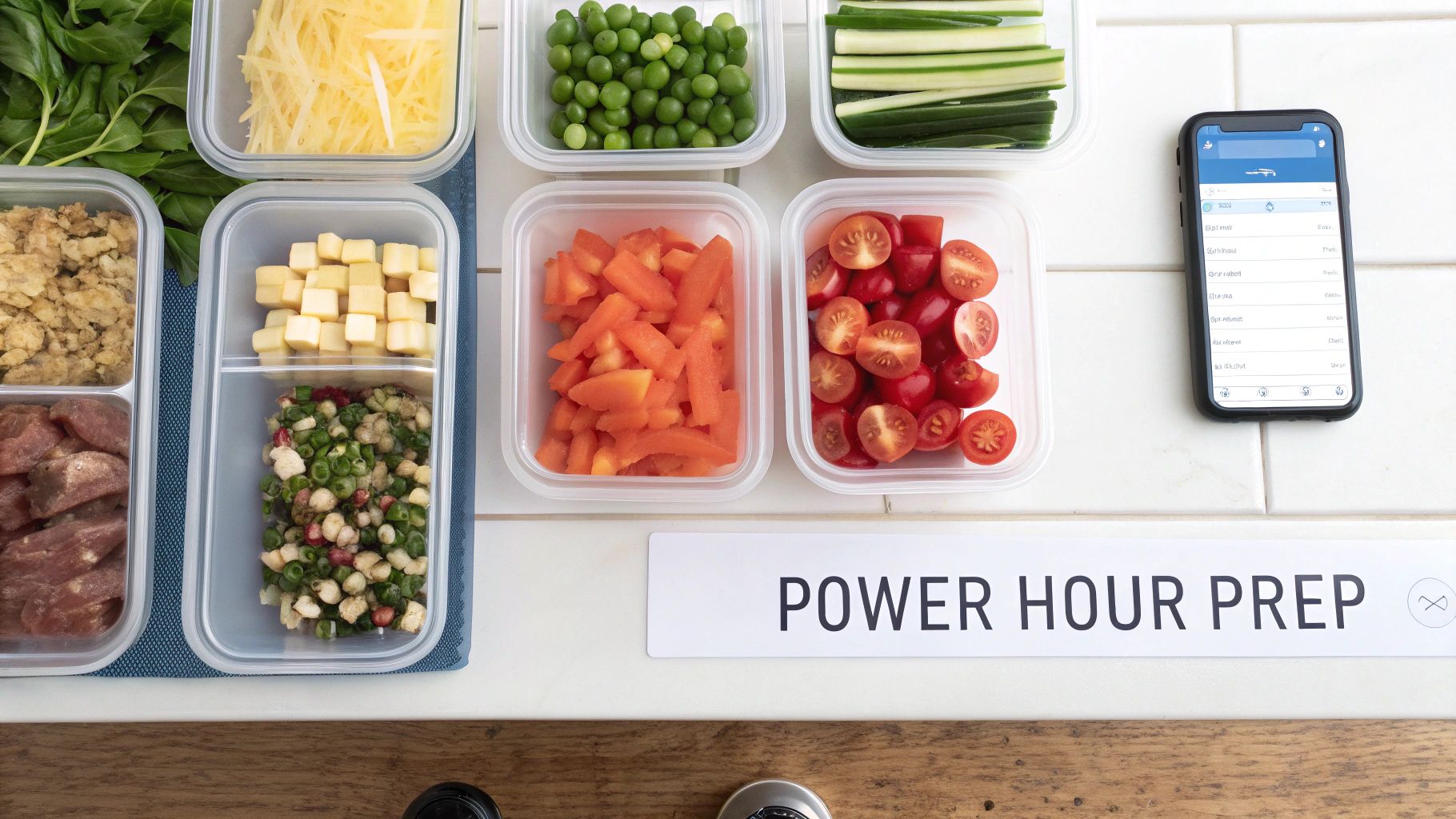
Now for the real magic: the "Power Hour." This isn't about cooking every single meal for the week in one marathon session—who has time for that? Instead, it’s a focused 60-90 minute block of time, usually on a Sunday, dedicated to knocking out all the annoying little tasks upfront.
By tackling the tedious prep work ahead of time, you turn weeknight cooking into a simple assembly job. Instead of chopping, dicing, and washing from scratch on a busy Tuesday, you’ll just be combining prepped ingredients. It's the ultimate gift to your future, stressed-out self.
Your Power Hour isn't about creating Instagram-perfect meal prep containers. It's about breaking down recipes into their smallest, most tedious parts and getting them out of the way so your weeknights feel easy and breezy.
A well-executed power hour is the difference between a meal plan that works and one that gets abandoned by Wednesday. It’s also a fantastic way to stretch your food budget by prepping fresh produce before it has a chance to wilt. Curious about other ways to make your groceries go further? Our guide on how to eat clean on a budget has some great tips.
Your Power Hour Checklist
Ready to give it a try? Put on some music, grab an apron, and knock out this checklist. You'll be amazed at how much you can get done in a short amount of time, setting yourself up for a week of smooth, stress-free meals.
- Wash and Chop Veggies: Get all your washing and chopping out of the way. Think lettuce for salads, onions and bell peppers for stir-fries, and sliced cucumbers and carrots for easy snacks.
- Cook Your Grains: Make a big batch of rice, quinoa, or pasta. You can use it as a side dish or a base for quick bowls all week long.
- Prep Your Proteins: Cook and shred a few chicken breasts, brown some ground beef for tacos, or hard-boil a dozen eggs for quick breakfasts and protein-packed snacks.
- Portion Out Snacks: Divide crackers, nuts, or Kids Cookies into grab-and-go bags or containers. This makes that snack station we talked about even more effective and saves you from the "I'm hungry!" chorus.
Quick Recipes The Whole Family Will Actually Eat
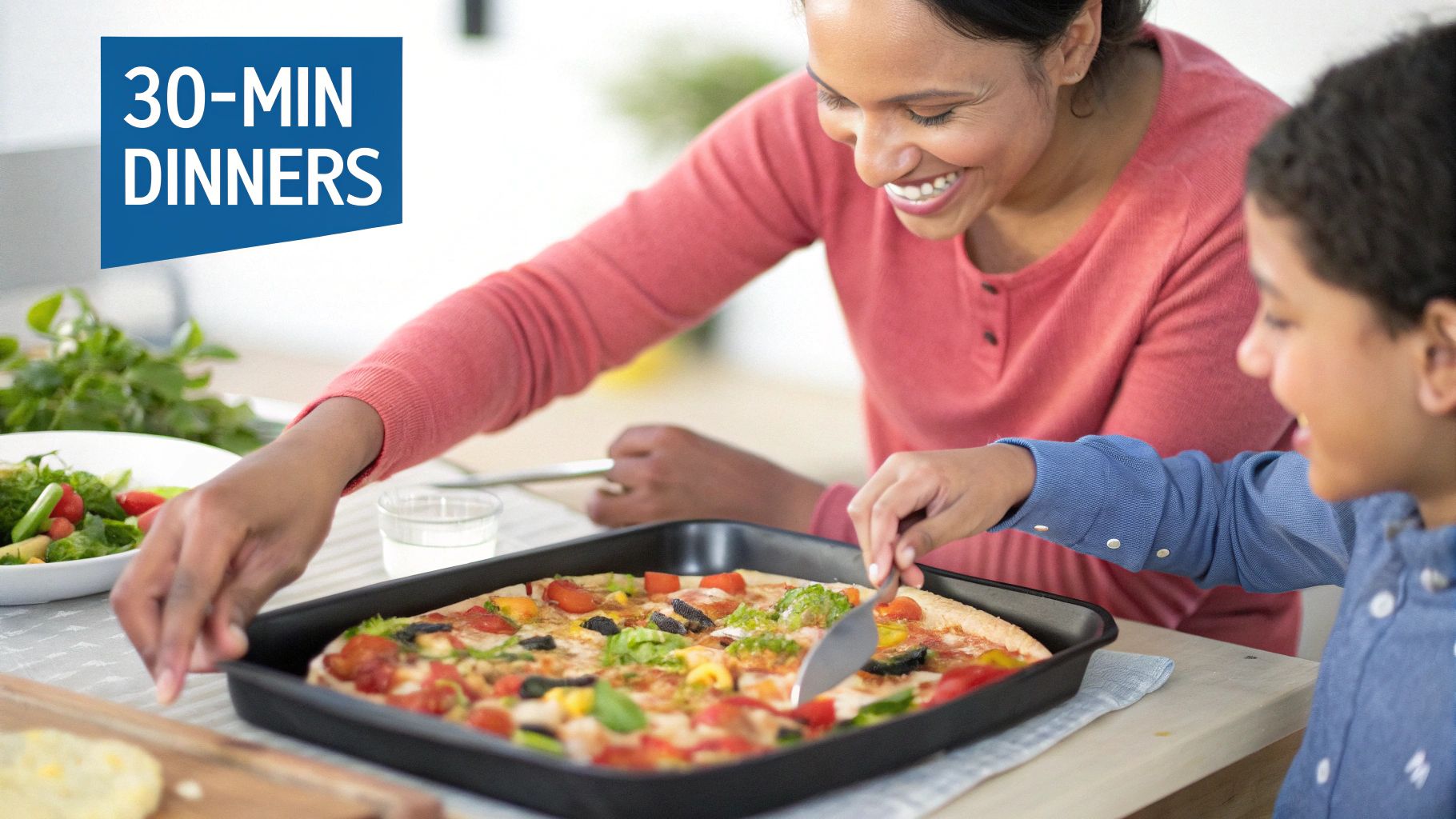
You can have the most organized meal plan in the world, but it all comes down to one critical question: will they actually eat it? Let's be honest, the answer needs to be a resounding "yes" without you having to spend hours in the kitchen.
This is where your arsenal of quick, forgiving, and kid-approved recipes becomes your secret weapon in meal planning for busy families. It’s not about becoming a gourmet chef overnight. It’s about nailing a handful of reliable, go-to meals you can get on the table in 30 minutes or less. These are the dinners that rescue you on a hectic Tuesday when soccer practice runs late and homework is still looming.
Global data highlights just how vital these dinners are. An analysis of 142 countries showed that families in the U.S. and Canada share about five dinners per week, but far fewer lunches. This pattern shows that dinner is the main event for family connection, making quick and reliable recipes absolutely essential when other meals are often eaten on the go.
Your 30-Minute Dinner Playbook
Let's stock your playbook with some tried-and-true winners. These recipes use simple, everyday ingredients and are designed for maximum flavor with minimal effort. Think of them as your weeknight workhorses.
- One-Pan Lemon Herb Chicken and Veggies: Just toss chicken thighs with broccoli, chopped bell peppers, and red onion. Drizzle with olive oil, lemon juice, dried oregano, and garlic powder, then roast at 400°F for 20-25 minutes. One pan means cleanup is a total breeze.
- 20-Minute Creamy Tomato Pasta: While your favorite pasta cooks, sauté minced garlic in olive oil. Add a can of crushed tomatoes, a splash of heavy cream (or coconut cream for a dairy-free option), and some dried basil. Let it simmer, then toss with the pasta. It’s comforting, fast, and always a hit.
- Deconstructed Burrito Bowls: This is the ultimate picky-eater-proof meal. Cook ground turkey or beef with taco seasoning. Set out bowls of rice (microwavable for speed!), black beans, corn, shredded cheese, and salsa. Everyone builds their own perfect bowl.
Navigating Picky Eaters And Dietary Needs
Dealing with selective palates is a universal parenting challenge. The secret isn't to become a short-order cook, but to serve meals that are easy to customize. The burrito bowl is a perfect example of this "deconstructed" approach.
Another simple trick? Serve sauces and toppings on the side. For the lemon herb chicken, you could offer a yogurt-dill sauce separately. This empowers kids to control their own plate, which dramatically increases the odds they’ll eat without a fight.
Adapting for dietary needs is also easier than you might think:
- Gluten-Free: Swap regular pasta for a gluten-free version and use tamari instead of soy sauce in marinades.
- Dairy-Free: Use dairy-free cheese shreds, coconut cream instead of heavy cream, and nutritional yeast for a cheesy flavor.
For more inspiration, explore these 10 Healthy Family Dinner Ideas That Make Mealtime Easy that are perfect for busy households.
A successful family meal isn’t about everyone eating the exact same thing. It's about everyone enjoying a meal together, even if one person’s plate is just plain pasta and another’s is loaded with veggies.
Getting The Kids Involved In The Kitchen
One of the best ways to get kids to try something new is to have them help make it. When they have a hand in the process, they feel a sense of ownership and pride. Even the youngest chefs can get involved with simple, age-appropriate tasks.
Assigning small jobs not only helps you get dinner ready but also teaches valuable life skills. Plus, it’s a great way to connect after a busy day.
Here are a few ideas to get started:
- Toddlers (2-3 years): Can wash vegetables, tear lettuce for a salad, or stir ingredients in a bowl (with supervision, of course!).
- Preschoolers (4-5 years): Are great at mashing avocados, cracking eggs, or using a kid-safe knife to cut soft foods like bananas.
- School-Aged Kids (6+ years): Can read recipe steps aloud, measure ingredients, grate cheese, or set the table.
By making cooking a team effort, you transform it from a chore into a fun family activity. And while dinner often gets all the attention, a balanced approach to every meal is key. For some fantastic ideas beyond the dinner table, check out our guide on dietitian-approved balanced and colorful lunch ideas.
Your Top Meal Planning Questions, Answered
Jumping into meal planning can feel like learning a new language. You’re excited to get started, but a few questions always seem to pop up. Trust me, you're not the only one running into these common hurdles.
Think of this as your personal Q&A session to clear those final obstacles and get you on the path to mealtime victory. And remember, every good plan needs great snacks to back it up, which is where smart choices like simple ingredient kids snack bars and delicious cookies save the day.
How Do I Handle Picky Eaters Without Becoming a Short-Order Cook?
This is the big one, but the solution is surprisingly simple: deconstruct and customize. Instead of trying to serve one perfectly plated meal that someone will inevitably reject, serve the parts of the meal separately. Let everyone build their own plate. You cook one meal; they create their own adventure.
Take a classic taco night, for example. You just set up a station with all the goods:
- Seasoned ground meat or beans
- Shredded lettuce and diced tomatoes
- Grated cheese (or a dairy-free option)
- Salsa and guacamole
- Soft and hard shells
Your adventurous kid might pile it all on, while your pickier one is perfectly happy with just meat and cheese in a tortilla. The best part? You only cooked once, and everyone feels in charge of their own dinner. This little bit of control makes a huge difference in reducing mealtime drama.
Another game-changer is letting them in on the planning. Have each kid pick one dinner for the week. When they have a say in the menu, they're way more invested and excited to actually eat it.
What’s the Best Way to Meal Plan with a Crazy, Fluctuating Schedule?
If your schedule changes at a moment's notice, a rigid, day-by-day meal plan is just setting you up for failure. The key here is to build in flexibility from the start.
Instead of assigning a specific meal to a specific day (like Spaghetti on Monday), just create a list of 4-5 meals you want to make that week.
Each morning, or the night before, glance at your schedule and pick the meal that fits. Got a late meeting and zero energy? That’s a 15-minute emergency meal night. Have a little more breathing room? Go for the one that takes a bit more prep. This way, the plan works for you, not against you.
Always have a "15-Minute Emergency Meal" ready to go. Keep your pantry stocked with things like pasta and a good jarred sauce, frozen quesadillas, or eggs for a quick scramble. It’s your lifeline on chaotic nights and beats the stress (and cost) of last-minute takeout every time.
And don't forget the power of breakfast-for-dinner. Pancakes or scrambled eggs are fast, cheap, and a guaranteed win with the kids.
How Can I Actually Stick to My Plan and Stop Wasting Food?
Watching food go to waste feels like throwing money directly into the compost bin. The secret to stopping the cycle is to get really good at knowing what you already have. Before you even think about writing a grocery list, you have to "shop your kitchen."
Take a quick look through your fridge, freezer, and pantry. What needs to be used up now?
Plan at least one meal around those odds and ends—think a "kitchen sink" stir-fry, a hearty soup, or a frittata. This one habit alone will dramatically cut down on what you throw away.
Also, get real about portion sizes. If you consistently find yourself with way too many leftovers that just sit there, start scaling your recipes back a bit. It’s far better to have just enough than a surplus that goes uneaten. This simple shift ensures everything you buy gets used, which is a huge win for your budget and your sanity on your meal planning for busy families journey.
Ready to stock your pantry with snacks that make your life easier? At Skout Organic, we create delicious, simple-ingredient kids snack bars and cookies that you can feel great about. Build your custom snack box today!