 Kids Snack Bars
 Soft-Baked Cookies
 Protein Bars
 Build A Box
 Shop All





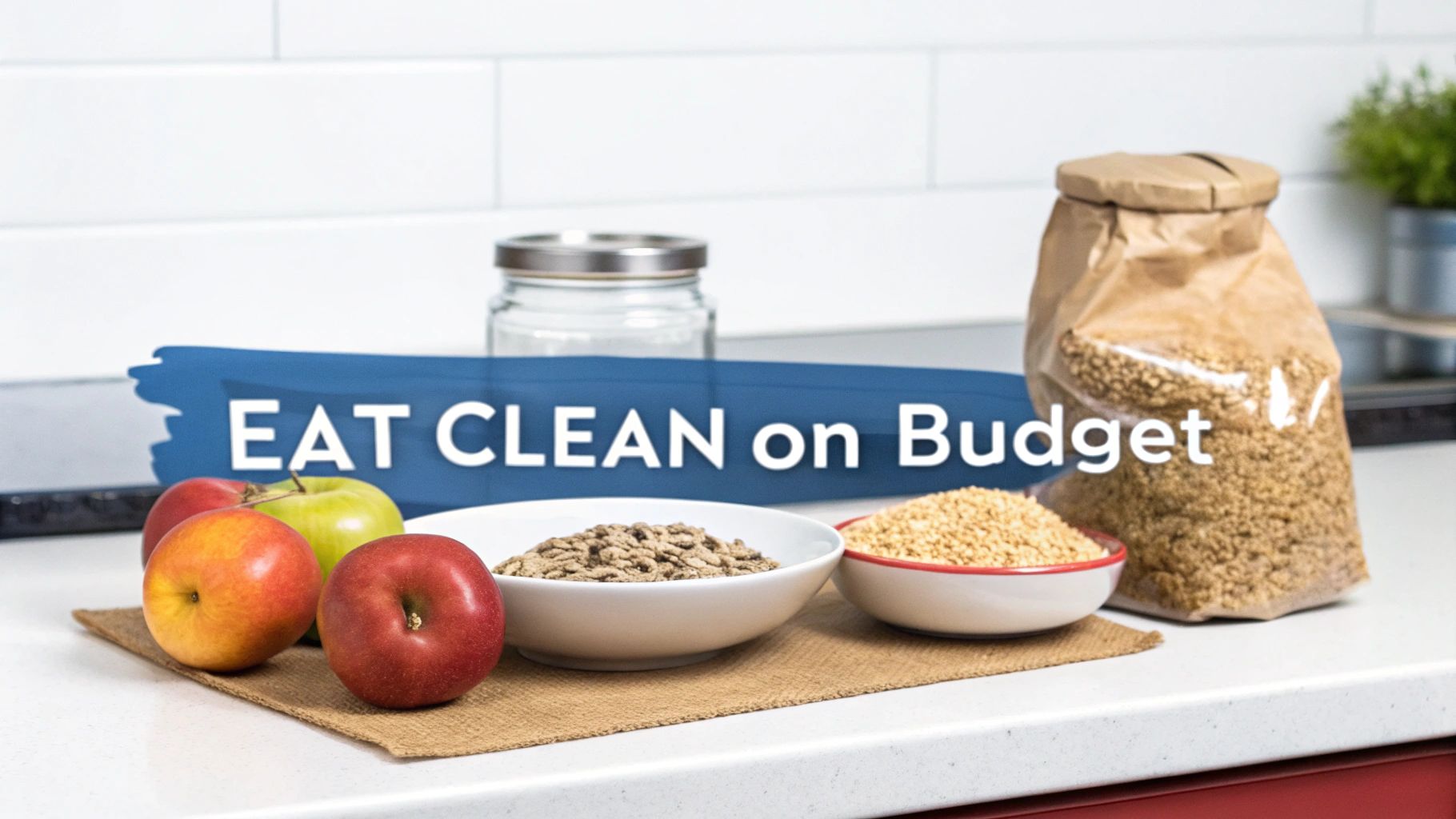
Let’s be honest, the phrase ‘eating clean’ often brings to mind images of eye-wateringly expensive grocery hauls, overflowing with organic-everything and the latest trendy superfoods. But the real heart of eating clean is much simpler—and thankfully, much cheaper. It’s about choosing whole, minimally processed foods. It’s about getting back to basics.
This isn't about chasing fads. It's about a simple, powerful strategy: plan your meals around whole foods, shop smart to find the best deals, and prepare food at home. That's it. We're talking about leaning into naturally affordable, nutrient-packed staples like beans, oats, and whatever veggies are in season.
Ditching The Pricey Snack Aisle
One of the biggest budget traps? The snack aisle. This is especially true when you have kids, right? Those brightly packaged organic snack bars and gluten-free cookies promise health and convenience, but they often come with a high price tag and a surprising amount of added sugar.
We’ve all been there. You grab a box of "healthy" kids snack bars, only to watch them vanish in two days, taking a huge chunk of your grocery budget with them. Those little cookie packs? Gone in sixty seconds.
But here’s the secret: see these moments as an opportunity, not a failure. Instead of relying on pricey, pre-packaged options, you can create delicious, healthier, and far cheaper alternatives in your own kitchen. This simple shift is one of the most powerful moves you can make. If you’re looking for more ideas, this comprehensive guide on how to eat healthy on a budget offers some fantastic perspectives.
Let's break down the core ideas that make this whole thing work. Think of these as the foundation for every other tip in this guide.
Core Principles of Budget-Friendly Clean Eating
| Principle | Why It Works | Simple First Step |
|---|---|---|
| Plan Ahead | Prevents impulse buys and food waste. When you have a plan, you buy only what you need. | Scribble down 3 dinner ideas for the upcoming week before you even think about making a grocery list. |
| Cook at Home | You control the ingredients, portions, and cost. It's almost always cheaper than takeout or processed meals. | Commit to making your own coffee and packing your own lunch just two days this week. |
| Embrace Whole Foods | Unprocessed foods like dried beans, oats, and seasonal produce are naturally cheaper than packaged goods. | Swap one processed snack (like chips) for a piece of fruit or a handful of nuts each day. |
| Shop Seasonally | Fruits and vegetables are cheapest and most nutritious when they're in season because they're abundant. | Look up what's in season in your area right now and add one of those items to your next shopping list. |
These principles aren't complicated, but sticking to them is what creates real, lasting savings.
A core principle of budget-friendly clean eating is realizing that you are paying a premium for convenience. Taking back a little control in the kitchen—especially with snacks—is where the biggest savings are found.
The reality is, food costs are climbing. The global cost of a healthy diet is now around $4.46 per person per day, a jump of 42% since 2017. In this economic climate, having smart strategies isn't just helpful—it's essential.
This guide will demystify the entire process. We'll prove that a clean, wholesome diet is achievable for any family, on any budget. It's time to forget the expensive hype and make clean eating finally work for you.
Mastering the Grocery Store with a Battle Plan
Ever walked into a grocery store without a plan? It’s like entering a battlefield unarmed. You’re immediately hit with tempting end-cap displays, confusing sales tags, and the siren song of the snack aisle. To win the war on your wallet while still eating clean, you need a strategy—a real game plan that goes way beyond just grabbing what’s on sale.
This isn't about restriction; it's about being smart and intentional. The first rule is simple: shop the perimeter of the store first. This is where the real, whole foods live—fresh produce, lean meats, and dairy. Think of the outer ring as your clean-eating safe zone.
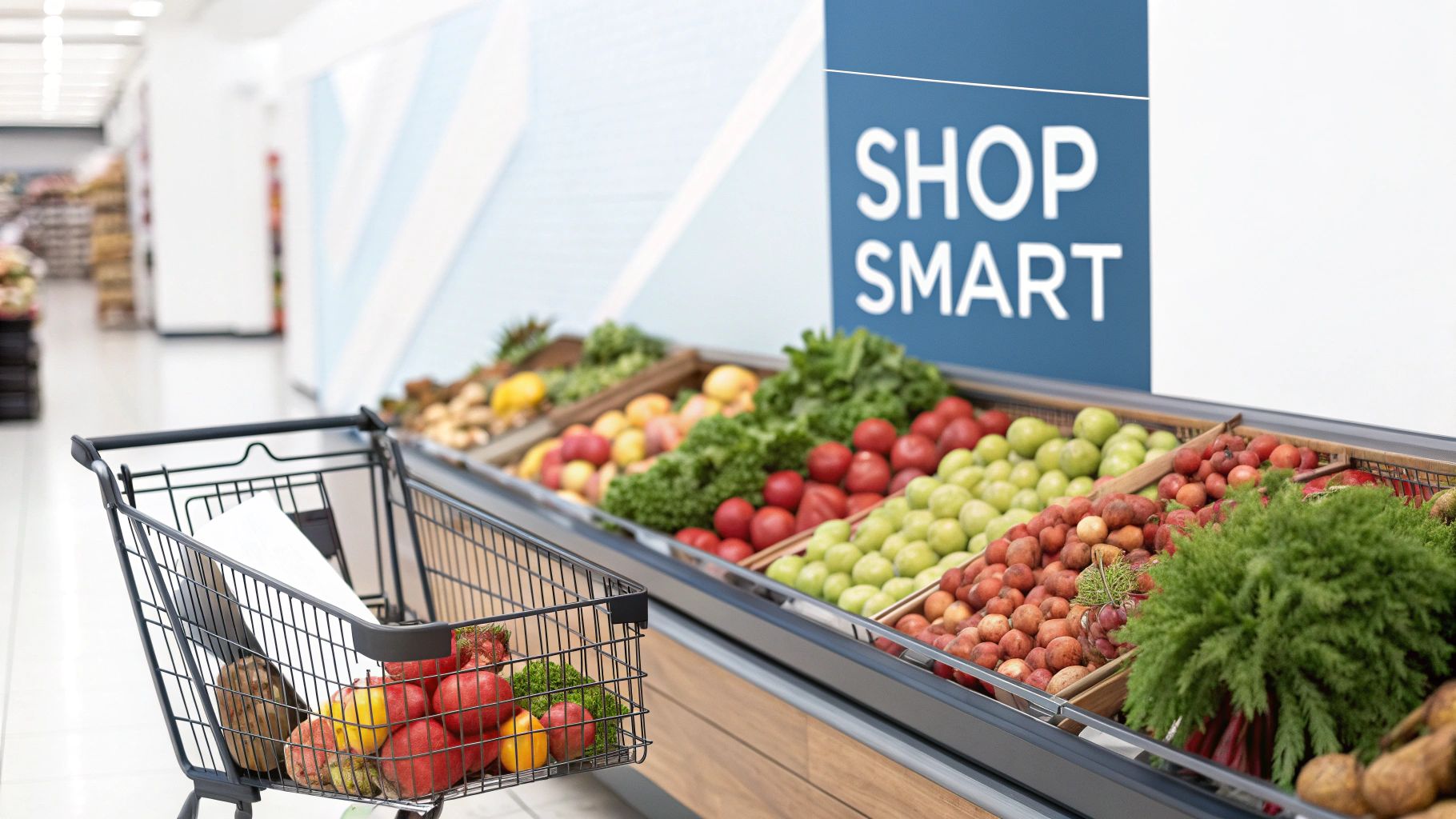
Starting here keeps your focus on nutrient-dense items and helps you sidestep the highly processed foods that lurk in the center aisles. Of course, you’ll need to venture inward eventually, but you’ll do so with purpose.
Navigating the Aisles for Budget Powerhouses
The middle aisles aren't all bad. In fact, they hide some of the most powerful and affordable clean-eating staples you can find. This is where you'll discover budget heroes like dried beans, lentils, brown rice, quinoa, and whole oats.
Here’s where a little label-reading savvy comes in handy. Many packaged goods try to look healthy, but a quick scan of the ingredients often tells another story. Don't let clever marketing fool you. For a deeper dive into decoding what's really in your food, check out our guide on how to read food labels.
The bulk bins are another secret weapon. Buying things like nuts, seeds, and grains from bulk bins means you can get the exact amount you need, which cuts down on food waste and often costs less per ounce. Just be sure to compare the unit price to be certain you're getting a deal.
The Frozen Aisle Is Your Friend
Let's bust a myth right now: frozen produce is not less nutritious than fresh. In fact, fruits and veggies are often flash-frozen at their peak ripeness, locking in all those vitamins and minerals. Think frozen berries for smoothies, spinach for soups, or broccoli for a quick side dish—they're all fantastic, affordable ways to eat clean.
Forget the idea that fresh is always best. Frozen fruits and vegetables are nutritional powerhouses that are available year-round, produce less waste, and are significantly cheaper than their out-of-season fresh counterparts.
This is especially true for items that aren't currently in season. Why pay a premium for fresh strawberries in December when you can grab a huge, affordable bag from the freezer section?
Decoding Prices and Avoiding Traps
To truly master the grocery store, you need to understand pricing. Always, always look at the unit price on the shelf tag. This little number tells you the cost per ounce, pound, or item, allowing for a true apples-to-apples comparison between different brands and package sizes. A larger container might seem more expensive upfront, but a lower unit price often means big savings over time.
This focus on smart shopping is more important than ever. Despite rising food costs, people are prioritizing their health. Projections show that by 2025, spending on health food products will reach an incredible $26.1 billion. This massive demand, particularly from younger generations, shows that people are committed to wellness, making budget-friendly strategies essential.
By combining perimeter shopping with strategic trips down the aisles for pantry staples and frozen goods, you can fill your cart with wholesome, clean foods without the financial stress.
Building Your Clean Eating Pantry on a Dime
A well-stocked pantry is more than just a collection of jars and boxes—it's your secret weapon for making clean eating on a budget actually stick. Think of it as your own personal, healthy convenience store.
When you have the right staples on hand, you're always just a few minutes away from a wholesome meal. That makes it so much easier to sidestep the siren call of expensive takeout and processed junk food after a long day.
Forget the idea that a "clean" pantry needs to be filled with exotic, pricey superfoods. The most effective, budget-friendly pantries are built on a foundation of humble, versatile powerhouses. We're talking about items that can be transformed into breakfast, lunch, or dinner with just a little creativity.
Prioritize Plant-Based Proteins
Let's get real about grocery bills for a second: animal protein is almost always the most expensive thing in your cart. Making a conscious effort to swap in plant-based proteins just a few times a week is one of the single biggest changes you can make to your food budget. It’s a simple shift with a huge financial payoff.
This isn’t about going completely vegetarian or vegan (unless you want to, of course!). It’s about being strategic. Why not try a "Meatless Monday" or swap ground beef for lentils in your favorite pasta sauce? The small changes really add up.
Here’s some perspective: animal-sourced foods are globally the most expensive food group, averaging around $1.00 per person per day. This fact alone makes a pretty compelling case for embracing the humble, nutrient-dense, and incredibly cheap world of beans and legumes. You can learn more about these global food cost findings from the World Bank.
Start with these budget-friendly superstars:
- Lentils (Brown, Green, or Red): Perfect for soups, stews, and even as a meat substitute in tacos. They cook up fast and don't require any pre-soaking.
- Chickpeas (Garbanzo Beans): Amazing for whipping up homemade hummus, roasting for a crunchy snack, or tossing into salads and curries.
- Black Beans and Kidney Beans: The backbone of chili, veggie burgers, and countless Tex-Mex dishes. Buying them dried is the absolute cheapest route, but canned is still a fantastic value.
Stock Up on Whole Grains and Healthy Fats
Whole grains are the filling, fiber-rich base for so many clean meals. They provide steady energy and keep you feeling full longer, which is crucial for avoiding mindless snacking on expensive, less-healthy options. Your pantry should absolutely include giants like rolled oats for breakfast, brown rice, and quinoa.
Healthy fats are just as important for both flavor and feeling satisfied. A well-rounded pantry includes:
- Extra Virgin Olive Oil: Your go-to for dressings and low-heat cooking.
- Avocado Oil or Coconut Oil: Great for higher-heat cooking like roasting or sautéing.
- Nuts and Seeds: Almonds, walnuts, chia seeds, and flax seeds are fantastic. Hitting the bulk bins for these is a pro move—you can get just what you need and save money.
Don't Forget the Flavor and the Snacks
A clean meal should never be a boring meal. This is where your flavor arsenal comes in. Stock up on dried herbs, spices, garlic, onions, low-sodium soy sauce (or tamari), and a few different vinegars. These items are cheap, last forever, and can turn a simple dish of rice and beans into something you actually crave.
And what about the kids? The constant demand for snacks can torpedo any well-meaning budget. Those pre-packaged organic snack bars and cookies seem convenient, but their cost adds up incredibly fast.
While making your own snacks is a game-changer, having some healthy grab-and-go options is a lifesaver for busy parents. For savvy parents, finding healthy snacks in bulk can be the perfect middle ground, offering convenience without the crazy cost per item. This approach saves money and ensures you have better options ready for those "I'm hungry!" emergencies.
Meal Prep & Batch Cooking: Your Secret Weapon for Savings
We all know the Sunday Scaries. That creeping sense of dread as the weekend winds down. But what if you could swap that anxiety for a feeling of calm and control over your week? That’s the real magic of meal prep.
It’s not about spending your entire Sunday chained to the stove. It’s about making a small investment of your time upfront to save a ton of time, money, and "what's for dinner?" stress later on.
Think about it this way: every prepped container you see in your fridge is a win against an expensive, last-minute takeout order. Some studies have found that a little planning can save a family over $1,500 a year. By setting aside just a couple of hours on a Sunday, you’re basically paying yourself back all week long.
The real secret to meal prep that actually sticks is component prepping. Forget cooking five identical meals. Instead, you’re creating a set of "building blocks" in your fridge, ready to be mixed and matched into quick, clean, and delicious meals in minutes.
A Simple Sunday Prep Workflow
The goal here isn't a rigid, complicated schedule. It's about cooking a few versatile items in bulk that you can use in different ways all week. This keeps things interesting and avoids the boredom of eating the same exact thing five days in a row.
Here’s an easy and effective plan to get you started:
- Pick a Grain: Cook up a big batch of something neutral like brown rice, quinoa, or even whole-wheat pasta. This becomes the base for grain bowls, salads, and easy side dishes.
- Roast Some Veggies: Grab a big sheet pan and toss on whatever seasonal vegetables you have—broccoli, bell peppers, sweet potatoes, onions. A little olive oil and your favorite spices are all you need. Roasting brings out their natural sweetness and makes them incredibly versatile.
- Prepare a Protein: Cook a batch of chicken breasts, hard-boil a dozen eggs, or simmer a pot of lentils. Having a protein source ready to go is a total game-changer for fast lunches and dinners.
This simple workflow is all about building up your pantry and fridge with the core components you'll need for easy, clean meals.
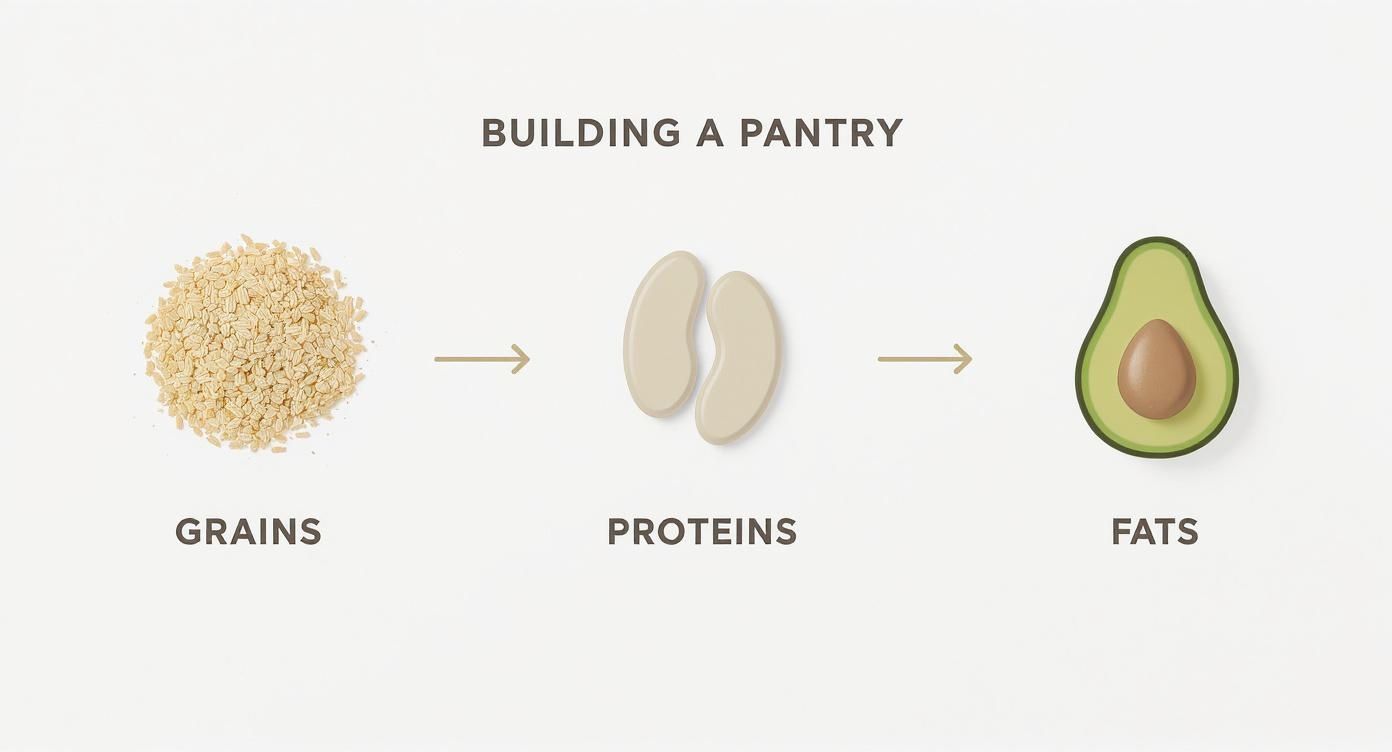
When you've got these components ready, throwing together a meal feels creative, not like a chore. You can assemble a vibrant grain bowl, a hearty salad, or a satisfying wrap in less time than it takes to scroll through a delivery app.
Smart Storage for Lasting Freshness
Let's be real: your meal prep is only as good as its storage. Nobody wants to eat soggy vegetables or dried-out chicken on a Wednesday. To keep all your hard work fresh and appealing, you need a good storage strategy.
I highly recommend investing in a set of quality glass containers. They don’t stain or hold onto smells the way plastic can, and you can see exactly what’s inside—which helps prevent that sad moment when you find something you forgot about in the back of the fridge.
The key to successful meal prep isn’t just cooking; it’s storing. Keep dressings separate, let hot food cool completely before you seal the lid, and tuck a paper towel in with your greens to absorb moisture. These little steps make a huge difference in how fresh your food tastes.
For things like your roasted veggies and cooked grains, airtight containers are your best friend. For salads, store the greens, toppings, and dressing in separate containers and just combine them right before you eat. This keeps everything crisp and delicious. Smart storage doesn't just preserve your food; it protects your investment of time and money.
Kid-Friendly Snacks That Are Clean and Cheap
Every parent knows the feeling. That little voice pipes up from the back seat or the living room floor: "I'm hungry!" It’s a simple request that can completely derail a well-planned grocery budget, especially when you wander down the snack aisle. It's a minefield of brightly colored boxes promising organic goodness but often delivering sugar-laden treats with a shocking price tag.
Let's be real about those kids' snack bars and cookies. You know the ones. They brag about being "made with real fruit" or packed with "organic whole grains." But a quick glance at the label often tells a different story—loads of added sugar and a cost that makes you wince. You're paying a huge premium for individually wrapped portions that disappear in about thirty seconds flat.
This isn't about guilt. It's about seeing a massive opportunity—to save money, improve nutrition, and even have some fun with your kids. By shifting just some of your snack strategy from "buying" to "making," you can slash your spending and give your kids treats that are genuinely clean and wholesome.
Ditching the Pricey Packages
It all starts with a simple mindset shift. Instead of seeing pre-packaged snacks as the default, think of them as your backup plan—perfect for those truly chaotic days when you just need to grab something and go. The rest of the time? Your kitchen is the snack factory.
The best part about homemade snacks is that you have 100% control over every single ingredient. You decide how much sweetener to add (or leave out). You choose the healthy fats. You can even sneak in extra nutrients like chia seeds or flax without anyone noticing. And the cost savings are huge.
A box of eight organic kids' snack bars can easily run you $5 to $7, making each tiny snack nearly a dollar. For that same $7, you can buy enough oats, peanut butter, and honey to make dozens of no-bake energy bites that taste better and are way more nutritious.
And no, this doesn't mean adding another complicated chore to your already packed schedule. Some of the best homemade snacks are ridiculously easy and don't even require you to turn on the oven.
Easy Homemade Swaps Kids Actually Love
Here’s the secret: get the kids involved. When they help mix the ingredients or roll the dough, they feel a sense of ownership and get genuinely excited to eat what they've made. It turns snack-making from a chore into a fun, hands-on activity.
Here are a few powerhouse ideas to get you started:
- No-Bake Energy Bites: The ultimate versatile snack. Just mix rolled oats, a nut or seed butter (peanut, almond, or sun butter work great), a sticky sweetener like honey or maple syrup, and some fun mix-ins. Think chia seeds, mini chocolate chips, or shredded coconut. Let the kids get their hands messy rolling them into balls.
- DIY Trail Mix Bar: This is always a hit. Set out bowls with affordable ingredients like popcorn, whole-grain cereal, raisins, sunflower seeds, and a few chocolate pieces. Give each kid a bag or a small container and let them create their own custom blend.
- Homemade Fruit Leather: It sounds fancy, but it couldn't be simpler. Blend fruit—berries, mangoes, or applesauce are perfect—until it's totally smooth. Spread the puree thinly on a parchment-lined baking sheet and bake at a super low temperature (around 170°F) for a few hours until it’s no longer sticky. Pure fruit, no junk.
Smart Snack Swaps for Kids
It's easy to fall into the trap of buying what's convenient, but a few simple swaps can save you a ton of money and cut out a lot of processed ingredients. Here’s a quick comparison of some common go-to's versus their cleaner, cheaper homemade versions.
| Ditch This Pricey Snack | Make This Clean Swap | Why It's a Win |
|---|---|---|
| Individually Wrapped Granola Bars | No-Bake Oatmeal Energy Bites | Cheaper per serving, you control the sugar, and it's a fun kid's activity. |
| Store-Bought Fruit Snacks & Roll-Ups | Homemade Fruit Leather | Made with 100% real fruit. No added sugar, corn syrup, or artificial colors. |
| Pre-Packaged "Lunchable" Style Kits | "DIY" Bento Box | Use a container to pack crackers, cheese cubes, fruit, and veggies. It's fresher and way more affordable. |
| Sugary Yogurt Tubes or Cups | Plain Yogurt with Berries & Honey | Cuts out tons of added sugar and preservatives. Plus, you can use frozen fruit to save even more. |
Making these small changes consistently adds up to big savings and healthier habits for the whole family. It's all about finding simple, sustainable routines that work for you.
These ideas are just the beginning. Once you start looking, you'll find a whole world of kid-approved, budget-friendly snack possibilities. For more inspiration, be sure to check out our guide to clean eating snack ideas. By making snack time a creative and collaborative effort, you teach your kids valuable skills and build positive food habits that will stick with them for life.
Your Clean Eating Budget Questions Answered
Starting a new way of eating always brings up a ton of questions. And when you're trying to eat clean without blowing your budget, it can feel like you're sorting through a mountain of conflicting advice.
Let's cut through the noise and tackle some of those nagging questions head-on. This isn't about perfection; it's about making small, smart choices that really add up. You've got this.
Is Organic Food Necessary for Eating Clean on a Budget?
Let’s get this one out of the way right now: absolutely not! While buying organic is a great choice if it fits comfortably into your budget, it is not a requirement for eating clean. The real heart of this lifestyle is focusing on whole, unprocessed foods.
A conventionally grown apple is always, always a better choice than an organic-certified, highly processed snack cracker. Don't let the "organic" label become a barrier that stops you from filling your cart with fresh produce.
If you want to be strategic about it, check out the "Dirty Dozen" and "Clean Fifteen" lists from the Environmental Working Group. These lists are super helpful for knowing which produce items are best to buy organic (if you can) and which ones are generally fine to buy conventional.
But the golden rule is simple: more fruits and veggies are always the goal, regardless of the label.
How Can I Eat Clean with Very Little Time to Cook?
This is a huge one for busy families. It's where the meal prep strategies we talked about earlier become your absolute lifesaver. You don't need to cook elaborate, time-consuming meals every single night to eat clean. It's all about having those building blocks ready to go.
When you have a container of pre-cooked quinoa and some roasted vegetables in the fridge, you can throw together a fantastic grain bowl in less than five minutes. Seriously. It’s faster, cheaper, and cleaner than any takeout you could order.
And don't forget to embrace simple meals! A clean and satisfying dinner can be as easy as:
- Scrambled eggs with a handful of spinach and a slice of whole-wheat toast.
- A smoothie blended with frozen fruit, plain yogurt, and a scoop of nut butter.
- A can of tuna or chickpeas mixed with a little avocado and piled onto whole-grain crackers.
Clean eating doesn't have to mean complicated cooking. It's about choosing simple, nutrient-dense ingredients.
What Are the Biggest Budget Killers to Avoid?
It’s so easy to get sidetracked in the grocery store, but a few key culprits consistently drain your wallet. Being aware of them is half the battle.
First up is pre-cut produce. You pay a massive premium for the convenience of sliced pineapple or chopped onions. Taking five minutes to do this yourself at home will save you a surprising amount of money over time.
Second, steer clear of the fancy bottled drinks. Things like kombucha, cold-pressed green juices, and vitamin-infused waters can be incredibly expensive. Your best, cleanest, and cheapest option will always be water.
Finally, be wary of anything in the "health food" aisle that comes in a shiny package screaming buzzwords like "keto," "paleo," or "superfood." These products are often just overpriced, processed foods in clever disguises. Stick to real, whole foods that don't need flashy marketing.
How Do I Get My Picky Family on Board?
This is the ultimate challenge for so many parents, but it's totally doable with the right approach. The secret? Introduce changes gradually and get everyone involved. Don't announce a sudden, dramatic diet overhaul—that's a recipe for rebellion.
Start with small, almost unnoticeable swaps. Why not use whole-wheat pasta instead of white, or mix half brown rice with half white rice? These little shifts add up without feeling like a major change.
The most effective strategy is to make it fun, not restrictive. Frame it as an adventure in trying new, delicious foods. When kids feel like they're part of the process, they're far more likely to get on board.
The absolute best way to win over a picky family is to invite them into the kitchen. Let your kids help you make the no-bake energy bites we talked about earlier. Give them a choice at the store: "Should we try the red peppers or the yellow ones this week?"
When they have a hand in choosing and preparing the food, it becomes their food, not just something you're making them eat. It transforms meals from a potential battleground into a creative and collaborative family activity.
At Skout Organic, we believe that providing healthy, clean snacks for your family shouldn't be complicated or expensive. For those busy days when you need a trustworthy, grab-and-go option, explore our delicious range of kids' bars and snacks, made with simple, organic ingredients you can feel good about. https://www.skoutorganic.com