 Kids Snack Bars
 Soft-Baked Cookies
 Protein Bars
 Build A Box
 Shop All




When it comes to feeding preschoolers, snacks are a pretty big deal. It's easy to think of them as just a little something to hold them over, but they're so much more than that. The best snacks are really powerful "mini-meals" that bridge the gap between breakfast, lunch, and dinner.
Think of combinations like apple slices with seed butter, creamy Greek yogurt with a handful of berries, or hummus with some whole-grain crackers. These aren't just random treats; they're thoughtfully paired to deliver steady energy for all that playing, learning, and growing. Ready to become a snack-time superstar? Let's dive in!
The Secret to Happy and Healthy Preschooler Snacking
Welcome to the wild, wonderful world of preschooler snacking! In this universe, tiny tummies need the right kind of fuel to power some seriously big adventures. Let's reframe how we think about snacks: they aren't just fillers, they're intentional "mini-meals."
A good snack is designed to provide sustained energy, support that all-important brain development, and help build a positive, lifelong relationship with food. This isn’t about letting them graze on whatever’s around. It’s about creating a simple, purposeful routine that helps your little one thrive.
Why Smart Snacking Matters So Much
Over the last few years, snacking has become a huge part of a kid's diet. Children in the U.S. are now averaging almost three snacks a day, which adds up to over 27% of their total daily calories. That's a massive jump from just a few decades ago. This shift makes choosing the right snacks more critical than ever.
When you get it right, snacks help keep a child’s mood and energy levels stable. They’re the secret weapon against the dreaded "hanger" meltdown and give your preschooler the brainpower and stamina for everything from building epic block towers to mastering their ABCs.
A well-balanced snack is like a power-up in a video game—it gives your child the boost they need to keep playing and growing without crashing before the next meal.
Building a foundation for happy, healthy snacking can start early on. Many of the principles behind a positive relationship with food, like self-regulation and exploring wholesome ingredients, can be traced back to early eating philosophies and understanding the benefits of baby-led weaning.
The Building Blocks of a Perfect Snack
Putting together a balanced snack is way simpler than you might think. You don't need complicated recipes or a pantry full of exotic ingredients. All you have to do is focus on combining a few key nutrient groups to create a bite that's both satisfying and nourishing.
This is especially true when you're grabbing convenient options like kids snack bars and cookies. Want to know a parent hack? A quick glance at the label for protein, fiber, and minimal sugar can make all the difference between a sugar crash and sustained energy. We'll get more into that later!
Here’s a quick guide to what makes a snack truly great. Use this blueprint to make confident choices, whether you're at home or cruising down the grocery store aisle.
The Perfect Preschooler Snack Blueprint
Use this quick reference guide to build balanced, healthy, and satisfying snacks that fuel your child's day.
| Nutrient Component | Why It's Important for Kids | Simple Snack Examples |
|---|---|---|
| Protein | Builds and repairs tissues, keeps them feeling full and satisfied. | Cheese cubes, Greek yogurt, hummus, hard-boiled eggs, edamame. |
| Complex Carbs | Provides long-lasting energy for play and brain function. | Whole-grain crackers, oatmeal, apple slices, sweet potato cubes. |
| Healthy Fats | Supports brain development and helps absorb essential vitamins. | Avocado slices, seed butters, olives, chia seed pudding. |
By aiming to include something from each of these categories, you’re not just quieting a rumbling tummy—you’re providing the balanced fuel your little one needs to power through their day.
What Makes a Snack Great for Little Ones
Figuring out what to feed a preschooler can feel like trying to solve a giant, ever-changing puzzle. But it's actually simpler than you might think. Little kids aren't just tiny adults—their super active, fast-growing bodies have their own unique set of rules.
A great snack does more than just quiet a rumbling tummy. It's a critical mini-meal, one that fuels their brain development, supports their constant growth, and powers all that non-stop playing. The secret is to focus on four simple things: powerful nutrition, perfect portions, safety first, and smart timing. Keep these in mind, and you can turn snack time into a chance to nourish your kiddo and build healthy habits that will stick around for years.
Powerful Nutrition in Every Bite
The best snacks for preschoolers are the ones that deliver steady, long-lasting energy. Think of each snack as a tiny powerhouse built from a combination of protein, fiber, and healthy fats. This trio is the key to preventing that dreaded energy crash that always seems to follow a sugary or super-processed treat.
For example, pairing apple slices (fiber and carbs) with a little seed butter (protein and healthy fats) gives them a balanced boost that lasts. So many of the snacks marketed to kids miss this completely, loading up on added sugars instead. That’s why it pays to become a savvy label reader. Getting comfortable with a nutrition panel helps you spot sneaky sugars and low-quality fillers. To get started, check out our guide on how to read food labels and feel way more confident in the grocery aisle.
This simple blueprint shows you how to build a balanced snack with those three essential building blocks.
When you combine these three, you create a snack that keeps your child full, focused, and happy between meals. No more meltdowns.
Safety First Slicing and Dicing
Beyond what’s in the snack, how you serve it is a top priority. Preschoolers are still getting the hang of chewing and swallowing, which means some foods can be serious choking hazards. It’s a scary thought, but being prepared makes all the difference.
Choking is a silent and serious risk for young children. Foods like whole grapes, nuts, large pieces of meat, and hard candies should be avoided or modified. Always supervise your child during snack time.
Here are a few simple ways to make common snack foods safer:
- Grapes & Cherry Tomatoes: Always slice them lengthwise into quarters. Never serve them whole.
- Hot Dogs: Cut them lengthwise first, and then into small, half-moon shapes.
- Nuts & Seeds: Instead of whole nuts, offer smooth nut or seed butters spread thinly on crackers or toast.
- Raw Veggies: Steam hard veggies like carrots until they’re soft, or shred them finely.
Making sure snacks are safe is just as crucial as making them nutritious. Understanding the basics of paediatric first aid can give you the confidence and skills to handle any emergency that might come up.
Perfect Portions and Smart Timing
A preschooler's stomach is only about the size of their fist, so they don’t need nearly as much as we do. Piling their plate high can be overwhelming and might even kill their appetite for the next meal. A good rule of thumb for most foods is to offer about 1-2 tablespoons per serving.
When you serve the snack is just as important. The sweet spot is usually midway between meals. This timing gives them an energy boost right when they need it most, without ruining their hunger for lunch or dinner. A well-timed snack keeps their energy and mood stable—which means a happier kid, and a much happier you.
Your Guide to the Best Store-Bought Snacks
Let's be real—life with a preschooler is beautifully chaotic. While homemade snacks are wonderful, some days you just need to grab something and go. But stepping into the snack aisle can feel like navigating a maze of brightly colored packages filled with confusing labels and sugary traps.
This is your roadmap to finding the healthiest, most convenient packaged snacks. We’ll help you become a label-reading pro, ready to spot the good stuff and sidestep the not-so-good. The goal is simple: find options that give your little one lasting energy, not a temporary sugar rush.
Decoding the Nutrition Label
Think of the nutrition label as your secret decoder ring. At first glance, it can be intimidating, but you really only need to focus on a few key areas to make a great choice. Don't worry about analyzing every single number; just keep an eye on the big three.
First, look at the ingredients list. The best snacks have short, simple lists with ingredients you can actually recognize. If the list is a mile long and filled with words you can't pronounce, it's often a red flag for a highly processed product.
Next, check the added sugars. This is a big one. Many kids' snacks, including some snack bars and cookies, are packed with it. Aim for products with 5 grams of added sugar or less per serving to help avoid those dreaded energy crashes.
Finally, glance at the fiber and protein content. These are your allies for keeping tiny tummies full and satisfied. A few grams of each can make the difference between a snack that’s gone in minutes and one that provides lasting fuel for an afternoon of play.
What to Look for in Kids Snack Bars and Cookies
When it comes to favorites like kids snack bars and cookies, the same rules apply. It’s all about choosing smarter options that taste like a treat but are built like a mini-meal. Finding the best snacks for preschoolers in this category means looking for products made with whole foods.
Here's a simple checklist to use:
- Whole-Grain Base: Look for bars and cookies made with whole grains like oats.
- Real Fruit Sweeteners: Products sweetened with dates, apples, or other real fruits are a fantastic choice over those using refined sugars or corn syrup.
- Simple Ingredients: The fewer ingredients, the better. This usually means less room for artificial colors, flavors, and preservatives.
- Plant-Based Power: Many plant-based options use nutrient-dense ingredients like seeds and fruits, offering a clean source of energy.
This is exactly where Skout Organic shines. Their Kids Snack Bars and Soft-Baked Cookies are designed with little ones in mind. They check all the boxes: they're made with simple, organic, plant-based ingredients you can actually pronounce and are sweetened with real fruit.
Finding a trustworthy, convenient option feels like a huge win. Brands like Skout Organic make it easy for busy parents to provide a delicious and genuinely healthy snack without the guesswork. They meet all the criteria for a great preschooler snack, offering a perfect solution when you’re on the move and need something you can feel good about.
Fun and Easy Homemade Snack Recipes Kids Love
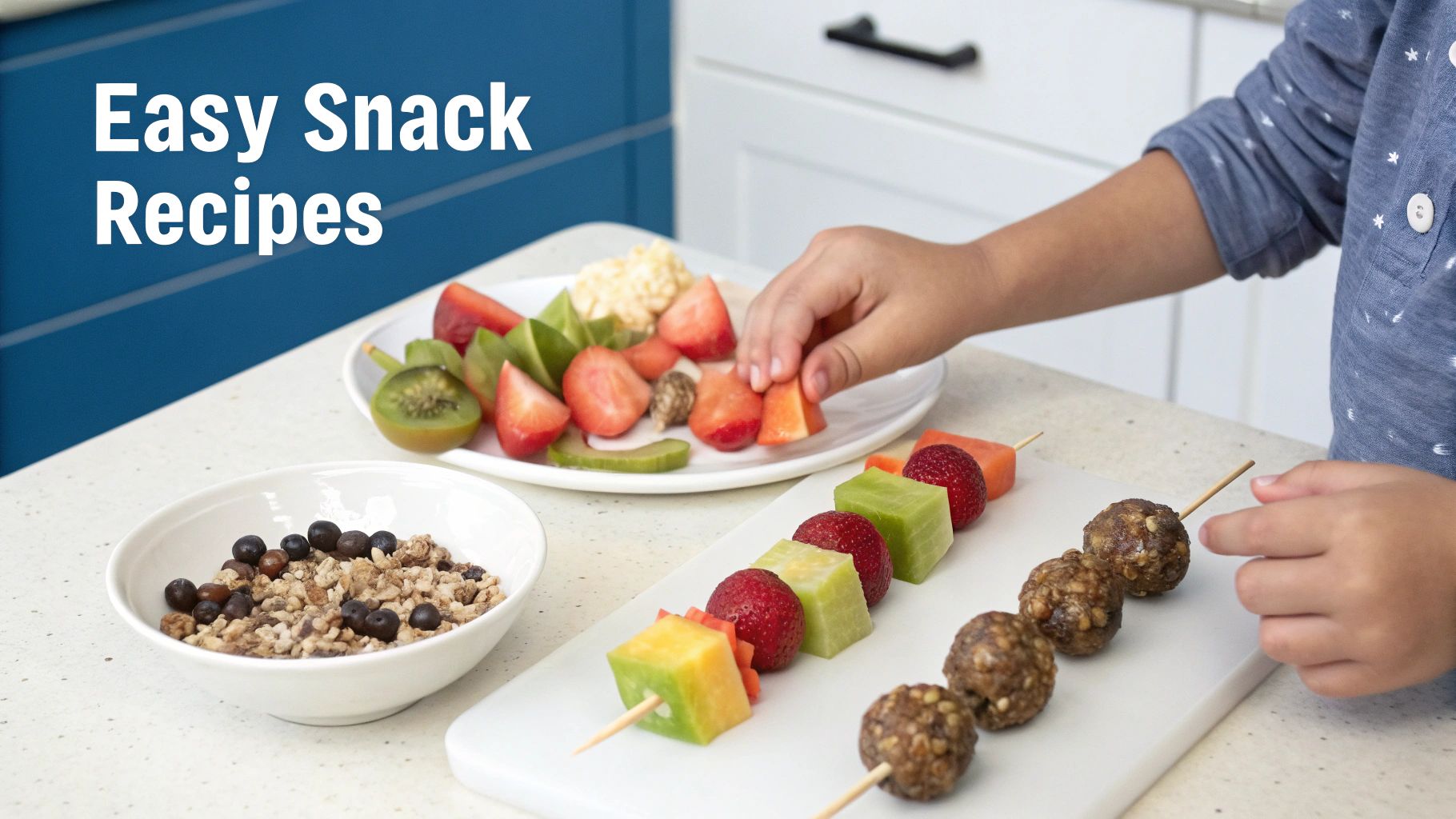
Ready to make snack time the best part of the day? While convenient store-bought options like kids snack bars are absolute lifesavers, there’s a special kind of magic in making snacks right in your own kitchen. You get to control every single ingredient, making sure your little one gets maximum nutrition with minimal fuss.
And no, you don't have to just stick to basic fruit slices. With a little creativity, you can turn simple, healthy foods into exciting creations that even the pickiest eaters will be eager to try. Best of all, these recipes are designed for busy parents—think minimal prep and common ingredients you probably already have on hand.
Get Your Little Chef Involved
Want to know one of the best ways to get a preschooler to try new foods? Let them help make them! Turning snack prep into a hands-on activity builds confidence and curiosity. Even the smallest tasks can make them feel proud and more connected to their food.
Here are a few easy ways to get your child involved:
- Washing: Let them help rinse fruits and veggies in the sink.
- Stirring & Mashing: Give them a bowl and a spoon to stir dips or mash soft ingredients like bananas or avocado.
- Sprinkling: Put them in charge of sprinkling on toppings like cinnamon or seeds.
- Assembling: They can thread fruit onto skewers or arrange ingredients on a plate. It’s all about ownership.
When kids participate in creating their own snacks, they're not just learning basic kitchen skills; they're building a positive and adventurous relationship with food.
Simple Recipes for Big Smiles
These recipes are kid-approved, packed with nutrients, and unbelievably simple to whip up. They transform everyday ingredients into fun, flavorful snacks that will keep your preschooler energized and happy.
1. Caterpillar Fruit Skewers with Yogurt Dip
This one is all about presentation. It turns a simple serving of fruit into a playful, edible creature that’s almost too cute to eat.
- What you need: Wooden skewers, green and red grapes, and a small bowl of plain Greek yogurt for dipping.
- How to make it: Let your little one help thread the green grapes onto a skewer to create the "body," then add a single red grape at the end for the "head." Serve it alongside the yogurt dip for a welcome protein boost.
2. Three-Ingredient Energy Bites
These no-bake bites are the perfect fix for a quick energy boost. They are naturally sweet, packed with fiber, and incredibly easy to customize.
- What you need: 1 cup rolled oats, ½ cup seed butter (like sunflower seed butter), and ¼ cup honey or maple syrup.
- How to make it: Mix everything in a bowl until it’s well combined. Then, just roll the mixture into small, bite-sized balls. For more fun ideas, explore these delicious and easy kids' trail mix recipes.
3. Crunchy Roasted Chickpeas
Swap out those processed, salty snacks for this crunchy, protein-packed alternative. Roasted chickpeas are savory, satisfying, and have a fantastic crunch that kids absolutely love.
- What you need: One can of chickpeas (rinsed and dried), 1 tablespoon of olive oil, and a pinch of your favorite mild spices like paprika or garlic powder.
- How to make it: Toss the chickpeas with olive oil and spices. Spread them on a baking sheet and roast at 400°F (200°C) for 20-30 minutes, or until they're golden and perfectly crispy.
Snack Time Solutions for On-The-Go Families
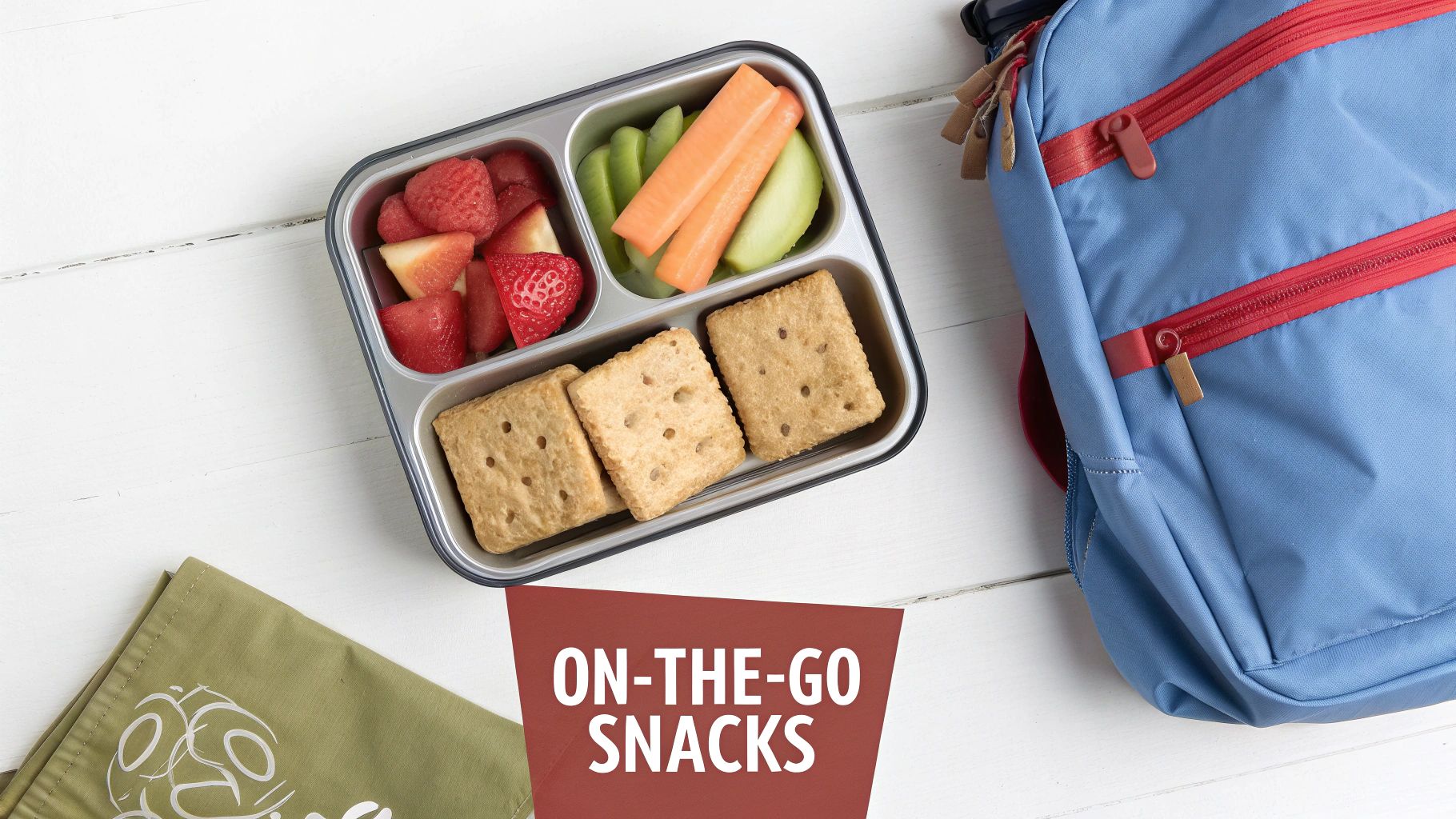
Having a pantry full of healthy snacks is one thing. Having them ready to go the second a hunger meltdown strikes? That’s next-level parenting. For families constantly on the move, mastering the art of the grab-and-go snack is a total game-changer, turning potential chaos into calm, happy outings.
Think of this as your playbook for making healthy snacking a seamless part of your busy life. With a little bit of planning, you can make sure your preschooler is fueled with the good stuff, whether you're heading to daycare, the park, or on a cross-country road trip.
Pro Tips for Packing Perfect Snacks
Let’s be real—keeping snacks fresh, safe, and mess-free is an art form. But a few simple tricks can make all the difference. Your best friend here is the right container. Look for small, bento-style boxes with compartments to keep foods from touching—a huge win for picky eaters who can't stand when their crackers get soggy from their apple slices.
Insulated lunch bags are also a must-have for keeping things like yogurt or cheese sticks cool and safe to eat. To get ahead of the morning rush, try prepping a week's worth of snacks on a Sunday afternoon.
- Portion Power: Divide up dry snacks like crackers, roasted chickpeas, or homemade energy bites into small, reusable bags or containers.
- Wash and Chop: Wash and cut durable fruits and veggies like grapes (always quartered!), carrot sticks, and bell pepper strips. Store them in airtight containers right in the fridge.
- Dip It: Spoon dips like hummus or seed butter into tiny containers with lids. They’ll be ready to grab and pair with your prepped veggies.
Long car rides need their own battle plan. You can find more ideas in our guide to the best mess-free car ride snacks to keep everyone happy (and your car clean-ish) on the road.
A Smart Shortcut for Busy Parents
Even with the best intentions, life happens. Prepping snacks can easily slide to the bottom of the to-do list, and that's when you find yourself grabbing whatever is convenient, even if it's not ideal. This is where a smart service can make a huge impact.
A well-stocked snack stash is a parent’s secret weapon. Automating it means you’re never caught off guard by a hungry preschooler, ensuring you always have a healthy, trusted option within reach.
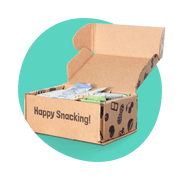
Services like Skout Organic’s ‘Build a Box’ subscription were designed for exactly this reason. You get to customize a box with your kid’s favorite snack bars and cookies, making sure you’re always stocked with options you feel good about. It completely takes the guesswork and last-minute stress out of the equation.
Having a regular delivery of wholesome, organic snacks means you can just grab a bar, toss it in your bag, and go. It’s a simple, effective way to guarantee you always have one of the best snacks for preschoolers on hand, making your on-the-go life just a little bit easier.
Answering Your Biggest Preschool Snacking Questions
Let's be real—navigating the world of preschooler nutrition can feel like a pop quiz you definitely didn't study for. One minute they love bananas, the next they’re tossing them on the floor like a mortal enemy. This is your go-to guide for those tricky snacking situations and the questions that pop up daily.
Consider this your cheat sheet for clearing up the biggest snacking mysteries. We’ll cover everything from portion sizes to picky eating, giving you simple, clear answers to help you feel like you've got this snack-time thing on lock.
How Many Snacks Does My Preschooler Really Need?
It might feel like your little one is on a never-ending snack quest, but most preschoolers actually do best with two planned snacks per day. A mid-morning snack and a mid-afternoon one are usually perfect. This routine bridges the gap between meals, keeping their energy steady without ruining their appetite for lunch or dinner.
Sticking to a schedule helps turn snacking from a constant negotiation into a predictable, calm part of their day. It teaches them to recognize their own hunger cues and prevents the all-day grazing that so often leads to picky eating at mealtimes.
Unfortunately, it’s easy for less-than-ideal options to creep in. Preschoolers' snack habits are often tilted toward low-nutrient foods. Some studies have found that kids consume an average of 8.2 snacks daily, with a shocking 5.2 of them being unhealthy items like sweets and salty junk. You can dive deeper into these consumption patterns by checking out the full research on children's snacking habits.
What If My Child Is a Picky Eater?
First, take a deep breath—you are so not alone. Picky eating is practically a rite of passage for preschoolers. The secret is to stay consistent and patient without letting snack time become a battle of wills.
A great strategy is the "pair and share" method. Just serve a food you know they like (the "safe" food) right alongside a new or less-loved one. No pressure, no begging them to try it—the exposure is what counts. It can take 10-15 introductions before a kid even considers trying something new.
Remember, your job is to provide the healthy options; their job is to decide what and how much to eat. Keeping the pressure off makes them way more likely to explore new foods on their own terms.
Getting them involved in the kitchen also works wonders. Letting them wash berries, stir a yogurt dip, or arrange crackers on a plate gives them a sense of ownership. They're far more likely to get excited about tasting something they helped create.
What Are Good Snack Options for a Nut Allergy?
Navigating a nut allergy can feel overwhelming, but there are so many delicious and safe alternatives out there. It's all about shifting your focus to other amazing food groups that provide similar nutritional perks without the risk.
Here are some fantastic nut-free ideas to get you started:
- Seed-Based Swaps: Sunflower seed butter or pumpkin seed butter are incredible stand-ins for peanut butter. They're perfect for spreading on apple slices, whole-grain toast, or kids' snack bars.
- Bean Power: Roasted chickpeas give that satisfying crunch, and hummus paired with veggie sticks or pretzels is a classic for a reason.
- Dairy or Alternatives: Cheese sticks, cubes of cheddar, or single-serving cups of yogurt (or a dairy-free version) are easy, protein-packed choices that are always a hit.
And of course, always, always double-check the labels on packaged foods. Look for allergen warnings like "may contain nuts" or "processed in a facility with nuts." Finding trusted brands that are transparent about their ingredients is a huge sigh of relief for any parent managing allergies.
At Skout Organic, we believe that finding delicious, safe, and healthy snacks shouldn't be a challenge. Our kids' snack bars and cookies are made with simple, organic ingredients in a variety of fun flavors your little one will love. Build a box of your child’s favorites today!