 Kids Snack Bars
 Soft-Baked Cookies
 Protein Bars
 Build A Box
 Shop All





Alright, let's be real. Standing in the snack aisle can feel like you're cramming for a pop quiz you didn't study for. With labels shouting from every package, "non-GMO" is just one more thing to figure out.
So, what does it actually mean? In short, if you see a non-GMO label on that box of cookies, it means the ingredients weren't made with any sci-fi-style genetic tinkering in a lab.
Decoding the Non-GMO Label on Kids' Snacks
Think of it this way. Imagine a farmer has a corn crop that’s always getting munched on by bugs. A scientist could pop into the corn’s DNA—its internal instruction manual—and add a new rule that helps it naturally fight off those pests. That corn is now a Genetically Modified Organism (GMO). It's a plant with a tiny, lab-inserted superpower.
So when you spot that cute little “non-GMO” butterfly on a bag of your kid's favorite snack bars, it’s a promise. It means none of the ingredients came from plants (or animals) that got those genetic superpowers. The soy in the protein bar or the apples in the fruit puree? They came from plants that grew just as nature originally designed them. Totally old school.
What This Means for Your Grocery Cart
For a lot of parents, this distinction really matters. The choice to buy non-GMO often comes down to wanting food that feels more natural or "un-tinkered with." While the science and debate around GMOs can get super complicated, just understanding the label is the first step toward making a choice that feels right for your family.
This is especially true when you're rushing through the store, trying to find a snack your toddler will actually eat without it ending up on the floor. Knowing what the labels mean can simplify everything. Feeling overwhelmed? Here's a suggestion: just look for the butterfly.
Think of the non-GMO label as a simple promise: the ingredients in this package were sourced to avoid genetic engineering. It's a straightforward signpost for parents navigating the often confusing world of food claims.
From Aisle to Pantry
Ultimately, knowing what non-GMO means gives you more control. It lets you be more intentional about the snacks you bring home, whether it’s crunchy cookies for an after-school treat or chewy snack bars for a day at the park. It’s about having the info you need to fill your pantry with total confidence.
Mastering this one term is a huge leap forward, but it's just one piece of the puzzle. For a deeper dive, learning how to read food labels in general can transform your shopping trips from stressful to strategic. It’s a skill that empowers you to see past the marketing and understand exactly what you're feeding your little snack monsters.
The Butterfly Seal vs. The USDA Organic Shield
When you’re standing in the snack aisle trying to choose the best snacks for your kids, two logos pop up again and again: the Non-GMO Project Verified butterfly and the USDA Organic shield. They might look like simple graphics, but they represent two very different promises for your family.
Think of it this way: The Non-GMO Project Verified butterfly is a specialist. It’s like a detective with one job and one job only—to hunt down and confirm that a product contains no genetically modified ingredients. Its mission is laser-focused on ensuring every single ingredient, from the corn to the soy, has been sourced to avoid genetic engineering.
This simple diagram helps visualize the fundamental split between GMO and non-GMO food sources.
At the most basic level, foods are either produced with or without genetic modification. That's the key distinction these labels help you identify in a split second.
The All-Around Protector: The USDA Shield
In contrast, the USDA Organic shield is the all-around protector, the overachiever of the food label world. This seal doesn’t just look for one thing; it checks off a whole list of requirements. When you see that green and white shield on a package of kids snack bars, you know two major things for sure.
First, it’s guaranteed to be non-GMO. The National Organic Program standards strictly prohibit the use of genetically modified organisms. It's a non-negotiable rule of being certified organic.
Second, it goes a big step further. The organic seal also promises that the ingredients were grown without most synthetic pesticides and fertilizers. It covers everything from soil health to how the crops are handled after harvest.
Different Levels of Organic Assurance
Just to keep things interesting, the USDA Organic seal has different tiers. This can feel confusing at first, but knowing the difference helps you pick snacks that perfectly align with your family's priorities. It all comes down to the percentage of organic ingredients.
- 100% Organic: Every single ingredient in the product is certified organic. You'll often see this on single-ingredient foods like fruits and vegetables.
- Organic: At least 95% of the ingredients are certified organic. This is the most common label you'll find on multi-ingredient snacks like our kids' snack bars.
- Made with Organic Ingredients: At least 70% of the ingredients are certified organic. These products can't use the USDA seal on the front of the package but can list the certified ingredients on the back.
Understanding these distinctions is empowering. If you want to dive even deeper, our guide on what 'certified organic' means breaks it all down. This knowledge turns you from a casual shopper into a label-reading pro.
So, Which Seal Is Better for Your Family?
Honestly, there’s no single "better" option—it all depends on what you value most. Our suggestion? Think about your main goal for that shopping trip.
If your primary goal is simply to avoid GMOs, the Non-GMO Project butterfly is a fantastic and reliable guide. It gives you clear, trustworthy assurance on that one specific issue. Plenty of great brands carry this seal.
However, if you're looking for a broader set of assurances—including non-GMO status plus a commitment to farming without synthetic pesticides and fertilizers—then the USDA Organic shield is your go-to.
For many parents, the USDA Organic seal acts as a shortcut to peace of mind. It’s a comprehensive standard that bundles several important values—non-GMO, cleaner farming practices, and strict production oversight—all into one easy-to-spot logo on the front of a snack bar box.
Ultimately, both labels are powerful tools. They give you the transparency to make informed choices, turning a hectic grocery run into a confident and successful mission to find the perfect, wholesome snacks for your kids.
Are Non-GMO Snacks a Healthier Choice for Kids?
This is the million-dollar question every parent whispers in the grocery aisle: does reaching for a non-GMO snack bar automatically mean you're making a healthier choice for your kids? The answer is a bit like a toddler's mood—it’s complicated, and everyone has a strong opinion.
The short answer, from a purely scientific standpoint, is that approved GMO foods are considered perfectly safe to eat. But for many families, the choice goes far beyond a lab report. Picking "non-GMO" often feels like choosing food that's closer to nature—a little more wild and a lot less “tinkered with.”
It’s a powerful idea. When you're picking out snacks for the lunchbox or a bar for the park, you’re not just buying food. You're trying to give your kids the best, most wholesome start you can.
The Consumer Heart vs. The Scientific Mind
There's a fascinating split between how most of us feel and what major health organizations actually say. Many of us instinctively link "non-GMO" with "healthier." A global survey found that a whopping 87% of consumers believe non-GMO products are healthier, and 63% feel that genetically engineered ingredients are less safe.
And yet, major scientific bodies like the National Academy of Sciences, the World Health Organization, and the FDA have all concluded that the GMO foods currently on the market are just as safe and nutritious as their non-GMO cousins. You can get into the nitty-gritty of these consumer perceptions in the full report.
So, if science says both are safe, why does the non-GMO choice feel so compelling? It often comes down to the bigger picture. Choosing non-GMO isn't just about avoiding one specific technology; it’s about what you’re choosing instead.
The decision to buy non-GMO snacks often reflects a broader desire for transparency and a return to simpler ingredients. It’s less about a single ingredient and more about voting with your dollar for a food system you believe in.
Looking Beyond the Label
Think of it this way: opting for non-GMO or organic snacks can act as a helpful filter. It naturally steers your shopping cart toward brands that are often more mindful about their entire process, from sourcing ingredients to their final recipe. This is where the "healthier" idea really gains traction.
Here’s what that often looks like in practice for your kids’ snack bars and cookies:
- Simpler Ingredient Lists: Brands focused on non-GMO and organic certifications tend to use fewer artificial additives, colors, and preservatives.
- Focus on Whole Foods: You’re more likely to find snacks built around recognizable ingredients like dates, nuts, and whole grains.
- Greater Transparency: Companies that pursue these certifications are typically more open about where and how their food is made.
Your Snack Strategy Suggestion
Here’s a practical way to approach it: don't get stuck on just one label. Instead, use the non-GMO and organic seals as your starting point—your trusty guides in the snack aisle.
- Spot the Seals: Look for the Non-GMO Project butterfly or the USDA Organic shield on snack bars and cookies. This is your first checkpoint.
- Flip the Package: Once you've found a certified snack, turn it over and read the actual ingredient list. Is it a short story or a novel?
- Ask Yourself: Can I picture these ingredients growing in a field? Are there just a few, or is it a long list of words I can't pronounce?
This approach helps you combine the assurance of a certification with your own parental wisdom. It moves the focus from a single debate (GMO vs. non-GMO) to a more useful question: "Is this a genuinely wholesome and delicious snack for my child?"
By doing this, you're not just buying a label; you're building a pantry full of snacks you can truly feel good about.
The Environmental Footprint of Your Family Snacks
Every snack bar and cookie your kids adore has an origin story, and that story always involves a patch of earth somewhere. The choice between GMO and non-GMO snacks isn’t just about what's inside the package; it's also about the environmental footprint left behind on farms and ecosystems.
Many GMO crops were created with a specific goal in mind: to make farming more efficient. Some were engineered to produce their own insecticide, while others were designed to withstand powerful herbicides. This lets farmers spray an entire field to kill weeds without harming the crop itself.
On the surface, it sounds like a smart solution. But this approach has led to some unintended consequences that ripple through the environment.
The Rise of the Superweeds
Nature is incredibly resilient. When the same herbicide is used over and over on a field, the toughest weeds eventually adapt and evolve. The result? Herbicide-resistant "superweeds" that are incredibly difficult to control, sometimes forcing farmers to use even stronger, more toxic chemicals.
This creates a challenging cycle for farmers and the land they depend on. Plus, this widespread use of specific herbicides can impact the surrounding biodiversity, affecting everything from soil microorganisms to the insects that beneficial pollinators rely on.
In contrast, organic farming—which is always non-GMO—takes a completely different approach. It champions practices that work with nature, not against it.
Choosing non-GMO or organic snacks is like casting a vote for a different kind of food system. You're supporting farming methods that prioritize long-term soil health, biodiversity, and a balanced ecosystem over short-term efficiency.
A Tale of Two Fields
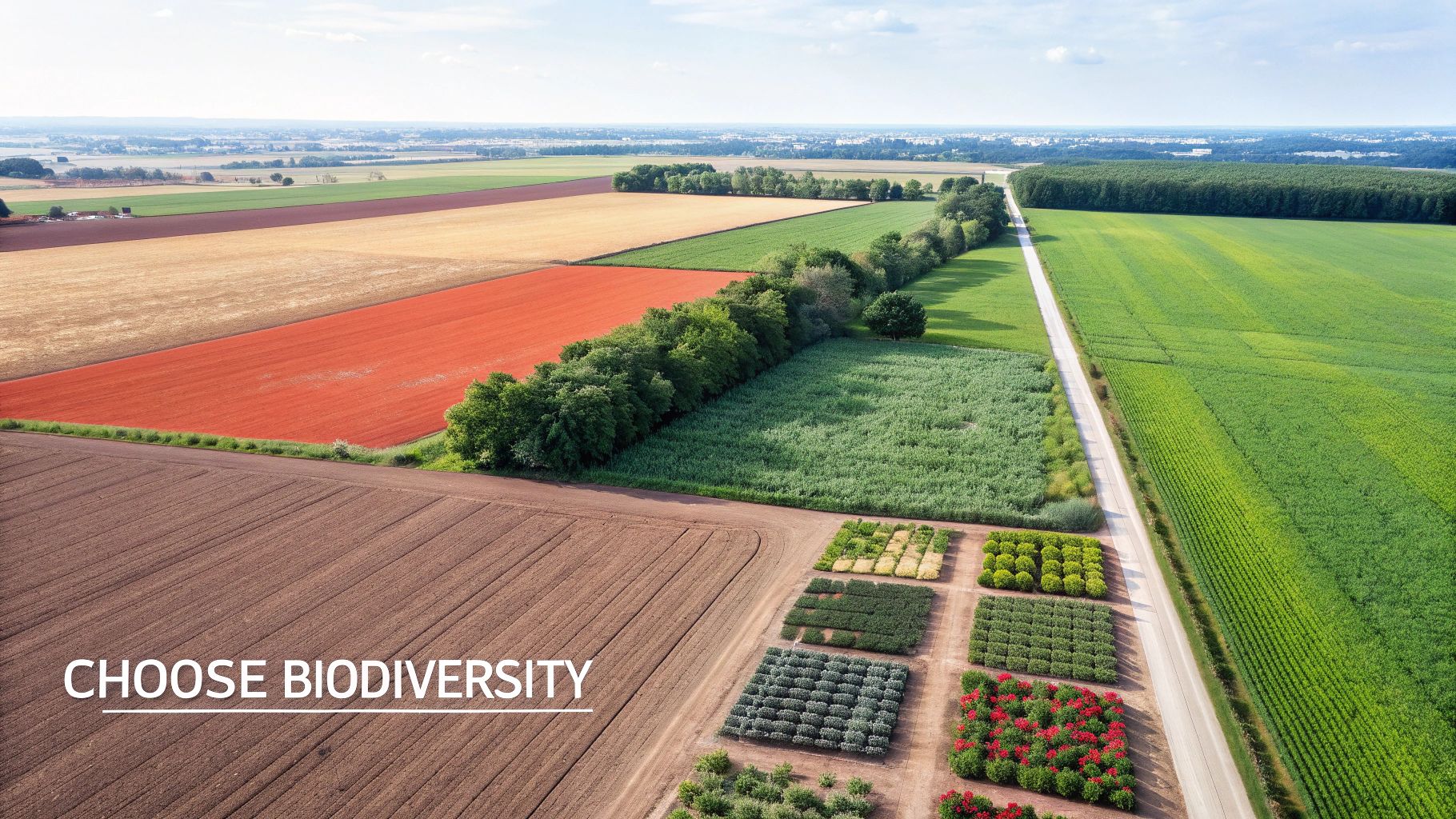
Imagine two different farms. One is a vast, uniform field of a single GMO crop, perfectly manicured and free of any "unwanted" plants. It's efficient, yes, but it’s also a monoculture—a food desert for bees, butterflies, and other essential wildlife.
Now, picture an organic farm. It might look a little messier, with diverse crops planted alongside each other, cover crops enriching the soil, and wildflowers buzzing with pollinators along the edges. This isn't just a farm; it’s a thriving, bustling ecosystem. This approach shows what non gmo means for the planet—a commitment to biodiversity.
By choosing snacks made from organically grown ingredients, you're helping support farms that:
- Build Healthy Soil: Practices like crop rotation and composting create rich, nutrient-dense soil that doesn't rely on synthetic fertilizers.
- Protect Pollinators: Avoiding synthetic pesticides creates a safer habitat for bees and other insects crucial for our food supply.
- Promote Biodiversity: A variety of plants supports a wider range of wildlife, creating a more resilient and balanced environment.
The story of your family's snacks extends beyond the farm and into your home. To dig deeper into the broader environmental footprint of food, checking out a guide to sustainable packaging solutions offers valuable insights into how choices at the store impact the planet. It’s a great next step for families looking to make even more eco-conscious decisions.
Making intentional choices about the food we buy is a powerful way to support a healthier planet for our kids to inherit. It's a small change in the snack aisle that can contribute to a much bigger, positive impact. Learning about a brand's commitment to sustainability can help you align your purchases with your family's values.
Building Your Ultimate Non-GMO Snack Pantry
Alright, theory time is over—let's turn all that knowledge into delicious, kid-approved action! Creating a pantry that’s a go-to for tasty, non-GMO snacks is easier than you think. It's not about a total overhaul overnight; it's about making smart, simple swaps on your next grocery run.
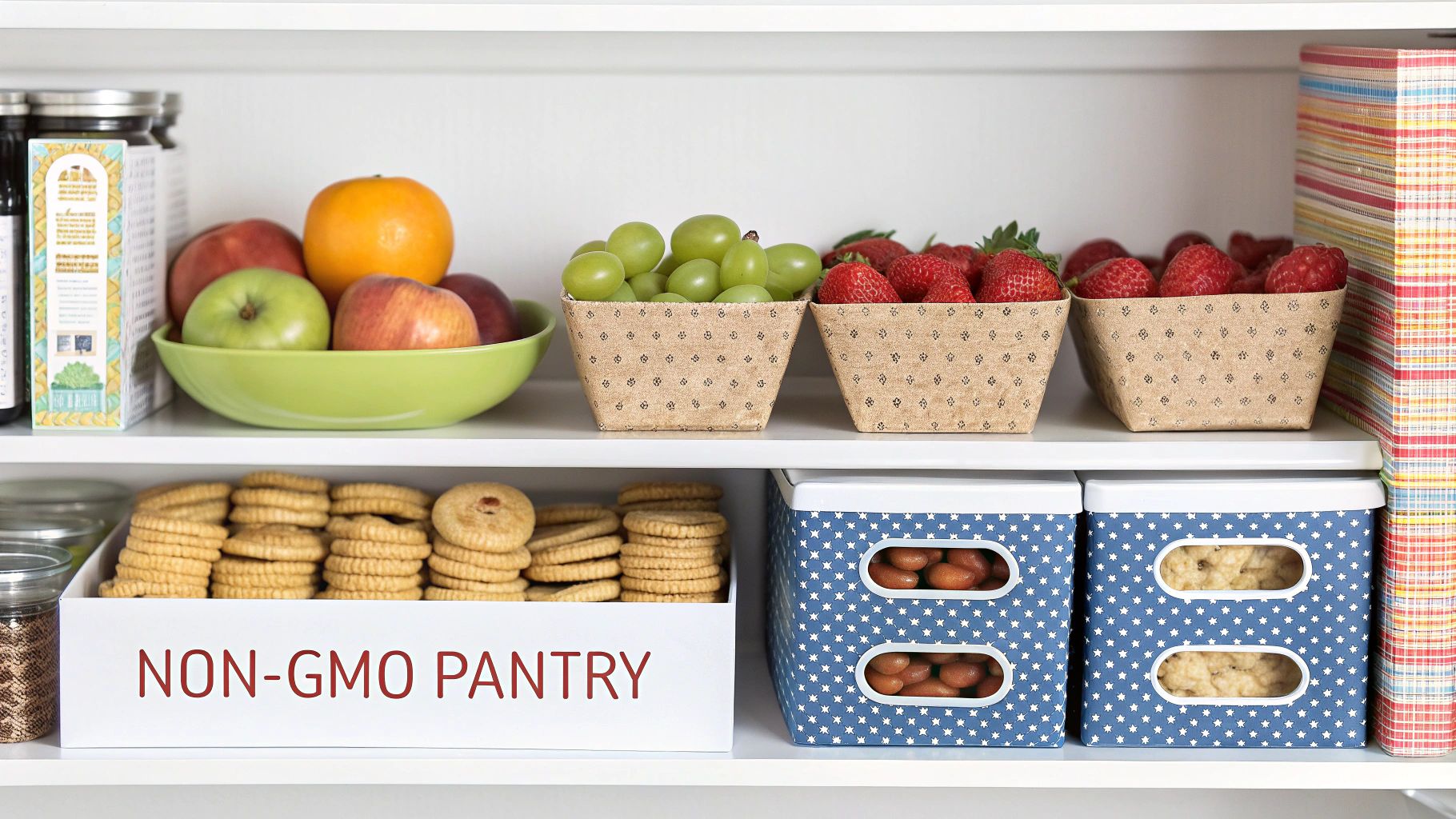
The first step is knowing where to focus your attention. Think of it like a treasure hunt where you’re looking for the good stuff. You don't need to scrutinize every single item, just the ones most likely to contain genetically modified ingredients.
Spotting the High-Risk Ingredients
When it comes to kids' snack bars and cookies, a few key ingredients pop up again and again. These are the "high-risk" crops that are most often genetically modified. Being aware of them is your secret weapon for quick label scanning.
Here’s a quick list of ingredients to keep an eye on:
- Corn: This includes corn syrup, cornstarch, and corn oil—all super common in processed snacks.
- Soy: Look out for soy protein, soy lecithin (an emulsifier), and soybean oil.
- Canola: Canola oil is a frequent flier in many baked goods and snacks.
- Sugar Beets: If a label just says "sugar," there's a good chance it comes from GMO sugar beets unless it’s specified as cane sugar.
The sheer prevalence of these crops in the U.S. food system is staggering. Recent data shows that over 90% of U.S. corn, soybeans, and cotton are grown from genetically engineered seeds. This is a major reason why the Non-GMO Project verification seal has become such a valuable tool for shoppers. In fact, studies show that more than two-thirds of consumers are more likely to buy products that feature it. You can explore more data on the non-GMO food market's growth.
Making Simple, Kid-Approved Swaps
Now for the fun part: stocking up! You don't have to give up convenience or flavor. It’s all about finding reliable alternatives that make everyone happy.
Your goal isn't to create a "perfect" pantry, but a practical one. Focus on finding a handful of trusted, go-to snacks that make your life easier and keep your kids smiling.
Ready for a sample shopping list? Here are some easy wins for your non-GMO snack station:
- Fresh & Simple: Start with the basics that are naturally non-GMO. Apples, bananas, berries, carrots, and bell peppers are always fantastic choices.
- Verified Cookies & Bars: Instead of grabbing any old cookie, look for ones with the USDA Organic or Non-GMO Project seal. Skout Organic's kids snack bars and cookies are a perfect example—they’re certified organic, which means they are always non-GMO, and made with ingredients you can actually recognize.
- Crunchy Alternatives: Swap out corn-based chips for options like rice crackers, snap pea crisps, or popcorn that is specifically labeled "organic" or "non-GMO."
- Sweet Treats: Look for sweeteners like organic cane sugar, maple syrup, or honey in your kids' treats instead of conventional sugar or high-fructose corn syrup.
Building your non-GMO pantry is a journey, not a destination. By focusing on high-risk ingredients and making simple, delicious swaps, you can make your next grocery trip less stressful and your pantry a treasure chest of snacks you feel great about.
Your Common Non-GMO Questions, Answered
Still have a few questions buzzing around? You're in the right place. Navigating the world of kids' snacks can feel like a full-time job, but getting clear on a few key things makes all the difference.
Let’s tackle the most common questions parents have. Think of this as your final cheat sheet for the snack aisle so you can feel completely confident in your choices.
If a Snack Has No Label, Is It GMO?
This is a great question, and the answer is: not necessarily. Many foods are naturally non-GMO—think of the entire produce section. A bag of apples or a bunch of bananas won't have a butterfly seal, but you can be sure they aren't genetically modified.
Where it gets tricky is with processed snacks like cookies, crackers, or bars. The absence of a label can be a gray area. While the Non-GMO Project Verified seal is your best guarantee, a missing seal doesn't automatically mean the product contains GMOs. Our suggestion? If you want to be extra sure, focus on checking products that list high-risk ingredients like corn, soy, and canola.
Are Organic Kids' Snack Bars Always Non-GMO?
Yes, they absolutely are! This is one of the best and easiest shortcuts for busy parents. The USDA Organic standard strictly prohibits the use of GMOs. It's a foundational, non-negotiable rule of organic certification.
So, when you see that familiar green and white "USDA Organic" shield on your kids' snack bars, you can rest easy knowing they are also non-GMO. It’s like a two-for-one deal for clean ingredients, taking one more thing off your mental checklist during a hectic grocery trip.
When in doubt, the organic seal is your all-in-one signal. It’s a powerful, government-regulated promise that the snack in your hand is both non-GMO and was grown without the use of most synthetic pesticides and fertilizers.
Why Do Non-GMO Snacks Sometimes Cost More?
It's true—you might notice a slightly higher price tag on some non-GMO or organic items. That small difference often comes from all the extra steps brands take to source, verify, and handle their ingredients with care.
To earn a non-GMO certification, a company has to ensure its ingredients are kept totally separate from GMO ones at every single stage, from the farm to the factory. This meticulous process, known as identity preservation, requires more resources and detailed tracking. Plus, earning an official seal involves fees for testing and verification. You're essentially paying for that extra layer of assurance and transparency.
What’s the Easiest Way to Shop Non-GMO for My Kids?
Let's make this simple. You don't need to spend hours reading every single label in the aisle. Here's our suggestion for a practical strategy that makes shopping for your kids a breeze:
- Look for the Seals: The "USDA Organic" and "Non-GMO Project Verified" seals are your most reliable guides. They mean the hard work of vetting has already been done for you.
- Prioritize Whole Foods: Lean on snacks that are naturally non-GMO, like fresh fruit, veggies with dip, and nuts or seeds (for older kids).
- Choose Simple Ingredient Lists: Often, snacks with fewer, more recognizable ingredients are less likely to contain hidden GMOs. Brands committed to simplicity are your best friends here.
By using these simple shortcuts, you can quickly and confidently fill your cart with snacks that align with your family’s values—without adding extra stress to your day.
Ready to stock your pantry with delicious, worry-free snacks your kids will actually ask for? Skout Organic makes it easy. Our entire line of kids' snack bars and cookies is Certified Organic, which means they are always non-GMO and crafted with simple, plant-based ingredients you can trust.