 Kids Snack Bars
 Soft-Baked Cookies
 Protein Bars
 Build A Box
 Shop All




Let's be honest: worrying about your child’s health in a world full of conflicting advice is totally normal. If you're concerned about your kid's weight or future well-being, you are definitely not alone. This is a conversation worth having, and it's one that should start with understanding and fun, not blame.
The goal here isn't to get bogged down in scary stats but to arm your family with positive, proactive strategies that actually work (and don't feel like a chore!).
Understanding Childhood Obesity: A Modern Family Challenge
Childhood obesity has become a major global health issue, and the numbers do paint a pretty clear picture. According to the World Health Organization (WHO), over 390 million children and teens were overweight in 2022, with 160 million of them living with obesity.
That figure jumped from 8% in 1990 to 20% in 2022, which tells us that our modern environment is playing a big role. If you want to dive deeper into the trends, the research published in JAMA Pediatrics offers some great insights.
It's About More Than the Scale
Here’s the most important thing to remember: preventing childhood obesity isn't about chasing a number on a scale. It’s definitely not about putting kids on strict, joyless diets. That kind of pressure often backfires, creating anxiety and a negative relationship with food. Nobody wants that!
Instead, our mission is to build a foundation of positive, lifelong habits that benefit everyone in the family. Let's face it, several modern challenges make this tricky:
- Crazy Schedules: Between work, school, and after-school activities, making a home-cooked meal can feel like mission impossible. It’s so easy to fall back on convenient (and often less-than-healthy) options.
- The Food Environment: Supermarket aisles are literally designed to make us grab highly processed, brightly packaged foods. They're engineered to be irresistible, especially to kids. Think of it as a jungle of temptation!
- The Lure of Screens: Tablets, phones, and TVs have become the default babysitter and pastime, replacing the active, outdoor play that used to fill our afternoons.
This journey isn’t about restriction. It's about shifting your family’s culture to one of joyful, healthy living. It’s about celebrating movement, discovering how good real food can taste, and creating a home where healthy choices just feel natural.
A Four-Pillar Approach to Family Wellness
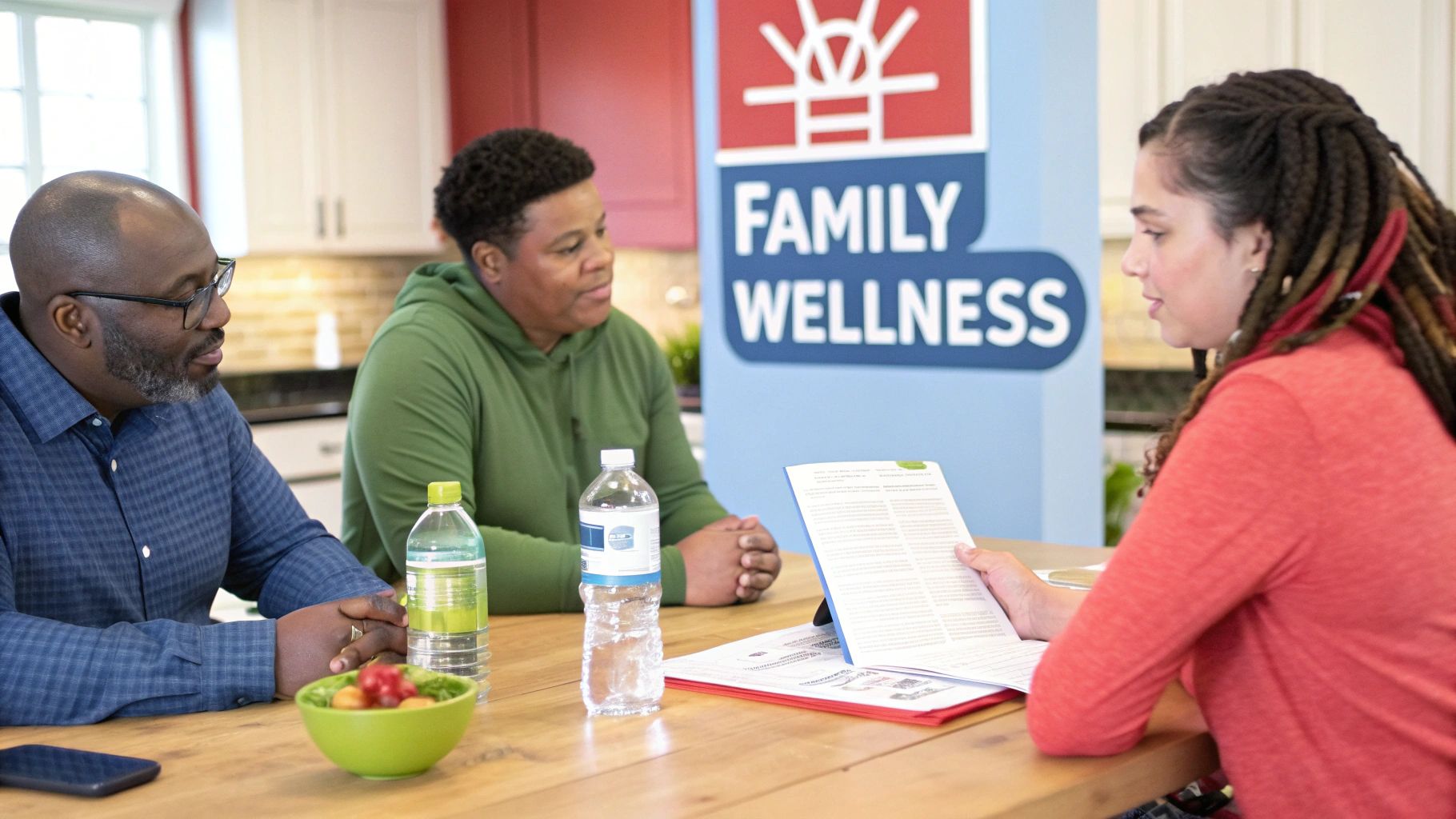
Thinking about making big changes can feel totally overwhelming, but you don't have to overhaul your entire life overnight. We’re going to break it down into four key areas, or pillars, that work together to create a healthier, happier home: nutrition, physical activity, sleep, and screen time.
This guide is your starting point. It's about making small, sustainable changes that add up. Think progress, not perfection. Let's explore how to make healthy living a fun and natural part of your family’s story, together.
Building a Healthy Relationship with Food
Let's transform the family kitchen. It's time to move it from a source of stress and mealtime standoffs into a place of joyful discovery. This is a huge step in heading off childhood obesity before it even starts. We're moving past the "eat your vegetables or no dessert" ultimatums and embracing strategies that actually build a healthy relationship with food for life.
This isn't about restriction. It's about creating a family culture where nutritious food is just a normal, enjoyable part of the day.
A powerful concept to start with is the division of responsibility in feeding. For many families, this is a total game-changer. Here’s the deal: you, the parent, are in charge of what, when, and where your family eats. Your child is in charge of if they eat and how much.
This approach takes the pressure off everyone. You provide balanced meals and snacks at predictable times, and they learn to listen to their own hunger and fullness cues. It might feel weird at first, but it teaches them to trust their bodies—a skill that's absolutely essential for long-term health.
The Power of Positive Food Exposure
Getting kids to try new things can feel like an impossible mission, but a few simple shifts can make a world of difference. The goal is to make healthy eating an adventure, not a chore.
One of the best ways to encourage adventurous eating? Get your kids involved. Even the smallest hands can help!
- Grocery Store Detectives: Let them pick out a new fruit or vegetable. Give them a mission, like finding the roundest apple or the greenest zucchini.
- Sous Chef Duties: Toddlers can tear lettuce for a salad or stir ingredients in a bowl. Older kids can help measure, chop (with supervision!), and even read recipes.
- Theme Nights: Try a "Taco Tuesday" where everyone builds their own, or a "Make Your Own Pizza" night with a buffet of colorful veggie toppings.
When kids have a hand in making the food, they feel a sense of ownership and pride. That makes them far more likely to actually try the final product. For more creative ideas, check out our guide on how to get kids to eat healthy without the mealtime drama.
Rethinking the Snack Attack
Snack time is often where good intentions go completely off the rails. Kids get hungry between meals, and reaching for pre-packaged cookies and sugary bars is just so easy. The snack aisle is a minefield of bright colors and health claims that don't always hold up. Honestly, many "kid-friendly" snack bars are packed with as much sugar as a candy bar.
The key is to reframe what a snack is. It’s not a treat; it’s a mini-meal designed to bridge the gap and provide sustained energy. Instead of seeing it as a time for junk food, think of it as another opportunity for real nutrients.
Think of snacks as "fueling opportunities" rather than "treat time." This small mental shift can completely change your family's snacking habits for the better, making it easier to choose options that genuinely nourish your child's growing body.
This doesn't mean snacks have to be boring. A simple pairing of protein with a fruit or vegetable is a winning combo that keeps kids full and their blood sugar stable.
Smart Swaps and Portion Guides
You don't need to banish all their favorite foods. Making small, simple swaps can seriously boost the nutritional value of their diet without them even noticing.
| Instead Of This... | Try This Smart Swap... | Why It's Better |
|---|---|---|
| Sugary Cereal | Oatmeal with berries and a drizzle of maple syrup | Higher in fiber, lower in added sugar, provides lasting energy. |
| Classic Kids Snack Bars | Apple slices with a scoop of nut butter or a Skout Organic Bar | Offers fiber, healthy fats, and protein for better satiety. |
| White Bread Sandwiches | Sandwiches on whole-wheat bread or wraps | Provides more fiber and essential nutrients. |
| Sugary Fruit Yogurt | Plain Greek yogurt with fresh fruit swirled in | Cuts down on added sugar while boosting protein content. |
Understanding portion sizes is another crucial piece of the puzzle. A child's stomach is way smaller than an adult's, and over-serving can teach them to override their natural fullness signals. A great visual trick is to use their own hand as a guide:
- A serving of protein (like chicken or fish) should be about the size of their palm.
- A serving of carbs (like pasta or rice) should fit in their cupped hand.
- A serving of vegetables or fruit should be about the size of their fist.
- A serving of fats (like butter or oil) should be no bigger than the tip of their thumb.
This simple method helps keep portions in check without you having to haul out measuring cups for every meal. To help parents navigate the complexities of children's nutrition, explore these comprehensive age-by-age feeding tips for children for even more tailored advice.
Building a positive food environment really does set the stage for a lifetime of healthy choices, turning mealtimes back into what they should be: a source of connection and nourishment for the whole family.
Decoding Kids' Snacks and Sugary Drinks
Let's be real: walking down the snack aisle can feel like navigating a minefield. The packaging is bright, the health claims are bold, and your kids seem to want everything. It’s designed to be overwhelming, but reclaiming snack time is one of the most powerful moves you can make in building a healthy foundation for your child.
This isn't about banning snacks. Far from it. Kids, especially active ones, need those mini-meals to bridge the gap between breakfast, lunch, and dinner. It’s about outsmarting the marketing and turning snacks into moments of real nutrition, not just a rush of empty calories.
Becoming a Label Detective
So many products marketed to kids are just glorified candy. From fruit gummies and snack bars to organic-looking cookies, they might scream "Made with Real Fruit!" or "Good Source of Vitamin C," but a quick flip to the nutrition label often tells a much different story.
You’ll usually find hidden sugars, refined flours, and a laundry list of ingredients you can’t pronounce. So, how do you spot a fake "healthy" snack? You become a label detective.
Here are your top clues:
- Scan the first three ingredients. Ingredients are listed by weight. If sugar (or one of its sneaky aliases like high-fructose corn syrup, dextrose, or cane juice) is near the top, that's a major red flag.
- Zero in on "Added Sugars." This is your secret weapon. The nutrition panel now separates naturally occurring sugars from the stuff that's been dumped in. A good rule of thumb is to aim for snacks with fewer than 5 grams of added sugar per serving.
- Hunt for fiber. Fiber is a game-changer. It helps kids feel full and supports a healthy gut. Look for snacks that offer at least 2-3 grams of fiber. Processed junk food almost never has any.
It only takes a few seconds, but this quick check empowers you to see right past the flashy cartoons and make a genuinely good choice for your family.
The Truth About Kids' Snack Bars and Cookies
The market for kids' snack bars has exploded, and it’s easy to see why. They're portable, convenient, and a guaranteed crowd-pleaser. But nutritionally, they are all over the map.
Some are fantastic, packed with whole grains, nuts, and seeds. Others are basically cookies in disguise, loaded with chocolate coatings, marshmallow bits, and sugary fillings. The same goes for cookies—a homemade oatmeal cookie is a perfectly fine treat, but many store-bought versions are engineered for maximum crave-ability with unhealthy fats and sugar.
Don't let marketing claims fool you. A "fruit-filled" bar might contain more corn syrup than actual fruit. Always let the ingredients list and the "Added Sugars" line be your ultimate guide.
The goal isn't to eliminate these entirely but to be selective. Look for bars with simple, recognizable ingredients. For a great starting point on what to look for in genuinely healthy options, check out this guide to healthy snacks for kids. It's a great resource for choosing smarter store-bought alternatives.
Smart Snack Swap Showdown
It's easy to get stuck in a snack rut with the same old processed options. But with a few simple swaps, you can dramatically boost the nutritional value of your child's snacks without sacrificing flavor or fun. Here’s how some common choices stack up against healthier alternatives.
| Common Kids' Snack | Typical Sugar Content (per serving) | Healthier & Fun Alternative | Why It's a Better Choice |
|---|---|---|---|
| Fruit Gummies | 12-15g | Fresh Berries with a Dollop of Greek Yogurt | Provides fiber, protein, and natural sweetness without the added sugars and artificial colors. |
| Sugary Cereal Bar | 10-14g | Apple Slices with Peanut Butter | A perfect combo of fiber, healthy fats, and protein for long-lasting energy. |
| Cheese Crackers | 1-3g | Whole-Grain Crackers with Real Cheese | Offers more fiber and sustained energy from complex carbs, not refined flour. |
| Chocolate Sandwich Cookies | 14g | Skout Organic Chocolate Brownie Bar | Made with simple ingredients like dates and cocoa, delivering rich flavor with 0g of added sugar. |
Making these small upgrades consistently can have a massive impact over time. It's about trading empty calories for nutrient-dense fuel that helps kids thrive.
Hydration Hijack: The Problem with Sugary Drinks
What our kids drink is just as important as what they eat. Sugary drinks are one of the single biggest sources of empty calories in a child's diet. Things like soda, sports drinks, sweetened teas, and most fruit juices deliver a massive sugar hit with zero nutritional upside.
Research has drawn a clear line connecting sugar-sweetened beverages to an increased risk of childhood obesity. These drinks are tricky because they don't trigger the same fullness cues as solid food, making it incredibly easy for kids to consume hundreds of extra calories without even noticing.
But what about 100% fruit juice? While it sounds healthy, it's a concentrated source of sugar without the fiber of a whole piece of fruit. A small glass is okay now and then, but water should always be the default drink for hydration.
This is where understanding feeding roles becomes so important. It's a simple concept that takes the pressure off everyone.
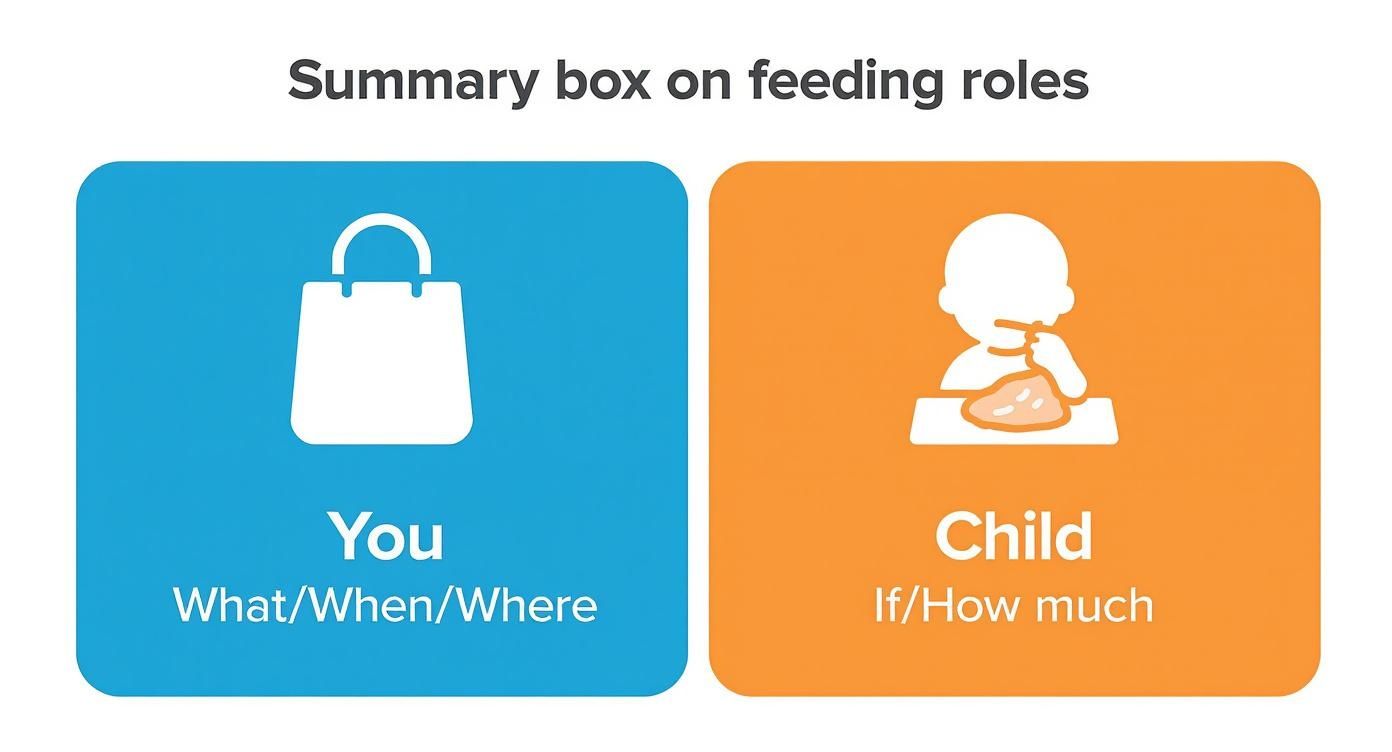
By focusing on providing healthy options (what, when, where) and letting your child manage their own appetite (if, how much), you build trust and help them develop a naturally healthy relationship with food.
Building Your Smart Snack Arsenal
Okay, now for the fun part: stocking your kitchen with awesome snacks that are ready to go when hunger strikes. Having these on hand makes it easy to say "yes" and feel good about it.
Quick & Easy Store-Bought Saviors:
- Plain Greek Yogurt: A protein powerhouse. Let your kids add fresh berries or a tiny drizzle of honey to control the sweetness.
- Cheese Sticks: Perfectly portioned, easy for little hands, and packed with protein and calcium.
- Hummus with Veggie Sticks: Carrots, cucumbers, and bell peppers are perfect for dipping.
- Whole-Grain Crackers with Avocado: A fantastic source of healthy fats and fiber that keeps them full.
- Skout Organic Kids Bars: When you need a reliable, clean, on-the-go option, these are a lifesaver. They’re made with simple, plant-based ingredients your kids will love.
Fun & Hydrating Drink Swaps:
- Fruit-Infused Water: Toss slices of orange, cucumber, or a handful of raspberries into a pitcher of water for a subtle, refreshing flavor.
- Sparkling Water "Sodas": Mix plain sparkling water with a tiny splash of 100% fruit juice and some frozen berries. It's fizzy, fun, and feels like a treat.
- Homemade Fruit Slushies: Blend frozen fruit (mango or strawberries are great) with a little water or milk for a naturally sweet, ice-cold drink.
By making these small but mighty changes, you're not just providing a snack; you're building an essential foundation for a healthy life. You're teaching your kids that fueling their bodies can be both delicious and satisfying.
Integrating Fun Movement into Your Daily Routine
When you hear the word “exercise,” what’s the first thing that comes to mind? For a lot of us, it’s treadmills, rigid schedules, and maybe even a little bit of dread.
Let’s just scrap that word entirely. When we’re talking about kids, the goal isn't exercise—it's play. It’s about making movement a joyful, natural part of your family’s life, not another chore to check off the to-do list. Weaving physical activity so seamlessly into your day that it becomes second nature is a huge piece of the puzzle.
Kids are wired to move. Our job is just to give them plenty of chances to do what they do best. The real magic happens when that movement is tied to fun and family time, creating healthy habits that actually stick.
Beyond the Playground
Sure, structured sports are fantastic, but you don’t need a soccer field or a basketball court to get your family moving. In fact, some of the most effective—and memorable—activities happen right in your own home or neighborhood, no matter the weather.
The trick is to think creatively and embrace a little silliness. When your home becomes a hub for active fun, you'll find that screens start to lose some of their magnetic pull.
Here are a few screen-free ideas to get you started:
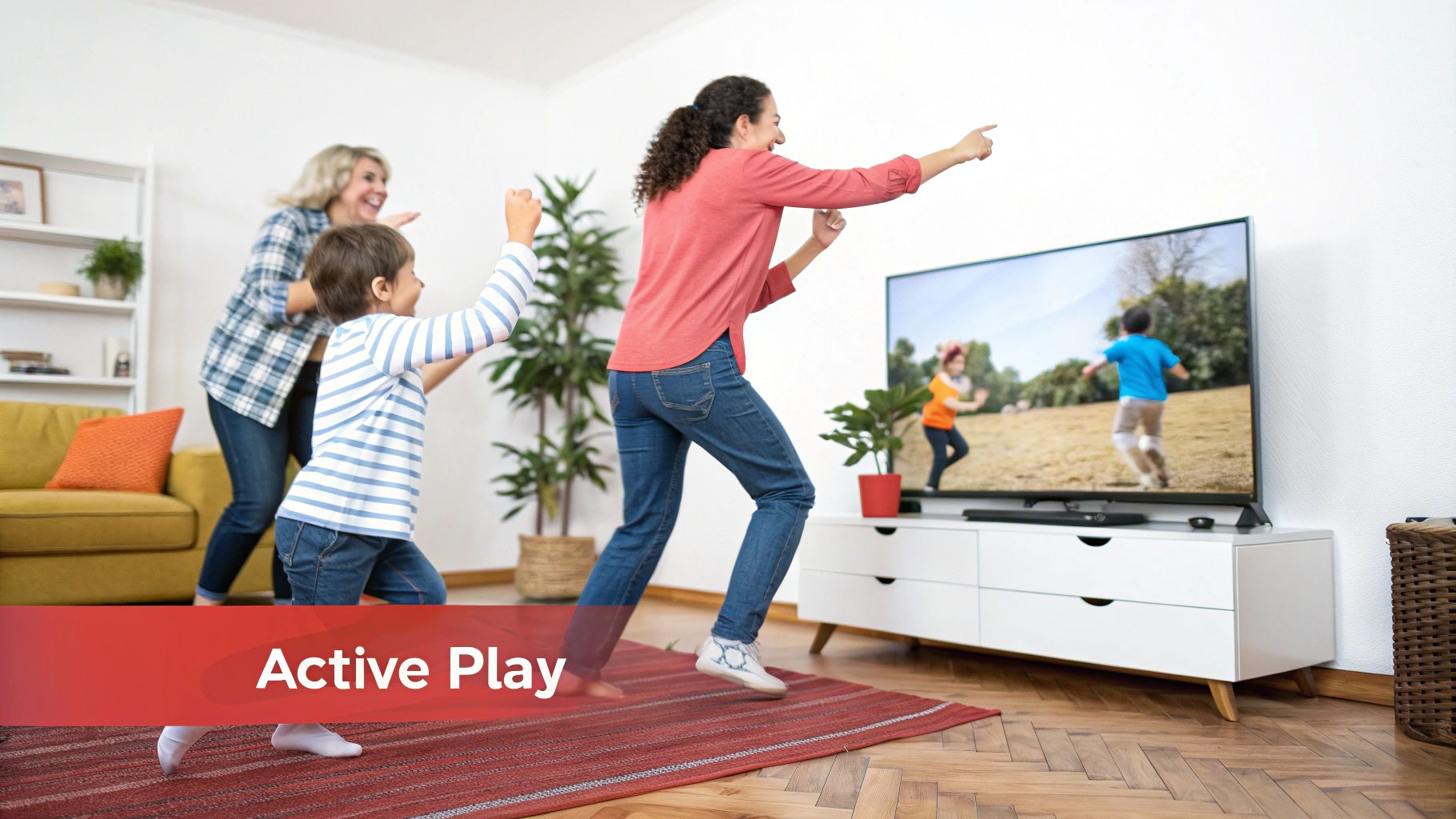
- Living Room Dance Parties: Just crank up your family's favorite playlist and let loose. There are no rules, just movement and a lot of laughter.
- Indoor Obstacle Courses: Get creative with pillows, couch cushions, and blankets. Kids can crawl under tables, climb over "mountains" of pillows, and hop between designated spots on the floor.
- Neighborhood Scavenger Hunts: Make a simple list of things to find outside (a red leaf, a smooth rock, a pinecone). It instantly turns a simple walk into an exciting mission.
These activities don’t require special equipment or a huge time commitment, but they get hearts pumping and create awesome memories. The goal is to make active time the best time.
You Are the Role Model
Here’s the simple truth: your kids are watching you. If they see you scrolling on your phone after dinner, that becomes the norm. But if they see you lacing up your shoes for a walk or enjoying a bike ride, they learn that being active is just a positive part of life.
Your enthusiasm is contagious. When you treat movement as a privilege and a source of joy rather than a chore, your kids will absorb that attitude. You are their most powerful influence.
You don’t have to be a marathon runner. It’s all about your attitude. Complain about having to take the stairs, and they'll learn that physical effort is something to avoid. Talk excitedly about a weekend hike, and they’ll see it as an adventure to look forward to. Your actions speak volumes.
Finding Movement in Everyday Moments
Let’s be honest—one of the biggest hurdles for any family is time. The good news? You don't need to block out a full hour every day for "exercise." Small bursts of activity woven right into your existing schedule add up to significant health benefits.
Look for simple opportunities to make the active choice the easy and automatic choice.
Here's how to sneak more activity into a packed schedule:
- Park farther away. At the grocery store or the library, choose a spot at the back of the lot. Those extra steps really do add up.
- Take the stairs. Make it a family rule to always choose stairs over the elevator or escalator whenever you can.
- Walk or bike for short errands. If you're just heading a few blocks away, leave the car at home and get some fresh air.
- Establish a post-dinner walk. A quick 15-minute stroll around the block is a fantastic way to aid digestion, connect as a family, and wind down the day.
These little "movement snacks" might seem small, but they accumulate throughout the day, helping your child reach the recommended 60 minutes of daily physical activity. By making these small changes, you’re building an active lifestyle one step at a time.
The Critical Role of Sleep and Screen Habits
When we talk about preventing childhood obesity, our minds usually jump straight to food and exercise. But two of the biggest players are often hiding in plain sight: sleep and screen time. These two habits quietly shape a child's health by messing with their appetite, energy, and even the foods they crave. Honestly, getting a handle on them can be a total game-changer for your family.
Think of sleep as your child's biological reset button. When kids don't get enough of it, their bodies go into a tailspin. They start pumping out more ghrelin (the "I'm hungry!" hormone) and less leptin (the "I'm full!" hormone). This hormonal mess creates a perfect storm where they feel starving and start jonesing for high-calorie, sugary foods.
This isn't just a theory; it's straight-up physiology. A sleep-deprived kid is scientifically more likely to reach for cookies over carrots.
Taming the Screen Time Beast
Excessive screen time is the other half of this tricky duo. It’s not just that screens keep kids on the couch—though that's a huge part of it. The real problem is that screen time and mindless snacking are best friends. When a child is totally absorbed in a show or a game, they completely tune out their body's natural fullness signals. It's shockingly easy to overeat.
And let's not forget the advertisers. They know exactly how to target kids with ads for sugary cereals, fast food, and junky snacks. All that exposure shapes what they want and fuels the "Can we get this?!" requests at the grocery store.
Your best defense is to create a family media plan. This isn't about banning screens entirely, but about setting clear, consistent ground rules that everyone understands.
- Establish Tech-Free Zones: The dinner table and all bedrooms should be sacred, screen-free spaces. This simple rule encourages mindful eating and, more importantly, protects that precious sleep time.
- Set Daily Limits: Figure out a realistic daily screen time limit that works for your family's schedule. Using a simple kitchen timer can make this feel less like a punishment and more like a normal house rule.
- Enforce a "Digital Curfew": This one is non-negotiable. Shut down all screens at least 60-90 minutes before bedtime. The blue light from phones, tablets, and TVs can seriously mess with melatonin, the hormone that tells the body it's time to sleep.
Crafting a Soothing Bedtime Routine
Dialing in your child's sleep hygiene is one of the most powerful things you can do for their long-term health. A predictable, calming bedtime routine is the magic ingredient that helps their minds and bodies wind down, paving the way for deep, restorative rest.
This routine doesn't have to be complicated. Consistency is what matters most. A warm bath, reading a book together, or listening to some quiet music can all signal that the day is ending and sleep is on its way. Just make sure their bedroom is a true sleep sanctuary: cool, dark, and quiet.
A consistent bedtime routine does more than just help your child fall asleep faster. It creates a sense of security and predictability that can reduce anxiety and improve overall sleep quality, directly impacting their daytime energy and appetite.
For some families, looking into tools like weighted blankets can offer another layer of support for better sleep. Understanding the science behind weighted blankets might provide additional strategies for kids who struggle to settle down.
By making sleep and screen habits a priority, you're not just managing behavior; you're fundamentally supporting your child's metabolic health from the inside out.
Your Family's Healthy Habits Action Plan
Alright, it’s time to take all this great info and put it into practice. This isn’t about a massive, stressful overhaul. It’s about making small, consistent choices that add up over time. The real journey to preventing childhood obesity is built on these everyday decisions, slowly turning your home into a place where healthy habits just feel normal.
Honestly, a positive mindset is your most powerful tool here. Let's shift the focus away from weight and onto well-being. Celebrate what your kid's body can do—run like the wind, climb a tree, or give the best hugs. Using encouraging, positive language builds a healthy body image and self-esteem, which are absolutely essential for long-term health.
Your Weekly Wins Checklist
Use this simple checklist to keep everyone on track and celebrate the small stuff as a family. The goal isn't perfection; it’s about recognizing the small victories along the way.
- Try One New Veggie: Did everyone at least try a bite of bell pepper this week? That's a win!
- Family Walk After Dinner: Did you get out for a quick stroll even once? Success!
- Screen-Free Meal: Was dinner a no-phone zone tonight? Fantastic!
- Hydration Hero: Did everyone reach for water instead of a sugary drink today? High five!
Tracking these little wins helps everyone see progress and keeps the motivation going. For more inspiration on building that positive family vibe, check out these ideas for healthier habits for a happier family.
Let's zoom out for a second. This is a global issue, and it takes all of us. UNICEF reports that one in ten children aged 5 to 19 now live with obesity—a number that has tripled since 2000. Your family's efforts are a vital part of a much bigger movement. You can learn more about these global trends on UN News.
If you have deeper concerns, your pediatrician is your best partner. Go into the conversation with specific questions about your child’s growth curve and your family's lifestyle. You are your child’s biggest advocate, and working together, you can create a plan that feels supportive and right for your family.
Still Have Questions? Let's Talk It Out.
Navigating the world of kids' nutrition can feel like a pop quiz you didn't study for. We've covered a lot of ground, but you probably still have some specific questions buzzing around. Let's tackle a few of the most common ones that land in my inbox.
"Help! My Kid Is So Picky. What Do I Do?"
Picky eating is a rite of passage for so many families, so first of all, know you're not alone. The secret weapon here is patience, not pressure. It’s so tempting to bargain or turn mealtime into a battle, but that rarely ends well.
Instead, keep offering a variety of healthy foods without any strings attached. A great trick is to get them involved in the process—let them pick a new vegetable at the store or help you stir the pasta sauce. When they have some ownership, they're more likely to give it a try.
And remember, it can take 10-15 exposures before a child even considers tasting something new. That's a lot! Just keep the vibe positive and celebrate the small wins, like just touching or smelling a new food. You're playing the long game here.
"Are Treats Like Cake and Cookies Completely Off-Limits?"
Absolutely not! In fact, banning treats entirely often backfires, making them seem even more exciting and desirable. A healthy lifestyle is about balance, not deprivation. Our goal is to teach moderation and help kids understand the difference between "everyday" foods and "sometimes" foods.
When you do have cake for a birthday or cookies for a special occasion, enjoy them together as a family. Serve a reasonable slice and move on—don't make a huge deal about it. This approach teaches a much healthier, more sustainable lesson than an all-out ban ever could.
Think of it this way: You are the gatekeeper of the snacks in your home. By stocking your pantry with mostly nourishing options, you make the healthy choice the easy choice. This takes the daily negotiation out of the equation.
A common culprit here is the seemingly innocent kids' snack bar. Let’s be real, many are just cookies in disguise, loaded with hidden sugars. Reading labels for "added sugars" is your best strategy. When you find a brand with clean ingredients, like a Skout Organic bar, it becomes a reliable go-to that feels like a treat but is packed with real nutrition.
At Skout Organic, we believe snacking should be simple, delicious, and full of good stuff. Our organic, plant-based kids' snack bars and cookies are made with ingredients you can pronounce, making it easy to say "yes" to snack time. Explore our fun flavors and build your family's custom snack box.