 Kids Snack Bars
 Soft-Baked Cookies
 Protein Bars
 Build A Box
 Shop All





Let’s be honest, the thought of packing another lunch can feel like a total chore. Between hectic mornings and the whims of a picky eater, it’s just so easy to fall back on the same uninspired sandwich, day after day.
But what if there was a way to make it simple, fast, and—dare we say—something you and your kids actually get excited about?
The goal here isn't to become a gourmet bento box artist overnight. It’s about creating a sustainable habit that saves you time and cuts down on decision fatigue. The first step is simple: shift your mindset from complicated recipes to a simple, repeatable framework.
The Secret to Stress-Free Healthy Lunches
Forget strict rules and calorie counting. Your new best friend is what we call the 'Fantastic Four' framework. Think of it as a mental checklist, not a diet plan. Every time you pack a lunch, just aim to include one item from each of these core food groups.
- A Lean Protein: This is what provides lasting energy and keeps tummies full until the next meal. Think grilled chicken strips, hard-boiled eggs, a scoop of hummus, or even a handful of edamame.
- A Healthy Carb: Carbs are essential fuel for brains and bodies, especially for active kids. Whole-grain crackers, a small scoop of quinoa salad, or a mini whole-wheat pita are all great options.
- A Fresh Fruit: Packed with vitamins and that natural sweetness kids crave, fruit is always an easy win. A handful of berries, a small apple, or some juicy melon cubes are perfect.
- A Crunchy Vegetable: This is where you can add color, crunch, and a boatload of extra nutrients. Baby carrots, cucumber slices, and snap peas are kid-friendly favorites that require zero cooking.
The real magic of this framework is its flexibility. It gives you the power to build countless combinations using foods you already have on hand, making it so much easier to throw together a balanced and appealing lunch in just a few minutes.
Your 'Fantastic Four' Lunchbox Blueprint
Use this quick-reference table to build a balanced lunch in minutes. Just pick one item from each category.
| Component | Why It Matters | Kid-Friendly Examples | Adult-Friendly Examples |
|---|---|---|---|
| Protein | Keeps you full & focused | Hard-boiled egg, cheese stick, hummus, rolled turkey slices | Grilled chicken, quinoa salad, chickpeas, Greek yogurt |
| Healthy Carb | Provides sustained energy | Whole-grain crackers, mini pita, brown rice cake, sweet potato chunks | Sourdough bread, whole-wheat tortilla, leftover pasta salad |
| Fruit | Vitamins & natural sweetness | Apple slices, berries, mandarin orange, grapes | Pear, kiwi, pomegranate seeds, dried apricots |
| Vegetable | Nutrients, fiber & crunch | Baby carrots, cucumber slices, bell pepper strips, cherry tomatoes | Sliced bell peppers, snap peas, side salad with vinaigrette |
Mixing and matching from this blueprint makes packing a no-brainer. It takes the guesswork out and ensures every lunch is both satisfying and nutritious.
The Rise of the Thoughtful Lunchbox
This back-to-basics approach to nutrition is more than just a passing trend—it’s a global movement. As people become more health-conscious, the desire for home-prepped meals grows right along with it.
In fact, the global lunch box market was valued at over USD 11.46 billion in 2023 and is projected to hit USD 20.72 billion by 2032. This huge jump is driven by people like us who see our lunch containers as tools for portion control and wellness. It’s a major shift toward prioritizing real, nutrient-dense food over the processed stuff.
By focusing on these four simple components, you're not just packing a meal; you're building a foundation for healthy eating habits. If you need some visual inspiration to get your creativity flowing, check out our guide on healthy lunch box ideas.
This simple strategy ensures every lunch is a step toward better nutrition, one bento box at a time.
Mastering Your Sunday Meal Prep Hour
Let’s be honest, Sunday nights can bring on the “Sunday Scaries.” But what if you could trade that feeling for “Sunday Success”? All it takes is a single, productive hour on Sunday afternoon to totally reclaim your weekday mornings.
And no, we're not talking about lining up five identical, sad-looking containers of the same meal. This is about component prepping—setting up a ready-to-go lunch station right in your own fridge.
The goal isn't to cook five complete meals. It's about getting the building blocks ready. This way, you can mix and match all week long, throwing together a fresh, interesting, and healthy lunch in under five minutes. Think of it like your own personal salad bar, but way better.
Your One-Hour Power Prep Plan
Ready to conquer the week? Here’s a realistic game plan for your prep hour. The key is to get things going in order of how long they take to cook, so you can multitask like a pro.
-
Get the Long-Cook Items Going First. Start with your grains and proteins. Get a pot of quinoa, brown rice, or some whole-wheat pasta on the stove. While that’s happening, pop a dozen eggs in another pot to hard-boil. These two tasks pretty much handle themselves while you move on to everything else.
-
Chop Up a Rainbow. While your grains and eggs are cooking, it's time to tackle the veggies. Wash and chop up the sturdy stuff that holds up well all week. We’re talking bell pepper strips, carrot sticks, cucumber slices, and broccoli florets. Store each type in its own container to keep everything fresh and crisp.
-
Whip Up a Dressing. Ditch the bottled stuff—we promise this is worth it. A homemade vinaigrette is incredibly easy and tastes so much better. Just shake up some olive oil, lemon juice (or vinegar), a spoonful of Dijon mustard, and a little salt and pepper in a mason jar. It takes two minutes and will last you all week.
By the time you’re done chopping, the grains and eggs are probably finished. Just drain, cool them down, and pack them into airtight containers. Boom. You've just created a full arsenal of lunch components.
This simple flow shows just how easy it is to build a balanced lunch from all your prepped goodies.
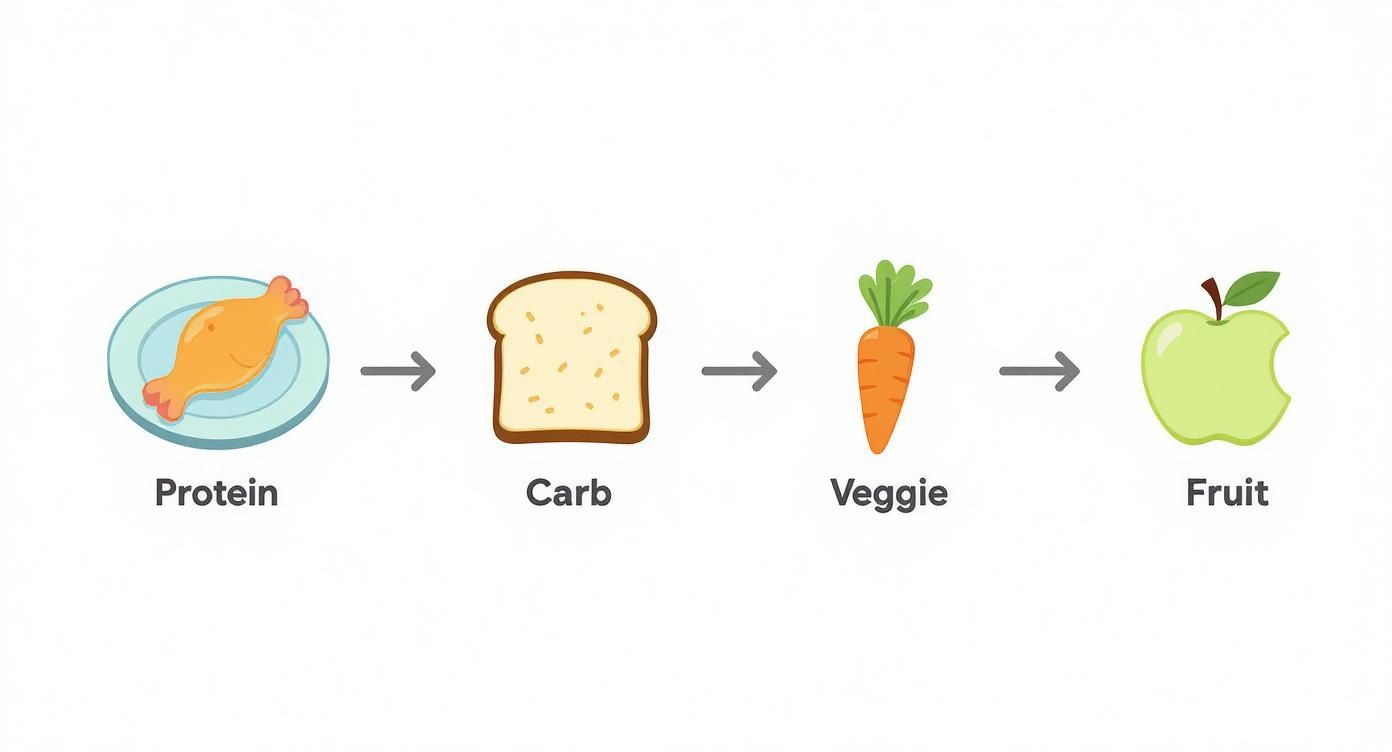
As you can see, grabbing a prepped protein, carb, veggie, and fruit means you can assemble a complete, satisfying meal in literally seconds.
Storing Your Success for Maximum Freshness
How you store your prepped food is just as important as how you cook it. We’re fighting two main enemies here: moisture and air.
- Veggies: Keep chopped veggies in airtight glass containers. A little trick for things like cucumbers or bell peppers is to toss a small piece of paper towel in with them. It absorbs any extra condensation and keeps them from getting soggy.
- Grains: Let them cool completely—this is crucial!—before storing them in a sealed container in the fridge. They’ll stay fluffy and ready to go for up to five days.
- Proteins: We like to keep hard-boiled eggs in their shell until the morning you're packing them. For things like grilled chicken or turkey, store it sliced in its own sealed container.
- Dressing: Your homemade vinaigrette is happiest in a sealed glass jar. Just give it a good shake before you use it each day to bring it back together.
Remember, the whole point of component prepping is freedom, not restriction. One day you can throw together a quinoa bowl with chickpeas and roasted veggies. The next, you can pack a bento box with a hard-boiled egg, crackers, and crunchy bell peppers.
This strategy gives you endless possibilities. If you need more inspiration for combining your prepped items, check out this guide to a week of nutrient-dense school lunch ideas. The variety is what keeps lunchtime from getting boring for you and the kids. By investing just one hour, you’re buying back precious time and mental energy every single morning of the week.
Choosing Lunch Gear That Keeps Food Fun and Fresh
Ever opened a lunchbox to find a soggy sandwich or lukewarm yogurt? We’ve all been there. The container you use isn't just a box; it's a total game-changer for how appealing and fresh a meal is hours later. Investing in the right gear is one of the best ways to ensure your healthy efforts don't end up in the cafeteria trash can.
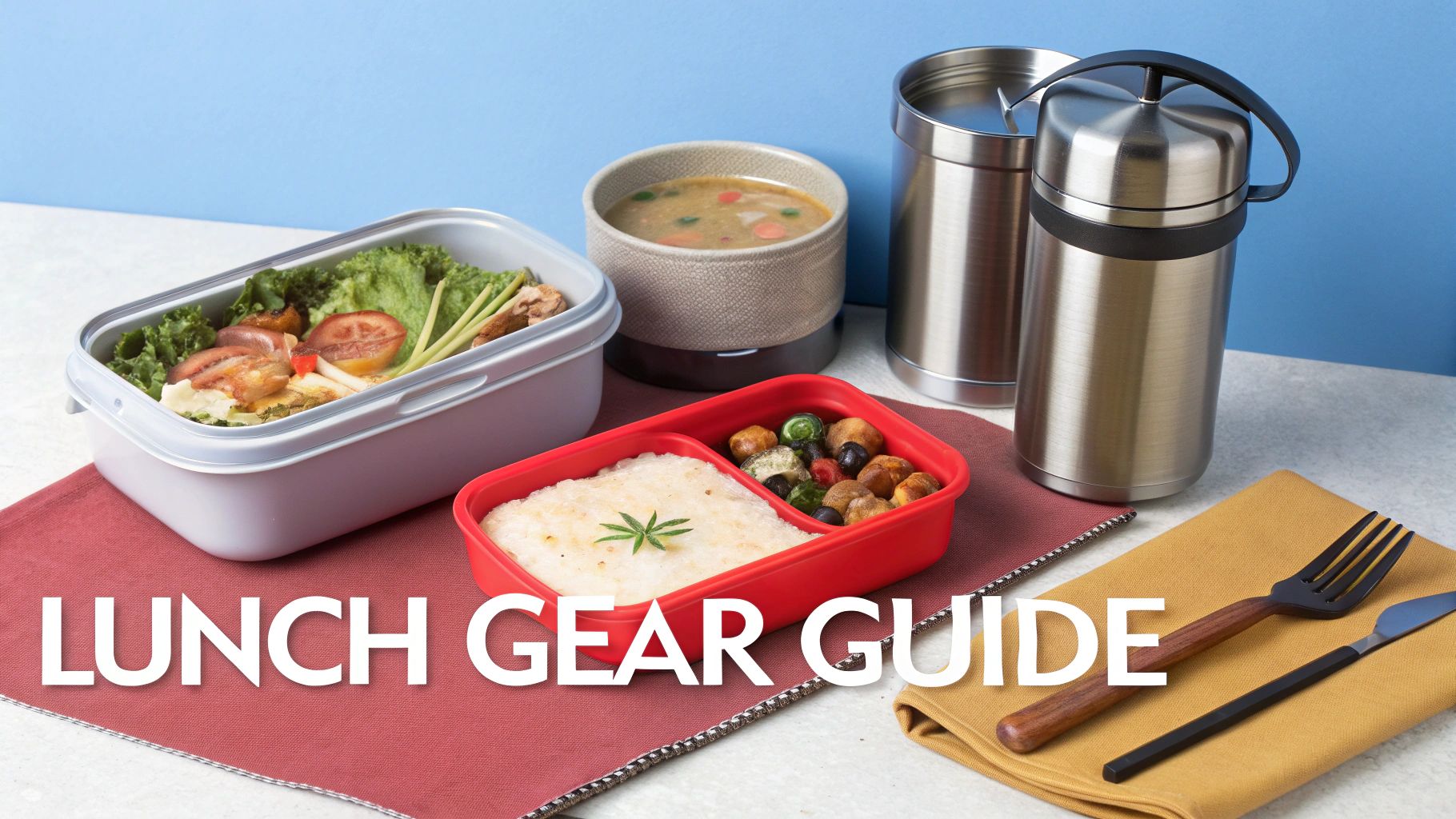
Think of the right lunchbox as your best ally in the quest to pack great lunches. The goal is simple: deliver food that looks and tastes just as good at noon as it did when you packed it that morning.
The Magic of Compartments
For picky eaters—or really, any kid—bento-style lunch boxes are a lifesaver. Their superpower is separation. Carrots don't get soggy from juicy orange slices, and crackers stay perfectly crunchy instead of getting softened by a neighboring cheese stick.
This setup is fantastic for a few key reasons:
- It keeps foods from touching. This is a non-negotiable for so many kids and stops textures and flavors from mingling.
- It encourages portion control. The small compartments naturally guide you to pack a variety of foods in just-right amounts.
- It creates visual appeal. A colorful bento box looks like a fun treasure chest of food, making kids way more excited to dig in.
Our favorite trick? Use silicone muffin cups as extra dividers inside a larger container. They’re perfect for holding a small handful of berries or some hummus, adding even more separation and a pop of color.
Beyond the Cold Sandwich
Variety is the secret to keeping lunches interesting, and that means sometimes sending warm leftovers. A high-quality insulated container or thermos is your ticket to sending everything from last night’s chili to chicken noodle soup or mac and cheese.
When you can send warm meals, you unlock a whole new world of lunch possibilities. This is especially comforting on a chilly day and ensures your kid gets a hearty, satisfying meal.
Pro Tip: To get the most out of a thermos, pre-heat it before adding food. Just fill it with boiling water, pop the lid on, and let it sit for about five minutes. Pour out the water, quickly dry it, and then add your steaming hot food. It makes a huge difference.
What to Look For When You Buy
Navigating the world of lunch gear can feel overwhelming, but focusing on a few key features makes it simple. Whether you're buying a bento box, thermos, or individual containers, keep these factors in mind.
Material Matters
- Stainless Steel: It's incredibly durable, won't hold onto odors or stains, and is a great non-toxic option. Insulated stainless steel is the gold standard for keeping food hot or cold.
- BPA-Free Plastic: A lightweight and often more affordable choice. Just make sure it's explicitly labeled BPA-free to ensure it’s food-safe.
- Glass: Excellent for storing leftovers at home and reheating, but usually too heavy and breakable for a kid’s lunchbox.
Functionality is Everything
A container is only as good as its seal. Look for products with strong, leak-proof seals, especially for anything runny like yogurt, applesauce, or dressings. And to make sure your healthy lunches can be warmed up safely when needed, a comprehensive guide on microwavable food containers can help you choose the best options.
Finally, think about clean-up. Dishwasher-safe components will make your life infinitely easier on busy weeknights. The easier the gear is to use and clean, the more likely you are to stick with your healthy lunch-packing routine.
Winning the Snack Game Beyond the Cookie Aisle
Let’s be honest, for a kid, the snack is often the star of the lunchbox show. It’s the first thing they dig for, and that colorful, crinkly packaging from the kids' snack aisle has an almost magnetic pull. But walking down that aisle can feel like navigating a nutritional minefield. So many of those popular kids snack bars and cookies are closer to candy bars than actual fuel.
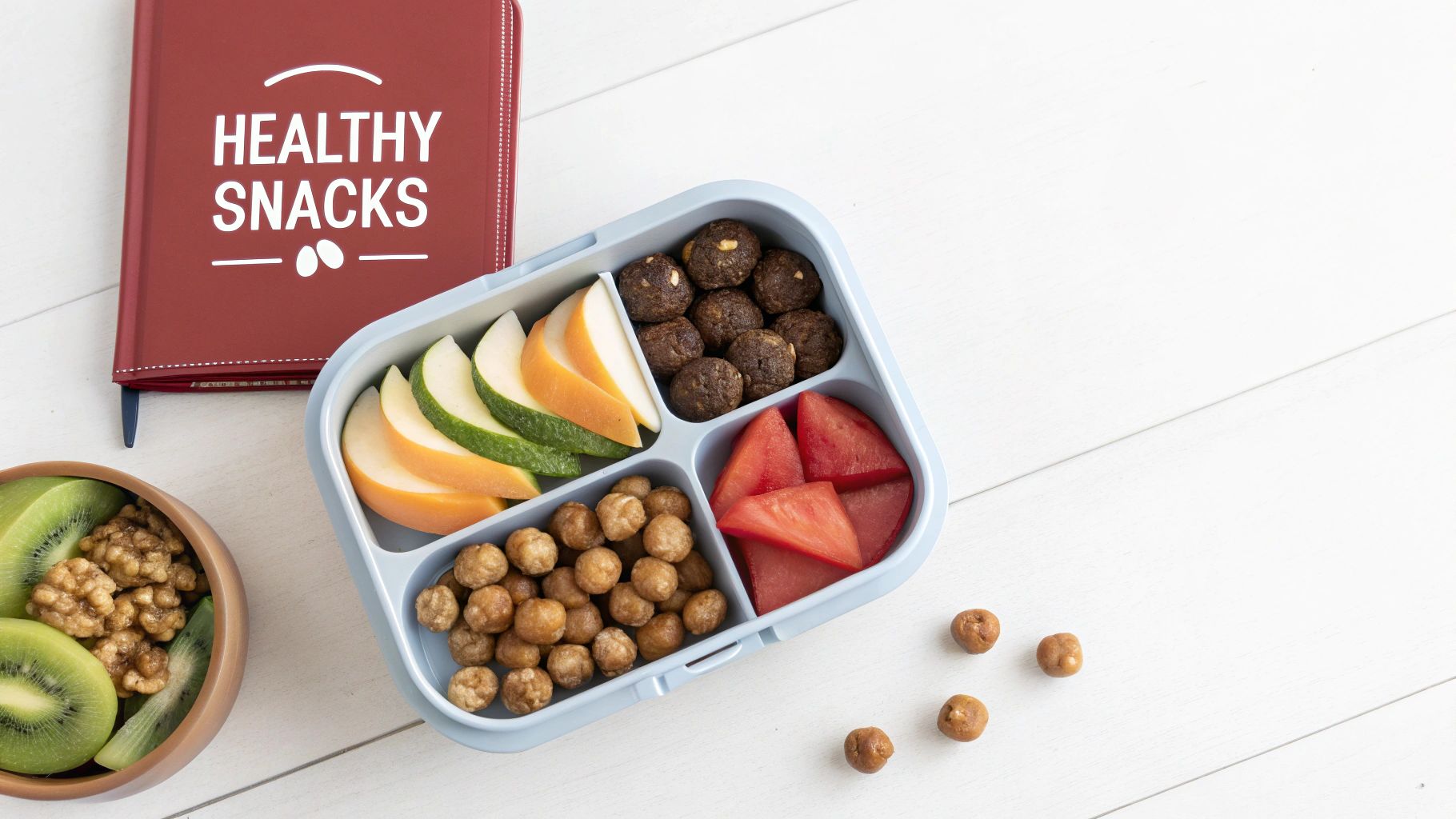
Many of those go-to snacks are packed with hidden sugars, refined flours, and a list of ingredients you can’t pronounce. They’re notorious for causing that dreaded afternoon energy crash, leaving kids sluggish right when they need to be focused and learning. The real challenge isn't just finding something healthy, but finding something your kids will be genuinely thrilled to eat.
How to Decode Snack Labels
Your best defense is becoming a savvy label-reader. It sounds intimidating, but you can totally do this! Instead of getting lost in all the numbers, just focus on two key areas: the ingredients list and the sugar content.
- Scan the first five ingredients: Ingredients are listed by weight, so the first few make up the bulk of what you're buying. If sugar, high-fructose corn syrup, or other sweeteners are near the top, that’s a red flag.
- Look for whole foods: Seek out snacks where the main ingredients are things you actually recognize—like organic oats, dates, nuts, seeds, or real fruit. These provide fiber and nutrients, not just empty calories.
- Check the "Added Sugars": This line item is your secret weapon. It separates the naturally occurring sugars (like those in an apple) from the sugars added during processing. Your goal? Find snacks with minimal to zero added sugars.
Once you know what to look for, you start to see past the flashy marketing and can focus on what’s actually fueling your child’s day.
Making Smarter, Tastier Swaps
The good news is you don’t have to sacrifice convenience or kid-appeal for good nutrition. Fantastic alternatives exist that check all the boxes. Instead of grabbing a sugary granola bar or a pack of cookies, consider a whole-food-based option like Skout Organic Kids Snack Bars. They’re made with simple, organic ingredients like dates and pumpkin seeds, delivering natural sweetness and energy without the sugar crash.
Plus, with flavors like Chocolate Brownie and French Toast, they feel like a total treat while packing a serious nutritional punch. For even more great ideas, check out our guide to the best snacks for school lunches.
Swapping a typical sugary bar for a whole-food alternative is one of the simplest yet most impactful changes you can make. It provides sustained energy for learning and playing, rather than a short-lived sugar rush followed by a crash.
It's amazing what a difference a few simple ingredient changes can make. Take a look at how a standard snack bar stacks up against a whole-food option.
The Snack Swap Showdown
| Nutrient | Typical Sugary Granola Bar or Cookie Pack | Whole-Food Snack Bar (e.g., Skout Organic) |
|---|---|---|
| Primary Sweetener | High-Fructose Corn Syrup, Sugar | Organic Dates, Real Fruit |
| Added Sugar | Often 10-15g or more | 0g Added Sugar |
| Fiber | Low (1-2g) | High (3-5g) from whole ingredients |
| Protein | Minimal, often from soy isolates | Plant-based from seeds & nuts |
| Ingredient List | Long, with artificial flavors & preservatives | Short & simple; all recognizable foods |
The difference is clear. Choosing snacks with whole-food ingredients gives your kids the steady energy they need to thrive, without the junk.
Fun and Easy DIY Snack Recipes
Getting creative in your own kitchen is another fantastic way to win the snack game. You control the ingredients, the sugar, and the cost. And when you get the kids involved in making them, they’re way more likely to actually eat them.
Here are a couple of no-fail, super simple recipes to get you started:
- No-Bake Energy Bites: In a bowl, mix 1 cup of rolled oats, 1/2 cup of sunflower seed butter, 1/3 cup of honey or maple syrup, and a splash of vanilla. Stir in some fun extras like mini chocolate chips or shredded coconut. Roll into small balls and chill for 30 minutes. That's it!
- Crunchy Roasted Chickpeas: Drain and rinse a can of chickpeas, then pat them completely dry (this is key for crispiness!). Toss with a tablespoon of olive oil and your favorite seasonings—a little paprika and garlic powder is amazing. Roast at 400°F for 20-30 minutes, until golden and crunchy.
These homemade options prove that packing an exciting, healthy snack doesn't have to be complicated. With a little label-reading know-how and a few easy recipes up your sleeve, you can pack snacks that are both parent-approved and genuinely kid-loved.
Solving Your Biggest Lunchbox Challenges
There’s no feeling quite like it: the heavy clunk of a lunchbox hitting the counter, followed by the sinking realization that it’s still mostly full. It’s a frustrating moment for any parent, but you are definitely not alone. This is your practical playbook for troubleshooting the most common hurdles and turning lunchbox fails into wins.
When that carefully packed meal comes home untouched, it's easy to feel like your efforts went to waste. But instead of getting discouraged, let's treat it like a puzzle. By figuring out the "why" behind the uneaten food, we can make simple adjustments that make a huge difference.
Taming the Picky Eater Palate
For many picky eaters, a mixed casserole or a complex sandwich can feel totally overwhelming. The secret weapon here is deconstruction. Instead of packing a fully assembled taco, pack the components separately: a small container of seasoned ground turkey, a little shredded cheese, a scoop of black beans, and a couple of small tortillas or a handful of tortilla chips.
This "DIY" approach transforms lunchtime into an activity. It gives kids a sense of control and ownership over their meal, making them far more likely to actually engage with it. You can apply this trick to almost anything:
- Pizza Lunchables: A mini whole-wheat pita, a tiny container of marinara sauce, shredded mozzarella, and a few slices of pepperoni.
- Yogurt Parfaits: A container of Greek yogurt with separate baggies of berries and granola for them to mix in.
- Sandwich Skewers: Cubes of bread, rolled-up turkey, and cheese squares on a kid-safe skewer.
Another simple but effective trick is to use fun shapes. A star-shaped sandwich or cucumber slices cut into flowers can suddenly make the same old food seem new and exciting. It’s a small detail that shows you’re thinking of them and adds a bit of joy to their meal.
Getting kids involved in the kitchen is one of the most powerful ways to encourage adventurous eating. When they help wash the veggies or assemble their own lunch, they build a positive connection with their food.
By involving them in the prep from an early age—maybe with the help of one of the safest toddler tower for kitchens—you can foster a sense of pride and curiosity that extends all the way to the lunchroom.
When Time Is the Enemy
Sometimes the issue isn't pickiness but a packed schedule. The dreaded "I didn't have time to eat" complaint is common, especially with short lunch breaks filled with socializing. For these kids, the key is to pack grab-and-go, bite-sized foods that are easy to eat quickly.
Think less about a formal "sit-down" meal and more about a collection of high-energy snacks. This might look like cheese cubes, hard-boiled eggs, mini muffins, grapes, or Skout Organic Kids Snack Bars. These items require zero utensils and can be eaten in just a few bites, ensuring they get the fuel they need even on the busiest days.
Navigating Dietary Restrictions with Ease
Dealing with dietary needs like gluten, dairy, or nut allergies doesn't mean lunches have to be boring. Today, there are amazing one-to-one swaps that make things easy without sacrificing flavor or texture.
Here are a few simple substitutions to keep in your back pocket:
| Restriction | Common Item | Easy & Delicious Swap |
|---|---|---|
| Gluten-Free | Wheat Bread/Crackers | Corn tortillas, rice cakes, certified GF oat-based crackers. |
| Dairy-Free | Cheese Stick/Yogurt | Hummus, guacamole, dairy-free yogurt (coconut or almond). |
| Nut-Free | Peanut Butter | Sunflower seed butter or pumpkin seed butter. |
These simple shifts can open up a whole new world of lunchbox possibilities. The goal is to focus on what they can have, not what they can't. By troubleshooting these common challenges with a bit of creativity, you can ensure your healthy efforts pay off and the lunchbox comes home satisfyingly empty.
Got questions about packing lunches? Of course you do. Even the most seasoned lunch-packing pro runs into little snags now and then. This is where we tackle the common "what ifs" and "how tos" that pop up during the morning rush.
Think of this as your go-to guide for troubleshooting everything from keeping food fresh to battling the dreaded sandwich fatigue. We’ve got you covered.
How Do I Keep Foods Like Yogurt and Cheese Safe Until Lunch?
This one’s a biggie. Food safety is everything, especially when you’re packing dairy or other perishable items. The goal is simple: keep cold foods cold. An insulated lunch bag is your best friend, but it can’t do the job alone.
Tuck in at least one or two slim ice packs. We like to place one on the bottom and another right on top of the yogurt, cheese, or lunch meat. This creates a little chilly cocoon for the most sensitive items.
Here's a great little hack: Freeze a yogurt tube or a small, reusable water bottle. It works just like an ice pack to keep everything else cool, and by lunchtime, it’s thawed into a perfectly chilled treat.
Also, give your lunch a head start. Packing everything up the night before and popping the entire lunchbox in the fridge means it all starts out extra cold, staying well below that 40°F (4°C) food safety danger zone.
My Kids Are So Bored with Sandwiches… What Else Can I Pack?
Ah, sandwich fatigue. It’s a very real thing. The moment you see that half-eaten sandwich come back home, it’s time to shake things up. The easiest pivot is to think outside the bread.
"DIY Lunchables" are a guaranteed win for kids of all ages. You just pack all the little components separately and let them assemble their own meal at school. It's interactive, fun, and a perfect way to use up your batch-prepped ingredients.
- The Classic: Whole-grain crackers, cubes of cheese, and sliced turkey or salami.
- Pizza Party: Mini pitas or naan bread, a tiny container of marinara, and shredded mozzarella.
- Nacho Time: A handful of tortilla chips, a scoop of black beans or leftover taco meat, and sides of shredded cheese and salsa.
And never, ever underestimate the power of leftovers! Last night's dinner can feel like a gourmet lunch. A quality thermos is a game-changer for sending warm pasta, chili, or soup, which is especially nice on a chilly day. Things like pasta salads or tortilla pinwheels also make great no-reheat options that feel way more exciting than a plain old sandwich.
Which Vegetables Can I Pack That Won’t Get Soggy?
The soggy veggie is the absolute worst. It can ruin a perfectly good lunch! The trick is twofold: choose veggies that are naturally sturdy and pack them the right way.
Your best bets are the crunchy ones. Baby carrots, celery sticks, bell pepper strips, snap peas, and cherry tomatoes are all champs at staying crisp for hours. Sliced cucumbers are great too, just give them a quick pat with a paper towel to blot away any extra moisture before you pack them.
For salads, there’s one golden rule: always pack the dressing on the side. A tiny, leak-proof container is a must-have. And if you’re packing leafy greens like spinach or lettuce, make sure they are bone-dry before they go into the container. Moisture is the enemy of crispness.
Is It Actually Cheaper to Pack Lunches Than to Buy Them?
Oh, absolutely. The savings add up way faster than you’d think. Sure, there's the upfront grocery bill, but when you break it down, the per-meal cost of a homemade lunch is a fraction of what you'd spend at the cafeteria, a food court, or a restaurant.
Let's put it in perspective. A simple, healthy packed lunch might cost you $2-$4 to put together. A purchased lunch can easily set you back $8-$12—sometimes more. Over an entire school year, that's a difference of hundreds, if not thousands, of dollars saved per person.
When you buy ingredients in bulk, repurpose leftovers, and cut down on food waste, you’re not just feeding your family well—you're making a seriously smart financial choice. It's a win-win that pays off every single day.
At Skout Organic, we believe that knowing how to pack a great lunch is a true superpower. It gives you the ability to nourish your family with delicious, real food that fuels them for whatever their day holds. With a little planning and these tips, you can turn a daily chore into a simple, rewarding habit.
Ready to stock your pantry with snacks you can feel great about? Explore our delicious, kid-approved organic snack bars and cookies and make every lunchbox a little more exciting.