 Kids Snack Bars
 Soft-Baked Cookies
 Protein Bars
 Build A Box
 Shop All





Ever looked at a snack's ingredient list and felt like you needed a chemistry degree to understand it? Yup, you’ve just stumbled into the world of ultra-processed foods (UPFs).
Put simply, these are industrial creations that start with substances pulled from whole foods, which are then chemically modified and pieced back together into products designed to be so tasty you just can't stop. Let's dive in and make it all make sense!
Decoding Your Pantry: What Are Ultra-Processed Foods?
Imagine you’re standing in your kitchen. On the counter, you have a fresh, crisp apple—simple, whole, and straight from nature. Next to it is a box of colorful, fruit-flavored gummy snacks your kiddo loves. Both might hit that sweet spot, but their journeys to your pantry are worlds apart. That gummy snack? A classic example of an ultra-processed food.
These aren’t just your average packaged goods. UPFs are typically made using industrial techniques and ingredients you’d never find in a home kitchen. We're talking about things like hydrogenated oils, modified starches, artificial colors, and flavor enhancers. These additives are engineered to make products incredibly tasty, super convenient, and last forever on a shelf. Spoiler alert: So many of those common kids' snack bars and cookies fall squarely into this category.
From Whole Food to Industrial Creation
So, what separates a simple processed food from an ultra-processed one? It all comes down to the degree of transformation.
Think of it as a spectrum. On one end, you have whole foods. On the far other end, you have things that barely resemble their original ingredients.
This is where a food classification system called NOVA comes in handy. It was developed by researchers in Brazil to categorize foods based on how much processing they've undergone. It's a game-changer for understanding what's really in our food.
Here’s a quick breakdown to help you see the difference.
The Four NOVA Food Groups Explained Simply
| NOVA Group | What It Means | Common Examples |
|---|---|---|
| Group 1: Unprocessed or Minimally Processed | Foods in or close to their natural state. They might be cleaned, cut, or frozen, but nothing artificial is added. | Fresh fruits and vegetables, eggs, milk, meat, whole grains (like oats or quinoa), dried beans, frozen berries. |
| Group 2: Processed Culinary Ingredients | Ingredients extracted directly from Group 1 foods. Think oils, butters, sugar, and salt used for cooking. | Olive oil, butter, honey, maple syrup, sea salt. |
| Group 3: Processed Foods | A simple mix of Group 1 and Group 2 ingredients. They’re made to be more durable or taste better. | Canned beans, freshly baked bread from a local bakery, jarred pasta sauce (with simple ingredients), cheese. |
| Group 4: Ultra-Processed Foods (UPFs) | Industrial formulas with five or more ingredients, often including things you don't have at home (like emulsifiers, artificial flavors, and modified starches). | Packaged cookies, sugary cereals, soda, instant noodles, frozen pizzas, most packaged snack bars and chips. |
This simple framework helps you quickly identify how far a food has strayed from its original source. The more it's been altered, the more likely it is to be a UPF.
This visual helps paint the picture of how a food travels from its natural form to an ultra-processed product.
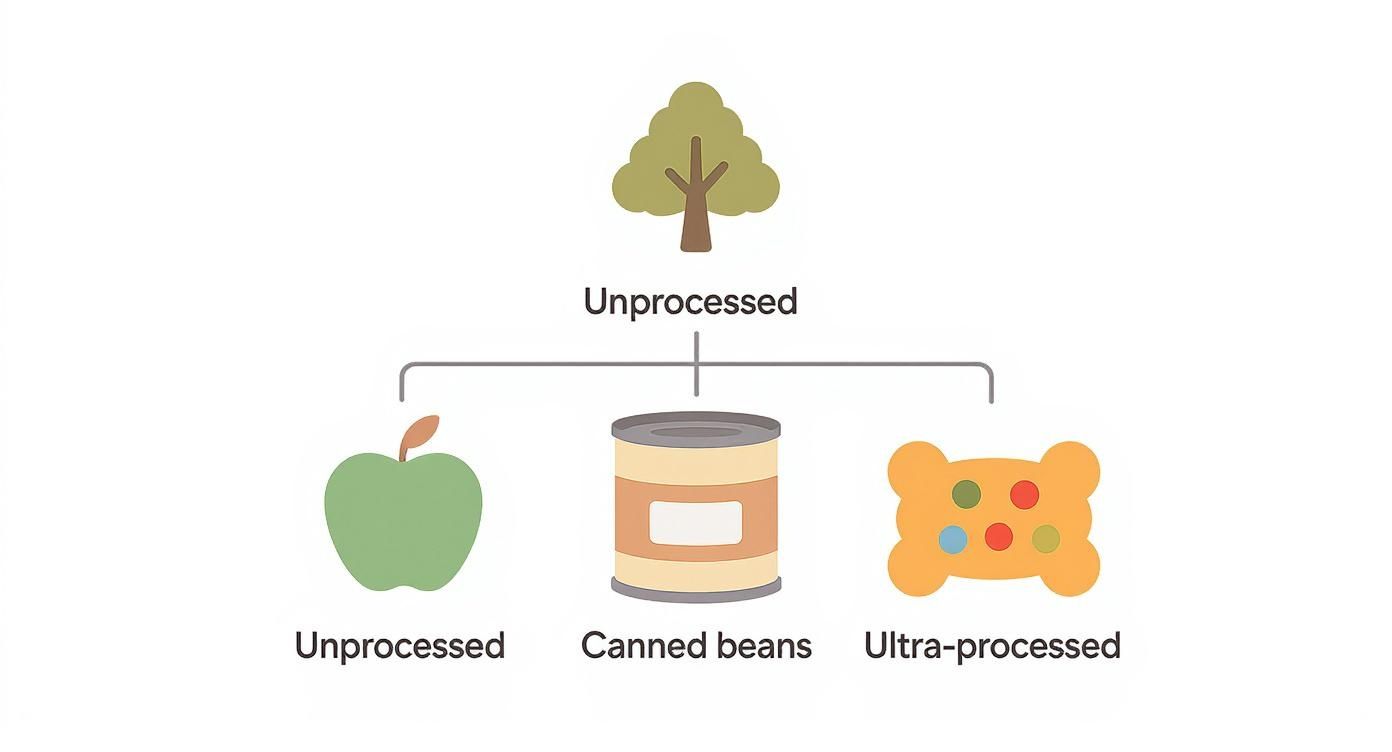
As you can see, the further a food moves down the line, the more it has been industrially manipulated.
This distinction is more important than ever because these foods now dominate modern diets. In fact, a startling CDC report found that approximately 55.0% of total caloric intake for Americans aged one and older came from ultra-processed foods between 2021 and 2023. That’s more than half of everything we eat. Yikes!
Understanding this spectrum is the first step toward making more mindful choices. When you start decoding your pantry, you can see the full range of food processing, from whole ingredients to complex products. A good example is looking at a guide to vegan meat substitutes, from whole foods to processed options, which helps illustrate this spectrum clearly.
Many of these products also rely on preservatives to extend their shelf life, and it can be helpful to learn the difference between what are natural preservatives versus their synthetic counterparts.
The Real Impact of an Ultra Processed Diet
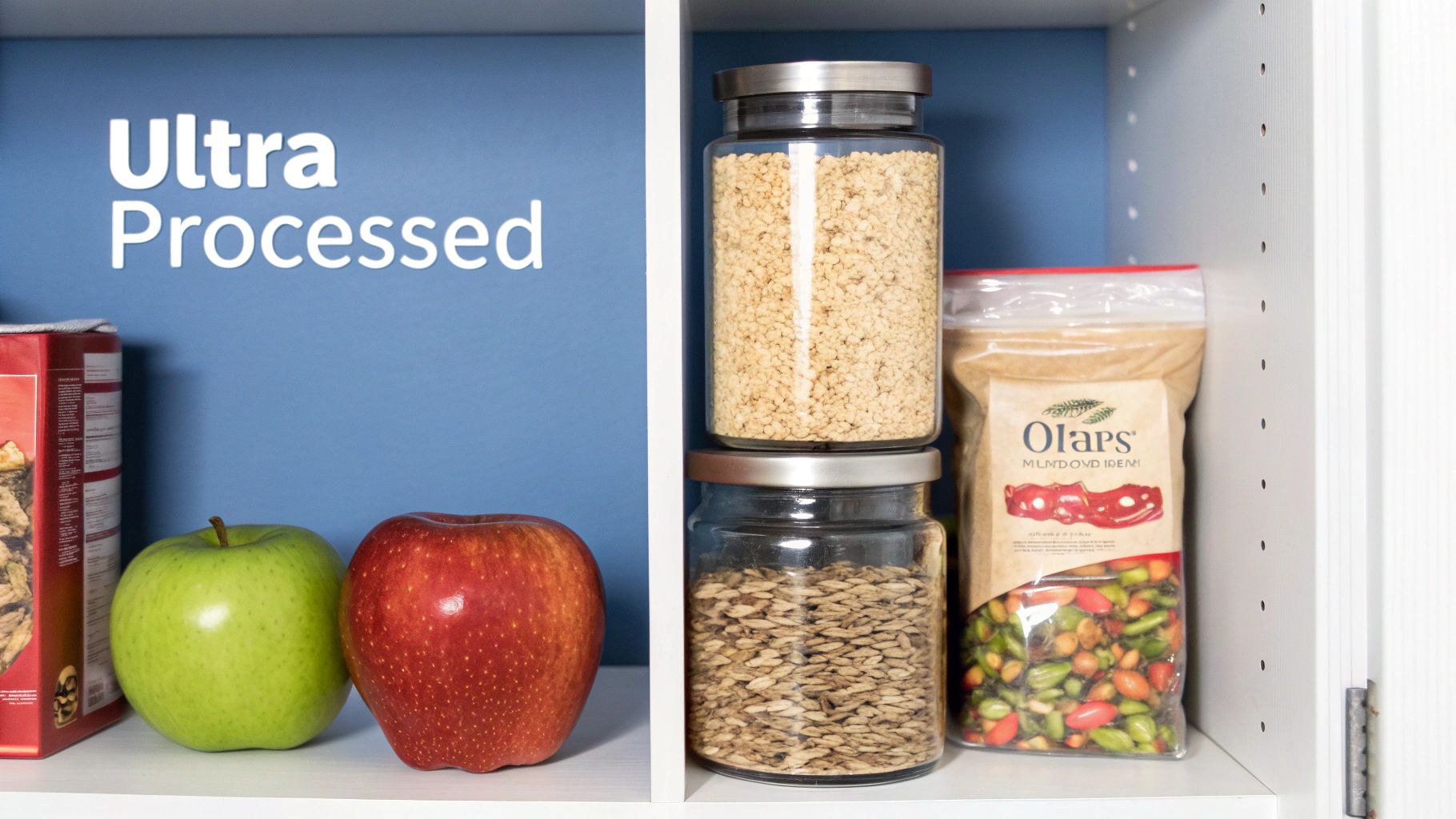
So, we know ultra-processed foods (UPFs) are industrial creations. But what does that actually mean for our bodies? It’s easy to write them off as just “junk food,” but the science is getting clearer every day, and the impact of a diet high in these products goes much deeper than we thought.
Think of your body like a high-performance car. It runs best on clean, premium fuel—whole foods. When you start filling the tank with UPFs, it’s like using a cheaper, lower-grade gas. The car might still run, sure, but over time, you’ll notice it sputtering, losing power, and eventually needing some serious repairs.
Designed to Be Irresistible
Ever opened a bag of chips planning to eat just a handful, only to find yourself staring at an empty bag moments later? You're not alone, and it's not a failure of willpower. UPFs are literally engineered for hyper-palatability.
This is a fancy term for when food scientists calculate the perfect storm of salt, sugar, fat, and flavorings to hit your brain's pleasure centers and keep you coming back for more.
These foods are designed to bypass your body's natural "I'm full" signals. The soft, easy-to-eat texture of many kids' snack bars and cookies means they can be eaten quickly without much chewing. This tricks your brain into consuming way more calories before it even has a chance to register fullness. It's an intentional design that can kickstart a cycle of overeating and craving.
The goal of hyper-palatability isn't just to make food taste good; it's to make it so rewarding that it overrides your natural hunger and satiety cues, encouraging you to eat more than you need.
The Health Risks Are Stacking Up
This constant cycle of eating hyper-palatable, nutrient-poor foods is directly linked to some pretty serious health concerns. This isn’t about scaring you—it's about giving you the information you need to make the best choices for your family's well-being.
The evidence is overwhelming. A massive review that analyzed data from nearly 10 million people found some startling connections. Diets high in these foods were shown to increase the risk of cardiovascular disease-related death by 50%, the risk of anxiety by 48%, and heart disease mortality by a staggering 66%. You can learn more about these ultra-processed food findings and see why it's becoming such a huge conversation in public health.
The main concerns tied to a diet high in UPFs boil down to a few key issues:
- Increased Risk of Chronic Disease: There are strong, established links between high UPF intake and conditions like obesity, type 2 diabetes, and heart disease.
- Nutrient Displacement: When your family fills up on UPFs, there’s simply less room for the good stuff. Nutrient-dense foods like fruits, vegetables, and whole grains—which provide essential vitamins, minerals, and fiber—get pushed off the plate.
- Poor Gut Health: The lack of fiber and the laundry list of artificial additives in UPFs can disrupt the delicate balance of your gut microbiome. A healthy gut is crucial for everything from digestion to immune function.
Understanding these risks is the first step. Next up is learning how to spot these foods so you can start making simple, positive changes.
Become a Food Detective and Read the Label
Ready to put on your detective hat? Navigating the grocery store can feel like solving a mystery, especially with flashy packages screaming "All Natural!" and "Made with Real Fruit!"
But the real clues aren't on the front of the box—they're hiding in plain sight on the ingredients list.
Learning to spot ultra-processed foods is your new superpower. Forget the marketing promises and flip that package over. This tiny block of text is where the truth lives, and a few key red flags can tell you everything you need to know.
A super long list of ingredients is often your first tip-off. If your grandmother wouldn't recognize an ingredient, that’s another major clue. Things like hydrogenated oils, modified corn starch, and artificial sweeteners are hallmarks of industrial food production, not home cooking.
Spotting the Usual Suspects
When you start looking, you’ll see the same culprits appear again and again in ultra-processed kids' snack bars, cookies, and cereals. These ingredients are designed to improve texture, extend shelf life, and make foods hyper-palatable, but they’re a sure sign that a product is far from its natural state.
Keep your eyes peeled for these common additives:
- High-Fructose Corn Syrup (HFCS): A highly processed sweetener linked to numerous health issues.
- Artificial Colors and Flavors: Chemical additives like Red No. 40 or "natural flavor" (which can be anything but) used to make products more appealing.
- Hydrogenated or Interesterified Oils: Fats that have been industrially altered to be more stable, often creating unhealthy trans fats.
- Gums and Thickeners: Ingredients like xanthan gum or guar gum are used to create a specific texture that you wouldn't typically use in your kitchen.
- Emulsifiers: Substances like soy lecithin or polysorbate 80 that keep oil and water from separating.
An ingredient list should read like a recipe, not a chemistry experiment. If you see a long list of unfamiliar, scientific-sounding terms, you're likely holding an ultra-processed food.
For a deeper dive into decoding what you're reading, check out our complete guide on how to read food labels to become an expert in no time.
This skill is invaluable, especially when trying to find genuinely healthy snacks for your kids. The difference between a simple, clean snack bar and a UPF version becomes crystal clear once you know what to look for.
Navigating the Kids Snack Aisle
Let’s be honest: the kids' snack aisle is a dazzling maze. It's a rainbow of bright boxes designed to catch your child’s eye while earning your trust with phrases like “whole grains,” “made with real fruit,” and “organic goodness.”
But flip those boxes over, and the story often changes. The ingredient list can look less like a recipe and more like a science experiment. This, right here, is the heartland of ultra-processed foods.
Many of those popular kids' snack bars, fruit gummies, and cartoon-shaped cookies are classic UPFs. They’re expertly engineered with added sugars, industrial seed oils, and a whole host of additives to nail that perfect, crave-able texture and taste. This isn’t about making parents feel guilty; it’s about pulling back the curtain on clever marketing so you can make choices that feel good.
How UPFs Rewire Young Palates
Ever offer your kid a juicy, sweet pear only to have them ask for a fruit snack instead? That’s the power of hyper-palatability in action.
When kids get used to the intense, engineered flavors of ultra-processed snacks, the subtle, natural sweetness of whole foods just can’t compete. Fruits and veggies can start to seem boring in comparison.
These snacks are designed for maximum reward. They melt in the mouth and deliver an instant hit of sugar and salt, training their taste buds to expect that level of intensity all the time. Over time, it gets a lot harder to get them excited about the simple, delicious flavors of real food.
And the stats show just how common this is. One analysis revealed that a staggering 61.9% of daily calories for kids and teens aged 1–18 came from ultra-processed foods—a rate much higher than for adults. You can explore the full data on youth consumption from the CDC to see the bigger picture.
What to Watch For on the Label
Becoming a savvy snack shopper means learning to look past the happy cartoon characters on the box. It’s all about flipping it over and scanning that ingredient list for a few tell-tale signs of a UPF.
Here are a few tips for your next grocery run:
- Look for short ingredient lists: The fewer ingredients, the better. If the list is a paragraph long and full of words you can’t pronounce, it's a red flag.
- Identify whole-food ingredients: You want to see things like "organic dates," "pumpkin seeds," or "apples" right at the top. If the first few ingredients are sugars, flours, and oils, it’s likely ultra-processed.
- Watch out for hidden sugars: Keep an eye out for high-fructose corn syrup, dextrose, and maltodextrin. These are all industrial sweeteners.
The goal isn’t perfection; it’s progress. Simply swapping out one ultra-processed snack a day for a whole-food alternative can make a huge difference in reshaping your child's palate and nutrition.
Making these changes doesn't have to be a battle. For some great ideas on where to start, check out our guide on what are the healthiest snacks for kids. It's all about finding simple, delicious swaps that your kids will actually love and you can feel great about.
Simple Swaps for Healthier Family Snacking
Alright, let's turn all this information into action. Knowing what ultra-processed foods are is one thing, but the real fun begins when you start discovering all the delicious and easy ways to upgrade snack time—without adding an ounce of stress to your day.
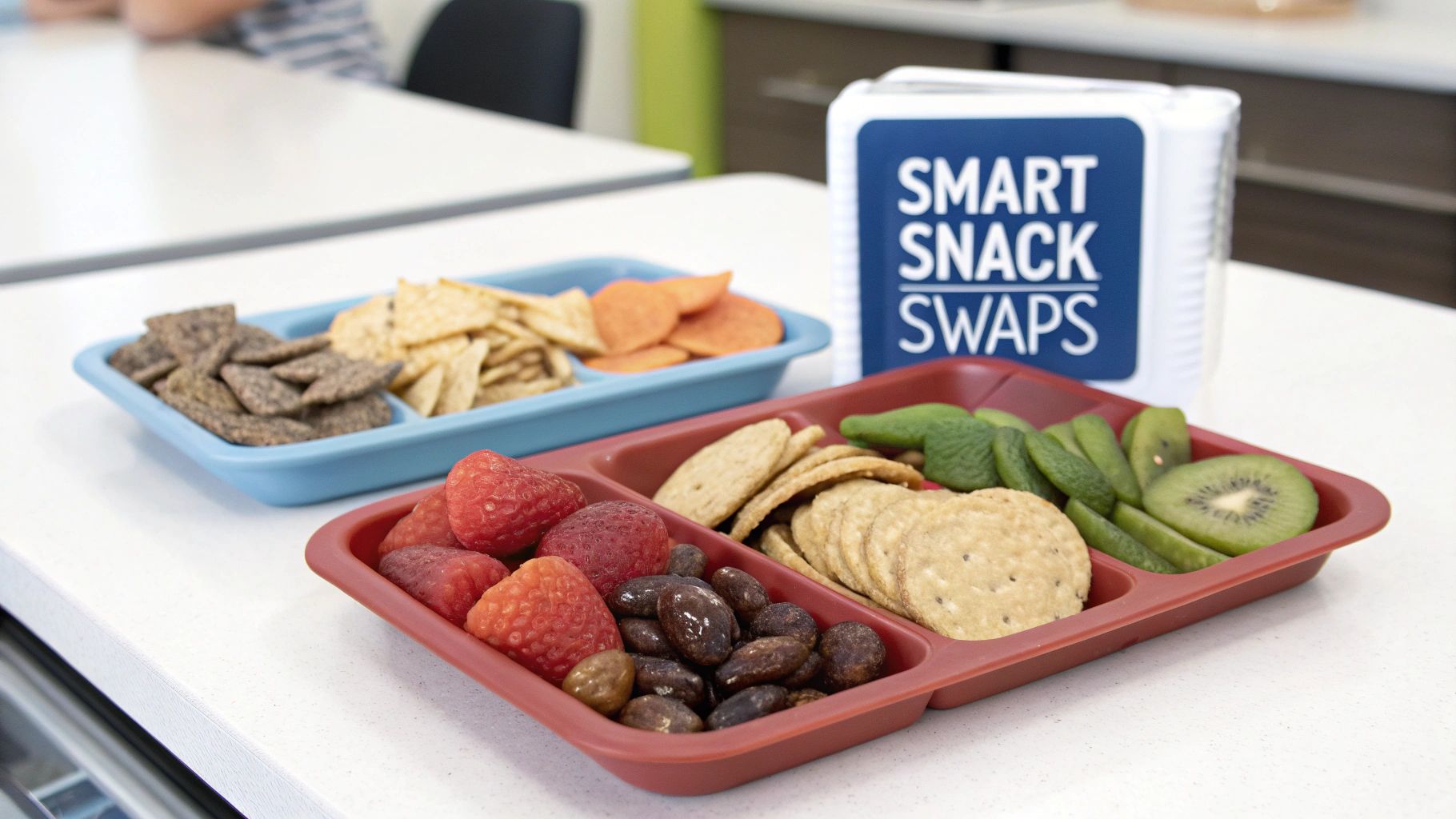
This isn’t about creating a long list of forbidden foods. Think of it more like a playbook of "try this instead!" The goal is to crowd out the ultra-processed snacks with options that are just as convenient and tasty but are made with ingredients you can actually recognize and pronounce. Instead of a lab-formulated kids' snack bar, imagine one made with just a handful of organic dates, sunflower seeds, and real berries. It’s that simple.
From UPF to Awesome Fuel
Making healthier choices doesn't mean you have to spend hours prepping in the kitchen. In fact, some of the best swaps are incredibly simple. It’s all about shifting from snacks built on refined flours, sugars, and additives to those built on whole-food foundations.
Take those popular kids' snack cookies, for example. Many get their texture and super-sweet taste from things like modified starches and high-fructose corn syrup. A fantastic alternative is a soft-baked cookie made from simple ingredients like almond flour and fruit. You still get that satisfyingly sweet treat, but you’re fueling your family with actual nutrition. This same idea applies when you bake at home—exploring healthier baking alternatives like using applesauce as an oil substitute is an easy way to cut down on processed oils and fats.
Here are a few quick ideas to get you started:
- Swap sugary yogurt tubes for plain Greek yogurt with a swirl of honey and a handful of fresh berries.
- Trade brightly colored fruit snacks for a handful of dried mango or a Skout Organic bar made with real fruit.
- Instead of cheesy crackers with a long ingredient list, try whole-grain crackers with a slice of real cheese.
The secret to successful snacking is making the healthy choice the easy choice. By stocking your pantry with better-for-you options, you set your family up for a win every time hunger strikes.
Upgrade Your Snack Game: Easy Swaps for Kids
To make it even clearer, let's look at a side-by-side comparison. Sometimes, seeing the difference between a typical UPF and a wholesome alternative can be a real "aha!" moment. This isn't about shaming any particular brand, but about helping you see the fundamental differences in how these snacks are made so you can make empowered choices for your family.
| Common Ultra-Processed Snack | Why It's a UPF | Healthier & Delicious Swap |
|---|---|---|
| Chewy Granola Bars with Candy Pieces | Often contains high-fructose corn syrup, hydrogenated oils, artificial colors, and a dozen other additives. | Skout Organic Kids Snack Bars: Made with a few simple ingredients like organic dates, sunflower seeds, and real fruit. |
| Fruit-Flavored Gummy Snacks | The first ingredients are usually corn syrup and sugar, with "fruit" coming from concentrates and artificial flavors. | A handful of fresh grapes, dried apple rings, or freeze-dried strawberries: These provide natural sweetness and fiber. |
| Packaged Frosted Snack Cookies | Made with refined white flour, partially hydrogenated oils, artificial flavors, and preservatives you can't pronounce. | Skout Organic Soft-Baked Cookies: Crafted with clean, plant-based ingredients and naturally sweetened with dates. |
These swaps are designed to be practical, tasty, and convenient, making healthy eating feel less like a chore and more like an easy win for everyone.
Your Questions About Ultra Processed Foods Answered
As you start looking at food labels and snack aisles with a fresh perspective, it's totally normal for questions to pop up. Let's tackle some of the most common ones so you can feel even more confident about the choices you're making for your family.
Are All Packaged Foods Considered Ultra Processed?
Not at all! This is a big one. The package isn't the problem; it’s what’s inside that counts. So many wonderful, minimally processed foods come in packages for convenience.
Think about canned beans (just beans, water, salt), plain yogurt, frozen vegetables, or natural peanut butter. These are all packaged but they aren’t UPFs. A food crosses the line into ultra-processed territory when industrial ingredients you wouldn't use in your own kitchen—like emulsifiers, artificial flavors, or high-fructose corn syrup—are added. When in doubt, let the ingredient list be your guide.
Does This Mean I Can Never Eat My Favorite Treats Again?
Absolutely not! Life is all about balance and joy, and that includes food. The goal here is awareness, not deprivation. Think of it as a gentle shift, aiming to make whole and minimally processed foods the stars of your diet most of the time.
Enjoying an occasional ultra-processed cookie or snack is perfectly fine. It's about making conscious, informed choices on the regular so you can savor those favorite treats without a shred of guilt. Progress over perfection is the name of the game.
If a Snack Is Organic or Gluten Free, Is It Healthy?
This is a fantastic question and a super common point of confusion. Labels like "organic" and "gluten-free" can feel like a green light, but they don't tell the whole story.
"Organic" tells you how the ingredients were farmed (without synthetic pesticides), and "gluten-free" just means the product doesn't contain gluten. But an organic, gluten-free kids' snack bar or cookie can still be loaded with refined starches, industrial seed oils, and a bunch of flavor additives, making it a classic UPF.
These labels are helpful, but they don't automatically mean a food isn't ultra-processed. Your most powerful tool is, and always will be, reading that ingredient list.
By asking these questions, you’re already taking a huge step toward building a healthier relationship with food for yourself and your family. It’s all about getting curious and making small, positive changes one snack at a time.
Ready to make snack time simpler and more delicious? Skout Organic offers a fantastic lineup of kids' snack bars and cookies made from simple, organic, and recognizable ingredients you can feel great about. Explore our tasty options and build your family's perfect snack box today.