
 Kids Snack Bars
 Soft-Baked Cookies
 Protein Bars
 Build A Box
 Shop All





Low FODMAP snack bars are your secret weapon for happy snacking without the tummy troubles. Think of them as your daily go-to when you need a quick pick-me-up that won’t leave your gut in knots. It’s all the taste and convenience, none of the digestive drama!
They slip past common IBS triggers like a smooth highway bypasses rush-hour traffic—no detours, no hassle. Perfect for busy parents packing lunchboxes, on-the-go professionals, and anyone who wants reliable, feel-good fuel.
Gut-Friendly Snacking With Low FODMAP Snack Bars
Every ingredient in these bars is hand-picked to keep those pesky fermentable carbs in check. What does that mean for you? Less bloating and a happier, calmer digestive system. High five!
Even the little ones get in on the fun. Soft-baked low FODMAP cookies and snack bars mean your picky eaters can still enjoy yummy flavors like chocolate chip or peanut butter—without the tummy trouble later. Imagine a world with fewer snack-time meltdowns!
- Reduced Bloating: Keeps high-FODMAP sugars and fibers to a minimum for gentle digestion. Say goodbye to that afternoon food baby!
- On-The-Go Nutrition: Portable bars that stabilize energy from school runs to work meetings. Your trusty sidekick for a busy day.
- Kid-Approved Flavors: From classic oatmeal chocolate chip to creamy peanut butter, there’s a flavor every youngster will beg for. We're talking lunchbox gold.
Families juggling school lunches, office snacks, and post-game refueling need simple solutions—not more stress. A stash of low FODMAP bars cuts down pantry guesswork and makes grocery shopping a breeze.
Preview Of Practical Tips
- Ingredient Spotlights that break down safe nuts, seeds, and grains.
- Real-World Label Decoding to help you spot hidden FODMAP culprits like a pro.
- Kid-Friendly Flavor Ideas ranging from awesome oatmeal cookies to soft-baked bars.
- Serving And Storage Hacks for fresh, yummy snacks all week long.
These pointers will help you make smart buys—whether you choose Skout Organic’s amazing lineup or get adventurous and whip up your own homemade bars.
What You’ll Discover
We'll start with the basics—what "low FODMAP" really means—and build your confidence step-by-step until you're a snack-selection superstar. By the end, you’ll know how to:
- Break down ingredients to spot safe nuts and grains.
- Decode labels and unveil sneaky FODMAPs.
- Recognize certification marks you can actually trust.
- Store and serve bars so they stay fresh and delicious.
You’ll walk away ready to assemble awesome snack boxes or grab a bar that feels as comforting and safe as a homemade treat.
These bars glide past IBS triggers like a smooth highway bypasses traffic.
Ready to dive into ingredient lists, certification badges, and flavor profiles? Let's master your low FODMAP snacking strategy together!
Understanding Low FODMAP Principles
Think of high-FODMAP carbs like a massive traffic jam in your digestive system. The low FODMAP diet helps clear the road by removing these troublemakers and then carefully reintroducing them, one by one. It's like fine-tuning your gut’s radio to find the clearest, calmest signal. Portion limits and ingredient thresholds are the rules of the road that determine if a snack bar truly earns its low FODMAP badge.
Key Phase Overview
- Elimination Phase: Remove all high-FODMAP ingredients. It's a temporary reset!
- Reintroduction Phase: Test one food at a time, in carefully measured portions, to see what your body likes.
- Portion Control: Keep servings small enough to prevent discomfort. This is your superpower!
A bar might include ingredients like inulin or honey, but only if they fall under super strict threshold levels.
Finding the right portion is like adjusting the volume on your radio—minor tweaks can make all the difference.
Certified low FODMAP bars come with an extra layer of trust. They’ve passed tough lab tests—threshold analysis, sensory evaluation, and batch checks—to spot hidden triggers before they ever reach your pantry. Simple recipe tweaks can make a world of difference for both kids and adults.
The global low FODMAP foods market hit USD 6.9 billion in 2024 and is on track to soar to USD 16.2 billion by 2034, fueled by innovative bars and grab-and-go snacks. For the full breakdown, check out this research report.
While you zero in on low FODMAP needs, remember to layer in broader general nutrition guidance to support overall health.
Applying Principles To Kids Snacks
When it comes to little tummies, simplicity and portion size are your best friends. Low FODMAP soft-baked cookies and snack bars should pass two tests: a clean, simple ingredient list and safe serving recommendations.
Imagine a chocolate chip cookie that swaps regular flour for a low-FODMAP version and keeps the add-ins in check. The result? No digestive roadblocks, just pure, sweet satisfaction for your little one.
Parents can follow the same elimination and reintroduction steps at home. Suggestion: Start with a small piece, see how they feel, and then adjust the portion up or down from there.
Key Tips For Choosing Kids’ Bars:
- Look for an official Low FODMAP certification logo. It's your peace-of-mind seal.
- Verify the serving size matches safe threshold guidelines.
- Pick bars made with a handful of familiar ingredients like rice flour or rolled oats.
Practical Swap Ideas:
- Swap honey for maple syrup to cut back on excess fructose.
- Trade chicory root (inulin) for rolled oats at ≤ 30 g per bar.
- Limit almonds to 10 nuts in a soft-baked cookie to manage galactan levels.
By mastering these swaps, you’ll confidently select—or bake—snack bars that glide past common triggers. Next up, let’s become label detectives!
Identifying Low FODMAP Ingredients
Peeking at a snack bar label can feel like trying to crack a secret code. On one side, you’ve got gut-friendly goodies; on the other, fermentable foes just waiting to cause a stir.
Think about almonds. Sticking to 10 nuts or fewer delivers a protein-packed crunch without the trouble. But drizzle on a ton of honey, and you’ve just invited extra fructose to the party.
This guide will walk you through ingredient by ingredient, so you can confidently pick bars that keep everyone's tummy calm and happy.

That infographic lays out the FODMAP process—Eliminate, Reintroduce, Portion—in a clean visual flow. You’ll see clear icons for no-entry, radio buttons, and a scale to guide you through safe servings.
Portion control is the traffic light of gut health—green means go, red means stop.
Safe Low FODMAP Ingredients
- Nuts: Almonds (max 10 nuts), macadamia (≤ 75 g). A little goes a long way.
- Seeds: Chia and flax (≤ 2 tbsp). Tiny but mighty plant-powered omegas.
- Grains: Rolled oats (≤ ¾ cup), rice flour. Gentle sources of fiber.
- Sweeteners: Maple syrup, rice malt syrup. Just enough sweetness without the overload.
Mini Case Study
Emma swapped honey for maple syrup in her homemade bars. Within days, her 5-year-old’s belly aches all but disappeared. A small change made a huge difference!
Red Flag Ingredients
- Honey or agave exceeding 1 tbsp
- Inulin (chicory root) above trace amounts
- Dried fruits—dates, figs—when portion size isn’t tightly controlled
Cutting out these sneaky offenders can seriously reduce bloating for both kids and adults. Our suggestion? Keep your servings small, jot down any symptoms, and reintroduce one ingredient at a time.
Check out our guide on clean protein bars for more low FODMAP recipes and clever label tips.
In 2024 the FODMAP-friendly snack bars market hit USD 1.2 billion and is on track to reach USD 3.4 billion by 2033, highlighting booming innovation. Discover more insights about this segment.
Ingredient Comparison For Low FODMAP Snack Bars
To help you swap ingredients or pick a ready-to-eat option, here’s a quick cheat sheet:
| Ingredient | FODMAP Category | Suitable For Low FODMAP | Notes |
|---|---|---|---|
| Almonds (10 nuts) | Fructans | Yes | Keep to ≤10 nuts per serving |
| Peanuts (30 g) | Galactans | Yes | Protein punch with safe portion |
| Honey | Excess Fructose | No | Swap for maple syrup |
| Inulin (chicory root) | Fructans | No | Often hidden in flavoring blends |
| Rolled Oats (¾ cup) | Fructans | Yes | Use certified gluten-free oats |
Use this table to build your own recipes or scan labels at the store. Swap out red-flag items and you’ll be on your way to a happy gut.
Mix And Match Ideas
- Turn oats into rice-puff cookie bars for a satisfying crunch that kids love.
- Stir in dark chocolate chips (≤ 30 g) for a playful, yummy twist.
- Swap nuts for pumpkin seeds (≤ 40 g) to make nut-free snack bars for school.
These easy swaps work equally well for kids’ lunchboxes and your office snack drawer. Experiment with mini cookie shapes or fun flavors like cinnamon-oat.
Grab your favorite low FODMAP ingredients and get creative. With a few smart swaps, everyone can snack safely—and deliciously.
Snack smart, snack happy!
Decoding Labels And Certifications
Spotting that Certified low FODMAP mark on a snack label is like getting a green light at a busy intersection. Whether you’re grabbing bite-size bars for the kids or soft-baked cookies for yourself, that seal takes a huge load off both your shopping stress and your stomach. It’s a guarantee that every ingredient has been lab-tested against safe serving thresholds.
That said, labels can still be tricky. Terms like no high-FODMAP sugars can sometimes hide oversized portions. For instance, a bar might boast about its low FODMAP ingredients "per serving" but list that serving as 80 g, when the Monash guidelines recommend a 30 g ceiling. Sneaky!
Reading Certification Marks
Here’s how to separate the real-deal badges from the wannabes:
- Visit the brand’s website and look for Monash University accreditation.
- Seek out the FODMAP Friendly logo, usually near the nutrition facts.
- Scan the barcode with trusted apps like the Monash FODMAP app or FoodMaestro.
A quick scan can save you hours of label-reading—and a potential stomachache later.
Spotting Serving Size Tricks
- Cross-check the serving size against Monash’s 30 g portion guide.
- Flag any sugar alcohols (sorbitol, maltitol) and note the grams per serving.
- Beware of vague disclaimers like “may contain up to 2 g.”
Kids' snack bars often highlight sugar alcohols in bold fonts. Our suggestion is to aim for bars with ≤ 2 g polyols per serving—whether you’re packing them for little hands or your own snack drawer.
| Label Phrase | True Test |
|---|---|
| Certified low FODMAP | Accredited by Monash or FODMAP Friendly |
| No high-FODMAP sugars | Confirm sugar alcohol content in grams |
| Serving size 50 g | Verify against the 30 g safe portion |
Digging Into Hidden Terms
“Natural flavors” might sound innocent, but it can be a hiding spot for things like chicory root extract or inulin. Think of it like a nickname—it’s handy until you realize you don’t know the real identity behind it.
Scan for suffixes ending in “-ol” or “-itol.” These often signal sugar alcohols that can trigger discomfort. A quick glance at your app or a trusted ingredient list keeps those surprise FODMAPs at bay.
Reading a nutrition panel can feel as simple as scanning a barcode at checkout once you know what to look for. Parents can breeze through kids’ snack bars and cookies knowing each bite aligns with dietary needs. Check out our guide on reading food labels for more deep dives.
Armed with these decoding strategies, choosing low FODMAP snack bars is no longer guesswork. You’ll shop faster and snack happier. Ready for the next step in your low FODMAP snacking adventure?
Next, we'll talk about picking the perfect bar for everyone in the family.
Choosing The Right Snack Bar For Every Age
Finding a low FODMAP snack bar that works for everyone in the family goes way beyond just scanning the ingredient list. It’s about matching the flavor, texture, and nutritional punch to what each person actually needs—and wants. It's a snack-matching game!
Kids, for instance, are usually drawn to fun shapes and familiar flavors like chocolate chip or peanut butter. Bright packaging or a friendly animal mascot can turn a simple snack into the highlight of their day.
And for parents, allergy-safe options are a huge sigh of relief, especially when navigating strict school policies. Bars that are free from common allergens like dairy, tree nuts, or sesame can make life so much easier.
What Kids Need In A Snack Bar
- Soft-Baked Texture: Little teeth need something they can handle. Chewy, cookie-like bars are easier to manage and reduce the risk of choking.
- Familiar Flavors: To win over a picky eater, stick to the classics. Simple flavors like vanilla, cinnamon, or a hint of chocolate are usually a safe bet.
- Kid-Sized Portions: Small tummies don't need a massive bar. Look for servings around 15–20 g to provide just enough fuel without overloading them with fiber.
A good rule of thumb for portion sizes:
- Toddlers (1–3 years): Half of a 15 g bar is plenty.
- Preschoolers (4–6 years): A full 20 g bar is a great fit.
- School-Aged Kids (7–12 years): They can typically handle a full 25 g bar.
Comparison Of Snack Bars For Kids Vs Adults
To make those family snack decisions a little easier, this table breaks down some great low FODMAP options, highlighting their key features and certifications.
| Bar Name | Age Suitability | Key Benefits | FODMAP Certification |
|---|---|---|---|
| Skout Organic Peanut Bars | 4–12 years | Gentle fiber, soft texture | Certified Low FODMAP |
| Crunchy Protein Bite | 7–12 years | Allergy-friendly, no dairy | Monash Accredited |
| Mini Oat Chocolate Chip | 3–8 years | Sweet taste, easy chew | FODMAP Friendly |
Matching the right bar to the right person helps keep everyone happy and symptom-free.
What Adults Are Looking For
Adults usually have different priorities. We’re often hunting for a solid balance of protein and fiber to get us through a busy day. A bar with 8–12 g of protein is perfect for supporting muscle recovery after a workout or just beating that 3 p.m. slump.
A well-balanced bar will also have a moderate amount of fiber (3–5 g) without being loaded with polyols, which can cause digestive issues. This combo helps sustain your energy levels without any unwanted gut drama.
You’ll also find bars designed for specific moments, like post-workout options with added electrolytes or bite-sized cookie bars with extra oats for slow-release carbs—perfect for a quick office snack.
Get Creative With Your Snacks
- Power Up: Suggestion: Pair a protein bar with a small handful of low FODMAP nuts like macadamias (up to 75 g).
- Make a Parfait: Slice up a soft-baked cookie bar and layer it with lactose-free yogurt for a delicious treat.
- Breakfast Boost: Crumble a bar over your cereal for an easy, on-the-go breakfast mix.
It's clear that digestive health is on everyone's mind. The gut-friendly snacks market was valued at an impressive USD 1.70 billion in 2024, showing just how much people are looking for snacks that make them feel good.
“Selecting bars that satisfy both taste buds and digestive needs is the secret to keeping the whole family smiling and symptom-free.”
Beyond the usual grocery aisles, you can often find great gut-friendly options in modern snack vending machines, which is super convenient when you're in a pinch.
And if dairy is a concern for your family, you might find our guide to dairy-free protein bars helpful for even more snack ideas.
By keeping portions, flavors, and certifications in mind, parents and adults can confidently grab a bar that not only tastes great but also keeps their gut happy.
Serving, Storing, And Troubleshooting
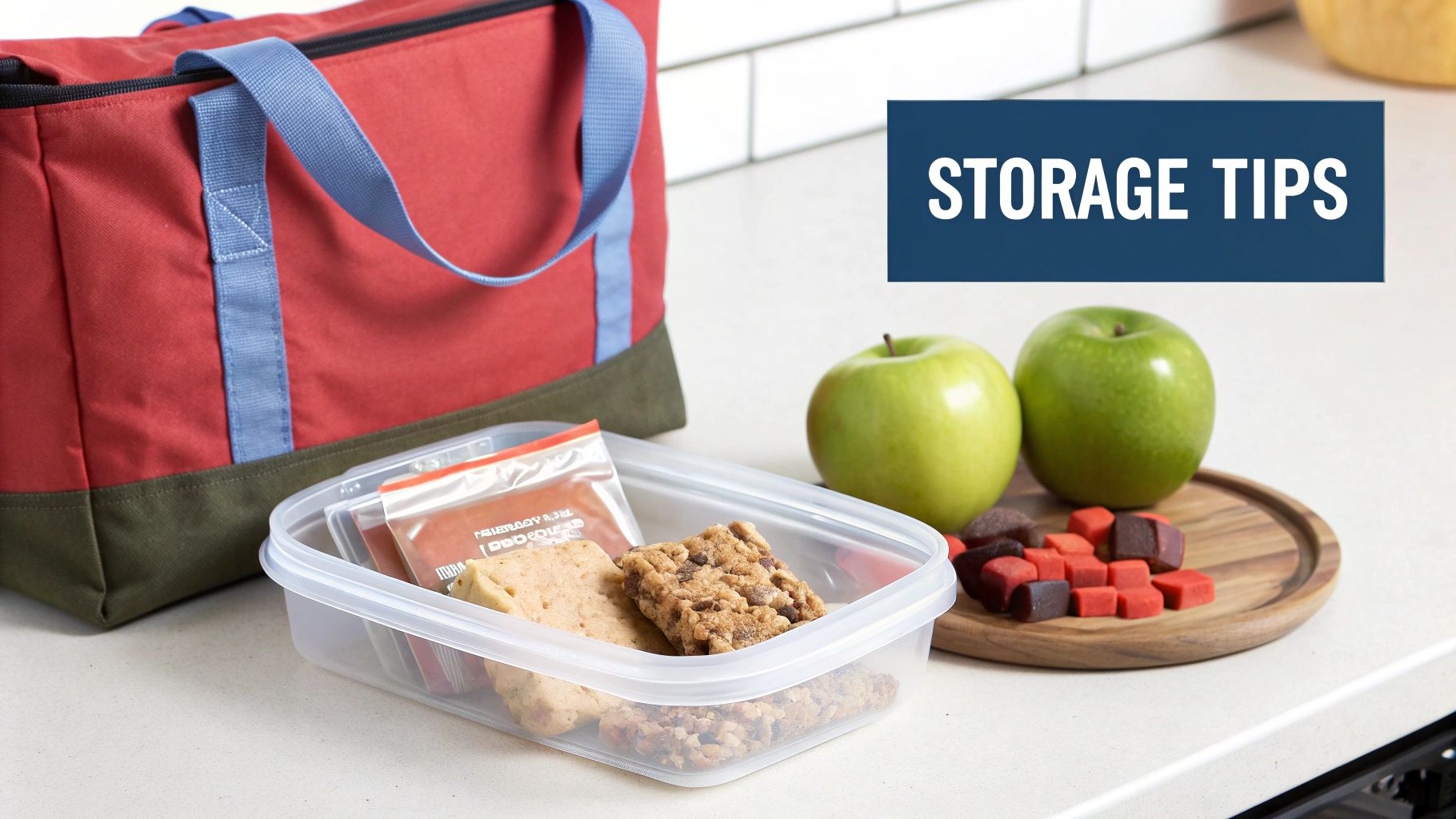
You’ve done the hard part—you’ve navigated the grocery aisles and found the perfect low FODMAP snack bars for your family. Success! But now, how do you keep them tasting fresh and, just as importantly, keep them interesting? With a little smart storage and a few creative serving ideas, you can turn a simple bar into a treat everyone looks forward to.
Think of your snack bar as the star of the show. It's fantastic on its own but even better with a supporting cast. For a fun after-school snack, I like to slice a soft-baked cookie bar into bite-sized pieces and let the kids dip them into lactose-free yogurt or a safe-serve of peanut butter.
Creative Serving Ideas
Let’s be honest, snack-time boredom is real. Getting creative not only keeps things fresh but can also sneak in a little extra nutritional value. A little flair goes a long way, especially with picky eaters. Here are a few suggestions:
- Parfait Power-Up: Crumble a bar and layer it with lactose-free yogurt and low FODMAP berries. It looks fancy, tastes amazing, and is surprisingly satisfying.
- Nut Butter Boost: Spread a thin layer of almond butter (max 1 tbsp) on top of a bar for an extra dose of protein and healthy fats. It’s simple but a total game-changer.
- Frozen Fun: On a warm day, chop a bar into small pieces and mix it into a scoop of low FODMAP ice cream or sorbet for a cool treat with a nice textural crunch.
These simple tricks elevate the whole snacking experience, making it feel less like a dietary "rule" and more like a fun culinary adventure.
Smart Storage For Lasting Freshness
To keep your low FODMAP snack bars from going stale or getting hard, storage is key. The goal is to lock out air and moisture, preserving that just-right texture and flavor. Your best bet for most bars is an airtight container tucked away in a cool, dark pantry.
Treat your snack bars like treasure. Keep them in an airtight chest (or container) to protect their flavor and crunch from pantry pirates like air and humidity.
If you’ve whipped up a batch of homemade bars, separating the layers with a little parchment paper is a great trick to keep them from sticking together. For store-bought bars, always try to reseal the original packaging as tightly as you can, or just pop them into a dedicated snack container.
Troubleshooting Common Snack Scenarios
Even with the best planning, you might run into a few hiccups. What if a new flavor of your favorite kids' bar has an unexpected ingredient? Or what if you accidentally ate a little more than the recommended portion?
First off, don’t panic. If you start feeling symptoms, just make a note of what you ate and how much. This isn't a failure—it's valuable data for your food journey. If you suspect a specific ingredient, try avoiding it for a few days and see if things improve. If it was just a portion-size slip-up, simply dial it back next time.
Remember, the low FODMAP diet is a learning process, not a pass/fail test. Every snack is just another opportunity to better understand what makes your body feel its best.
Got Questions? We've Got Answers
Let's be honest, navigating the world of low FODMAP snacks can feel like a pop quiz. Here are some of the most common questions we hear, answered.
Are all nuts okay in low FODMAP bars?
Most nuts are perfectly fine, as long as you stick to the right portion sizes. A good rule of thumb is that a handful of certain nuts is usually safe. For instance, almonds are good up to about 10 nuts, while you can enjoy up to 30g of macadamias or peanuts.
The real watch-out? Seasonings. Garlic powder or onion extract can sneak into nut coatings and quickly turn a safe snack into a symptom trigger.
A few safe bets per serving:
- Almonds (≤ 10 nuts)
- Peanuts (≤ 30 g)
- Macadamia nuts (≤ 30 g)
- Pecans (≤ 20 g)
So, how many bars can I eat?
Just stick to one bar at a time. It’s tempting to grab another, but staying within the serving size recommended by Monash University is your best bet for keeping your gut happy. Going over can lead to an overload of fructans or polyols, which might bring on the bloating and discomfort you’re trying to avoid. One bar keeps things simple and your energy steady.
Can my kids eat these every day?
Absolutely! Kids can definitely enjoy low FODMAP snack bars daily, just with smaller portions in mind. Think about 15–20g for the little ones. Simple, classic flavors like a soft-baked oatmeal cookie or a peanut butter bar are usually a huge hit. Here's a suggestion: try rotating different flavors to keep snack time exciting and ensure they’re getting a good variety of foods throughout the week.
What to Do if Symptoms Pop Up
Help! A bar triggered my symptoms. Now what?
First off, don't panic. Take a breath and play detective. Try to pinpoint which ingredient or maybe even the portion size might have been the culprit. The next step is a gentle reintroduction, one small change at a time. For example, if you suspect honey was the issue, try a similar bar made with maple syrup instead and see how you feel over the next 3 days.
Think of it this way: tracking your snacks and how you feel turns guesswork into real, actionable data about your body.
Here’s a simple game plan:
- Cut your portion size in half. See how you feel over the next 24 hours.
- If you have a suspect ingredient, swap it for a known safe alternative and test that out.
- If all goes well, you can try reintroducing the original snack on day three to see if symptoms return.
And remember, it’s always a great idea to chat with a registered dietitian before making big changes, especially when you’re in the elimination or reintroduction phase of the diet.
These quick answers should help you and your family feel confident about adding low FODMAP snack bars to your routine. When you understand the ins and outs of portions, ingredients, and troubleshooting, every bite can be enjoyable and gut-friendly.
Ready to snack smarter? Grab your favorites from Skout Organic and explore the full range of organic, plant-based snack bars designed for happy digestion today.