 Kids Snack Bars
 Soft-Baked Cookies
 Protein Bars
 Build A Box
 Shop All




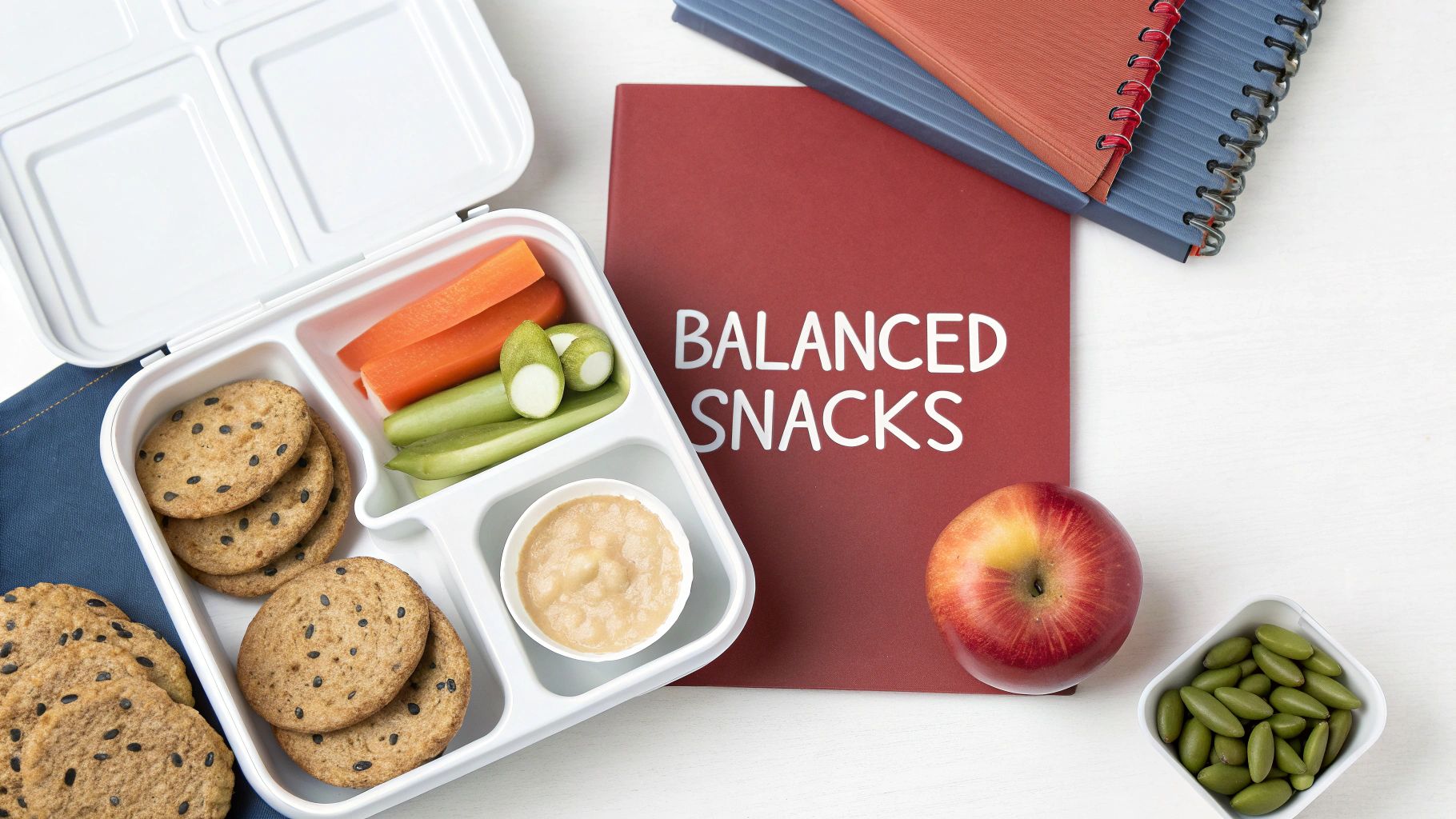
When it comes to the best snacks for school lunches, the goal is simple: find that sweet spot between the nutrition kids need and the flavors they actually want. A perfect snack is all about fueling their afternoon with steady energy from protein and fiber, not a sugary rush that leads to a crash. Think apple slices with seed butter, a small handful of trail mix, or a kid-friendly snack bar with a simple ingredient list.
The Secret to Packing Perfect School Snacks
Let’s be honest: packing a school lunch can feel like a daily puzzle. You want to send something healthy, but you really want it to get eaten. The secret isn't about finding one magical, perfect snack, but about understanding the building blocks of a great one. Once you nail the basics, you’ll win the snack game every single time.
This is all about the art of “power-packing.” You’re not just filling a space in the lunchbox; you're building a tiny fuel source designed to prevent that dreaded afternoon slump and keep them focused for learning and play.
The Four Pillars of a Great School Snack
Think of the perfect snack like a sturdy little table. It needs four solid legs to stand on. If one is wobbly or missing, the whole thing falls apart. Getting these four pillars right is the key to packing a lunchbox that consistently comes home empty.
So, what are these magic pillars?
- Nutrition: Does it offer lasting energy from things like protein, healthy fats, or complex carbs?
- Kid-Appeal: Is it tasty, colorful, and fun for them to eat?
- Convenience: Is it easy for you to pack and—just as important—easy for little hands to open and eat?
- Safety: Is it shelf-stable and free of any potential classroom allergens?
This quick-reference table breaks down what each pillar means in the real world, with some easy ideas to get you started.
The Four Pillars of Perfect School Snacks
| Pillar | What It Means | Easy Snack Examples |
|---|---|---|
| Nutrition | Provides sustained energy from protein, fiber, and healthy fats instead of a sugar rush. | Hard-boiled eggs, cheese sticks, roasted chickpeas, seed butter packets. |
| Kid-Appeal | Looks and tastes good to kids, with appealing textures and colors. | Brightly colored berries, fun-shaped crackers, yogurt tubes, fruit leather. |
| Convenience | Simple to pack in the morning and easy for a child to eat independently at school. | Pre-portioned trail mix, squeeze pouches, individually wrapped snack bars. |
| Safety | Won't spoil in a lunchbox and is free from common school-wide allergens like nuts. | Sunflower seeds, dried fruit, rice cakes, allergen-free cookies. |
Nailing all four is the secret sauce for snack success. It ensures you’re sending something that’s not just good for them, but something they'll genuinely be excited to find in their lunchbox.
As you can see, a successful snack isn't just about nutrition. It has to hit the mark on kid-appeal, convenience, and safety to truly be a winner.
And this isn’t just a challenge for parents—it’s a global effort. In 2022, over 407 million children received school meals or snacks, showing just how critical these small meals are in a child's day. That’s roughly one in every four school-age children worldwide, though access is much higher in high-income countries. You can discover more insights about global school nutrition programs and their impact.
How to Read Snack Labels Like a Pro
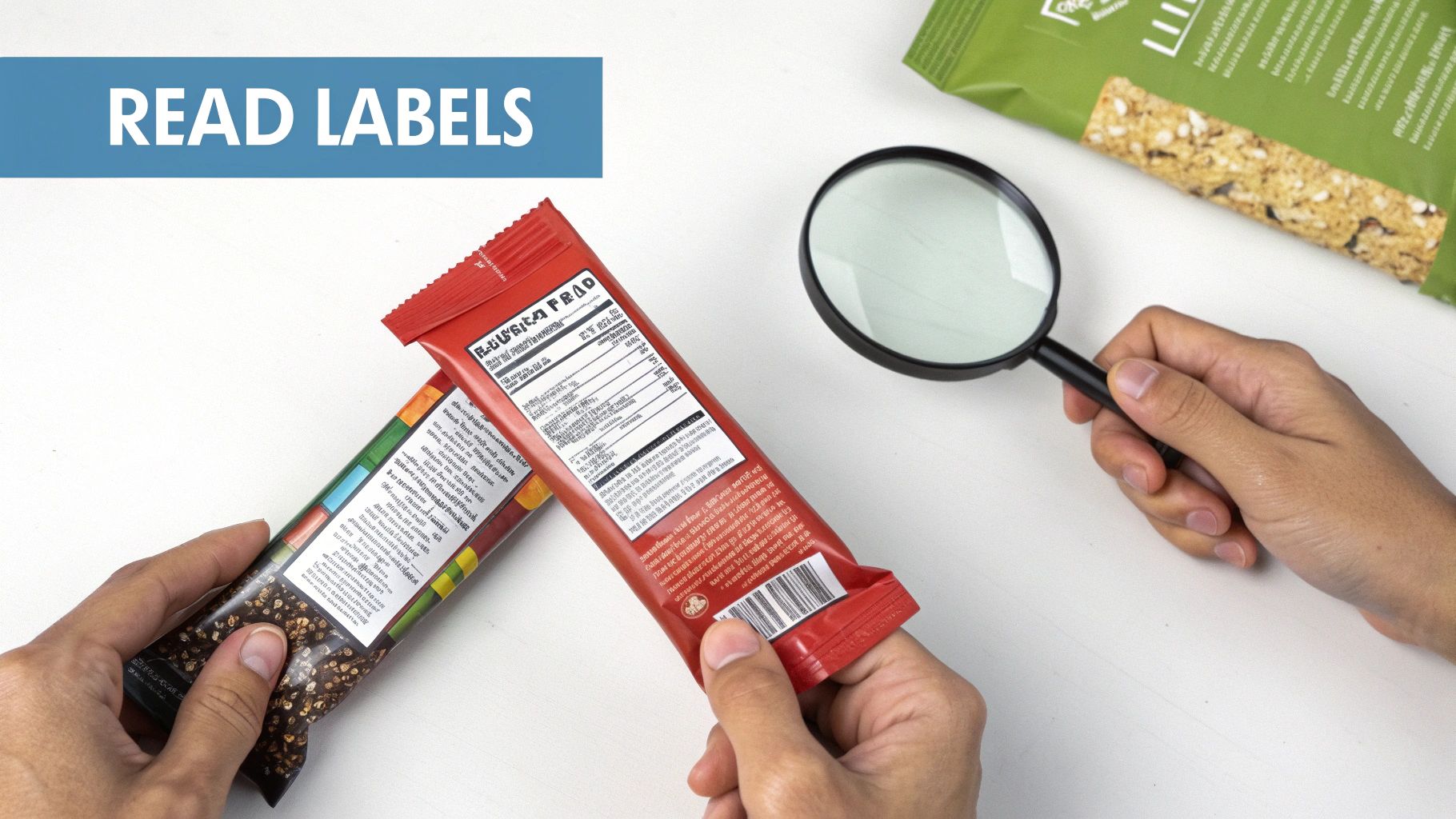
Let's be real: the snack aisle is a jungle of bright colors and bold claims. Phrases like “all-natural,” “made with real fruit,” and “whole grain goodness” are plastered everywhere, especially on snacks aimed at kids. But what do they actually mean? Learning to see past the flashy marketing is your secret weapon in choosing snacks that will actually fuel your child's day.
Think of it this way: a sugary snack is like kindling. It provides a quick burst of flame—that familiar sugar rush—but it burns out fast, leaving your kid tired and unfocused. A truly nutritious snack, however, is like a slow-burning log. It offers steady, reliable energy to get them through math class, recess, and everything in between.
Decoding the Ingredient List
The first place you should always look isn't the calorie count; it's the ingredient list. This is where the real story is told. Your goal is to find snacks with short, simple, and recognizable ingredients—stuff you could actually find in your own kitchen.
Here’s a quick cheat sheet for what to look for:
- A Short List: The fewer ingredients, the better. A long, complicated list is often a red flag for a highly processed product packed with additives and preservatives.
- Whole Foods First: The very first ingredients should be things you can easily picture, like "organic oats," "dates," or "sunflower seeds," not complex chemical names.
- Hidden Sugar Watch: Sugar loves to wear disguises. Keep an eye out for terms like high-fructose corn syrup, dextrose, cane juice, and fruit juice concentrate. They're all just different names for added sugar.
For a deeper dive into label reading, check out our complete guide on how to read food labels for more expert tips.
Comparing Two Snack Bars
Let's put this into practice. Imagine you’re choosing between two different kids' snack bars in the store.
Bar A (The Sugary Imposter):
The front of the box shouts "Made with Real Fruit!" but when you flip it over, the ingredient list starts with enriched flour, high-fructose corn syrup, and palm oil. It has 15 grams of sugar and only 1 gram of fiber. This is your kindling—a quick spike followed by an energy crash.
Bar B (The Better-for-You Choice):
This bar’s ingredient list is simple: organic dates, sunflower seeds, blueberries, pumpkin seeds. It has 8 grams of sugar (all from the fruit itself) and 3 grams of fiber. This is your slow-burning log, providing sustained energy that lasts.
The key difference isn't just the lower sugar content in Bar B; it's where the ingredients come from. Bar B is built on whole foods that provide fiber and protein, which are essential for keeping kids full and focused.
By prioritizing a simple, clean ingredient list, you can confidently cut through the noise of misleading health claims. You'll become a pro at spotting the imposters and choosing snacks that genuinely support your child's well-being, ensuring they have the fuel they need to thrive at school.
Your Guide to Allergy-Safe Snacking
Packing a lunchbox can feel tricky enough on a busy morning. When you add food allergies into the mix, it can feel like you're navigating a minefield.
With food allergies on the rise among children, creating snacks that are safe, inclusive, and delicious is more important than ever. The good news? It’s much simpler than you might think.
Many schools now have a strict "no nuts" policy, but true allergy-safe snacking often goes beyond just peanuts and tree nuts. Other common allergens like dairy, gluten, soy, and eggs can also be a real concern in a shared classroom environment. The goal is to create snacks that every child can enjoy without a second thought.
Thinking in terms of simple swaps is the easiest way to adapt your go-to snack ideas. This isn't about completely reinventing your lunch-packing routine; it's about making small, smart substitutions that open up a world of safe and tasty possibilities.
Easy and Delicious Allergy-Friendly Swaps
Making your child’s favorite snacks allergy-friendly is all about creative replacements. Instead of peanut butter, for instance, try sunflower seed or pumpkin seed butter—they offer a similar creamy texture and are packed with healthy fats.
For a deeper look into this topic, our guide on what snacks are nut-free and school safe is a fantastic resource to have in your back pocket.
To make those morning swaps even easier, here’s a quick-glance table to help you out.
Allergy-Friendly Snack Swaps
| Common Allergen | Instead Of This Snack... | Try This Safe & Delicious Alternative... |
|---|---|---|
| Peanuts/Tree Nuts | Peanut butter & crackers, granola with almonds | Sunflower seed butter with apple slices, nut-free granola made with seeds |
| Dairy | Cheese sticks, yogurt cups, milk-based cookies | Dairy-free cheese alternatives, coconut or oat milk yogurt, Skout Organic Cookies |
| Gluten | Wheat crackers, pretzels, traditional snack bars | Rice crackers, gluten-free pretzels, certified gluten-free oat-based bars |
| Eggs | Hard-boiled eggs, baked goods with egg | Roasted chickpeas, egg-free baked muffins made with flax "eggs" |
These small changes make a big difference, ensuring that every kid at the lunch table feels included and safe.
Remember, the goal of allergy-safe snacking is inclusion. By packing snacks that are free from common allergens, you’re not only keeping children with allergies safe but also teaching a valuable lesson in empathy and community care.
Spotting Allergens on the Label
Becoming a confident packer means knowing how to read a label for more than just sugar content. It's actually pretty straightforward once you know what to look for.
Food labels are legally required to list major allergens. Keep an eye out for a "Contains" statement, which will clearly list any of the top allergens present in the product, like "Contains: Wheat and Soy."
You might also see advisory statements like "May contain nuts" or "Processed in a facility that also handles peanuts." While not a guaranteed sign of cross-contamination, these labels are super important to note if you're packing for a child with a severe allergy. A quick scan of the label is all it takes to pack with total peace of mind.
Building a Week of Fun Lunchbox Snacks
Let’s be real—packing lunches can feel like a chore. The secret to breaking out of the same-old-snack rut is a little planning. It’s what transforms the daily grind into a fun, creative process and keeps those lunchboxes coming home empty.
The key is to think in themes, mixing up textures and flavors to keep your kid engaged and guessing what delicious surprise is next. This isn't just about fun; it’s about building balanced, healthy habits. The National School Lunch Program (NSLP) knows a thing or two about this, serving nearly 4.9 billion lunches to 29.7 million students every single day during the 2023–24 school year. It’s a huge reminder of how important nutritious, appealing food is in a school setting.
A Five-Day Snack Menu for Inspiration
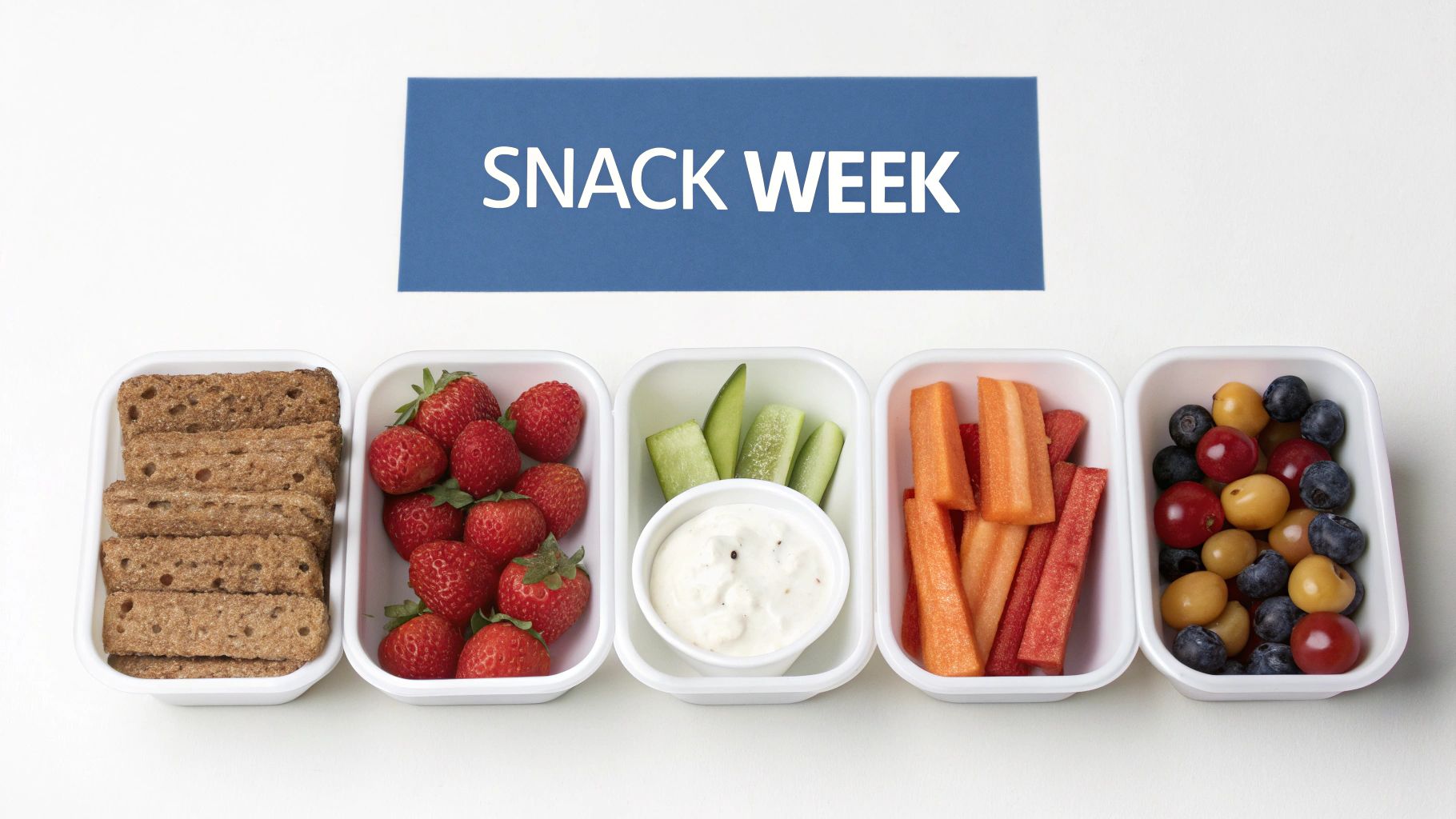
To get your creativity flowing, here’s a sample weekly menu packed with some of the best snacks for school lunches. These ideas are designed to be easy to prep, fun to eat, and full of the good stuff.
- Mindful Monday: A handful of roasted chickpeas and a Skout Organic Kids Snack Bar. This combo gives them a satisfying crunch from the chickpeas and a soft, fruity chew from the bar—the perfect balance of fiber and protein to start the week.
- Tasty Tuesday: Mini whole-wheat pitas with a side of guacamole for dipping. It’s a hands-on snack that pairs healthy fats from the avocado with complex carbs for energy that lasts.
- Dippable Wednesday: Baby carrots and cucumber sticks with a small container of hummus. This classic duo is a fantastic way to make veggies exciting and easy to eat.
- Crunchy Thursday: A small bag of popcorn (air-popped is best!) mixed with sunflower seeds and a few dried apricots. You get a homemade trail mix that’s sweet, salty, and completely nut-free.
- Fruity Friday: A colorful mix of fresh berries with a side of coconut yogurt for dipping. It’s a sweet, refreshing treat to celebrate the end of the school week.
A great tip for busy parents is to dedicate a small amount of time on Sunday to snack prep. Wash and chop veggies, portion out trail mix, and line up your snack bars for the week. This small step can save you tons of time and stress on hectic mornings.
Getting Your Kids Involved
Want to make sure that snack actually gets eaten? Let your child help pack it. When they have a say, they get a sense of ownership and excitement about their lunch.
Just let them choose between two healthy options you approve of, like "Do you want apple slices or berries today?"
To make lunch prep even more of an adventure, you could even get them their own edible candy food science kits. When kids feel like they’re part of the process, they're way more likely to enjoy the results. For even more inspiration, check out our guide to healthy lunch box ideas your kids will actually love.
Finding the Perfect Pre-Packaged Snack
Let's be real—life gets busy. While homemade snacks are incredible, sometimes you just need a reliable, grab-and-go option that doesn't feel like a compromise. Finding the best snacks for school lunches in the pre-packaged aisle is all about knowing what to look for on the label.
This is where a brand’s philosophy really shines. The best options, from kids snack bars to cookies, are built on a simple idea: less is more. You want to see short ingredient lists filled with things you can actually picture, like organic dates, sunflower seeds, or real blueberries. We suggest you look for kids snack bars and cookies made with simple, whole-food ingredients.
Why Fewer Ingredients Matter
Think of the ingredient list as a snack's resume. A long one full of artificial flavors, preservatives, and a dozen types of sugar is a major red flag. On the other hand, brands like Skout Organic keep it simple, using a handful of high-quality ingredients to create snacks that are both delicious and genuinely nourishing.
For example, a Skout Organic Kids Snack Bar is made from just a few organic fruits and seeds. This clean-label approach means your child is getting energy from real food, not from empty calories and fillers that lead to that dreaded after-school crash. The difference is night and day when you compare it to a mainstream snack bar with over twenty ingredients, many of which sound like they belong in a science lab.
The ultimate goal for a convenient snack is to find one that is as close to whole food as possible. A simple ingredient list isn't just a trend; it's a direct indicator of a snack's nutritional quality and a powerful tool in your snack-packing arsenal.
This focus on providing quality nutrition is a global priority. Just look at India’s Mid-Day Meal Scheme, one of the world's largest school feeding programs. It’s shown the massive impact of providing good meals at scale, with coverage in rural schools growing from 82.1% in 2010 to 89.4% by 2022. This initiative really drives home the importance of accessible, nutritious food for children's development. You can learn more about the findings from this massive school nutrition program and its challenges.
When you're rushing out the door, having a trusted pre-packaged option makes all the difference. Choosing snacks like Skout Organic kids snack bars and cookies means you can offer convenience without sacrificing the clean, simple nutrition your child needs to thrive. It’s the perfect backup plan for those beautifully chaotic days.
Common Questions About School Snacks
Even with the best game plan, questions always come up. We get it. Here are some quick, real-world answers to the questions we hear most from parents about packing snacks.
How Can I Get My Picky Eater to Try New Healthy Snacks?
The trick is to start small and keep it fun. Seriously, no pressure! Try involving them in the process by letting them pick out a new fruit or veggie at the store. You can also use cookie cutters to make fun shapes out of apples, melon, or cheese slices.
A strategy that works wonders is "pairing." This just means offering a new food, like bell pepper strips, alongside a dip they already know and love, like hummus or ranch. The key is to make it a low-stakes experience with lots of positive vibes. Celebrate even the tiniest nibble!
Are Pre-Packaged Fruit Cups or Pouches Healthy?
They absolutely can be a good choice, but the secret is always in the label. Flip it over and look for fruit packed in 100% juice or water—never heavy syrup.
Give the ingredients list a quick scan to make sure there are no added sugars hiding in there. While a whole piece of fruit will always offer more fiber, these pouches are a fantastic and convenient alternative to sugary treats, especially on those mornings when you're running out the door.
Getting ready for school lunches often goes hand-in-hand with all the other back-to-school prep. If you're looking for ways to keep track of sweaters and jackets, you might find some great tips in a comprehensive parent's guide to clothing name labels for school.
How Big Should My Child's Snack Be?
For elementary-aged kids, a good rule of thumb is to aim for a snack that's between 100 and 150 calories. You're looking for just enough fuel to bridge the gap between meals without spoiling their appetite for lunch or dinner.
Think of a small apple with a tablespoon of seed butter, a cheese stick with a few whole-grain crackers, or a kid-sized snack bar. This amount provides lasting energy without overfilling their little tummies before the next meal.
For a truly simple and delicious option that checks all the boxes, check out Skout Organic's line of kids' snack bars and cookies. They're the perfect solution for busy parents who refuse to compromise on clean, organic nutrition for their family. Find your child's new favorite flavor at https://www.skoutorganic.com.