
 Kids Snack Bars
 Soft-Baked Cookies
 Protein Bars
 Build A Box
 Shop All





Welcome to the ultimate survival guide for parents navigating the tricky world of picky eating. If the phrase "I don't like that!" is the unofficial soundtrack to your evenings, you're in the right place. Hey, we've all been there! Let's move beyond the endless cycle of chicken nuggets and mac 'n' cheese to explore creative, stress-free family dinner ideas for picky eaters that will bring peace back to your table. This list is more than a collection of recipes; it's a strategic toolkit designed to disarm dinner-time standoffs and rebuild a positive relationship with food.
This comprehensive guide is built on a foundation of empowerment and understanding. We will explore practical strategies like Build-Your-Own Bowl Bars to give kids a sense of control and Deconstructed Classics that make familiar meals feel safer. You'll discover how to manage sensory needs, introduce new textures without pressure, and turn mealtime into a game with a Color-Coded Plate Challenge. To transform simple ingredients and appeal to diverse tastes, learning how to create incredible sauces with olive oil can be a game-changer for picky eaters, adding flavor without intimidation.
We’ll also tackle the crucial role of snacking—because let's be honest, kids are always snacking! Have you ever noticed your little one is suddenly "not hungry" for dinner after a day filled with treats? A well-timed, nutrient-dense snack can be an ally, not an enemy. Thoughtfully chosen options, like organic fruit-sweetened kids snack bars and cookies from Skout Organic, can bridge nutritional gaps without derailing dinner. These strategies are designed to help you create positive food experiences, reduce mealtime stress, and finally turn dinnertime from a battlefield into a bonding experience.
1. Build-Your-Own Bowl Bar
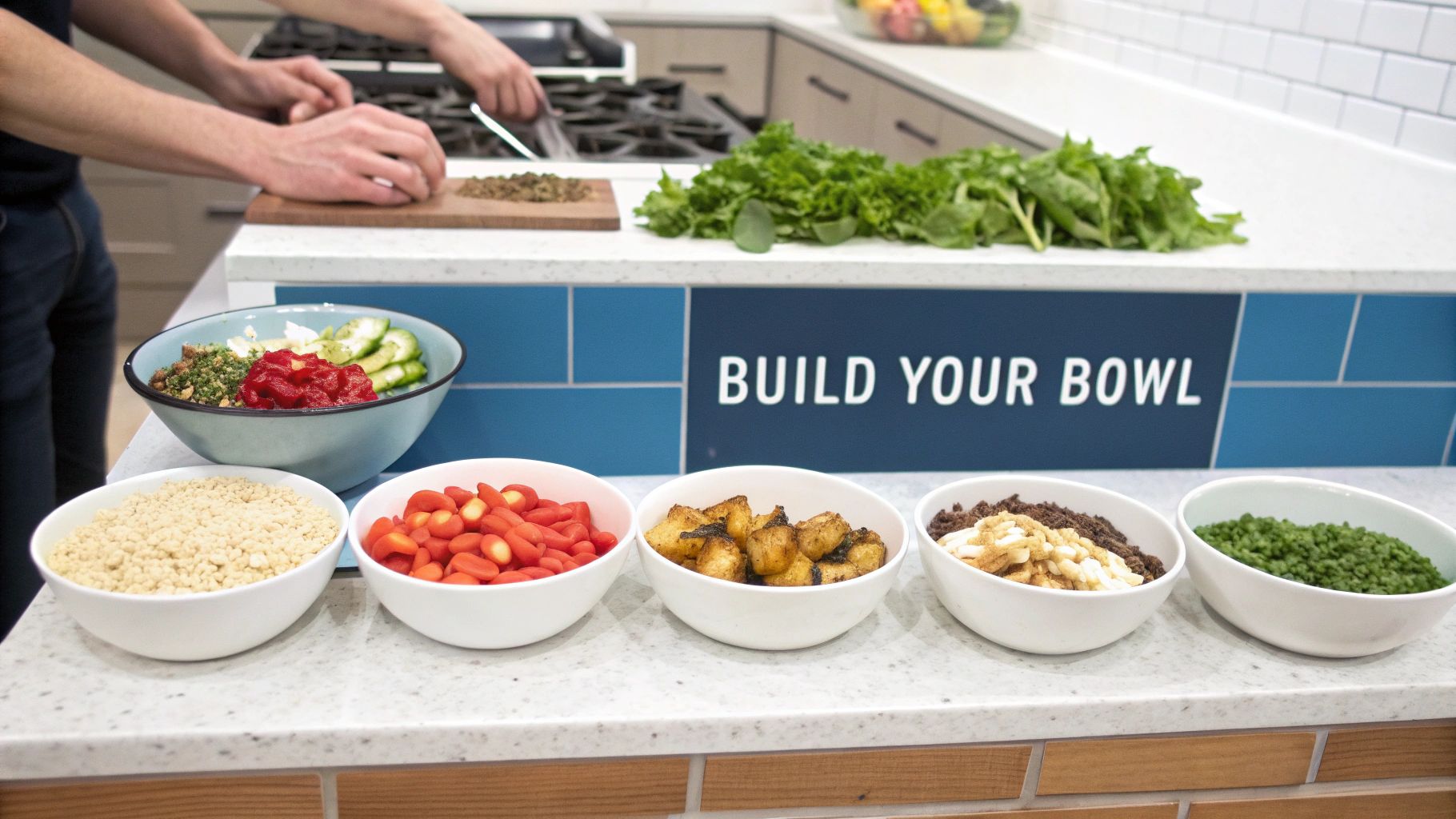
The "Build-Your-Own Bowl Bar" is a game-changer for families with picky eaters. This interactive dinner setup puts children in the driver's seat, giving them control over what goes on their plate. By presenting a variety of pre-cooked and pre-chopped ingredients buffet-style, you transform a potentially stressful mealtime into an engaging and empowering experience.
This method directly addresses the core of picky eating: the need for autonomy. When kids can choose their own base, protein, veggies, and toppings, they are more invested in the meal and far more likely to eat it without a fight. This is one of the most effective family dinner ideas for picky eaters because it respects their preferences while gently encouraging them to try new combinations.
Why It Works for Picky Eaters
The magic of the bowl bar lies in its ability to deconstruct a meal into safe, individual components. A child who dislikes mixed foods can see and select only what they want. This approach minimizes food anxiety and builds positive associations with dinnertime. It’s a low-pressure environment where a "no, thank you" is perfectly acceptable because there are plenty of other "yes, please" options available.
Quick and Easy Bowl Bar Ideas
- Taco/Burrito Bowl: Set out seasoned ground turkey or black beans, shredded lettuce, diced tomatoes, cheese, mild salsa, and guacamole. Use brown rice or quinoa as a base.
- Pasta Bar: Offer a couple of pasta shapes (like penne and rotini), a simple marinara sauce, a pesto sauce, mini meatballs, steamed broccoli florets, and grated Parmesan cheese.
- Greek Bowl: Provide grilled chicken strips, couscous or orzo, chopped cucumbers, cherry tomatoes, chickpeas, and a yogurt-based tzatziki sauce.
Parent-Tested Tips for Success
- Include a 'Safe' Food in Every Category: Always offer at least one item you know your child will eat in each component group (e.g., plain rice, shredded cheese, grilled chicken).
- Start Small, Grow Big: Begin with just two or three options per category to avoid overwhelming your child. As they become more comfortable, you can introduce new ingredients.
- Involve Them in Prep: Let your kids help wash vegetables or choose which color bowls to use. This ownership makes them more excited to participate in the meal.
- Connect to Snacks: For a light side or a healthy dessert, you can even incorporate familiar flavors. If your child loves Skout Organic kids snack bars or cookies, consider a "dessert bowl" with yogurt, granola, and crumbled pieces on top. Finding the right healthy snacks for picky eaters can also provide clues about what flavors and textures they might accept at dinnertime.
2. One-Ingredient-Per-Person Night
"One-Ingredient-Per-Person Night" turns meal planning into a collaborative family adventure. In this setup, each family member gets to choose one single ingredient to add to the night's dinner. This simple act of participation creates a powerful sense of ownership and emotional investment, making children significantly more likely to try a meal they helped create.
The concept transforms dinner from something that "happens to them" into something they "made happen." It’s a brilliant strategy for picky eaters because it respects their voice and gives them a role in the decision-making process. By allowing them to contribute a favorite food, you guarantee there's at least one "safe" component on the table for them, reducing mealtime anxiety and opening the door to trying what others chose.
Why It Works for Picky Eaters
This method is rooted in the principle of shared responsibility and positive exposure. When a child sees their chosen ingredient, like sweet potatoes, being combined with a sibling's choice of broccoli, they are more curious about the final result. It’s a low-pressure way to introduce new foods and combinations, as the focus is on teamwork and creativity rather than just consumption. This approach is one of the most effective family dinner ideas for picky eaters because it builds confidence and a more adventurous palate over time.
Quick and Easy Collaborative Meal Ideas
- Custom Stir-Fry: One person picks chicken, another picks snap peas, a third chooses carrots, and a fourth adds rice noodles. Everyone’s choice gets added to the wok for a unique family stir-fry.
- Collaborative Pasta Sauce: Start with a basic tomato base. One child adds mushrooms, another adds mini turkey meatballs, and a parent adds fresh spinach.
- Family-Built Pizza: Each family member chooses one topping to place on the pizza dough. This visual representation of their contribution is especially exciting for kids.
Parent-Tested Tips for Success
- Set Gentle Ground Rules: We suggest establishing basic parameters to ensure a cohesive meal. For example, you might decide on a "roast vegetable night" and everyone chooses one vegetable to add to the pan.
- Make it Visual: Use a small whiteboard or a sticky note pad on the fridge where everyone can write down their chosen ingredient for the upcoming meal. This builds anticipation.
- Involve Them in the Hunt: Take a trip to the grocery store or a local farmer's market and let everyone find and select their own ingredient. This hands-on experience strengthens their connection to the food.
- Allow a "Dessert Ingredient": For a fun twist, one person’s ingredient can be for dessert. This is a great opportunity to introduce healthy treats. For example, a child could choose to crumble up a Skout Organic kid's snack bar or cookie over a bowl of Greek yogurt and berries for a sweet and nutritious finish to the family meal.
3. Deconstructed Classics
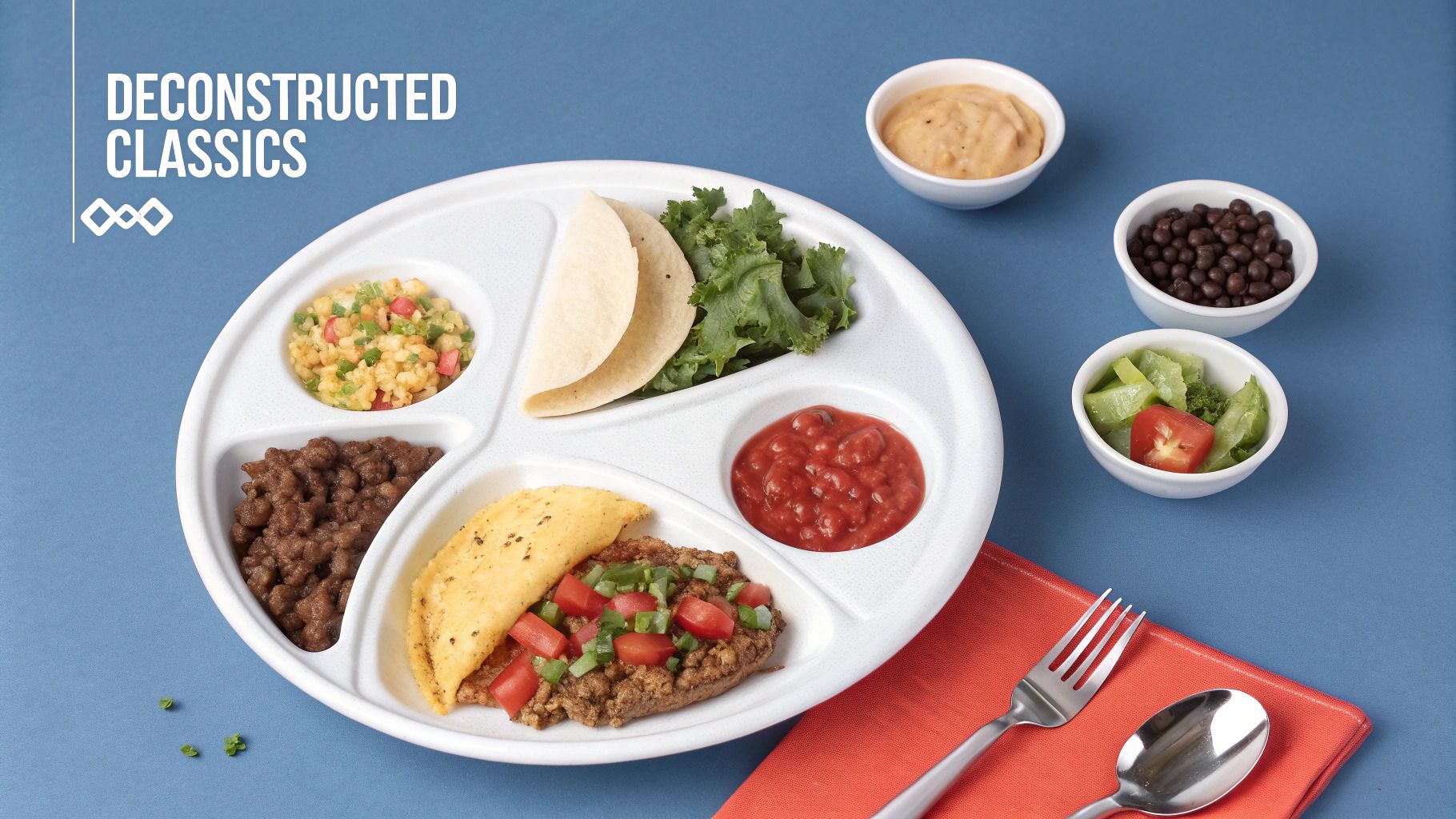
The "Deconstructed Classics" approach is a simple yet revolutionary strategy for managing mealtimes with picky eaters. It involves taking a familiar, often mixed, dish like tacos or spaghetti and serving all its components separately. This allows a child to see, identify, and choose each individual element, transforming a potentially intimidating meal into a plate of safe, recognizable foods.
This method tackles a major hurdle for many children: the fear of hidden ingredients and mixed textures. By presenting food in its basic form, you eliminate the anxiety of the unknown and give your child complete control over assembling their plate. It’s one of the most effective family dinner ideas for picky eaters because it honors their need for predictability while still exposing them to a balanced meal.
Why It Works for Picky Eaters
Deconstruction is highly recommended by pediatric feeding specialists because it lowers the sensory barrier to trying new foods. A child who would refuse a fully assembled taco might happily eat the seasoned meat, cheese, and shell separately. It creates a pressure-free environment where they can touch, taste, and combine ingredients at their own pace, fostering a healthier relationship with food.
Quick and Easy Deconstructed Ideas
- Taco Night: Serve seasoned ground beef, shredded cheese, lettuce, diced tomatoes, and hard/soft shells all in separate bowls. Everyone can build their own.
- Pasta Dinner: Offer plain cooked pasta with bowls of marinara sauce, mini meatballs, steamed peas, and grated Parmesan on the side.
- Pizza Plate: Use pita bread or English muffins as a base. Provide small bowls of pizza sauce, shredded mozzarella, and various toppings like pepperoni or bell pepper strips for a DIY pizza experience.
- Breakfast for Dinner: Use a divided plate to separate scrambled eggs, bacon or sausage links, toast strips, and fresh fruit.
Parent-Tested Tips for Success
- Use Divided Plates: These are fantastic tools for keeping foods from touching, which is a common trigger for sensory-sensitive children. Small bowls also work well.
- Encourage (Don't Force) Mixing: Start by suggesting they dip a piece of chicken into the sauce or add just one piece of lettuce to their taco. Let them lead the way.
- Label the Components: For older kids, labeling the bowls ("Protein," "Veggies," "Dairy") can add a fun, educational layer to the meal.
- Embrace Deconstructed Snacking: This concept extends beyond dinner. Think about how kids already love deconstructed snacks. A child might enjoy the simple, clean ingredients in a Skout Organic kids snack bar or cookie because they represent predictable, yummy flavors. Offering a crumbled bar over yogurt is a great way to tie their favorite snack flavors into a deconstructed dessert or breakfast.
4. Sneaky Nutrition Integration
Sneaky Nutrition Integration is a strategic and often necessary approach for parents of extremely selective eaters. This method involves blending or finely chopping nutrient-dense ingredients like vegetables and proteins directly into foods your child already knows and loves. The goal is to boost the nutritional value of their accepted meals without altering the familiar taste, texture, or appearance that they find comforting.
This technique is less about teaching adventurous eating and more about ensuring your child receives essential vitamins and minerals during a restrictive phase. By seamlessly incorporating healthier elements into their favorite dishes, you can reduce your own stress about their nutritional intake. This makes it one of the most practical family dinner ideas for picky eaters, acting as a nutritional safety net while you work on long-term food acceptance.
Why It Works for Picky Eaters
The power of this method lies in its subtlety. A child who would immediately reject a side of steamed carrots will often unknowingly consume those same carrots when they are pureed invisibly into a spaghetti sauce. This strategy bypasses food neophobia (the fear of new foods) and sensory-based rejections by maintaining the "safe" status of a beloved meal. It allows you to fill nutritional gaps without turning dinnertime into a battlefield.
Quick and Easy "Sneaky" Ideas
- Vegetable-Enhanced Tomato Sauce: Blend steamed carrots, zucchini, or a handful of spinach into your regular pasta or pizza sauce. The rich color and flavor of the tomatoes effectively mask the additions.
- Cauliflower Mac & Cheese: Add steamed and pureed cauliflower to your cheese sauce. Its mild flavor and creamy texture blend in perfectly while adding fiber and vitamins.
- Fortified Meatballs or Burgers: Mix finely grated zucchini or pureed lentils into your ground meat mixture. This not only adds nutrients but also helps keep the meatballs moist and tender.
Parent-Tested Tips for Success
- Start Small and Go Slow: Begin by adding just a tablespoon or two of a pureed vegetable to a large batch of sauce or dish. You can gradually increase the amount over several weeks.
- Match Colors and Flavors: Blend mild, light-colored vegetables (like cauliflower or white beans) into creamy or cheesy dishes. Use orange or red vegetables (carrots, sweet potatoes) in tomato-based sauces to avoid visual detection.
- Involve Them (Sometimes): For older kids, you can eventually turn this into a fun "secret ingredient" game. This slowly transitions the concept from sneaky to collaborative. For more inspiration, check out these clever hacks to sneak veggies into your kid's meals.
- Connect to Healthy Snacking: Use snack time to talk about ingredients in a positive way. Point out the simple, real foods in a Skout Organic snack bar or cookie. This can build trust and make them more curious about what goes into their meals, paving the way for less "sneaking" and more open acceptance.
5. Color-Coded Plate Challenge
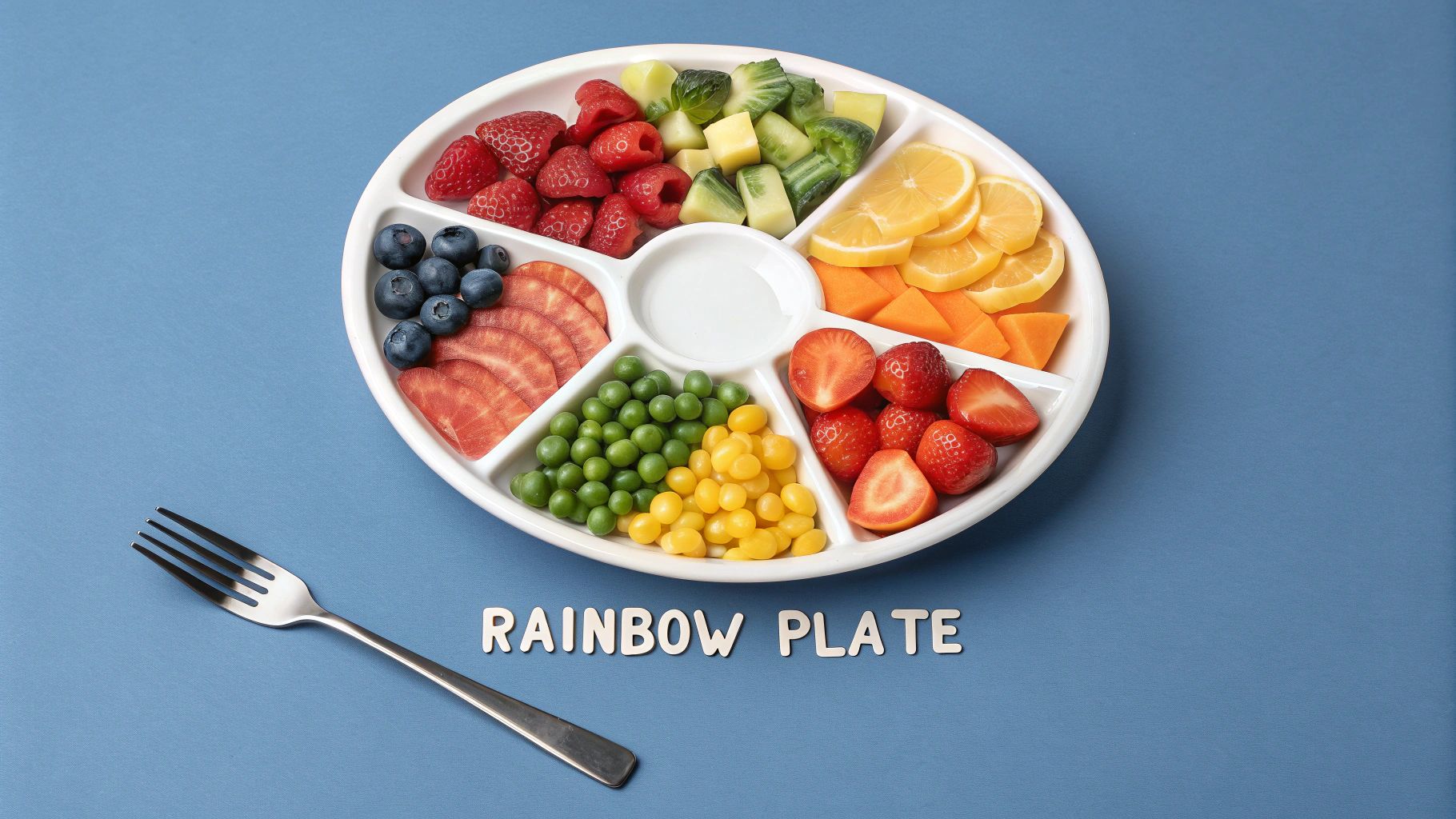
The "Color-Coded Plate Challenge" gamifies nutrition by turning dinner into a vibrant, visual quest. This approach encourages children to "eat the rainbow" by including foods from different color groups on their plates. By shifting the focus from "you must eat your vegetables" to "let's find three colors for our plate tonight," you transform mealtime from a battle into a fun, collaborative game.
This technique is one of the most creative family dinner ideas for picky eaters because it taps into a child's natural love for games and challenges. It visually represents a balanced meal in a way kids can easily understand, making healthy eating an achievable goal rather than an abstract concept. This method empowers them to make healthy choices while exploring new foods in a low-pressure setting.
Why It Works for Picky Eaters
The challenge format appeals to a child's competitive spirit and desire for accomplishment. Instead of focusing on a specific disliked food, the goal becomes collecting colors. This external motivation can persuade a child to try a small piece of red bell pepper (for the red category) or a few kernels of corn (for yellow) to "win" the challenge. It separates the food from the pressure, making them more receptive to trying new things.
Quick and Easy Challenge Ideas
- Three-Color Starter: Aim for three different colors on the plate. For example: white (chicken), green (peas), and orange (sweet potato fries).
- Rainbow Skewers: Thread colorful ingredients like cherry tomatoes (red), cheese cubes (white), cucumber chunks (green), and yellow bell peppers onto skewers.
- Weekly Rainbow Chart: Create a chart with days of the week and columns for different colors. Let your child put a sticker in the box for each color they eat at dinner, aiming to fill the chart by the end of the week.
Parent-Tested Tips for Success
- Make a Visual Guide: Create a chart with pictures of different fruits and veggies under their respective color categories (e.g., red: strawberries, tomatoes; green: broccoli, spinach).
- Start with Fruits: If vegetable resistance is high, allow fruits to count toward the color goal. A side of blueberries can fulfill the "blue/purple" requirement.
- Involve Them in Shopping: Let your child pick a new "green" vegetable at the grocery store or a "purple" one at the farmer's market to try for the challenge.
- Connect to Colorful Snacks: Celebrate a successful "rainbow week" with a treat that continues the theme. Many kids snack bars and cookies, like those from Skout Organic, use real fruits like raspberries and blueberries, making them a fun and colorful reward that reinforces the lesson. It's a great way to show that healthy eating is a part of every meal, including snack time.
6. Texture Exposure Progression
For children whose picky eating is rooted in sensory sensitivities, the "Texture Exposure Progression" is a therapeutic and highly effective strategy. This approach, often used by feeding specialists, involves systematically introducing a single food in various textures, moving from what's most acceptable to what's more challenging. It’s a patient, structured method that helps a child's brain and mouth learn to accept and manage new food experiences without fear.
Instead of presenting a whole carrot stick and hoping for the best, you start with a texture your child can handle, like a smooth purée. Over days or weeks, you gradually increase the textural demand. This methodical process respects the child's sensory limits, making it one of the most compassionate and successful family dinner ideas for picky eaters who struggle with how food feels in their mouth.
Why It Works for Picky Eaters
Texture aversion is a common driver of picky eating. This gradual exposure method works by desensitizing the child to new feelings in a low-pressure way. By keeping the flavor consistent (e.g., it's always carrot), the only new variable is the texture. This allows the child to build trust and confidence with a specific food, making them more willing to try the next step in the progression.
Quick and Easy Progression Ideas
- Carrot Progression: Start with smooth puréed carrots, move to a lumpy mash, then to finely diced and steamed carrots, and finally to soft-roasted carrot sticks.
- Potato Progression: Begin with a silky smooth mash, then a slightly lumpy mash, followed by small, soft-boiled potato chunks, and eventually roasted potato wedges.
- Chicken Progression: Offer very finely shredded chicken in a familiar sauce, then progress to small, tender pieces, and later to larger chunks of grilled chicken breast.
Parent-Tested Tips for Success
- One Food at a Time: Focus on a single food for one to two weeks before moving to the next textural step. Patience is the key to this process.
- No Pressure, Just Exposure: The goal is interaction, not consumption. Let your child touch, smell, or lick the food. Celebrate any level of engagement without forcing a bite.
- Keep Flavors Familiar: Use the same seasonings or preparation method throughout the progression for one food to keep the flavor profile consistent and predictable.
- Connect to Preferred Textures: If your child loves soft snacks, use that to your advantage. Offer a familiar favorite, like a soft-baked Skout Organic kid's cookie, alongside the new texture exploration. This provides a safe, enjoyable food to fall back on during the meal. Finding the right healthy snacks for picky eaters can serve as a bridge to accepting new dinner foods.
7. No-Cook Assembly Dinners
"No-Cook Assembly Dinners" are a lifesaver for busy weeknights and a fantastic strategy for families with picky eaters. This approach focuses on building a meal from high-quality, pre-prepared components, requiring little to no actual cooking. By arranging ingredients like pre-cooked proteins, fresh veggies, cheeses, and dips on a platter or board, you create an effortless, deconstructed meal.
This method transforms dinner into a low-pressure grazing experience, which is ideal for children who feel overwhelmed by a traditional plated meal. It gives them the freedom to see, touch, and select individual foods without the stress of mixed dishes. These family dinner ideas for picky eaters are perfect for reducing kitchen time while still offering a nutritious, visually appealing meal that empowers kids to make their own choices.
Why It Works for Picky Eaters
The power of an assembly dinner is in its transparency. Picky eaters can clearly identify every single item, which eliminates anxiety about hidden ingredients. This format encourages exploration without pressure; a child might not eat the bell pepper strips tonight, but seeing them next to their favorite cheese and crackers normalizes their presence on the dinner table. It turns mealtime into a simple, hands-on activity rather than a culinary battle.
Quick and Easy Assembly Dinner Ideas
- Kid-Friendly Charcuterie: Arrange mild cheddar cubes, turkey slices, whole-grain crackers, cucumber circles, apple slices, and a handful of nuts or seeds.
- Mediterranean Platter: Offer hummus, pita bread triangles, feta cheese, cherry tomatoes, olives (if they like them), and pre-cooked grilled chicken strips.
- Deconstructed "Sushi" Plate: Set out small bowls of cooked rice, avocado slices, cucumber sticks, pre-cooked shrimp or smoked salmon, and a mild yogurt-based dipping sauce.
Parent-Tested Tips for Success
- Prioritize Quality Components: Since you aren't cooking, the flavor comes from the ingredients. We suggest choosing a quality rotisserie chicken, good cheeses, and fresh, crisp vegetables.
- Prep Ahead: Wash and chop all your vegetables over the weekend or the night before. This makes assembly take less than five minutes on a busy evening.
- Make it Visually Fun: Arrange the items in a rainbow pattern or use cookie cutters to make fun shapes out of cheese and soft vegetables.
- Incorporate Trusted Snacks: If your child is hesitant, add a familiar, healthy snack to the board. Including a few bites of a favorite Skout Organic kid's snack bar or cookie can serve as a "safe" food, making the entire plate feel more approachable and less intimidating. This bridges the gap between snack time and dinnertime.
8. Repeat Exposure with Low Pressure
This strategy isn't a single recipe, but rather a long-term, evidence-based approach that transforms how families introduce new foods. The "Repeat Exposure with Low Pressure" method is built on the well-researched principle that it can take 15, 20, or even more times of seeing, smelling, or touching a food before a child is willing to taste it. This technique removes the conflict from the dinner table and shifts the focus from "you must eat this" to "this is what we are having."
This method is one of the most powerful family dinner ideas for picky eaters because it respects a child's natural caution around new foods and gives them the time and space to build familiarity and trust. By consistently and calmly presenting a new food alongside familiar favorites, you create a safe environment where curiosity can eventually win over anxiety. It’s a marathon, not a sprint, that fosters a healthier, lifelong relationship with food.
Why It Works for Picky Eaters
The core of this strategy is eliminating the power struggle. When there is zero pressure to eat something, the food itself ceases to be a source of conflict. A child who is constantly coaxed or forced to eat broccoli will associate it with stress. A child who sees broccoli on their plate every week, with no comment on whether they eat it, is free to observe it, touch it, and one day, maybe even try it on their own terms. This gradual desensitization makes new foods less threatening and more approachable over time.
Quick and Easy Exposure Ideas
- The "No-Thank-You" Portion: Serve a single, pea-sized portion of the new food (like roasted salmon or sauteed mushrooms) on your child's plate. They don't have to eat it, but it's there.
- Vary the Form: If you're trying to introduce beans, serve them whole one week, mashed into a dip the next, and blended into a soup the week after. The flavor is the same, but the texture is different, offering multiple ways for them to accept it.
- Family-Style Serving: Place the new food in a bowl in the middle of the table for everyone to serve themselves. This allows your child to see others enjoying it without feeling singled out.
Parent-Tested Tips for Success
- Serve with a "Safe" Food: Always pair the new food with at least two other items you know your child likes and will eat. This ensures they won't go hungry and reduces mealtime anxiety.
- Model Positive Behavior: Let your child see you eating and genuinely enjoying the new food. Make positive, but casual, comments like, "This roasted asparagus is so yummy and crunchy."
- Stay Neutral and Silent: This is the hardest part. Do not praise, bribe, or comment if they try the food, and do not show disappointment if they don't. The goal is to make it a complete non-issue.
- Incorporate Familiar Comforts: When introducing something new, ensure the rest of the meal feels safe and familiar. You can even offer a trusted snack like a Skout Organic bar or cookie for dessert to end the meal on a guaranteed positive note, reinforcing that dinnertime is a happy experience. For more tips on building positive food associations, you can find out more on how to get kids to eat healthy.
8 Family Dinner Ideas Comparison for Picky Eaters
| Strategy (what) | Implementation Complexity 🔄 | Resource & Prep ⚡ | Expected Effectiveness ⭐ | Ideal Use Cases 💡 | Key Advantages / Impact 📊 |
|---|---|---|---|---|---|
| Build-Your-Own Bowl Bar | Moderate — multiple components + setup | Moderate — prep time, counter space, ingredient variety | High ⭐ — increases acceptance via choice | Family dinners, mixed diets, interactive meals | Boosts acceptance, reduces waste, teaches balance |
| One-Ingredient-Per-Person Night | Low–Moderate — rotating planning and adaptation | Low — single ingredient per person, flexible recipes | Medium–High ⭐ — builds engagement and willingness | Families with older kids, meal-planning nights | Encourages ownership, sparks creativity, teaches combos |
| Deconstructed Classics | Low — separate plating and presentation | Low — extra dishes/utensils, minimal extra prep | High ⭐ — reduces sensory overwhelm | Sensory-sensitive eaters, allergy or preference accommodation | Visual control, easy customization, clearer meal composition |
| Sneaky Nutrition Integration | Moderate — recipe modification skills needed | Low–Moderate — blending tools, quality ingredients | Medium ⭐ — ensures nutrition but less exploratory | Extreme selectivity or short-term nutrition goals | Improves nutrient intake quietly, reduces mealtime conflict |
| Color-Coded Plate Challenge | Low — plan for color variety and tracking | Low — diverse produce, simple charts or apps | Medium ⭐ — motivates variety, visual learning | Gamified families, kids who respond to challenges | Teaches phytonutrient diversity, fun tracking and rewards |
| Texture Exposure Progression | High — systematic, phased sensory plan | High — specialist guidance, repeated prep over time | Very High ⭐ — addresses root sensory issues long-term | Children with texture aversions, feeding therapy cases | Builds lasting tolerance, evidence-based sensory gains |
| No-Cook Assembly Dinners | Low — minimal cooking, assembly focus | Moderate — quality pre-made components and cost | High ⭐ — quick, customizable, less intimidating | Busy weeknights, dietary restrictions, on-the-go families | Saves time, preserves fresh flavors, easy personalization |
| Repeat Exposure with Low Pressure | Moderate — consistent, patient scheduling | Low — time and consistency more than gear | Very High ⭐ — research-backed gradual acceptance | Long-term behavior change, extreme picky eaters | Reduces conflict, creates lasting acceptance, evidence-based |
Your Journey to Happier, Healthier Family Dinners Starts Now
Navigating the landscape of family meals with a selective eater can feel like a daily puzzle. However, as we've explored, you now have a comprehensive toolkit filled with adaptable strategies and creative family dinner ideas for picky eaters. This isn't about finding a single magic recipe; it's about building a new approach to mealtimes, one that prioritizes patience, choice, and a low-pressure environment.
The core message woven through every idea, from the Build-Your-Own Bowl Bar to the No-Cook Assembly Dinners, is empowerment. When children feel a sense of control over what goes on their plate, even in a small way, their defensiveness can melt away, making them more receptive to trying new things. This shift transforms dinner from a battleground into a space for collaboration and discovery.
Key Takeaways for Lasting Success
Remember the foundational principles that make these ideas work. Consistency is your greatest ally. Implementing a Texture Exposure Progression or a Color-Coded Plate Challenge won't yield results overnight, but sticking with the strategy will gradually expand your child’s palate and comfort zone. The concept of Repeat Exposure with Low Pressure is crucial here; it’s a gentle, persistent invitation to explore, not a demand to eat.
Furthermore, deconstruction is a powerful tool. By breaking down classics like tacos or pasta into their individual components, you honor your child's preferences while still serving a cohesive family meal. This approach respects their autonomy and models flexibility, two valuable life lessons that extend far beyond the dinner table. Integrating these methods aligns beautifully with broader family well-being strategies; in fact, as you embark on your journey to happier family dinners, further insights into positive parenting tips can provide a supportive framework for all your interactions.
The Role of Smart Snacking
Let’s be realistic: some nights will be more successful than others. There will be dinners where your child eats only the plain pasta or the cucumber sticks. This is where strategic, healthy snacking becomes an invaluable part of your overall nutrition plan. Having reliable, clean-ingredient options on hand removes the stress and guilt from a less-than-perfect meal.
When you know your child has had a nutrient-dense snack earlier in the day, like a Skout Organic kids' snack bar, you can relax and focus on the long-term goal of food exploration rather than the short-term panic of calorie counting. These bars and cookies, made with minimal, organic ingredients, serve as a perfect nutritional safety net. They ensure your child's baseline needs are met, freeing you to maintain a positive and patient attitude at the dinner table, which is the most critical ingredient of all.
Ultimately, your goal is to cultivate a positive relationship with food for your child and create cherished memories together. The family dinner ideas for picky eaters shared in this article are your roadmap. Embrace the journey with curiosity, celebrate the small victories, and remember that every meal is an opportunity to connect. You are not just feeding your family; you are building a foundation for a lifetime of healthy and happy eating.
Ready to take the pressure off mealtimes? Stock your pantry with the clean, organic, and delicious snacks that picky eaters love and parents trust. Explore the full line of kids' bars and cookies from Skout Organic and ensure your child has a healthy, reliable option anytime. Visit Skout Organic today and build your nutritional safety net.