 Kids Snack Bars
 Soft-Baked Cookies
 Protein Bars
 Build A Box
 Shop All





As a parent, you're the chief snack officer, the gatekeeper of the pantry, and a detective trying to decipher cryptic ingredient lists. It's a tough job! You want quick, easy, and delicious snacks that your kids will actually eat, but you're also concerned about what's really inside those colorful wrappers and seemingly innocent snack bars. The truth is, many conventional kids' cookies, fruit snacks, and treats are packed with more than just fun flavors. They often contain a laundry list of synthetic additives, preservatives, and sweeteners designed for shelf stability and visual appeal, not optimal health.
This guide is your practical cheat sheet for navigating the grocery store with confidence. We're pulling back the curtain on the most common chemicals in food to avoid, explaining exactly what they are in simple terms. You'll learn where they typically hide, especially in those kid-favorite snacks, and get fun, actionable tips on how to easily sidestep them without sacrificing convenience or taste. We’ll break down confusing labels and highlight safer, cleaner alternatives that the whole family will love.
Get ready to transform your family's snack time from a source of worry into a joyful, healthy adventure. By understanding what to look for, you can make informed choices that nourish your family from the inside out. Let’s dive into the ingredients worth leaving on the shelf, empowering you to stock your pantry with foods that are as wholesome as they are delicious. This isn't about food fear; it's about food freedom.
1. High Fructose Corn Syrup (HFCS)
High Fructose Corn Syrup (HFCS) is an intensely sweet, liquid sweetener created from corn starch. Unlike regular table sugar (sucrose), it undergoes an enzymatic process that converts some of its glucose into fructose, typically resulting in a 42% or 55% fructose content. This chemical alteration makes it cheap to produce and easy to mix into processed foods, but our bodies metabolize it differently than natural sugars.
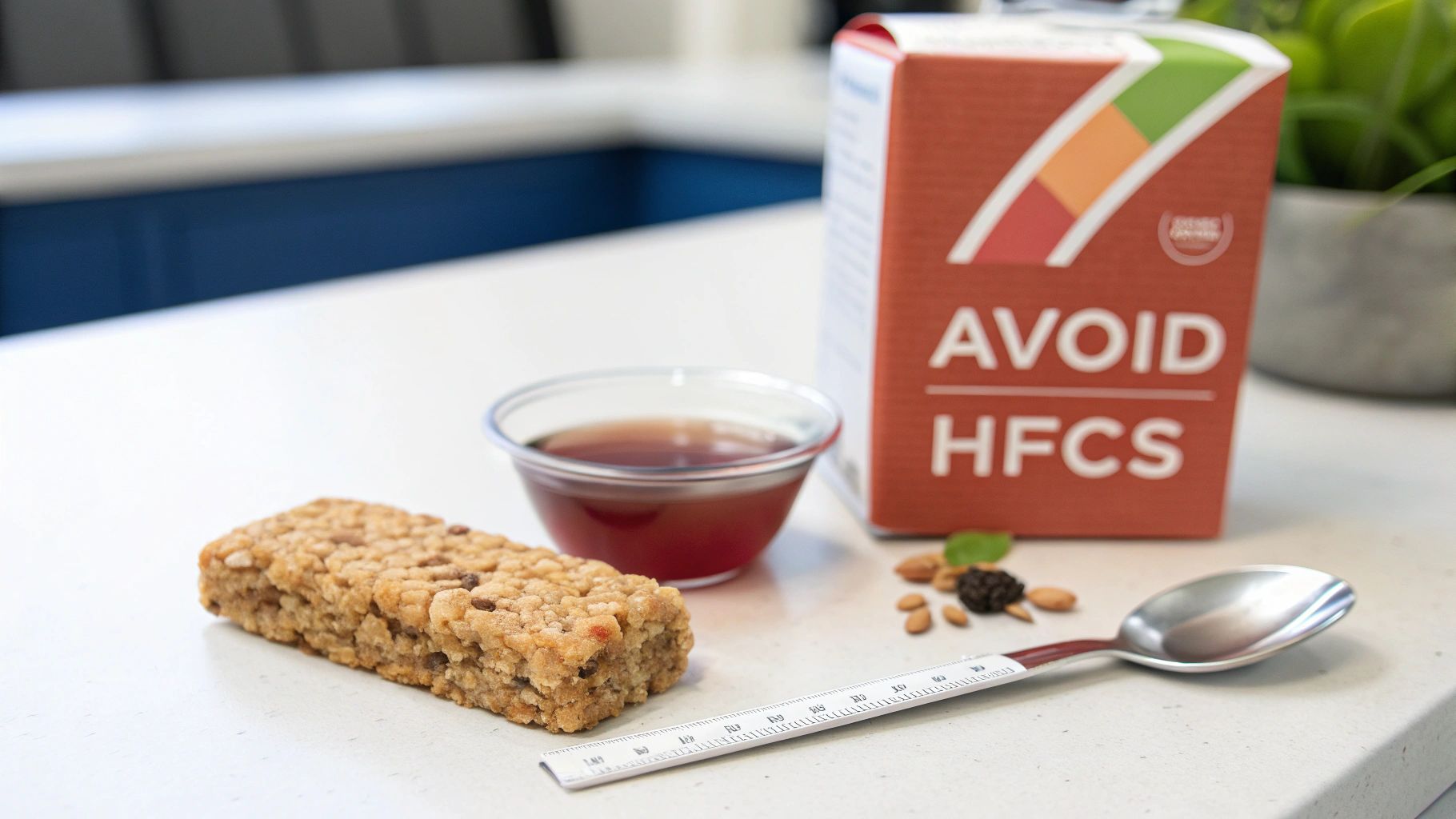
This difference is why HFCS is a primary chemical in food to avoid. The liver processes fructose, and excessive intake can lead to metabolic issues. Studies have linked high HFCS consumption to an increased risk of obesity, fatty liver disease, and type 2 diabetes. It also fails to trigger the same satiety signals as glucose, which can lead to overeating without feeling full.
Where HFCS Hides in Plain Sight
HFCS is a superstar in the world of processed foods, especially those marketed to kids. It’s the secret to the long shelf life and consistent sweetness of many conventional snacks. Think about your kids' snack bars and cookies—if they are super sweet and have a long shelf life, HFCS might be the culprit!
- Sweet Drinks: Sodas, fruit juices, and sweetened iced teas.
- Breakfast Foods: Many popular breakfast cereals, flavored yogurts, and toaster pastries.
- Snack Foods: Mass-produced cookies, crackers, and granola bars often use HFCS to bind ingredients and add sweetness.
- Condiments: Ketchup, BBQ sauce, and salad dressings are common culprits.
How to Spot and Swap HFCS
Avoiding HFCS requires a bit of detective work at the grocery store. Manufacturers often use different names for this ingredient, making it tricky to identify.
Parent Tip: Many "fruit" snacks and kids snack bars are loaded with HFCS. A quick label check can be eye-opening. Try this fun swap: instead of a processed bar, offer a handful of real berries or a naturally sweetened option like a Skout Organic Kids Snack Bar. This provides natural sweetness without the metabolic downside.
Here’s your checklist for keeping HFCS out of your cart:
- Read the Label: Scan the ingredients list for "high fructose corn syrup," "glucose-fructose," "maize syrup," or "fructose-glucose syrup." Learning how to read food labels is a powerful skill for any health-conscious shopper.
- Look for Certifications: Products labeled USDA Organic are prohibited from using HFCS.
- Choose Natural Sweeteners: Opt for foods and snacks sweetened with honey, maple syrup, coconut sugar, or whole fruits.
- DIY Snacks: Making your own granola bars or cookies at home is a blast! It gives you complete control over the ingredients, allowing you to use natural sweeteners like dates or bananas.
2. Artificial Food Dyes (FD&C Colors)
Artificial food dyes, also known as FD&C (Food, Drug, and Cosmetic) colors, are synthetic, petroleum-based chemicals used to give foods vibrant and appealing colors. Unlike natural colorants from beets or turmeric, these dyes have no nutritional value and are added purely for aesthetics. Common culprits like Red 40, Yellow 5, and Yellow 6 are used to make processed foods look more attractive, especially those aimed at children.
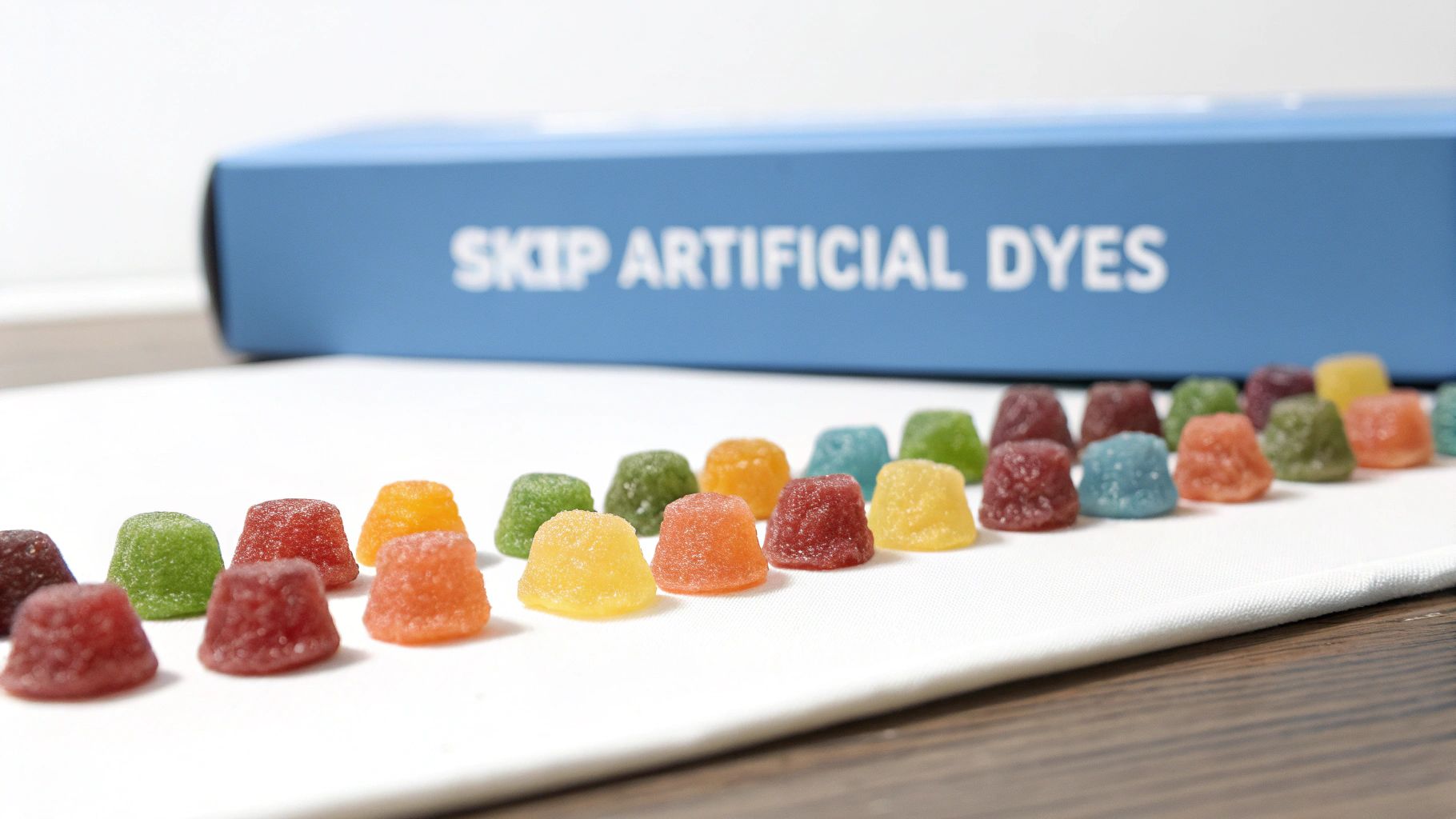
The controversy around these additives makes them a key group of chemicals in food to avoid. Numerous peer-reviewed studies have linked the consumption of artificial dyes to behavioral issues in children, including hyperactivity and exacerbation of ADHD symptoms. While the European Union requires warning labels on products containing these dyes, they are widely used in the U.S. without such notices, placing the burden of awareness on consumers.
Where Artificial Food Dyes Hide in Plain Sight
That neon-colored cereal or electric-blue yogurt isn't getting its hue from nature. Artificial dyes are rampant in the world of processed snacks, turning otherwise dull-colored foods into a rainbow of temptation for kids. The brighter the cookie, the more likely it has these dyes!
- Colorful Snacks: Brightly colored fruit snacks, gummies, conventional snack bars, and candy.
- Breakfast Foods: Many kids' breakfast cereals, toaster pastries, and artificially colored soft-baked cookies.
- Drinks: Sports drinks, sodas, and powdered drink mixes often contain a cocktail of dyes.
- Dairy & Desserts: Flavored yogurts, ice creams, and frosting are common sources.
How to Spot and Swap Artificial Dyes
Ditching artificial dyes is all about becoming a color detective and reading labels carefully. Once you start looking, you'll be surprised how many products contain them.
Parent Tip: If your child shows signs of hyperactivity, keeping a food diary can help identify triggers. An elimination diet, temporarily removing foods with artificial dyes, can reveal a sensitivity. Suggest a fun taste test: swap brightly colored kids snack bars for those with muted, natural colors from real fruit or vegetable powders. It's a simple but powerful change!
Here is a quick guide to keeping artificial dyes out of your pantry:
- Read the Label: Look for specific names like Red 40, Yellow 5, Yellow 6, Blue 1, and Blue 2. Any ingredient listed as "color" followed by a number is a synthetic dye.
- Choose Natural Colors: Look for products that state "colored with fruit/vegetable juice," "no artificial dyes," or list ingredients like beet powder, annatto, or turmeric for color.
- Think Earth-Tones: Naturally colored snacks usually have more muted, earthy colors. If it looks unnaturally bright, it probably is.
- Watch this Deep Dive: For a better understanding of the impact of these dyes, this video offers a great overview.
3. Sodium Benzoate and Potassium Sorbate
Sodium benzoate and potassium sorbate are chemical preservatives designed to prevent mold, yeast, and bacteria from growing in processed foods. They work by increasing the acidity of the food, creating an environment where microorganisms cannot thrive. This extends the shelf life of products from salad dressings to snack cakes, but their safety is a growing concern.
These preservatives are key chemicals in food to avoid due to potential health risks. When sodium benzoate is combined with vitamin C (ascorbic acid) in an acidic product, it can form benzene, a known carcinogen. Independently, some studies have linked these preservatives to inflammation, allergic reactions, and potential disruptions to the delicate balance of the gut microbiome.
Where These Preservatives Hide in Plain Sight
These additives are masters of disguise, appearing in many foods where you might not expect them. They are particularly common in shelf-stable products that need to last for months, including many snack bars and cookies designed for kids' lunchboxes.
- Beverages: Conventional juice boxes, fruit drinks, and sodas often contain these to prevent spoilage.
- Condiments: Commercial salad dressings, pickles, and sauces rely on them for preservation.
- Snack Foods: Mass-produced snack cakes, pastries, and some granola bars use them to maintain freshness over long periods.
- Jams and Jellies: Many fruit spreads contain these preservatives to inhibit mold growth.
How to Spot and Swap Preservatives
Avoiding sodium benzoate and potassium sorbate means becoming a diligent label-reader and opting for fresher alternatives.
Parent Tip: Many kids’ squeeze pouches and juice boxes contain these preservatives. Checking the ingredients list is crucial. How about a fun swap? Instead of a packaged pouch, try blending some yogurt and fruit at home. Or, for a quick fix, choose products like Skout Organic Kids Snack Bars that are preserved with natural ingredients like rosemary extract, not synthetic chemicals.
Here’s your checklist for keeping these preservatives out of your pantry:
- Read the Label: Scan the ingredients list for "sodium benzoate" and "potassium sorbate." They must be listed by name.
- Look for Natural Preservatives: Choose products preserved with natural alternatives like vitamin E (tocopherols), rosemary extract, or salt.
- Choose Shorter Shelf Lives: Freshly made snacks or those with shorter expiration dates are less likely to contain heavy-duty preservatives.
- DIY Snacks: Making and freezing your own fruit pouches or baked goods gives you full control over preservation, completely eliminating the need for these chemicals.
4. Trans Fats (Partially Hydrogenated Oils)
Trans fats, also known as partially hydrogenated oils (PHOs), are a type of artificial fat created by adding hydrogen to vegetable oil. This process makes the oil solid at room temperature, which extends the shelf life of processed foods and improves texture, making snacks like cookies and pastries feel perfectly soft or flaky. While great for food manufacturers, they are devastating for human health.
This ingredient is one of the most critical chemicals in food to avoid because it significantly harms cardiovascular health. Trans fats raise your "bad" LDL cholesterol while simultaneously lowering your "good" HDL cholesterol, a double-whammy that increases the risk for heart disease and stroke. Though the FDA has banned PHOs from new products, they can still linger in older items or imported foods.
Where Trans Fats Hide in Plain Sight
Trans fats are the ghosts of the ultra-processed food world, lurking in products designed for a long shelf life and indulgent texture. Many of these are snacks popular with children, especially soft-baked cookies and snack cakes.
- Baked Goods: Commercial pastries, mass-produced soft-baked cookies, donuts, and snack cakes.
- Spreads: Certain older formulations of margarine and vegetable shortening.
- Snack Foods: Some microwave popcorn, older granola bars, and fried snacks.
- Frozen Foods: Certain frozen pizzas, pies, and breaded foods can contain them.
How to Spot and Swap Trans Fats
Avoiding trans fats means becoming a vigilant label reader. While many products now boast "0g Trans Fat," this can be misleading if the serving size is small, so always check the ingredient list.
Parent Tip: Many conventional soft-baked cookies and kids snack cakes once relied on trans fats for their texture. Protect your little ones by choosing snacks with cleaner fat sources. We suggest making a family baking day a new tradition! If you're short on time, swapping for Skout Organic Kids Cookies ensures they get a delicious treat made with wholesome ingredients like coconut oil and sunflower oil, not artificial fats.
Here’s your checklist for keeping trans fats out of your kitchen:
- Read the Label: The most important step is to scan the ingredients for "partially hydrogenated oil." If you see this phrase, put the product back. These are the primary source of artificial trans fats in ultra-processed foods.
- Check the Nutrition Facts: Look for "Trans Fat" on the nutrition panel. The ideal amount is always 0 grams.
- Choose Whole Foods: Focus on snacks based on whole ingredients like fruits, nuts, and seeds.
- Opt for Better Oils: Choose products made with healthier fats like butter, coconut oil, avocado oil, or cold-pressed sunflower oil.
5. Monosodium Glutamate (MSG)
Monosodium Glutamate (MSG) is a flavor enhancer derived from glutamic acid, an amino acid found naturally in foods like tomatoes and cheese. It's used to create that intensely savory, "umami" taste that makes certain snacks so addictive. While the FDA classifies it as 'generally recognized as safe,' a growing body of research suggests it may trigger adverse reactions in sensitive individuals, making it a key chemical in food to avoid.
The concern with MSG lies in its potential to act as an excitotoxin. It can cross the blood-brain barrier and overstimulate glutamate receptors in the brain. For some people, especially children whose brains are still developing, this overstimulation has been linked to symptoms like headaches, sweating, and nausea.
Where MSG Hides in Plain Sight
MSG is the secret weapon in many processed savory foods, giving them a flavor boost that's hard to replicate with simple salt and pepper. It's especially prevalent in foods designed for maximum crave-ability, like those cheesy crackers kids can't get enough of.
- Salty Snacks: Flavored chips, popcorn products, and conventional cheese crackers.
- Savory Bars: Mass-produced salty snack bars and even some "healthy" protein bars use it to enhance flavor.
- Convenience Foods: Bouillon cubes, canned soups, frozen meals, and seasoning packets are often packed with MSG.
- Condiments & Dressings: Many soy sauces, salad dressings, and dipping sauces contain it.
How to Spot and Swap MSG
Finding and avoiding MSG requires a sharp eye, as it's often disguised under different names. Learning its aliases is crucial for keeping it out of your family's snacks.
Parent Tip: Those cheesy crackers and flavored snacks that kids love often rely on MSG for their irresistible taste. Check the ingredients for hidden sources. We suggest a fun snack experiment: swap them for snacks with simple, whole-food ingredients to show your kids that flavor can come from real food, not a chemical enhancer.
Here’s your checklist for going MSG-free:
- Read the Label: Look for "monosodium glutamate" on the ingredients list. Also, be wary of its common hiding places like "hydrolyzed vegetable protein," "autolyzed yeast," "yeast extract," and sometimes even "natural flavoring."
- Look for Clear Claims: Many brands now proudly label their products "No MSG" or "MSG-Free."
- Choose Simple Ingredients: Opt for snacks with short, recognizable ingredient lists. If you can't pronounce it, it might be best to avoid it. Digging into the world of food additives to avoid can be an empowering first step.
- DIY Seasonings: Create your own delicious seasoning blends at home using herbs like garlic powder, onion powder, paprika, and nutritional yeast for a cheesy, umami flavor without the MSG.
6. Artificial Sweeteners (Aspartame, Sucralose, Acesulfame-K)
Artificial sweeteners like aspartame (Equal), sucralose (Splenda), and acesulfame potassium (Acesulfame-K) are synthetic sugar substitutes. They provide an intense sweetness with few or no calories, making them a popular choice in "diet" and "sugar-free" products. While approved by regulatory bodies, these chemicals are foreign to our bodies, and emerging research suggests they might not be the harmless alternative they appear to be.
These non-nutritive sweeteners are considered chemicals in food to avoid because of their potential impact on metabolic health. Studies suggest they can disrupt the balance of gut bacteria, which is crucial for digestion and overall wellness. Paradoxically, some research indicates they may interfere with appetite-regulating hormones, potentially leading to an increased craving for sweet foods and contributing to the very health issues they are meant to prevent.
Where Artificial Sweeteners Hide in Plain Sight
These calorie-free sweeteners are masters of disguise, appearing in a wide array of products marketed as healthy or guilt-free. They are especially prevalent in foods aimed at children and health-conscious adults, like "sugar-free" snack bars and cookies.
- "Diet" or "Zero Sugar" Foods: Sodas, sports drinks, beverage mixes, and snack bars.
- Sugar-Free Snacks: Candies, gummies, and puddings often marketed to kids.
- Light or Reduced-Calorie Items: Yogurts, ice creams, and some protein bars.
- Condiments and Jams: Sugar-free ketchup, syrups, and fruit spreads.
How to Spot and Swap Artificial Sweeteners
Ditching artificial sweeteners means becoming a label-reading expert and retraining your taste buds to appreciate natural sweetness. This shift can make a huge difference in your family's long-term health.
Parent Tip: Many "sugar-free" kids snack bars can train their palates to expect hyper-sweet flavors, making naturally sweet foods like fruit seem bland. We suggest choosing snacks like Skout Organic Kids Snack Bars, which are sweetened with real dates. It’s a great way to help foster a love for natural, wholesome sweetness.
Here’s your checklist for keeping artificial sweeteners out of your kitchen:
- Read the Label: Scan ingredient lists for aspartame, sucralose, acesulfame potassium (or acesulfame-K), saccharin, and neotame.
- Beware of "Diet" Claims: Be skeptical of products labeled "sugar-free," "zero sugar," or "light." These terms are red flags for artificial additives.
- Choose Natural Sweeteners: Opt for foods sweetened with whole fruits, organic dates, maple syrup, or honey in moderation.
- Embrace Less Sweet: Gradually reduce the overall sweetness in your family's diet. This helps reset palates to appreciate the subtle, delicious flavors of whole foods.
7. BHA and BHT (Butylated Hydroxyanisole and Hydroxytoluene)
BHA (Butylated Hydroxyanisole) and BHT (Butylated Hydroxytoluene) are synthetic antioxidants used as preservatives in foods containing fats and oils. Their job is to prevent products from going rancid, which significantly extends their shelf life. While this keeps snacks "fresh" on pantry shelves for months, these chemicals come with serious health concerns.
The International Agency for Research on Cancer (IARC) classifies BHA as a possible human carcinogen. Both BHA and BHT have also been linked to endocrine disruption, which means they can interfere with the body's hormone signals. This is particularly concerning for children, whose developing bodies rely on precise hormonal balance. Because these compounds can accumulate in body fat over time, consistent exposure is a key reason BHA and BHT are chemicals in food to avoid.
Where BHA and BHT Hide in Plain Sight
These preservatives are most common in processed foods with a high fat content, especially those designed to sit on store shelves for long periods without spoiling. This often includes kids' favorite snack bars and cookies.
- Breakfast Foods: Many mass-produced cereals and conventional granola bars use them to keep oils from going bad.
- Snack Foods: Soft-baked cookies, crackers, potato chips, and some processed nut mixes often contain BHA or BHT.
- Other Products: You can also find them in chewing gum, dehydrated potatoes, and some meat products.
How to Spot and Swap BHA and BHT
Finding snacks without these preservatives is easier than you think once you know what to look for. Reading labels is your best defense against these sneaky additives.
Parent Tip: Those convenient, long-lasting granola bars or fruit-and-grain bars for kids often rely on BHA or BHT. It's an eye-opener to check the labels. We suggest choosing snacks preserved with natural alternatives, like Skout Organic Kids Snack Bars that use ingredients like organic rosemary extract. It’s a simple swap to protect your little ones.
Here's your checklist for keeping BHA and BHT out of your cart:
- Read the Label: Scan the ingredients list for "BHA," "BHT," "butylated hydroxyanisole," or "butylated hydroxytoluene." They are often listed at the very end.
- Look for Natural Preservatives: Choose products preserved with vitamin E (mixed tocopherols), vitamin C (ascorbic acid), or rosemary extract.
- Be Wary of Long Shelf Lives: An exceptionally long expiration date on a fatty or oily snack can be a red flag for synthetic preservatives.
- Choose Fresh: Prioritizing freshly made snacks or those with simpler, whole-food ingredient lists naturally reduces your family's exposure.
8. Sodium Nitrite and Sodium Nitrate
Sodium Nitrite and Sodium Nitrate are preservatives commonly used in processed meats to prevent bacterial growth, maintain a fresh pink color, and add a salty flavor. While they extend shelf life, they can transform into harmful compounds called nitrosamines in the digestive system. This chemical reaction is why they are considered major chemicals in food to avoid.
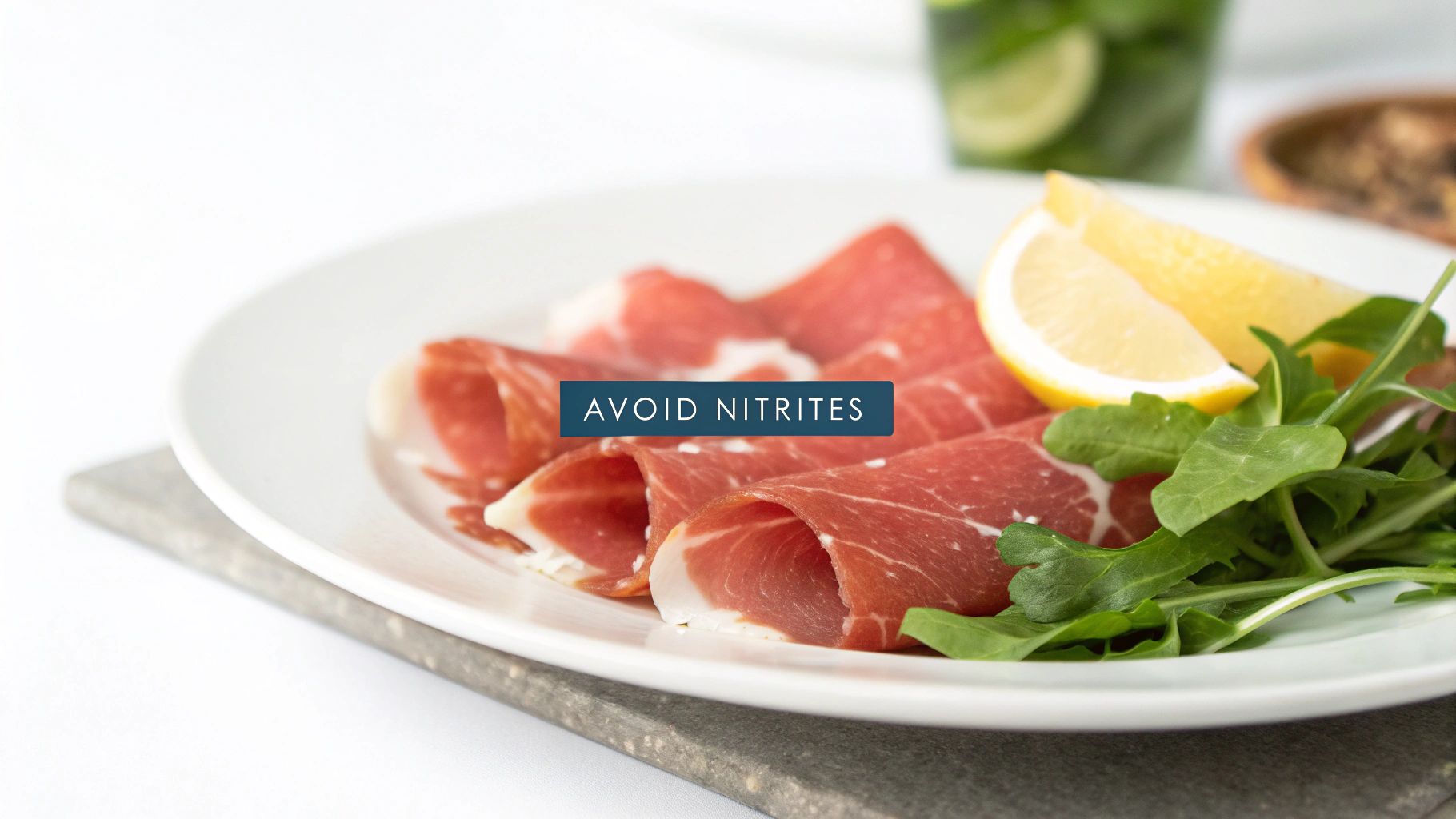
The concern is so significant that the World Health Organization has classified processed meat as a Group 1 carcinogen, the same category as tobacco smoke. Nitrosamines are powerful carcinogens linked to an increased risk of colorectal, pancreatic, and stomach cancers. This makes checking for these additives particularly important, especially in foods intended for children.
Where Nitrites and Nitrates Hide in Plain Sight
These preservatives are staples in the world of cured and processed meats, often appearing in convenient snack foods that appeal to busy families.
- Meat Snacks: Conventional beef jerky, meat sticks, and processed meat-based protein bars.
- Cured Meats: Bacon, ham, salami, hot dogs, and sausages.
- Kids' Lunch Foods: Many pre-packaged lunch meats and "kid-friendly" meat snacks.
- Flavored Snacks: Some bacon-flavored chips or crackers use these compounds.
How to Spot and Swap Nitrites and Nitrates
Avoiding these preservatives is achievable with careful label reading and a few smart swaps. Many brands now offer safer, cleaner alternatives for families looking to reduce their exposure.
Parent Tip: Those convenient meat and cheese snack packs for kids often contain nitrites. Here's a fun idea: swap them for plant-based protein snacks like hummus with veggie sticks. Or, choose snacks from brands committed to clean ingredients, such as Skout Organic, to eliminate this risk without sacrificing convenience.
Here’s your checklist for keeping nitrites and nitrates out of your cart:
- Read the Label: Look for "sodium nitrite" or "sodium nitrate" in the ingredients list. Don't be fooled by "natural flavors" that can sometimes hide these additives.
- Look for Key Phrases: Choose products labeled "uncured" or "nitrate-free." These often use natural sources like celery powder for preservation, which is a safer option.
- Choose Safer Proteins: Prioritize fresh, unprocessed meats like chicken or fish, or explore plant-based proteins like beans, lentils, and chickpeas.
- Pair with Vitamin C: If you do eat cured meats, consuming them with a source of vitamin C (like orange juice or bell peppers) can help inhibit the formation of nitrosamines.
9. Propylene Glycol
Propylene glycol is a synthetic food additive used to keep foods moist, prevent them from drying out, and maintain a soft texture. It acts as a humectant and solvent, which is why it's also a primary ingredient in antifreeze and de-icing solutions. While the FDA has classified it as "Generally Recognized As Safe" (GRAS), its presence in food raises concerns because our bodies metabolize it into lactic acid.
The industrial origin of this compound is a major reason why propylene glycol is a chemical in food to avoid. High intake can lead to an accumulation of lactic acid, potentially causing a condition called acidosis, which can strain the kidneys and liver. For children with smaller bodies and developing metabolic systems, the risk of accumulation is even greater, making this additive particularly worth avoiding in their favorite snacks.
Where Propylene Glycol Hides in Plain Sight
Propylene glycol is the secret to that unnaturally soft, never-stale texture found in many packaged baked goods. It's especially common in products designed for a long shelf life, including many kids' snack bars and cookies.
- Baked Goods: Commercial soft-baked cookies, cakes, and brownies.
- Snack Bars: Many mass-produced granola and cereal bars use it for a chewy texture.
- Frosting & Mixes: Conventional store-bought frosting, icing, and cake mixes.
- Flavored Products: It's also used as a carrier for food colorings and flavorings in some beverages and frozen dairy desserts.
How to Spot and Swap Propylene Glycol
Finding and avoiding propylene glycol means looking past the front of the box and directly at the fine print on the ingredients list.
Parent Tip: Those soft, chewy kids' cookies that stay fresh for weeks are often loaded with chemical humectants like propylene glycol. Baking a batch of cookies at home is a fun activity and gives you complete control. For a quick and clean swap, we suggest looking for snacks like Skout Organic Kids Snack Bars that achieve a soft texture using simple, whole-food ingredients like dates.
Here’s your checklist for keeping propylene glycol out of your pantry:
- Read the Label: Scan the ingredients for "propylene glycol" and be wary of products with long lists of chemical-sounding names.
- Choose Shorter Shelf Lives: A snack that goes stale faster is often a good sign it’s free from artificial preservatives and humectants.
- Bake at Home: Making your own cookies, brownies, or granola bars is the surest way to control every ingredient and avoid unwanted additives.
- Opt for Natural Preservation: Look for baked goods preserved with natural ingredients like rosemary extract or those that are sold fresh with a clear expiration date.
10. Palm Oil (Unsustainable and Hydrogenated Varieties)
Palm oil is a versatile vegetable oil derived from the fruit of the oil palm tree. While palm oil in its natural, unprocessed state isn't toxic, the problems lie in its sourcing and processing. Conventional palm oil production is linked to significant environmental destruction, and many food products use hydrogenated palm oil, a process that creates artificial trans fats detrimental to cardiovascular health. This combination of ethical and health concerns makes certain types of palm oil a chemical in food to avoid.
The hydrogenation process changes the oil's molecular structure to make it more solid and stable, extending the shelf life of processed foods. However, this creates trans fats, which have been strongly linked to increased levels of bad (LDL) cholesterol and decreased good (HDL) cholesterol, raising the risk of heart disease. For conscientious families, both the environmental impact and the health risks of hydrogenated forms are serious considerations.
Where Unsustainable and Hydrogenated Palm Oil Hides
Palm oil’s creamy texture and stability make it a go-to ingredient in countless packaged goods, especially those promising a soft, satisfying bite. It's a key ingredient in many kids snack bars and cookies.
- Snack Foods: Mass-produced soft-baked cookies, crackers, and snack cakes.
- Bars: Many conventional granola, cereal, and protein bars use it for texture and shelf life.
- Spreads: Margarine, shortening, and many commercial nut butters.
- Packaged Meals: Instant noodles, frozen pizzas, and some packaged baked goods.
How to Spot and Swap Problematic Palm Oil
Avoiding unsustainable or hydrogenated palm oil means becoming a savvy label reader and prioritizing ethical sourcing.
Parent Tip: Those soft, chewy granola bars and animal crackers your kids love often get their texture from palm oil. Scrutinizing the label is key. We suggest swapping them for snacks like Skout Organic Kids Snack Bars. This ensures a treat free from hydrogenated oils and sourced with sustainability in mind.
Here’s your checklist for making better palm oil choices:
- Read the Label: Scan the ingredients list for "palm oil," "palm kernel oil," or "partially hydrogenated palm oil." The term "partially hydrogenated" is a red flag for trans fats.
- Look for Certifications: Seek out products with the Roundtable on Sustainable Palm Oil (RSPO) or Rainforest Alliance certification logos, which indicate more responsible sourcing.
- Choose Whole Foods: The easiest way to avoid processed oils is to focus on whole, unprocessed foods.
- Bake at Home: Making your own cookies, cakes, and bars gives you full control. You can use healthier fats like coconut oil, avocado oil, or butter from grass-fed cows.
Comparison of 10 Food Chemicals to Avoid
| Item | Implementation Complexity 🔄 | Cost / Resource Efficiency ⚡ | Expected Health Impact 📊 | Ideal Use Cases 💡 | Key Advantages ⭐ |
|---|---|---|---|---|---|
| High Fructose Corn Syrup (HFCS) | Low — easy industrial integration 🔄 | Very low cost; high scalability ⚡ | High negative — linked to obesity, fatty liver, insulin resistance 📊 | Mass‑produced sweet snacks and beverages 💡 | Intense sweetness at low cost; stable supply ⭐ |
| Artificial Food Dyes (FD&C Colors) | Low — simple additive step 🔄 | Low cost; long color stability ⚡ | Moderate–high negative — behavioral issues in children; potential carcinogenic signals 📊 | Products needing bright, consistent color (kids’ snacks) 💡 | Bright, fade‑resistant colors; cheap and predictable ⭐ |
| Sodium Benzoate & Potassium Sorbate | Low — standard preservative use 🔄 | Low cost; effective antimicrobial action ⚡ | Moderate negative — benzene risk with vitamin C; allergies; gut concerns 📊 | Acidic beverages and shelf‑stable snacks needing mold control 💡 | Broad‑spectrum preservation; extends shelf life ⭐ |
| Trans Fats (Partially Hydrogenated Oils) | Moderate — hydrogenation processing required 🔄 | Low cost; very long shelf life ⚡ | Very high negative — raises LDL, lowers HDL; increases CVD risk 📊 | Historically for pastries/textures; now largely avoided in formulations for health reasons 💡 | Improves texture and mouthfeel; increases shelf stability ⭐ |
| Monosodium Glutamate (MSG) | Low — easy to add; often hidden in ingredients 🔄 | Low cost flavor enhancement ⚡ | Variable negative — symptoms in sensitive individuals; potential neurological concerns 📊 | Savory snacks seeking intensified umami flavor 💡 | Strong umami boost; reduces need for costly ingredients ⭐ |
| Artificial Sweeteners (Aspartame, Sucralose, Acesulfame‑K) | Low — direct substitution for sugar 🔄 | Very high sweetness per small dose; low calories ⚡ | Moderate negative — microbiome/metabolic effects; may increase sweet preference 📊 | “Diet”/sugar‑free products and reduced‑calorie formulations 💡 | Zero‑calorie sweetness; prevents acute glucose spikes ⭐ |
| BHA & BHT | Low — common antioxidant addition 🔄 | Low cost; effective against rancidity ⚡ | Moderate–high negative — possible carcinogens; endocrine disruption concerns 📊 | Fat‑rich snacks and long‑shelf cereals/crackers 💡 | Prevents oxidative spoilage; extends shelf life ⭐ |
| Sodium Nitrite & Sodium Nitrate | Low — routine curing/preservation step 🔄 | Low cost; preserves color and inhibits botulism ⚡ | High negative — convert to nitrosamines; strong cancer associations (processed meat) 📊 | Cured meats, jerky, meat‑based snack products 💡 | Preserves color and safety (botulism prevention) in cured meats ⭐ |
| Propylene Glycol | Low — humectant addition in formulations 🔄 | Low cost; effective moisture retention ⚡ | Uncertain/moderate negative — potential accumulation, metabolic concerns in children 📊 | Soft‑baked goods and products needing consistent moisture 💡 | Maintains texture and softness; prevents staling ⭐ |
| Palm Oil (Unsustainable / Hydrogenated) | Low production complexity; sourcing/ethics complex 🔄 | Very cost‑efficient; high yield ⚡ | Variable negative — saturated fat concerns; hydrogenated forms add trans fat risk; environmental harms 📊 | Widely used for texture, shelf life, and low cost in many snacks 💡 | Semi‑solid texture, stable at room temperature, inexpensive ⭐ |
Ready for a Pantry Makeover? Start Your Clean Snacking Adventure Today!
Navigating the labyrinth of grocery store aisles can feel like a daunting task, especially when you're trying to sidestep the long list of chemicals in food to avoid. After exploring additives from High Fructose Corn Syrup and artificial dyes to sneaky preservatives like BHA and BHT, it's easy to feel overwhelmed. But the goal isn't immediate, flawless perfection. The true victory lies in making small, sustainable changes that compound over time, transforming your family's health one snack at a time.
The power is now in your hands. You've learned how to decode confusing ingredient labels, identify common culprits, and understand the potential health impacts of these synthetic additives. This knowledge is your most effective tool for building a cleaner, more nourishing lifestyle for you and your loved ones.
Your Action Plan for a Cleaner Kitchen
Remembering the details for all ten chemicals can be challenging, so let's distill it down to a simple, actionable strategy. Focus on progress, not perfection.
- Start Small, Win Big: Don't try to overhaul your entire pantry overnight. Choose just one item you regularly buy, like a sugary cereal, a brightly colored juice, or a packaged snack. This week, your mission is to find a cleaner alternative for that single product.
- Embrace the "Five Ingredient" Rule: When in doubt, look for products with short, simple ingredient lists. If you can't pronounce it, or it sounds like it belongs in a science lab, it’s a good sign to look for another option. Whole foods are always the best choice.
- Read Labels Religiously: Make it a habit. Flip over the package and scan for the additives we've discussed. Look for keywords like "partially hydrogenated oil" (trans fat), "FD&C" followed by a color and number (artificial dyes), or names like "aspartame" (artificial sweetener).
Upgrading Your Family's Snack Game
This journey is especially crucial when it comes to our kids. The snacks marketed to them are often the biggest offenders, packed with artificial colors, synthetic sweeteners, and preservatives. Think about those neon-colored fruit snacks or character-themed cookies. By swapping these out, you’re not just avoiding harmful chemicals; you’re helping to shape their palate to appreciate real, wholesome flavors.
This is where brands like Skout Organic become a parent's best friend. They make the transition effortless and delicious. Imagine handing your child a soft-baked cookie or a snack bar knowing it’s made from simple, organic ingredients you can actually recognize. Choosing snacks that are intentionally free from the chemicals in food to avoid is a powerful act of love. You're fueling their growth, supporting their development, and teaching them that healthy food can be incredibly tasty.
To keep these great choices front and center, a well-organized kitchen is a game-changer. When healthy options are easy to see and grab, everyone is more likely to reach for them. To effectively maintain your clean snacking habits, consider implementing smart pantry organization systems that make healthy choices more accessible. A clear path to good food starts with a clear pantry.
You are now equipped to be the gatekeeper of your family's nutrition. Embrace this role with confidence. Celebrate every small victory, from swapping a sugary drink for water to discovering a new favorite clean snack. This is more than just avoiding a few ingredients; it's about building a foundation of wellness that will serve your family for a lifetime.
Ready to fill your pantry with snacks you can feel great about? Explore the delicious, kid-approved snack bars and cookies from Skout Organic. Every product is Certified Organic, non-GMO, and crafted without the common chemicals you want to avoid, making clean eating simple and satisfying for the whole family. Visit Skout Organic today and start your clean snacking adventure!