 Kids Snack Bars
 Soft-Baked Cookies
 Protein Bars
 Build A Box
 Shop All





Let’s be real—the right snacks can make or break a camping trip. A brilliant snack plan is your secret weapon for keeping spirits high and energy steady, especially when you're miles from the nearest kitchen. Forget just grabbing a few bags of chips; we're talking about packing smarter, not just more, to fuel your fun.
The goal is to build a portable pantry that fuels your body without weighing down your pack. Think of your snacks as a toolkit. You need the right tool for the right job, whether that’s a quick burst of energy for an uphill climb or a satisfying bite to tide you over until dinner. This means moving beyond a single bag of trail mix and creating a balanced selection tailored to your trip.
The Foundation of a Great Snack Plan
A killer strategy starts with a simple framework. Before you even think about packing, ask yourself a few key questions:
- How long are we going? A weekend getaway requires way less food than a week-long expedition.
- What are we doing? A strenuous backpacking trip demands more calorie-dense options than a relaxed car camping weekend.
- Who am I feeding? Are you fueling hungry teenagers, picky toddlers, or just yourself? The audience definitely dictates the menu.
A solo hiker, for instance, might prioritize ultralight, high-protein bars. If you want to dive deeper into picking the right fuel for intense activities, our guide on the best energy bars for running offers some great insights.
But when kids are involved, the game changes entirely. Suddenly, the fun factor and ease of eating become just as important as nutrition. This is where options like kid-friendly snack bars and cookies really shine, offering a no-fuss way to prevent a "hangry" meltdown on the trail. You should definitely consider packing some!
The secret to a perfect camping snack supply? Variety. Packing a mix of sweet, salty, crunchy, and chewy options prevents palate fatigue and ensures there’s always something appealing to eat, no matter what you're craving.
The demand for convenient and tasty outdoor fuel is growing, and for good reason. The camping snacks and energy bars segment is a major player in the outdoor camping food market, which is projected to hit USD 4.8 billion by 2032. That trend just highlights how important great snacks are to the modern camper.
And for those looking to expand their culinary options beyond no-cook items, a versatile appliance like a campervan diesel cooker can be a total game-changer. By planning ahead, you ensure every snack not only tastes great but also serves a real purpose in fueling your outdoor experience.
No-Cook Snacks for Easy Trail Fueling
When you’re miles from the nearest kitchen, soaking in those incredible views, the last thing you want to deal with is a camp stove. That’s where the magic of no-cook snacks comes in. These are the unsung heroes of any good hike, ready to fuel your adventure the second hunger hits.
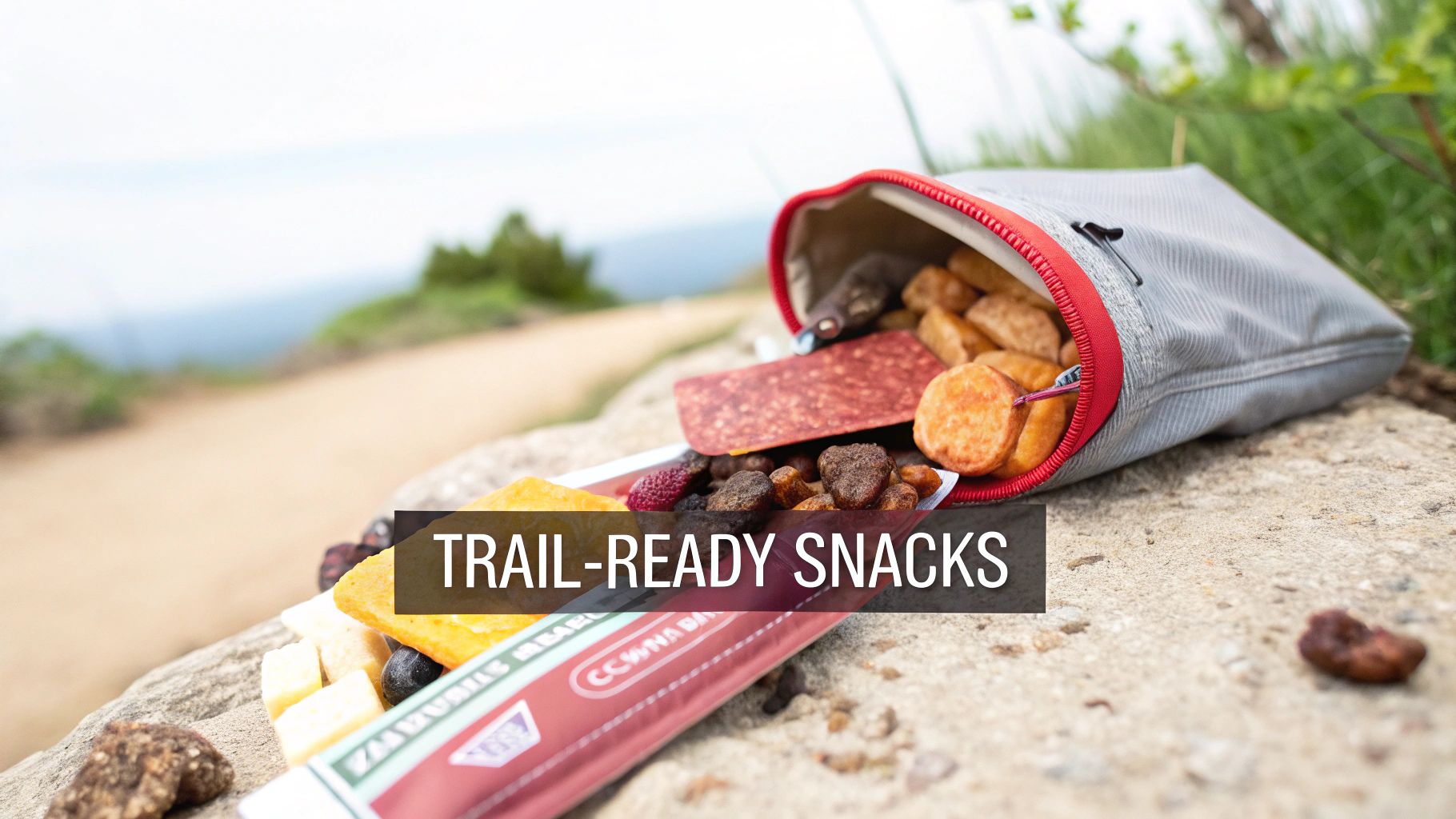
Picture this: you're halfway up a tough climb, your legs are starting to feel it, and your energy is tanking. Reaching into your pack for a quick, delicious boost isn’t just a nice-to-have; it’s essential. This is all about keeping things simple without skimping on satisfaction.
Building Your Grab-and-Go Pantry
Let’s think beyond just a bag of GORP. A solid no-cook snack supply is all about variety. You need a mix of simple carbs for that immediate "get me up this hill" energy, plus some protein to keep you feeling strong for the long haul.
Here are a few powerhouse classics to toss in your pack:
- Dried Fruits: Think mango slices, apricots, or apple rings. They deliver a fast hit of natural sugar when you need it most.
- Beef or Turkey Jerky: A fantastic source of protein that helps with muscle recovery and actually keeps you full. Plus, it’s lightweight and just plain satisfying to chew on.
- Nut and Seed Butters: Those little single-serving packets of almond or peanut butter are clutch. Squeeze them onto crackers, an apple, or—let’s be honest—straight into your mouth for a calorie-dense punch.
- Hard Cheeses: Cheeses like a sharp cheddar or gouda hold up surprisingly well without refrigeration for a day or two and offer a great salty, fatty treat.
These staples are popular for a reason—they work. They're durable, require zero prep on the trail, and give you the nutrients you need when you're pushing your limits.
Pro Tip: Do all your repackaging at home. Ditch the bulky boxes and transfer crackers, jerky, and dried fruit into reusable silicone bags. It saves a ton of space and helps you stick to Leave No Trace principles by minimizing trail trash.
The Modern Essentials for Happy Trails
While the classics are great, some of the newer snacks out there are total game-changers for the outdoors. These modern essentials are specifically designed to be nutrient-dense, super packable, and genuinely delicious.
We’re talking about energy and protein bars. A quality bar can act as a complete mini-meal, balancing carbs, protein, and healthy fats all in one. A Skout Organic energy bar, for example, is made to give you that perfect blend of quick fuel from dates and sustained energy from other organic ingredients. They're the perfect solution when you need a reliable boost without even breaking your stride.
And what about the kids? Keeping them fueled and happy on the trail is priority number one. This is where kids snack bars and cookies become your absolute best friend. You need something tasty enough for picky eaters but also packed with wholesome ingredients that you can feel good about.
Think about it: a soft-baked organic cookie isn't just a treat; it's a morale booster for a tired little hiker. Having these kid-specific snacks ready can prevent meltdowns and turn a tough moment into a fun, memorable snack break. If you want to get them involved before you even leave, check out these awesome kids trail mix recipes. It’s a fun way to get them excited about their own trail fuel.
Keeping Your Happy Campers Fueled
Anyone who has ever camped with kids knows this simple truth: a camping trip is really just a series of snacks interrupted by brief moments of scenery. Keeping your little adventurers fed and happy isn't just a part of the trip—it's the main event. The right camping snacks can turn a potential meltdown into a moment of pure joy.
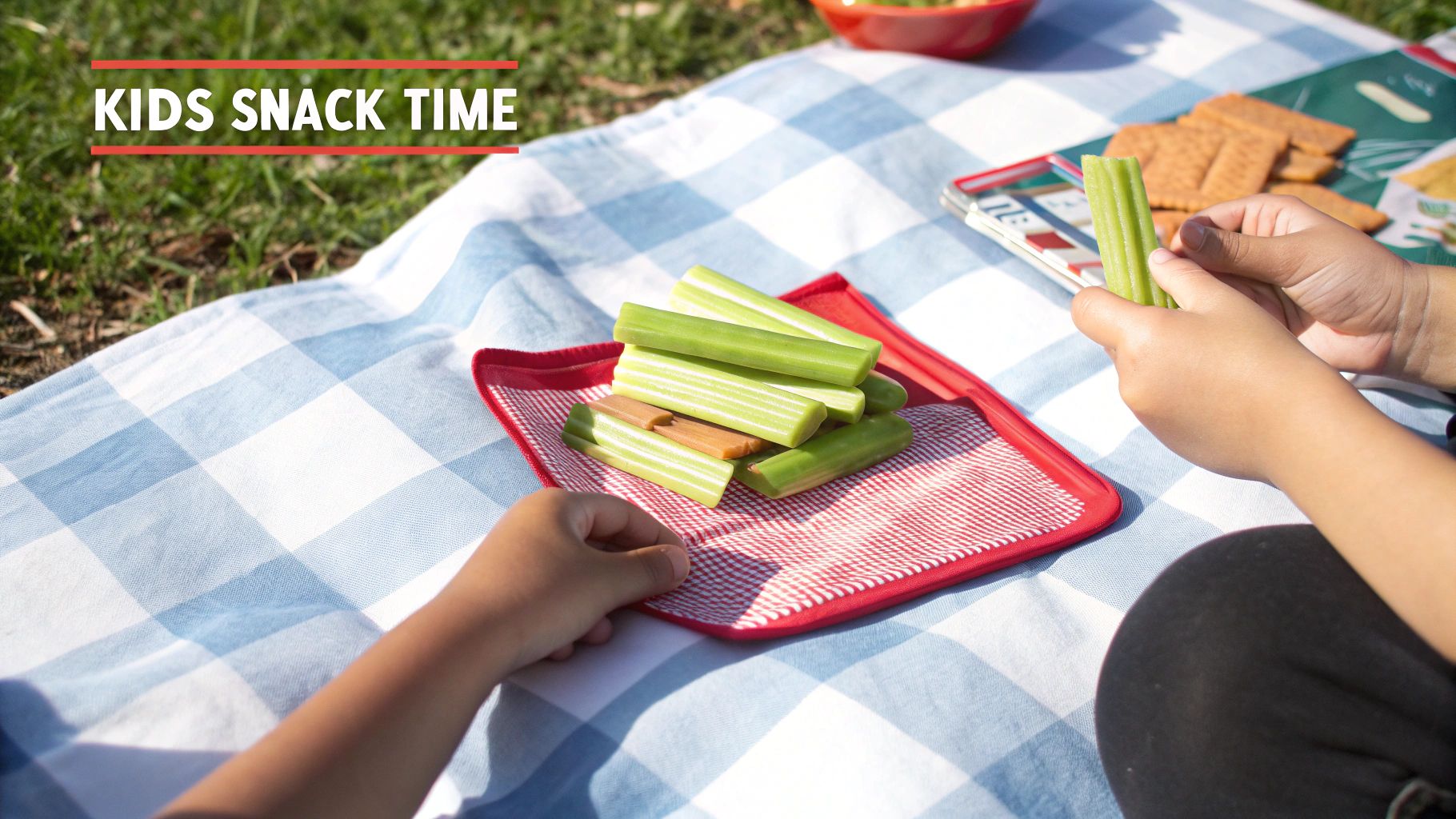
This goes way beyond just calories; it’s about mastering kid-friendly logistics. Snacks need to be delicious enough to tempt a picky eater, easy enough for small hands to manage, and durable enough to survive being jostled around in a daypack. Forget anything delicate or complicated—you need portable, palatable power-ups.
The Anatomy of a Perfect Kid Snack
When you’re building your snack arsenal, every item should pass a simple test: Is it appealing, manageable, and mess-resistant? A great kid's snack usually has a mix of carbohydrates for that quick burst of energy, plus some protein or healthy fats to prevent the dreaded sugar crash an hour later.
This is where kid-specific products become MVPs. Take Skout Organic's kids snack bars and cookies, for example. They're designed with exactly this balance in mind. They deliver on taste—a total non-negotiable for kids—while being made from simple, organic ingredients that parents can feel good about. Having a few of these tucked away is your best defense against the endless "I'm hungry!" chants.
A tired, hungry child can bring a hike to a screeching halt. The smartest thing you can pack is a dedicated, easily accessible 'emergency snack' for each kid—something you know they love and can eat quickly to boost morale.
Turning Snack Time into an Adventure
Here's the secret to successful kid snacking in the great outdoors: make it fun. Instead of just handing over a bar, turn snack time into a mini-activity. This not only gets them excited to eat but also creates a positive association with trail food and healthy habits.
Here are a few ideas to get you started:
- DIY Trail Mix Bar: Before you leave home, set out bowls of kid-friendly ingredients like pretzels, seed mixes (sunflower or pumpkin are great), dried cranberries, and maybe a few chocolate chips. Let each kid create and name their own unique blend in a reusable bag.
- Ants on a Log Assembly: This classic is perfect for the campsite. Just pack pre-cut celery sticks, a single-serving pouch of sunbutter, and a small container of raisins. Kids absolutely love assembling their own crunchy, creamy snack.
- Fruit and Cheese Kabobs: Skewering cubes of sturdy cheese (like cheddar) with grapes or apple chunks is an easy way to make simple ingredients feel special. Plus, they're easy to hold and fun to eat.
Navigating the Picky Eater Predicament
Camping with a picky eater adds another layer of challenge. The unfamiliar environment can sometimes make them even more resistant to trying new things. The key is to pack a mix of safe, familiar favorites alongside a few new, low-pressure options.
Don't make snack time a battle. If they only want the pretzels today, that's okay. Offer the apple slices too, but don't push it. Often, after a morning of running, climbing, and exploring, even the most selective eaters find their appetite expands a little.
Ultimately, your goal is to keep their energy levels stable and their spirits high. Pack more than you think you need, embrace a little bit of creative fun, and always have those tried-and-true favorites ready to go. With the right strategy, your snacks won't just prevent hunger—they'll become a highlight of the entire trip.
Gourmet Bites for the Trail Ahead
Let’s be real: store-bought snacks are a lifesaver. But putting in a little prep time before you leave can totally transform your trailside snacking game. We’re not talking about complicated cooking here. This is about creating simple, delicious bites that feel like a five-star treat after a long day of hiking.
With just a few pantry staples, you can whip up some incredible camping snacks without ever needing a camp stove. The goal is to focus on recipes that are easy to make, pack well, and don’t need a cooler to stay fresh. Think nutrient-dense, flavorful, and durable enough to survive a bumpy ride in your backpack.
No-Bake Energy Balls Three Ways
No-bake energy balls are the MVP of make-ahead camping snacks. They’re endlessly customizable, deliver a serious energy punch, and are almost ridiculously easy to make. The basic formula is a binder (like nut butter), a protein source, and whatever fun mix-ins you’re craving.
Here’s a fantastic recipe using Skout Organic protein powder to get you started:
- The Base: In a big bowl, mix 1 cup of rolled oats, 1/2 cup of your favorite nut or seed butter (almond and sunflower butter work great), and 1/3 cup of a sticky sweetener like honey or maple syrup.
- The Boost: Stir in two scoops of Skout Organic Chocolate Protein Powder and a tablespoon of chia seeds for extra fiber and omega-3s.
- The Fun Part: Time to customize! Add up to 1/2 cup of your favorite goodies. Mini chocolate chips, shredded coconut, or finely chopped dried apricots are all amazing additions.
- Roll & Chill: Roll the mixture into bite-sized balls and pop them on a parchment-lined tray. Let them hang out in the fridge for at least 30 minutes to firm up.
When it's time to pack, store these in a hard-sided container. Trust me, it’ll save them from getting squished into a single energy pancake at the bottom of your bag.
Savory Roasted Chickpeas
Craving something salty and crunchy on the trail? Roasted chickpeas are an absolute game-changer. They’re a much healthier, high-protein alternative to potato chips and are surprisingly simple to whip up at home.
Grab a can of chickpeas, give them a good rinse, and then dry them thoroughly—and I mean thoroughly. This is the secret to getting them perfectly crispy. Toss them with a tablespoon of olive oil and your go-to seasonings. For a classic savory vibe, try garlic powder, smoked paprika, and a pinch of salt. If you like a little heat, a dash of cayenne pepper works wonders.
Spread them out on a baking sheet and roast at 400°F (200°C) for about 20-30 minutes. Give the pan a good shake halfway through. You’ll know they’re done when they’re golden and crunchy. The most important step? Let them cool completely before packing them. Any leftover warmth will create steam and make them soggy.
Homemade Customizable Granola Bars
Forget those bland, sugary granola bars you find at the store. Making your own is not only easy but lets you pack them with wholesome ingredients you actually love. These are designed to be sturdy enough for any adventure.
The Dry Stuff:
- 2 cups rolled oats
- 1 cup chopped nuts or seeds (almonds, walnuts, and pumpkin seeds are a great trio)
- 1/2 cup dried fruit (cranberries, chopped apricots, or dates)
- 1/2 teaspoon cinnamon
- A pinch of salt
The Sticky Stuff (Binder):
- 1/2 cup honey or maple syrup
- 1/2 cup nut or seed butter
Just mix the dry ingredients in a bowl. Gently heat the binder ingredients in a small pot until they’re smooth and combined, then pour the wet mixture over the dry. Stir it all together until everything is well-coated.
Press the mixture firmly into a parchment-lined 8x8 inch pan and bake at 350°F (175°C) for 15-20 minutes. Let them cool completely before you even think about cutting them into bars.
Pro Tip: For a nut-free version, swap the nuts for a mix of sunflower and pumpkin seeds and use sunbutter. If you need a gluten-free option, just make sure to use certified gluten-free rolled oats.
It's clear that people value good food in the great outdoors. The market for dehydrated backpacking and camping food is expected to grow from USD 1,275.6 million in 2025 to USD 2,500 million by 2035. You can learn more about the growth of the dehydrated camping food market and see for yourself. By making your own gourmet snacks, you're not just following a trend—you're taking that principle and making it personal, delicious, and way more satisfying.
Before you start chopping and mixing, here's a quick cheat sheet for some of our favorite prep-ahead ideas.
DIY Camping Snack Prep Guide
| Snack Idea | Key Ingredients | Primary Benefit | Best For | Storage Tip |
|---|---|---|---|---|
| Energy Balls | Oats, nut butter, protein powder, honey | Quick energy & sustained fuel | Mid-hike boosts | Hard-sided container to prevent squishing |
| Roasted Chickpeas | Chickpeas, olive oil, spices | Salty, crunchy, & high-protein | A savory alternative to chips | Airtight bag or container after they've cooled completely |
| Homemade Granola Bars | Oats, nuts/seeds, dried fruit, nut butter | Customizable & nutrient-dense | All-day snacking | Wrap individually in parchment or wax paper |
| Trail Mix (Gorp) | Nuts, seeds, dried fruit, chocolate | Classic, easy, & energy-packed | Anytime fuel | A simple resealable bag works perfectly |
| Fruit Leather | Blended fruit (e.g., berries, apples) | Lightweight & packed with vitamins | A sweet treat for kids & adults | Roll in parchment paper and store in an airtight bag |
These homemade options give you total control over what you're eating, save you some money, and add a personal touch to your adventure fuel. Happy snacking
How to Pack and Store Your Snacks Like a Pro
You've planned the perfect lineup of camping snacks, but the job isn't quite done. How you pack and store everything is just as important as what you bring. A smart packing strategy keeps your snacks fresh, prevents crackers from turning to dust, and—most importantly—keeps them safe from curious critters.
Let’s be honest, nobody wants to discover their prized cookies have been pulverized at the bottom of a backpack or that a clever chipmunk made off with tomorrow's trail mix. This is your guide to packing like a seasoned pro, so every snack is as delicious on day three as it was on day one.
This quick decision tree can help you figure out whether to buy or make your snacks before you even start packing.
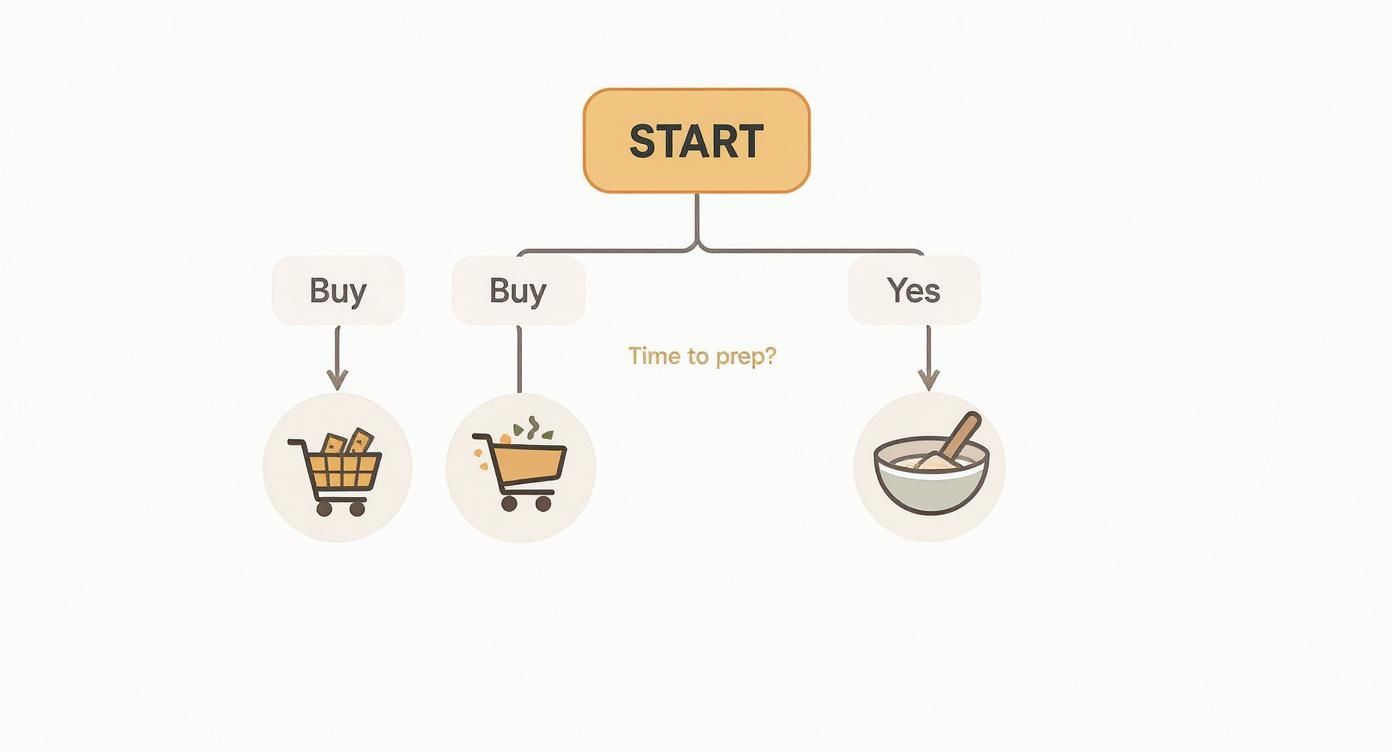
As the flowchart shows, the key factor often comes down to whether you have time to prep, guiding you toward grabbing pre-made items or making your own.
Choosing the Right Containers
The containers you use can make or break your snack game. Your choice really depends on what you’re packing and what kind of camping you’re doing. It's all about balancing durability, weight, and function.
- Hard-Sided Containers: These are your best friends for anything fragile. Think cookies, crackers, or those homemade granola bars you spent an hour perfecting. A simple plastic or metal container ensures they arrive in one piece.
- Reusable Silicone Bags: I love these for bulkier items like trail mix, dried fruit, or jerky. They're lightweight, flexible, and eco-friendly, which helps cut down on single-use plastics.
- Ultralight Dry Sacks: For backpackers counting every single ounce, dry sacks are fantastic for organizing food. They keep everything contained and add a layer of protection from moisture.
The global outdoor camping food market is booming—it was valued at USD 2.5 billion in 2023 and is projected to hit USD 4.8 billion by 2032. This growth shows just how many people are getting serious about quality outdoor experiences, and proper food storage is a huge part of that.
Master the Art of Repackaging
One of the biggest rookie mistakes is bringing food in its original store packaging. Those bulky boxes and crinkly bags take up precious space and create a mountain of trash. The solution? Repackage everything before you leave home.
By transferring snacks from their original boxes into streamlined bags and containers, you not only save a significant amount of space but also make it easier to follow Leave No Trace principles by packing out less trash.
This simple step is a core part of being a responsible camper. If you want more pre-trip strategies, check out our guide on https://www.skoutorganic.com/blogs/the-snack-guide/healthy-meal-prep-snack-ideas for inspiration.
Keeping Wildlife Wild
Proper food storage isn't just about freshness; it's about protecting wildlife and yourself. Animals have an incredible sense of smell, and leaving food unsecured is an open invitation for a visit you didn’t plan on. And on a smaller scale, it’s vital to know how to keep flies away while camping to make sure your meal is both pleasant and hygienic.
Depending on where you're camping, you'll need to take specific precautions:
- Bear Canisters: In many national parks and backcountry areas, a certified bear-resistant canister isn't just a good idea—it's required. These hard-sided containers are the most effective way to keep your food secure from bears and other large animals.
- Bear Bags: If canisters aren't required, properly hanging a food bag is another solid option. This involves hoisting your food-filled sack from a tree branch at least 10-15 feet off the ground and 4-5 feet away from the trunk.
- Vehicle Storage: For car campers, your locked vehicle is often the best and easiest place to store your food overnight. Just make sure all the windows are rolled up tight.
By planning your storage strategy carefully, you ensure your snacks stay organized, intact, and right where they belong—ready to fuel your next adventure.
Your Top Camping Snack Questions Answered
Even the most seasoned camper has those last-minute questions that pop into their head while packing. It's totally normal. Don't worry, we've got you covered.
Think of this as your final sanity check before you hit the road. We’re diving into the nitty-gritty details that can make or break your snacking game on the trail, from nailing quantities to keeping your crackers from turning into dust.
How Many Snacks Should I Pack Per Day?
Figuring out the right amount of food can feel like a guessing game, but I've always found a simple rule of thumb that works. A good starting point is to plan for 2-3 hearty snacks per person, per day, on top of your main meals.
Now, if you've got a tough day planned—like a long hike with some serious elevation gain—definitely toss in an extra high-energy bar for everyone. And when kids are in the mix? Their snacking style is more like constant grazing. For them, having 3-4 smaller, easy-to-grab snacks is the secret to steady energy and happy moods. This is exactly where dedicated kids snack bars and cookies become lifesavers; they're perfectly portioned and easy for little hands.
Always pack a little extra. Seriously, think of it as your "happy camper insurance." One extra emergency snack per person for the entire trip can be a real game-changer if a hike takes longer than you thought or someone gets a sudden case of the "hiker hunger."
What Are the Best Snacks for Hot Weather Camping?
Camping in the heat brings its own set of challenges, especially when it comes to snacks. The last thing you want is to reach into your pack and pull out a gooey, melted mess. The key is to ditch anything with a chocolate or yogurt coating.
Instead, lean into durable, heat-proof options. Here are a few of my go-to choices for warm-weather adventures:
- Dried Fruits: Apricots, mangoes, and apple rings are fantastic. They give you that natural sugar boost without the melt factor.
- Savory Bites: Jerky, roasted chickpeas, and pretzels are perfect salty snacks that hold up beautifully in the heat.
- Sturdy Bars: Lots of energy bars, like the ones from Skout Organic, are built for this. They use dates and other stable ingredients that can handle higher temps without falling apart.
Fruit leathers are another brilliant choice. They're super lightweight, packed with flavor, and completely melt-proof, making them the ideal treat for a sunny day on the trail.
How Do I Manage Dietary Restrictions on a Camping Trip?
Navigating allergies or dietary needs while camping is absolutely doable with a bit of forward thinking. The most important thing is to plan your menu and pack specific snacks that are safe for everyone involved.
For gluten-free campers, focus on things like rice cakes, certified GF granola, and corn-based chips. If you're dealing with nut allergies, seed butters (like sunbutter), roasted seeds, and bars made in certified nut-free facilities are your best friends. Just be sure to read labels carefully before you pack anything.
The golden rule here is to avoid cross-contamination at all costs. Pack allergen-free foods in their own separate, clearly marked containers. It's a simple step that ensures everyone can snack safely and without a second thought, letting you focus on the fun.
What Is the Best Way to Keep My Snacks from Getting Crushed?
There’s almost nothing more disappointing than reaching for a crunchy cracker only to find a bag of sad, pulverized crumbs. Protecting your fragile snacks is all about packing smart.
Use a small, hard-sided container—like a reusable plastic tub—for anything delicate. This is a non-negotiable for stuff like cookies, crackers, or any homemade granola bars. I like to place this container near the top of my backpack, cushioned by soft gear like a rain jacket or a fleece.
For more durable items like sealed packets of nuts or fruit leather, you can just use reusable bags and tuck them into your pack’s smaller pockets for easy access. Just remember the number one rule of packing: never, ever put your crunchy snacks at the bottom of your pack. They simply will not survive the journey.
Ready to make your next camping trip the most delicious one yet? Skout Organic has everything you need to fuel your family's adventure, from tasty kids snack bars and cookies to protein-packed bars for the trail. Build your own snack box and discover your new favorite flavors today at https://www.skoutorganic.com.